Description
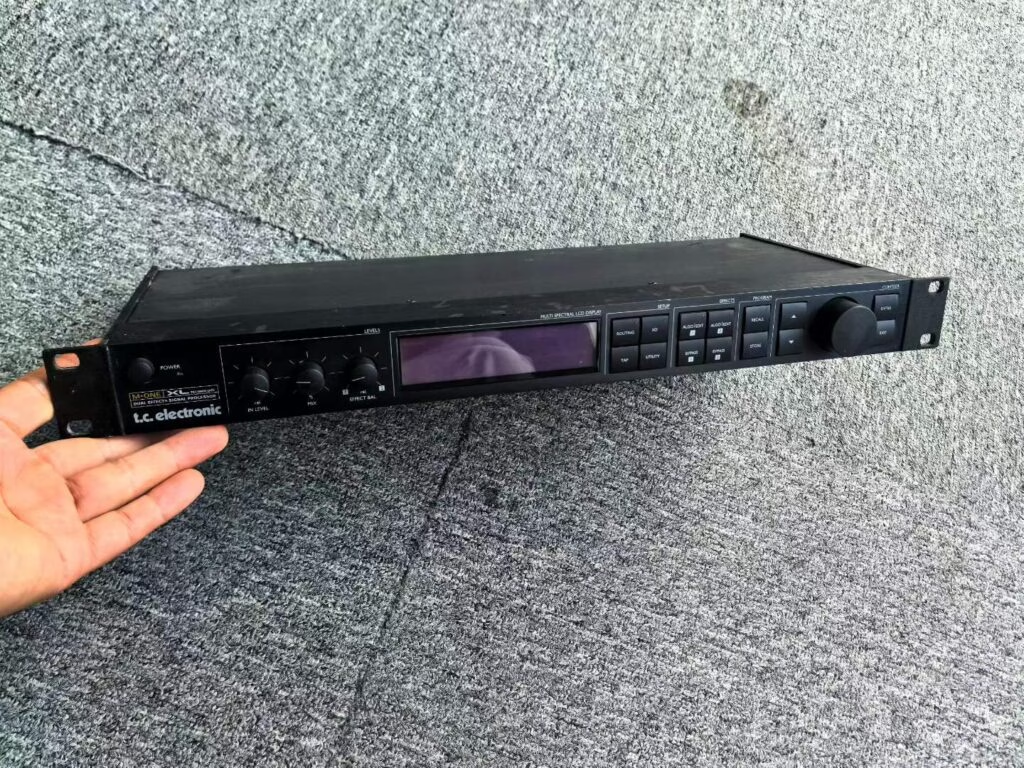
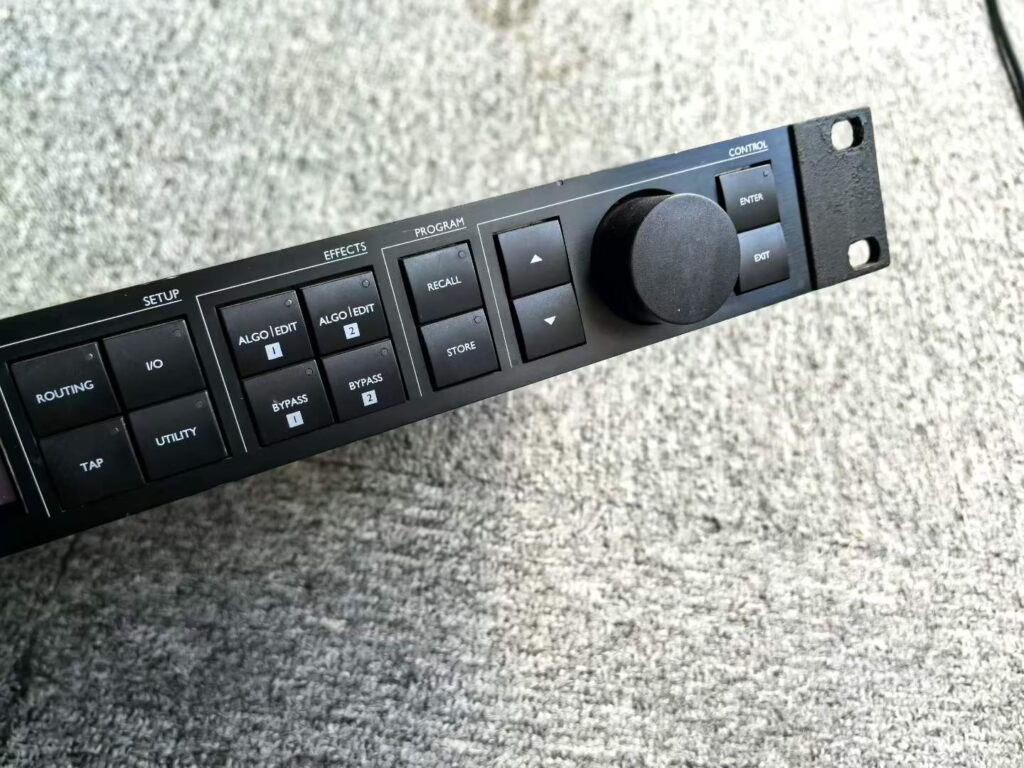
This is a used TC Electronic M-One XL dual-engine effects processor, in stock, price on request. It is a single rack unit of black brushed metal with the LCD in the middle, the effect selector buttons stacked on the left, and the one big rotary encoder on the right that you will spend all your time with.
The M-One XL is TC Electronic’s dual-engine 24-bit effects processor from the mid-2000s, the bigger brother of the M-One. Two independent engines run in series or in parallel, so you can stack a reverb with a delay or a chorus without eating the whole machine, and the routing matrix decides whether each engine sees the left/right pair separately or a summed mono feed. It was built for rental racks and small venues that needed decent reverb, delay and modulation without a computer in the signal path.
Specifications
| Type | Dual-engine digital effects processor, 1U rackmount |
|---|---|
| Processing | Two independent effects engines, series or parallel |
| Resolution | 24-bit A/D and D/A conversion |
| Sample rates | 44.1 kHz and 48 kHz (internal clock) |
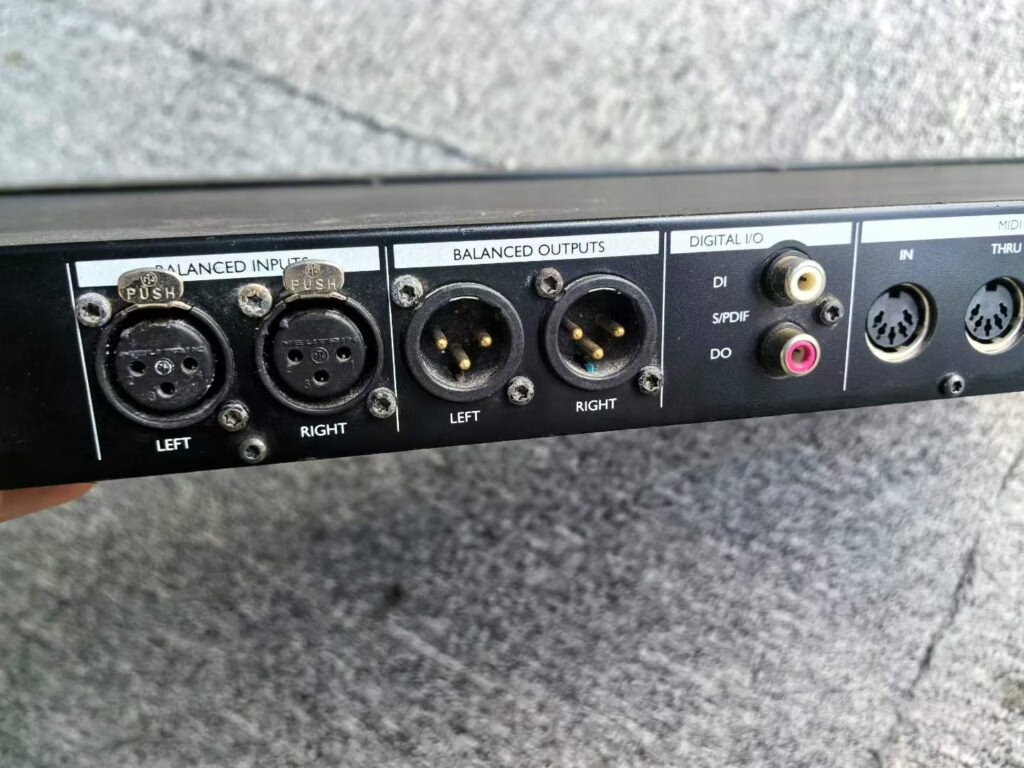
| Inputs | 2 x balanced analogue (left / right), XLR and 1/4-inch TRS |
| Outputs | 2 x balanced analogue (left / right), XLR and 1/4-inch TRS |
| Digital I/O | S/PDIF coaxial in and out |
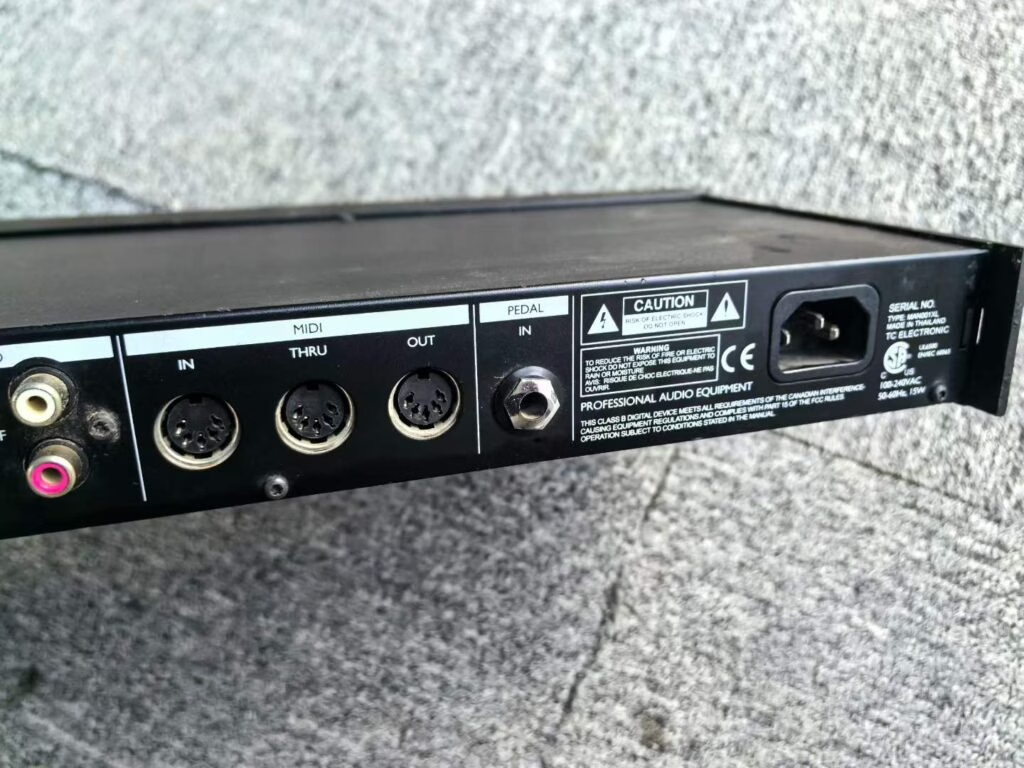
| MIDI | MIDI in, out and thru for program change and real-time control |
| Front panel | LCD display, effect selector buttons, rotary encoder, level controls |
| Presets | Factory preset bank plus user memory for your own programs |
| Rack size | 1U, 19-inch rack |
| Power | Internal linear supply, IEC inlet |
Those are the figures this unit is specified at. Where a number is not on that list, the honest answer is ”
“that it was not worth printing, not that it is secret.
What the front panel tells you
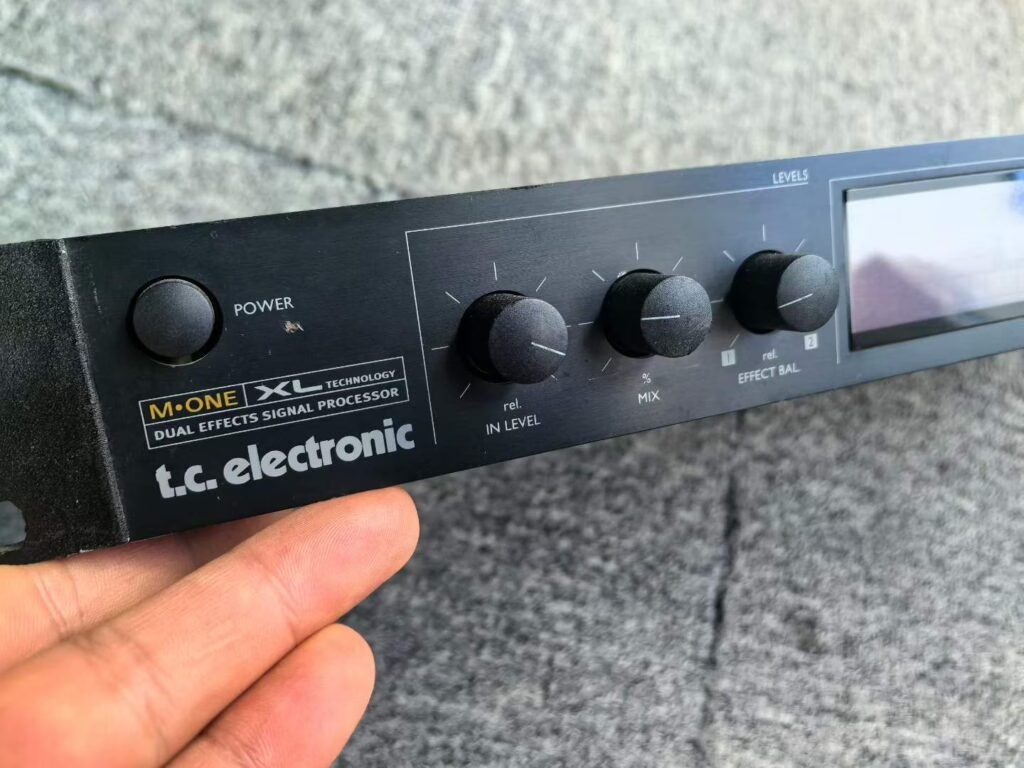
The controls are grouped by function and the printed legends read INPUT LEVEL, MULTI, ROUTING, UTILITY, and LEVELS, with an LCD display carrying the M-ONE XL badge. The fader-style level controls sit in a row rather than as rotary knobs, which is the layout that let TC squeeze two independent processing engines, a routing matrix and a utility menu into one 1U front panel.
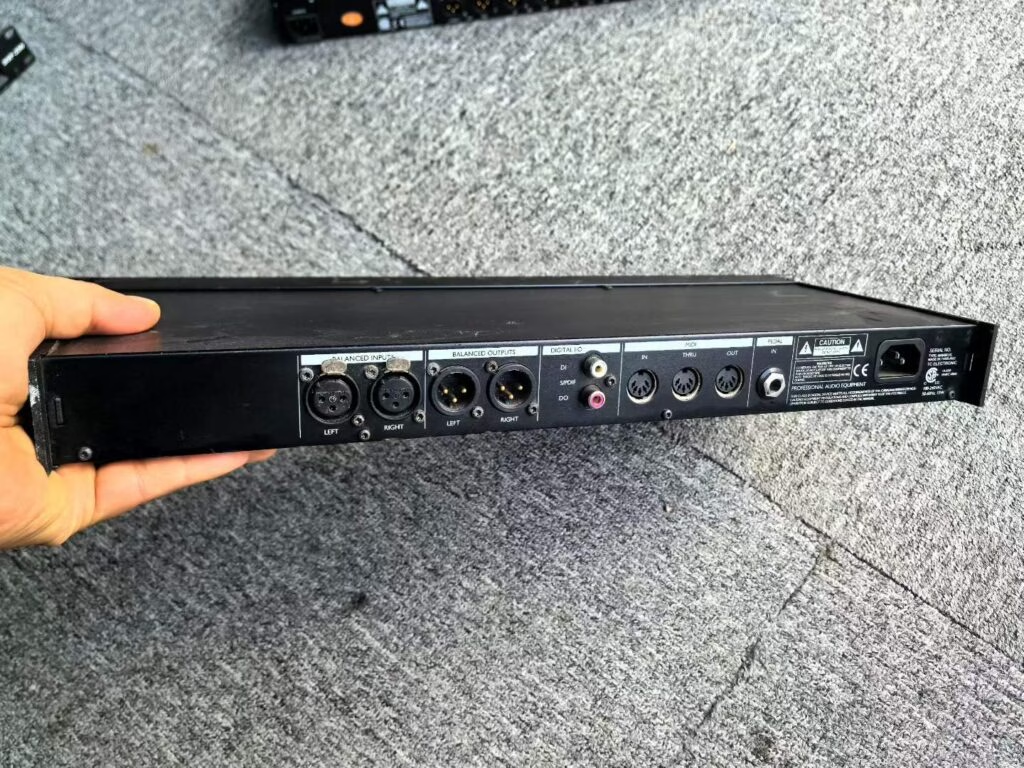
The rear and side shots show BALANCED INPUT with LEFT and RIGHT labelling, and outputs marked OUT. That balanced I/O matters for what this box is actually for. It belongs in a rack next to a console or a PA processor, not on a pedalboard, and balanced connections are what keep it quiet when the run to the amp rack is twenty metres.
Who this is for, and who it is not
It suits a rental house or a small venue that wants reverb, delay and modulation available without a laptop in the signal path, and it suits a studio that needs a hard-wired hardware reverb because the plug-in load is already at the ceiling. It also suits a church or a club that inherited a rack and needs the effects slot filled with something that does not require an Ethernet switch.
It is not for anyone chasing a modern convolution reverb. This is a mid-2000s digital effects unit. The algorithms are TC’s own and they still hold up on vocals and on drums, but if what you want is an impulse response of a cathedral captured last year, this is the wrong box and pretending otherwise would waste your time.
Condition
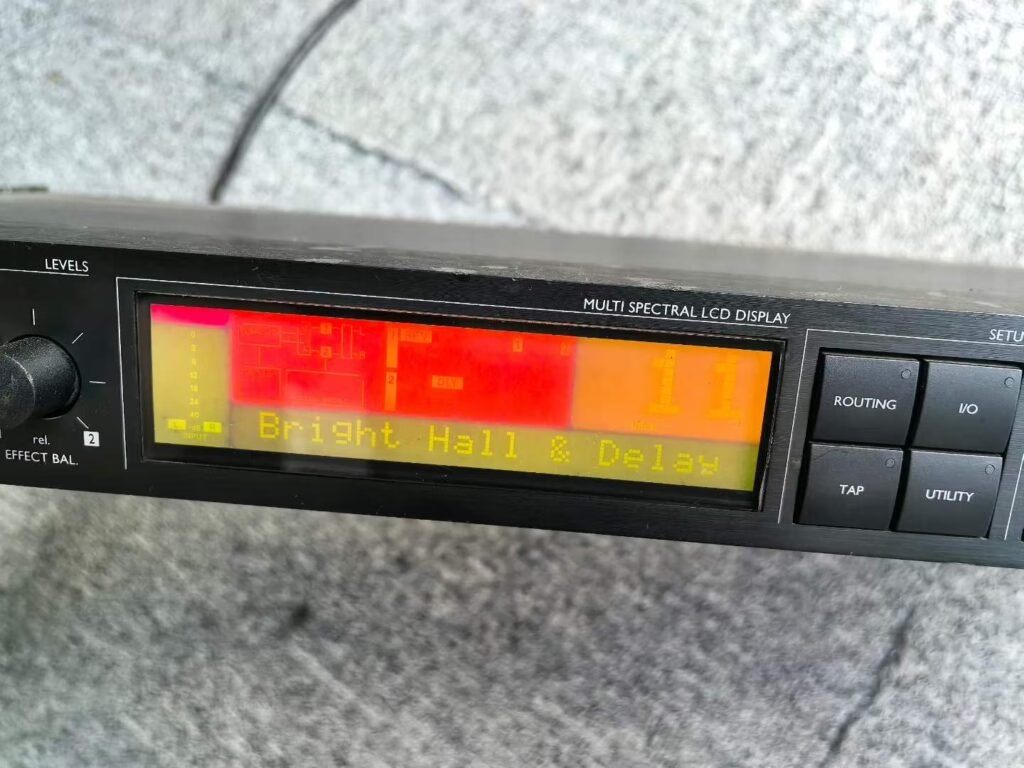
The photographs show the actual unit, front, panels and rear. The front fascia is intact with the LCD window clear, the button legends all legible, and the corner of the rack ear not bent. The rear panel connectors are present and straight. Cosmetically it reads as a working rack unit that has been installed rather than toured hard: there are no holes punched through the chassis, no missing button caps, and the display bezel is not cracked.
What I have not done: it has not been on a bench, it has not had its power supply inspected, and no effect has been recalled and auditioned for this listing. I am not going to tell you it sounds fine when I have not heard it. If you want a specific test before it ships, name it.
Checks we will run on request
Tell us which of these you want and we will run it and send the result before the box leaves:
Power-up sequence and display self-test, photographed or on short video. Recall of a specific factory preset you name, with the LCD shown. Audio pass-through on both channels into a load, both balanced and unbalanced. A photo set of the interior with the lid off, so you can see the power supply caps and the board. Confirmation of the mains voltage configuration for your country.
Related gear in our stock
If you are building a processing rack, the Yamaha DM1000 digital mixing console pairs with this unit directly. For a rack that needs monitoring rather than effects, look at the KRK V6 Series 3 active studio monitor pair. And if you are buying speakers for the same room, the JBL KP4010 passive two-way 10-inch is the budget-safe choice.
Shipping and export
In stock, shipping from China. It is a 1U rack unit so it travels cheaply compared to any cabinet: we pack it in foam inside a double-wall carton, or on a pallet if you are taking several units at once. Voltage is settable at the rear, which means we can configure it for your destination before it ships rather than have you buy a step-up transformer.
Price on request. Send the destination port and the quantity and you will get a number with the freight broken out separately, so you can see what the unit costs and what the shipping costs without having to argue about which is which.
Key takeaways
TC Electronic M-One XL dual-engine effects processor, 1U rack unit, used and in stock. Two independent 24-bit engines, balanced left and right analogue I/O, S/PDIF and MIDI, 44.1/48 kHz, factory and user presets. Cosmetically clean, not bench-tested for this listing, and every test listed above will be run on request. Price on request, shipping from China.