Description
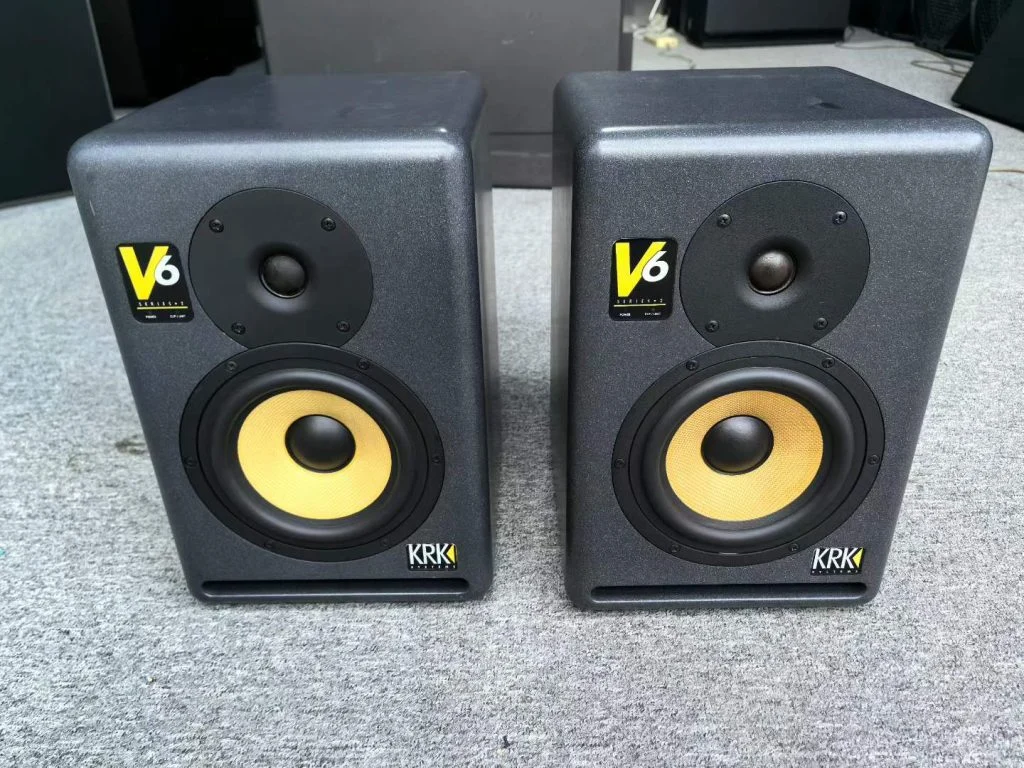
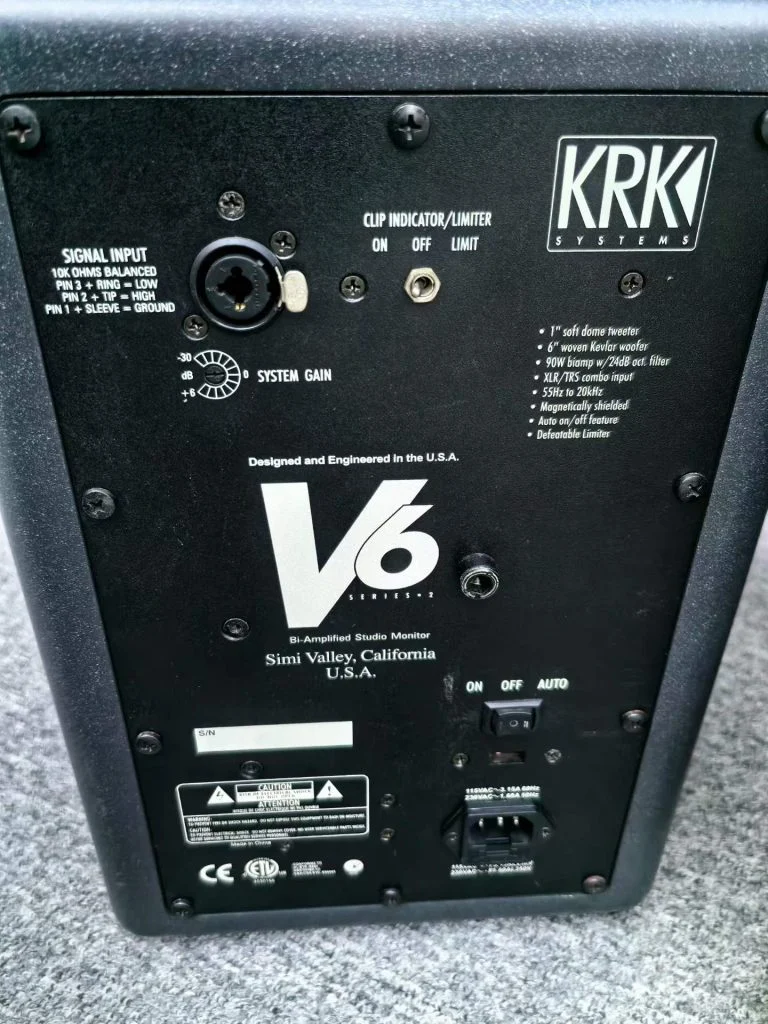
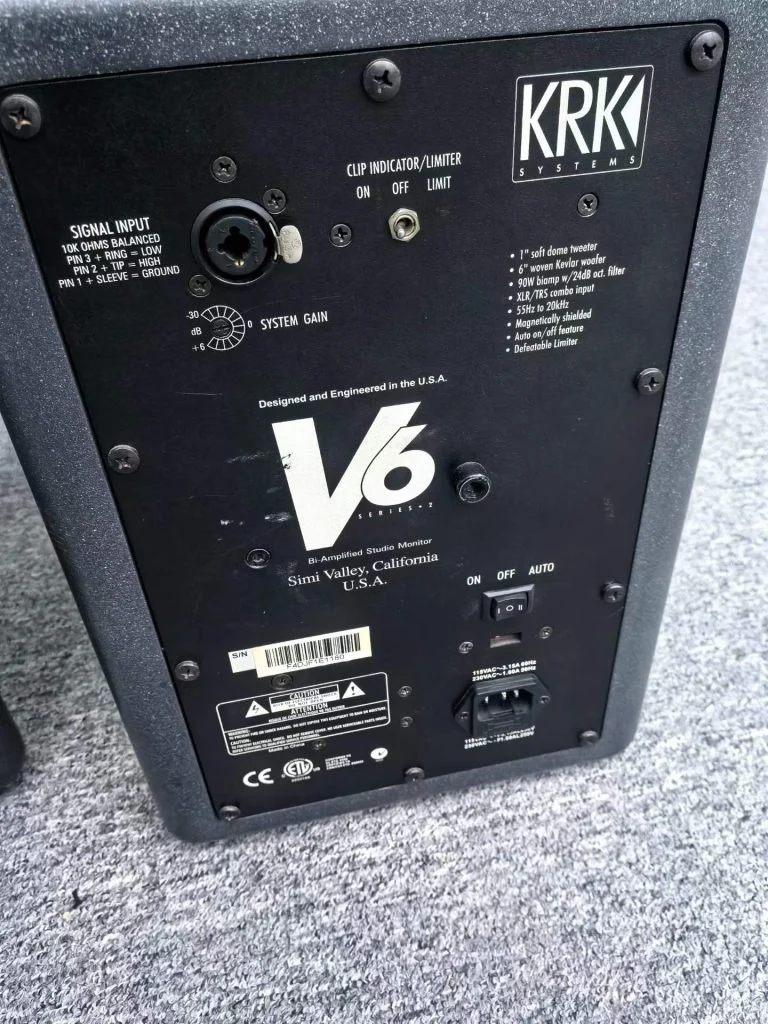
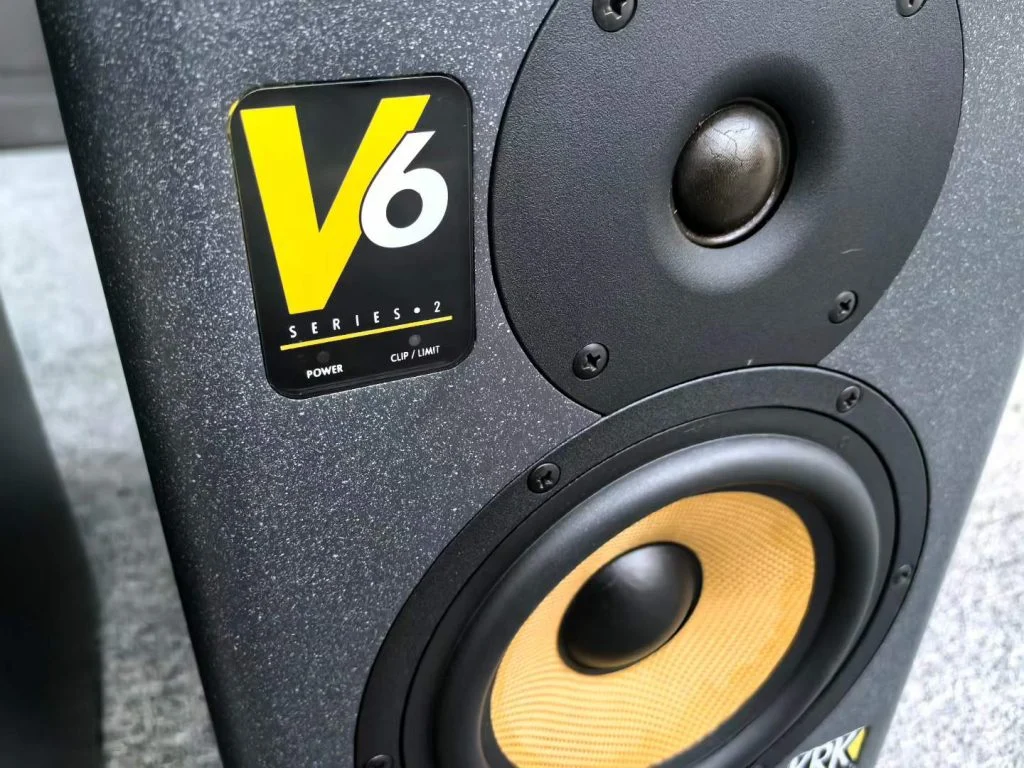
Short answer: this is a matched pair of KRK V6 Series 3 active studio monitors — 6.5-inch yellow Kevlar woofer, 1-inch dome tweeter, 155 W of bi-amped Class D power per cabinet, 49 Hz to 24 kHz. They are used, in stock, and priced on request. The cabinets were not power tested before we photographed them, so read the condition section before you assume anything about the amps.
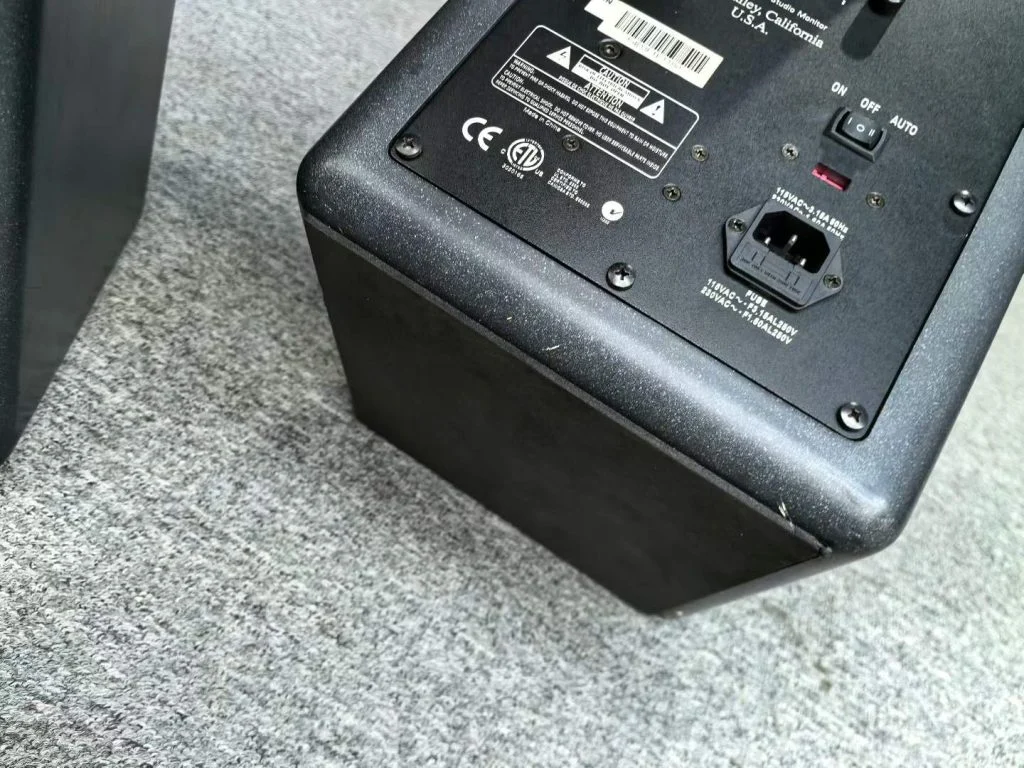
We pulled these out of a studio clearance in Guangdong. Both boxes are the same vintage, both have the original yellow cones without dents, and both have their rear control panels intact. That matters more than the paint on the corners, honestly — a V6 with a dead tweeter amp is a paperweight, and the amps are not sold separately anymore.
What exactly is the KRK V6, and why is the badge confusing?
The V6 is KRK’s mid-size nearfield from the V Series, the line that sits above the Rokit and below the pro monitors KRK builds for post houses. The 6.5-inch version is the one most home studios actually buy, because the 8-inch V8 needs a bigger desk and a better-treated room than most of us have.
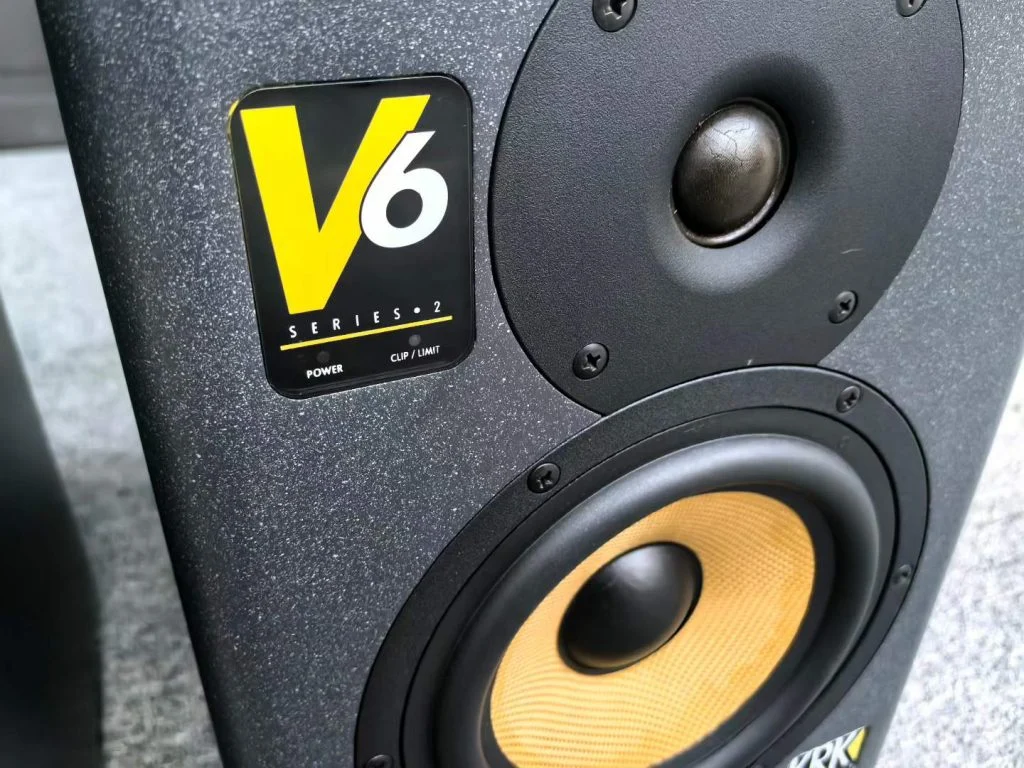
Here is the thing nobody tells you: the badge on our cabinets reads “V6 Series 3”, but KRK’s own website labels the same range “V SERIES 4”. Both labels were in circulation when this generation launched in 2014–2015 — the UK distributor printed “Series 3” in early trade sheets, and several retailers kept that name for years. The drivers and the cabinet are the same. If you are searching for either name, you have found the right speaker.
Specs worth knowing before you plug them in
- Drivers: 6.5″ woven Kevlar aramid woofer, 1″ Kevlar aramid dome tweeter with ferrofluid cooling
- Amplification: 155 W total bi-amped Class D — 90 W to the woofer, 65 W to the tweeter
- Response: 49 Hz – 24 kHz (±3 dB), crossover at 1.6 kHz
- Max SPL: 113 dB per cabinet
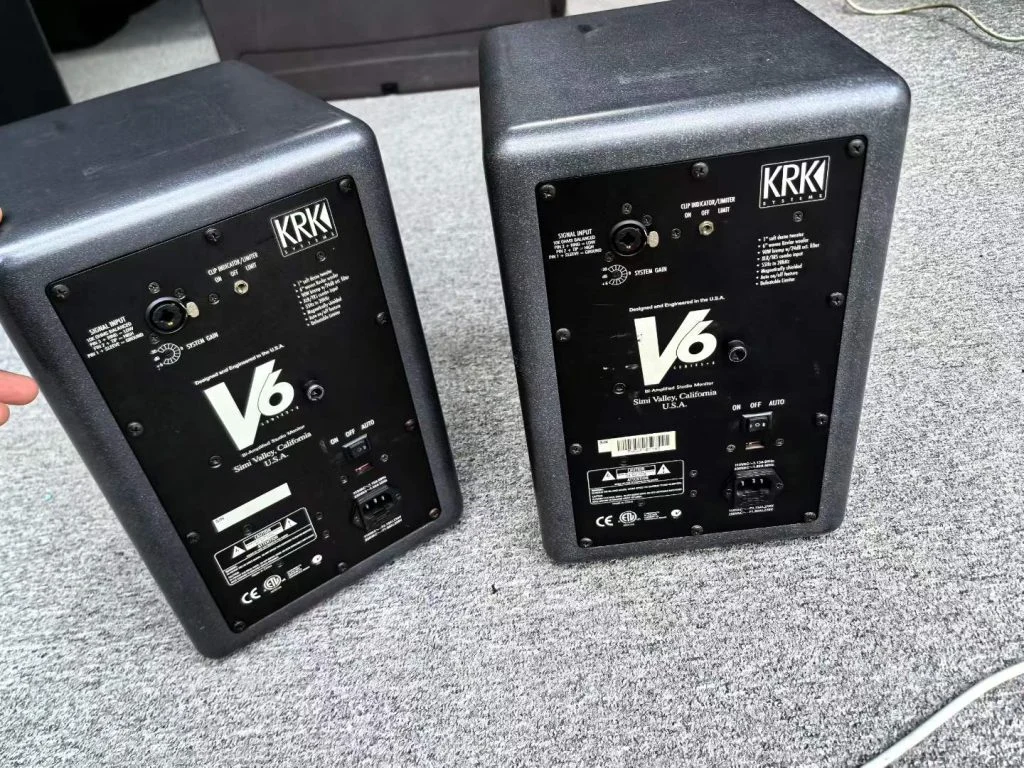
- Inputs: balanced XLR/TRS combo, unbalanced RCA, with rear-mounted volume and HF trim
- Cabinet: MDF with aluminium front baffle, front-firing slot port, 10.9 kg each
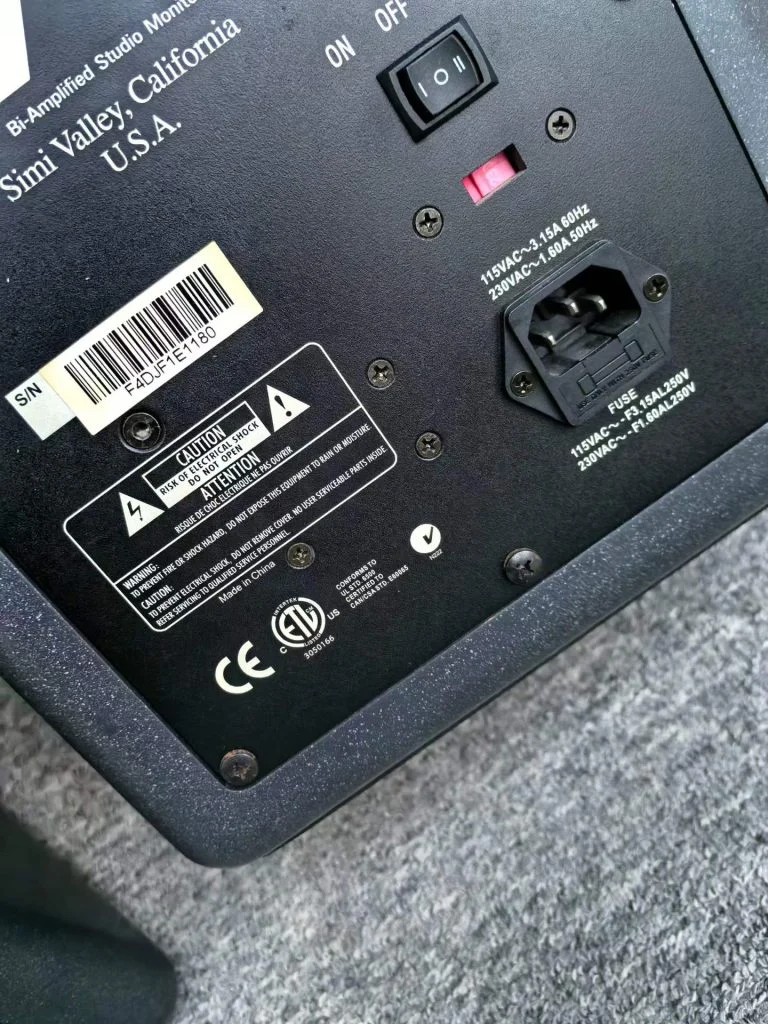
- Rear panel: ground lift switch and auto-standby, four M6 mounting points
Two details from those numbers are the ones buyers ask about. First, 49 Hz is honest for a 6.5-inch nearfield — you will want a sub if you mix anything with real low end, and pretending otherwise is how people end up with mixes that fall apart on a car stereo. Second, the front-firing port means you can push these closer to a wall than a rear-ported Rokit, which is the whole reason some small rooms end up with V Series instead.
How do you check condition on a used pair?
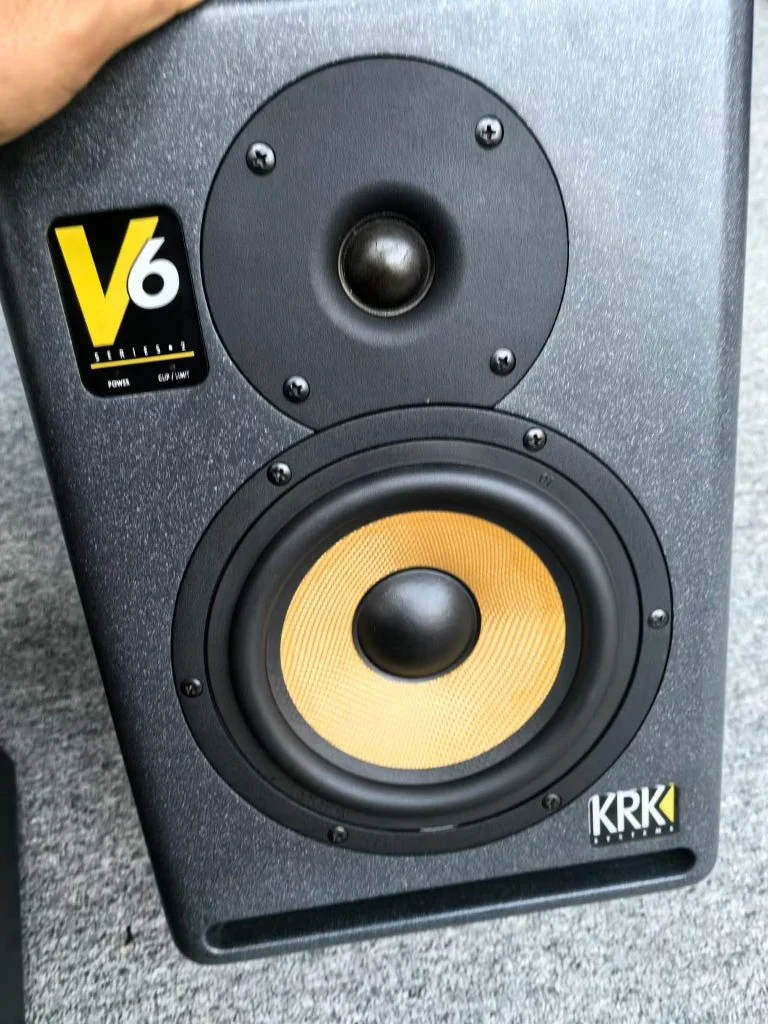
Old studio monitors fail in predictable places, and none of them are visible from three metres away. Our nine photographs are shot close — front baffle, cones, rear panel, both cabinets side by side — so you can zoom in on the parts that matter rather than guessing.
- Cones and surrounds: look for creases in the Kevlar and any cracking where the rubber meets the basket. Creases stay if someone pushed the cone in with a thumb; cracks mean UV or heat damage.
- Tweeter domes: a dented dome shifts the top end by a couple of dB. KRK’s dome is exposed, so this is the most common cosmetic hit.
- Rear controls: the trim and standby switches on these amps get scratchy before they fail outright. Wiggle them and listen for crackle.
- Port noise: sweep a low sine at low volume and listen at the slot. Chuffing means something is loose inside the box.
We did not power these up — the workshop is a warehouse with no treated room and no way to run a proper sweep. That is a deliberate call, not an oversight: we would rather tell you they are untested than sell you a “fully working” claim we cannot back. If you want a power-on video or a photo of anything specific, ask before you order and we will shoot it.
Who should buy a V6, and who should not
Buy these if you are setting up a first serious nearfield rig and you want a speaker that tells you the truth about your low mids. The V Series has less of the smiley-face EQ that made the Rokit famous, and for mixing that is usually what you want. If you want to compare against the high end before deciding, our Barefoot MicroMain27 listing shows what the next tier costs. They also make decent reference boxes in a second room, or a pair of playback speakers in a small edit bay.
Skip them if you are mixing bass-heavy genres in an untreated bedroom. At 49 Hz on the low end you will be guessing at everything under 60 Hz, and no amount of volume fixes that. It is the same reason we tell people buying a passive PA cabinet to check the crossover before the paint — the spec tells you where the limit is, and you work around it.
If you are pairing monitors with subs and need something to drive the low end, our K-array KO70 dual 21-inch active subwoofer is a different league, but it shows what a properly specified sub looks like on paper. For a rack-level view of the full category, browse the studio gear listings.
What does a used V6 pair actually cost?
A single V6 sells new for roughly 500–600 USD depending on region, so a used pair usually lands between 450 and 800 USD on the European and North American second-hand markets, with the price driven almost entirely by whether the amps still work. That range is why we are not printing a number here: a pair that powers on and sweeps clean is worth double a pair that does not, and we have not done that test.
Export changes the math. Shipping a 22 kg pair from Guangdong to a European port costs roughly 180–260 USD by sea LCL, plus insurance and the destination charges your forwarder quotes. We can combine these with other items on one pallet if you are buying multiple pieces, which knocks the per-unit freight down considerably.
Quick Answer
- A matched pair of KRK V6 active nearfields, 6.5″ Kevlar woofer and 1″ dome tweeter, 155 W bi-amped each.
- Frequency response 49 Hz – 24 kHz, which means you need a sub for real low-end work.
- The badge says “V6 Series 3”; KRK’s site calls the range “V SERIES 4”. Same speaker, two names.
- Cosmetically clean on both cabinets, untested electrically, priced on request, in stock now.
- Ask for a power-on video or extra close-ups before you commit — we will shoot them.
Want a quote on this pair, or on a full studio package with monitors, subs and interface? Send us the details and tell us the destination port. We answer within one working day and we quote freight separately so you can see what you are actually paying.