Three things, in this order: voltage compatibility, service history, and firmware version. Get those three answered before you look at a single photo of the cosmetics. Voltage decides whether the unit works at all in your country. Service history decides whether the faders have one more year in them. Firmware decides whether the deck talks to the rest of your rig.
Most buying guides start with cosmetics. That is backwards. A scratched deck that plays is worth USD 600. A mint deck that will not link to your library is worth nothing.
Why does voltage matter more than condition?
Because DJ gear is often region-locked by its power supply. Many controllers run on an external 12V brick that accepts 100-240V, which is fine anywhere. But club-standard media players and some mixers have internal supplies fixed to 120V or 230V. A 120V unit in Europe needs a step-up transformer of at least 1.5x its rated power, and a 230V unit in the US needs a step-down.
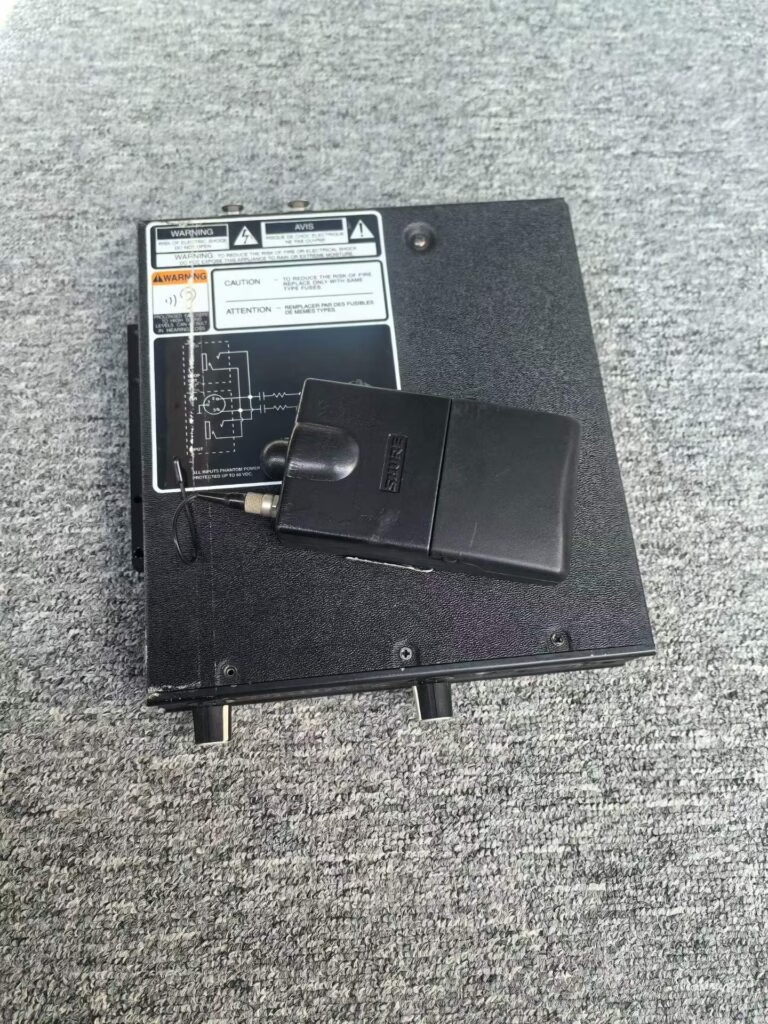
- Ask for a photo of the rear voltage label. Not the seller’s word — the label.
- If it is single-voltage, budget USD 60-150 for a transformer, and expect some hum.
- Transformers do not fix 50/60 Hz differences in older gear with AC motors. Turntables are the classic case.
Which faults are fatal, and which are just annoying?
| Fault | Verdict | Repair cost |
|---|---|---|
| Scratchy crossfader | Annoying | USD 60-150 |
| Dead cue button | Annoying | USD 20-50 |
| Worn jog bearing | Costly | USD 40-90 plus labour |
| Dead USB port | Fatal | Board-level, USD 250+ |
| No link between decks | Fatal | Often firmware or board |
| Burnt smell / no boot | Walk away | Uneconomical |
The dividing line is whether the fault lives on a connector or a board. Connectors are cheap. Boards are where used gear stops being a bargain.
What should the seller be able to show you?
A short video, filmed today, of the unit booting, loading a track from USB, playing with both channels live, and linking to a second deck if it is a pair. Fifteen seconds of unedited footage rules out about 80% of misdescribed listings.
Ask too for the total hours if the unit tracks it — most modern players do. Under 500 hours is barely used. Over 4,000 hours on a club deck means fader and jog wear is imminent. Sellers who track this are usually sellers who maintain their gear.
Is buying a full setup cheaper than buying piece by piece?
Usually yes, by 15-25%, because sellers of complete setups want it gone in one trip. The downside is that you inherit the weak item in the bundle. If the bundle is two decks, a mixer and a case, price the weakest item as if it were free — that is your real budget for repairs.
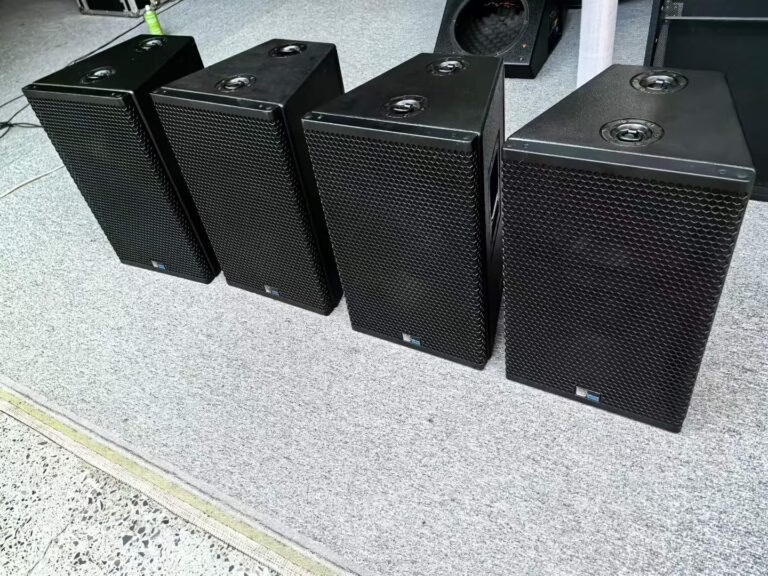
One structural point: DJ gear without a PA is a paperweight. If you are building a room from scratch, budget the speakers first. Our K-array KF12 listing is the kind of box that pairs with a booth setup without needing an amp rack, which keeps the total system small.
Should you buy at auction or from a dealer?
Auction gets you 20-35% below street if you know what you are doing, and a box of problems if you do not. Dealers charge more and, in theory, test. The practical rule for a first buy: dealer, with a return window. For your third buy, once you know the failure modes, auction is fine.
Wherever you buy, get the serial number in writing before payment. It is the only thing that protects you if the unit arrives different from what was described.
Key Takeaways
- Check voltage label, service history and firmware before cosmetics.
- Connector faults cost USD 20-150; board faults start at USD 250.
- Ask for a 15-second unedited video of the unit booting and playing.
- Total play hours above 4,000 means fader and jog wear is close.
- Bundles save 15-25% — price the weakest item as if it were broken.