Description
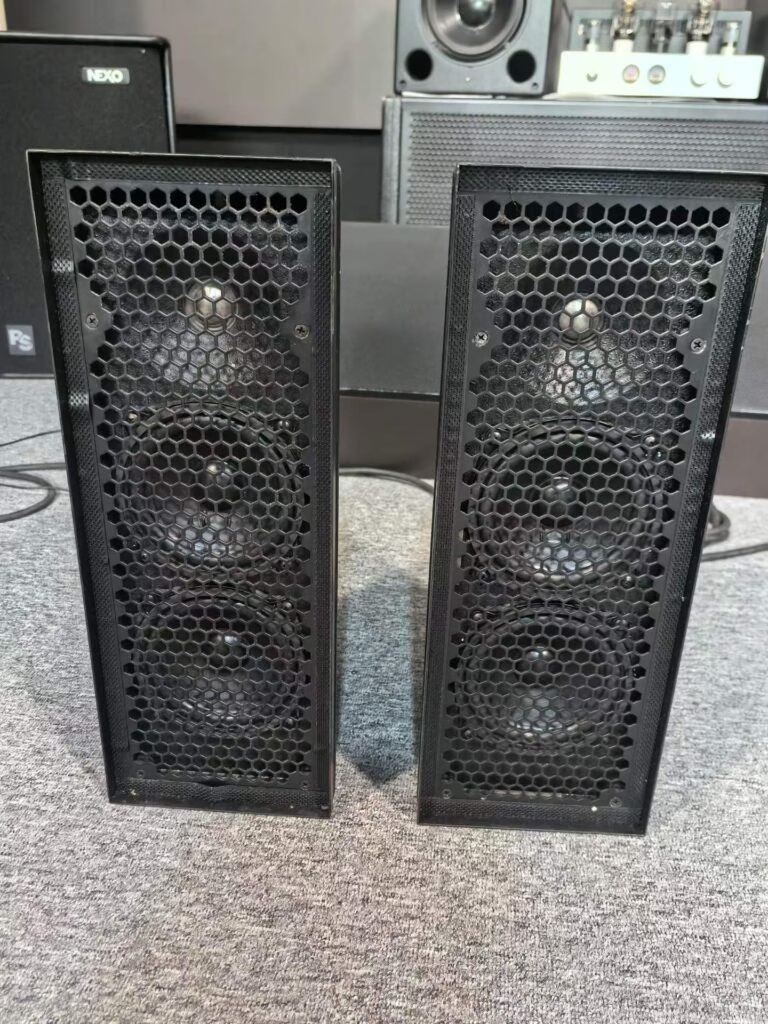
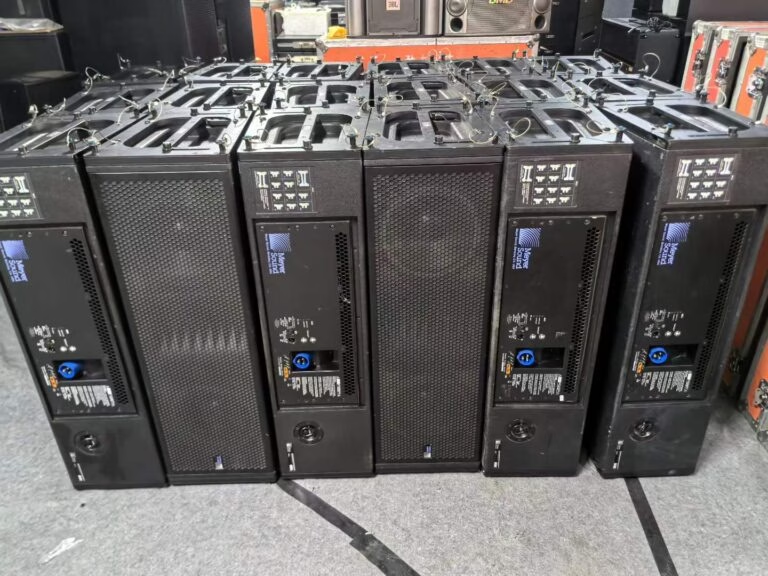
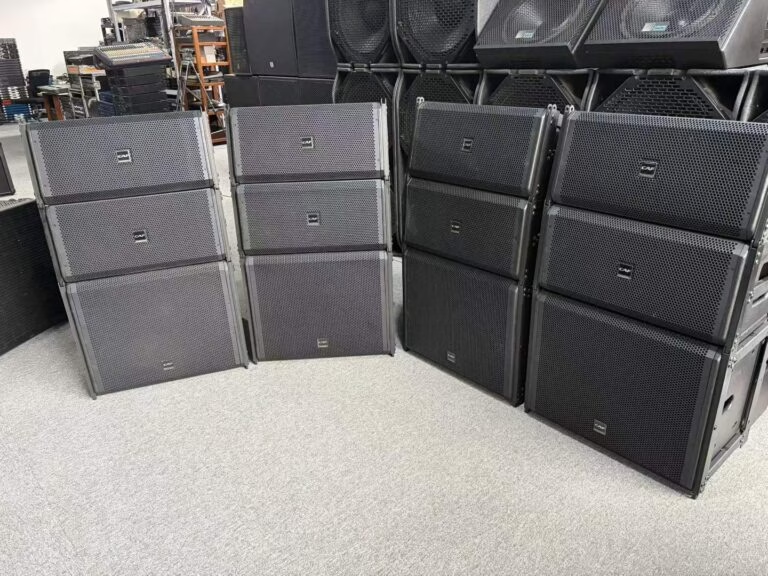
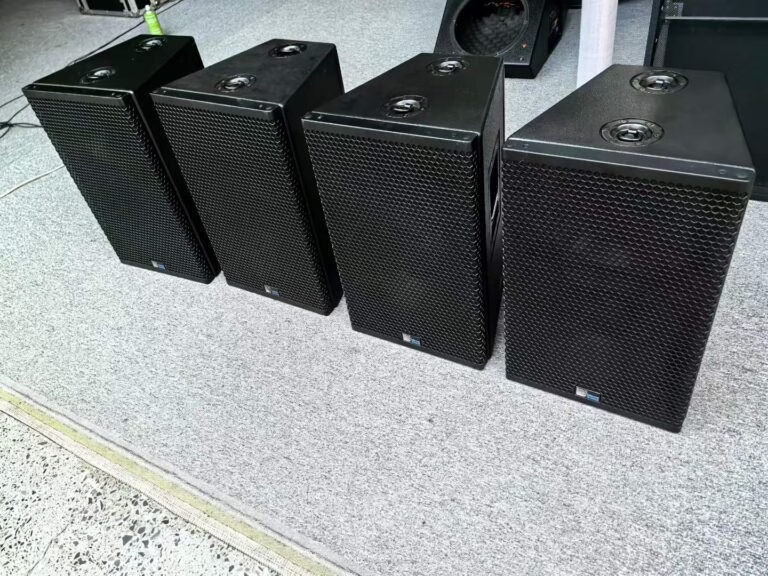
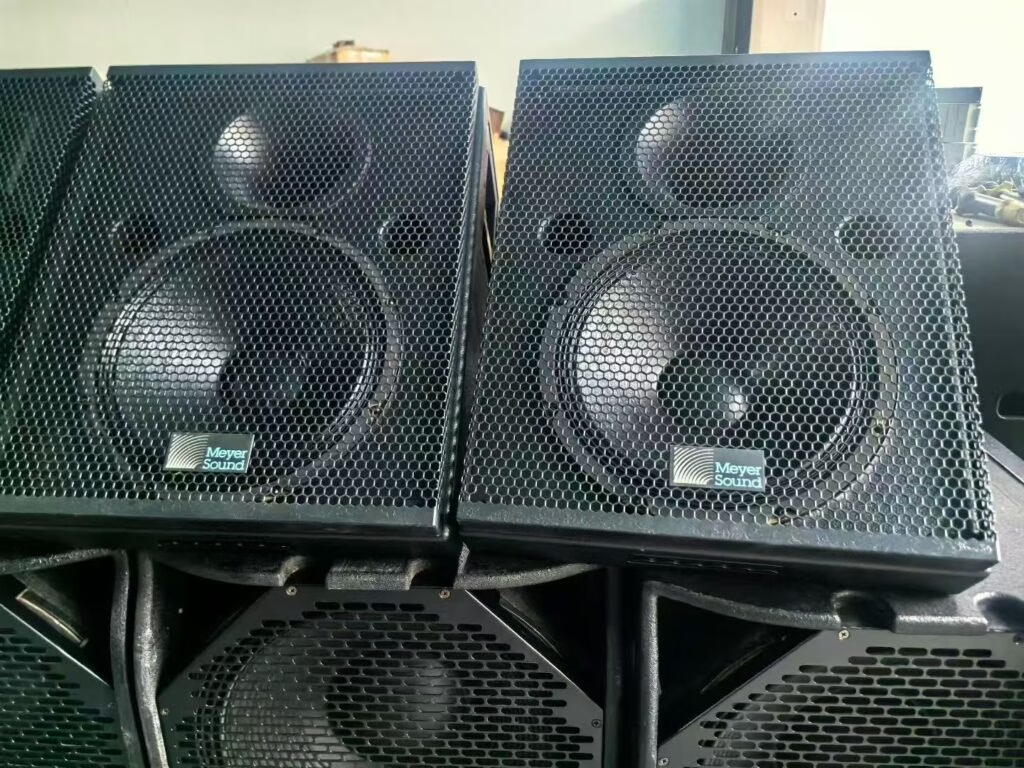
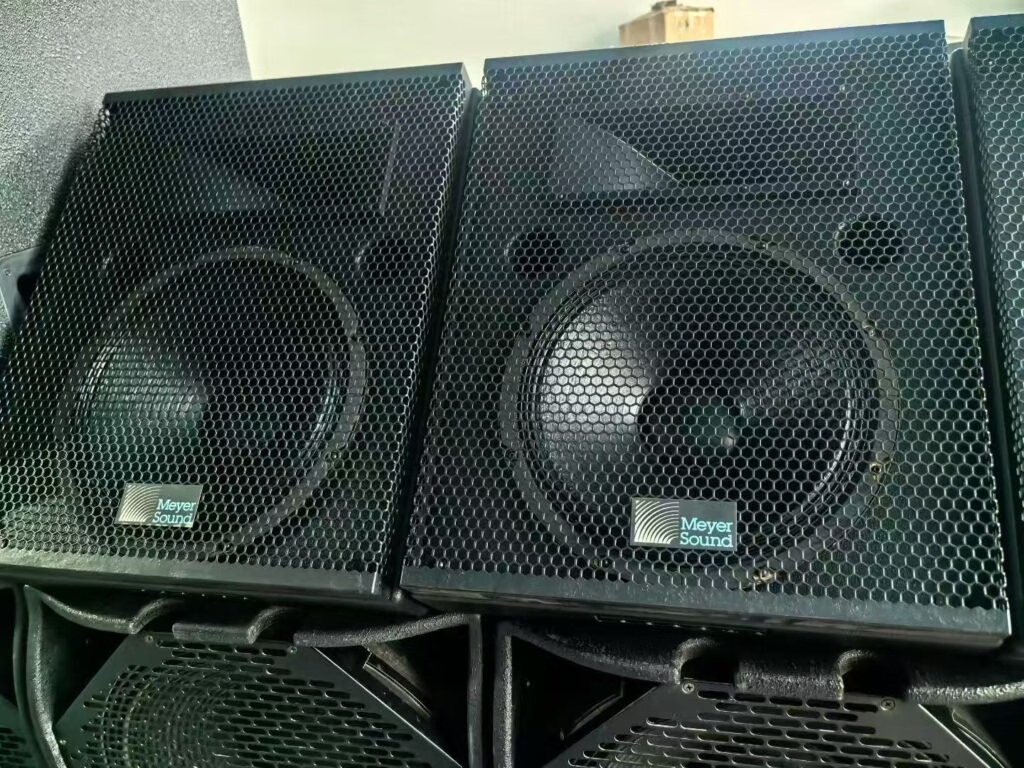
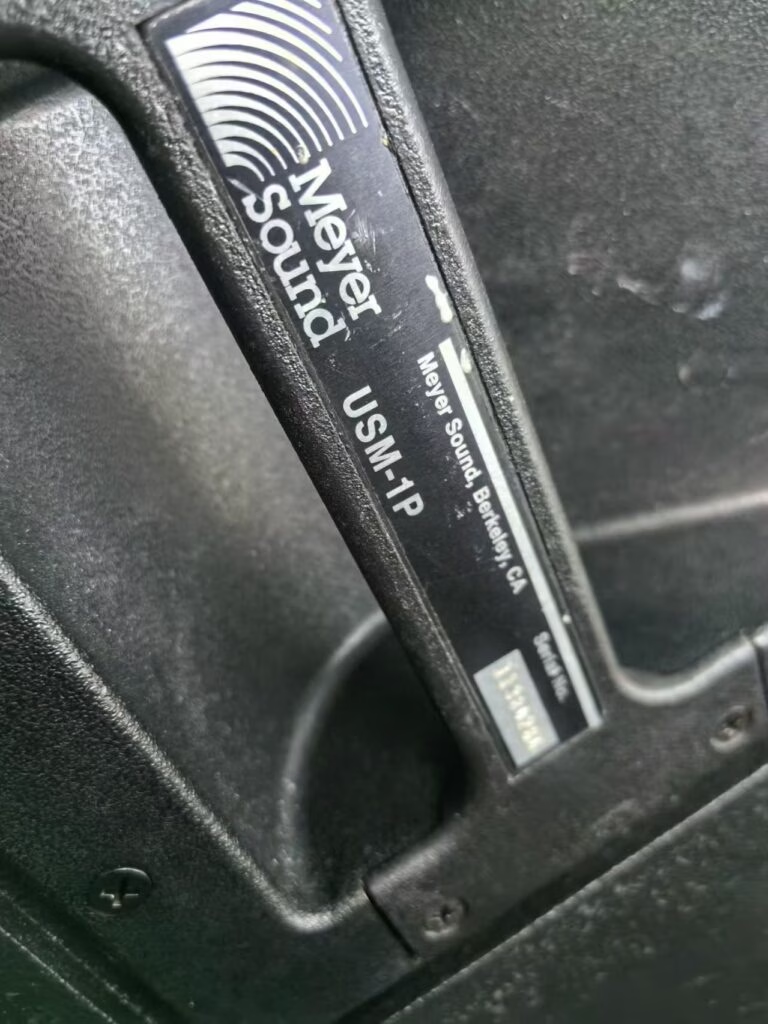
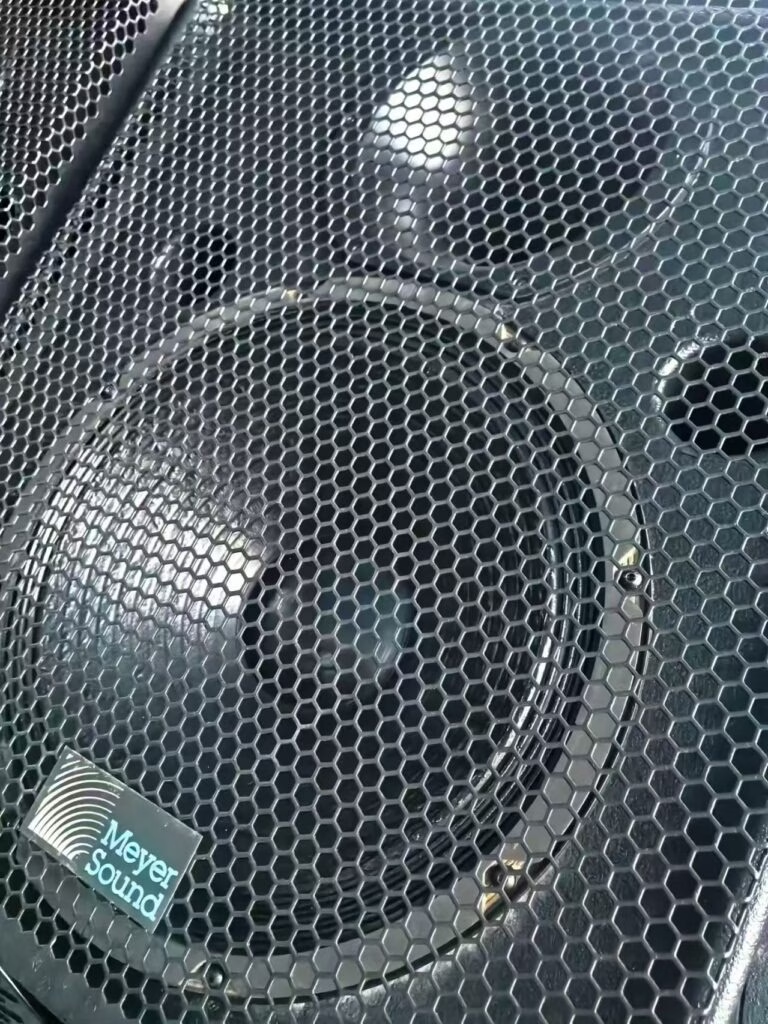
The Meyer Sound USM-1P is a self-powered stage monitor built around a 12-inch low-frequency driver and a 3-inch diaphragm compression driver, with a narrow 45° by 45° coverage pattern, a 700 W two-channel Class-D amplifier inside the cabinet, and 132 dB peak output at 1 m. This used unit is in excellent working condition and available now from stock. Price on application.
The USM-1P is the smallest of Meyer Sound’s dedicated wedge monitors, and it exists for one reason: to give a vocalist a loud, clean, tightly controlled slice of the mix without turning the stage into a feedback chamber. Everything about the design serves that goal — the 45° conical coverage, the DSP phase correction, the integral limiting, the fact that there is no amplifier rack and no long speaker cable run between the console and the performer’s feet.
Monitors are the hardest job in a live rig. A wedge sits a metre from a singer’s face, fires straight up into a microphone, and has to deliver a full-range mix at a level that competes with the backline — all while staying stable. The USM-1P was designed by people who understood that the way to win that fight is not more power but better control, and that is exactly what it delivers.
What is the Meyer Sound USM-1P used for?
Its primary job is floor-monitor duty for lead vocals and featured instruments in live performance. Set at the front of the stage, angled up at the performer, the 45° by 45° pattern keeps the energy in a tight cone around the singer’s head rather than spraying sideways into the drum kit or up into the microphone’s rear null. That is why the USM-1P is a fixture on touring stages and in mid-size venues where the monitor mix has to be loud and clear without a fight.
Beyond floor wedges, the same cabinet works as a side-fill or drum-fill in tight spaces, a front-fill under a main system, or an installed monitor in theatres, churches and broadcast studios where a compact, self-powered, pattern-controlled speaker is more useful than a big wide box. Some engineers also use pairs as close-field reference monitors in a control room or rehearsal room, because the narrow pattern makes them behave like a very large nearfield.
Why does the 45° × 45° pattern reduce feedback so effectively?
Feedback happens when the microphone hears the monitor. A wide-pattern wedge throws energy everywhere — walls, ceiling, the back of the mic — and every one of those reflections eventually finds its way back into the capsule. A 45° conical pattern concentrates the same acoustic output into a much smaller volume of air, so for a given level at the performer’s ears, far less energy is arriving anywhere the microphone cares about.
That geometry is what the USM-1P is famous for. It is not a mellow-sounding box; it is a precise one. In practice you get more usable gain before feedback, which means the singer hears themselves properly at a level that does not smear the front-of-house mix. For a lead vocalist who needs to place their pitch against a loud band, that headroom is the difference between a comfortable show and a constant fight with the console.
Meyer Sound USM-1P specifications
| Type | Self-powered stage monitor (floor wedge), two-way |
| Low frequency | 12-inch cone driver |
| High frequency | 3-inch diaphragm compression driver |
| Coverage | 45° horizontal × 45° vertical (conical) |
| Frequency response | 40 Hz – 18 kHz (±4 dB) |
| Maximum SPL | 132 dB peak at 1 m |
| Amplification | Two-channel Class-D, 700 W total, self-powered |
| Crossover | 1000 Hz, active, with onboard DSP phase correction and limiting |
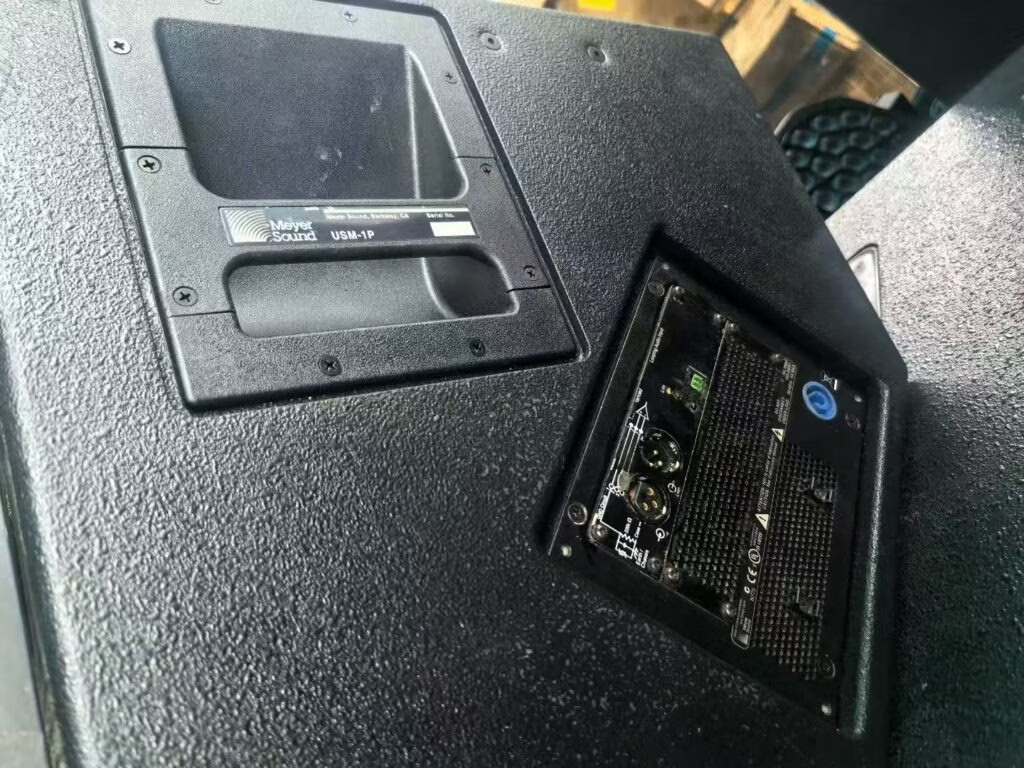
| Inputs and outputs | Balanced XLR input with XLR loop-through |
| Power | PowerCon AC inlet, with status indicator LEDs |
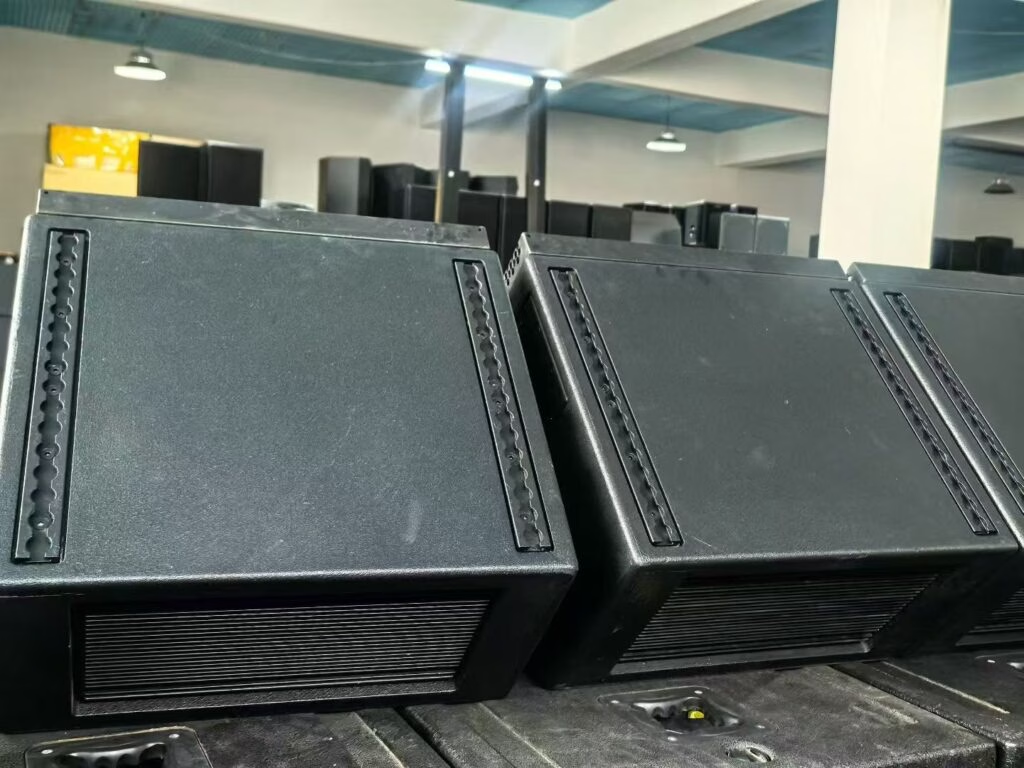
| Enclosure | Monitor wedge format, black textured finish |
| Condition | Used, excellent, available from stock |
What does 132 dB peak and 700 W of Class-D actually mean on stage?
It means the USM-1P will sit on the floor in front of a loud rock band and still put the vocal on top of it. 132 dB peak is a genuinely high figure for a 12-inch wedge, and because it comes from an amplifier and processing designed together, the level stays clean rather than turning brittle as you push it. The 700 W is split across the two drivers by an active crossover at 1000 Hz, with the DSP managing phase alignment between them so the handover is not audible.
The integrated limiting is the part working engineers appreciate most. When a performer suddenly leans into the mic or the console sends a transient spike, the onboard protection catches it instead of letting the compression driver complain. A wedge that survives a full tour without a blown diaphragm is worth more than one with a bigger spec sheet.
Do you still need an amplifier rack with the USM-1P?
No — and that is the whole point of the design. Each USM-1P is a complete system: mains power in, balanced audio in, XLR loop out to the next wedge. There is no amp rack to patch, no speaker cable to run across the stage, and no mismatch between amplifier and driver to worry about, because Meyer Sound matched them at the factory. On a multi-wedge stage you daisy-chain the loop-through and you are done.
For touring, that means fewer cases, less weight in the truck and a faster load-in. For a fixed installation — a church, a theatre, a club — it means you can put a monitor where the performer needs it without designing a power-amplifier location for it. The trade-off is that each cabinet needs its own AC outlet, which on a modern stage is a much easier problem than patching an amp rack.
Is a used Meyer Sound USM-1P a good buy?
For the right buyer, yes. The USM-1P is out of production, but it remains one of the most respected compact wedges ever built, and used examples hold their value because working engineers know exactly what they are getting. Compared with a new powered wedge of similar output, a used USM-1P costs a fraction of the price while offering pattern control and build quality that most current budget boxes cannot match.
The honest caveat is service. These are older cabinets, and the parts that eventually need attention are the amplifier module and the drivers. Meyer Sound’s support network is well established and parts are obtainable, so a check-up is a maintenance cost rather than a dead end. Buy it knowing it is a professional tool that may want a service, and it will keep earning its place on stage for years.
How does the USM-1P compare with other Meyer Sound monitors?
The USM-1P is the compact 12-inch wedge in the family; the larger Meyer Sound USM-1P 15-inch stage monitor adds low-end weight and output for bigger stages and louder acts, while the Meyer Sound UM-1P and UM-100P self-powered stage monitors cover the same monitoring brief in a different cabinet generation. If your stage needs a compact, tightly patterned vocal wedge that is easy to place and hard to make feed back, the 12-inch USM-1P is the natural pick; if you need to move air for a loud drummer or a bassist, step up.
The other comparison worth making is against a full-range cabinet like the Meyer Sound UPA-1P self-powered loudspeaker. The UPA is a 100° by 40° box intended for main PA and side-fill; the USM-1P is a 45° by 45° box intended to be close to a performer’s head. They share the self-powered philosophy, but they solve different problems, and a well-equipped stage usually wants both.
Why buy from Used Sound Equipment?
We specialise in professional audio gear sourced from China and shipped worldwide. Every monitor is inspected and tested before it leaves us, and where you need a matched pair or a full set of wedges we can supply multiples rather than a single unit. Price for this USM-1P is on application, so tell us how many you need, what console you are driving them from and where they are going, and we will put together the right package — including other Meyer Sound monitors and system components you may be looking for.
Key Takeaways
- The Meyer Sound USM-1P is a self-powered 12-inch stage monitor with a 3-inch compression driver and a 45° × 45° conical coverage pattern.
- A 700 W two-channel Class-D amplifier, 1000 Hz active crossover, DSP phase correction and limiting are all built into the cabinet.
- Rated 132 dB peak at 1 m with a 40 Hz – 18 kHz (±4 dB) response.
- The narrow pattern is the point: more gain before feedback and a tighter monitor mix for lead vocals.
- Balanced XLR in and loop-out plus PowerCon mains mean no amplifier rack and no speaker cable runs.
- Best suited to floor-monitor duty, side-fill, front-fill and installed monitoring in theatres, churches and clubs.