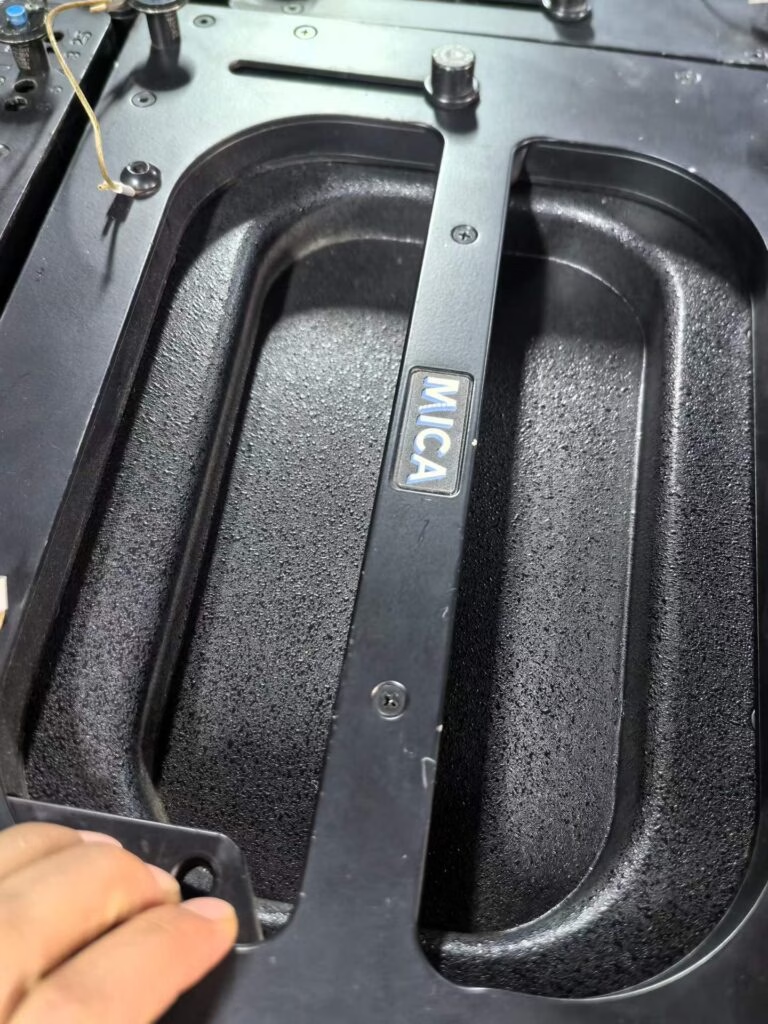
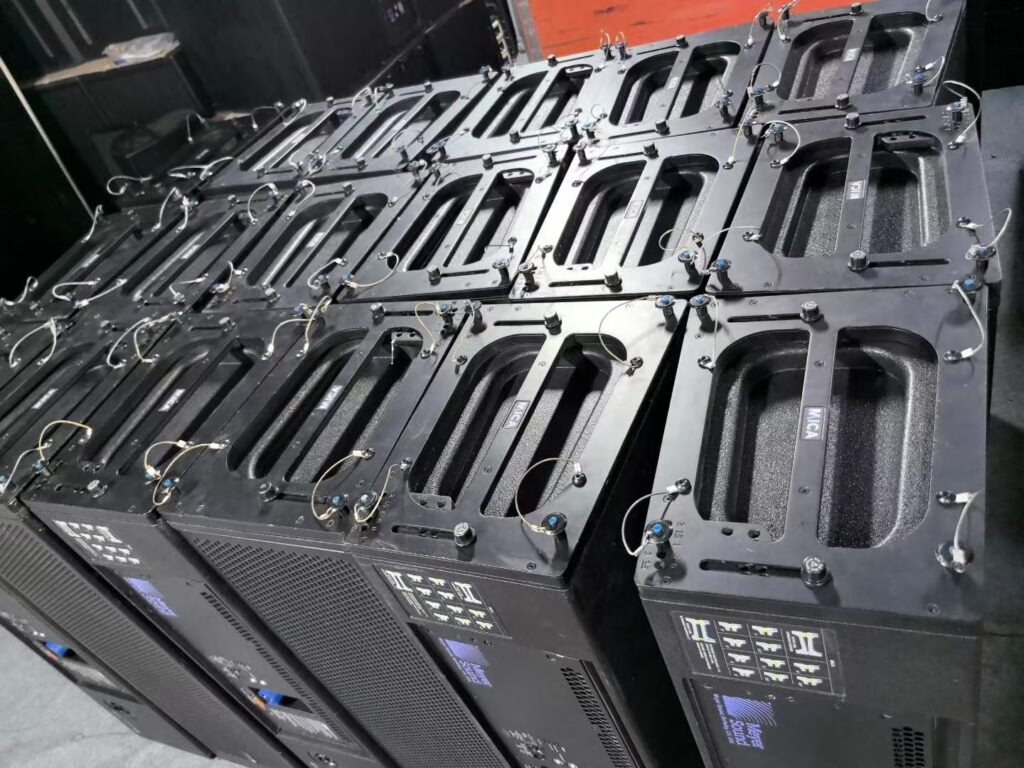
Description
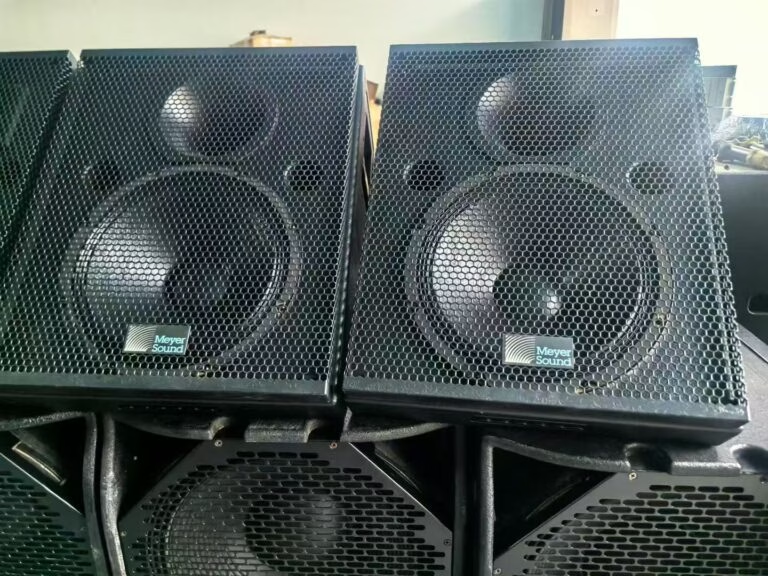
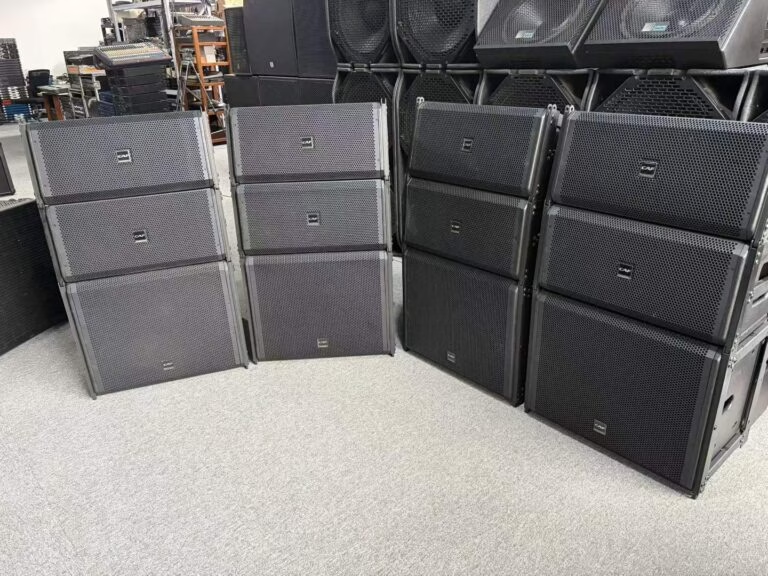
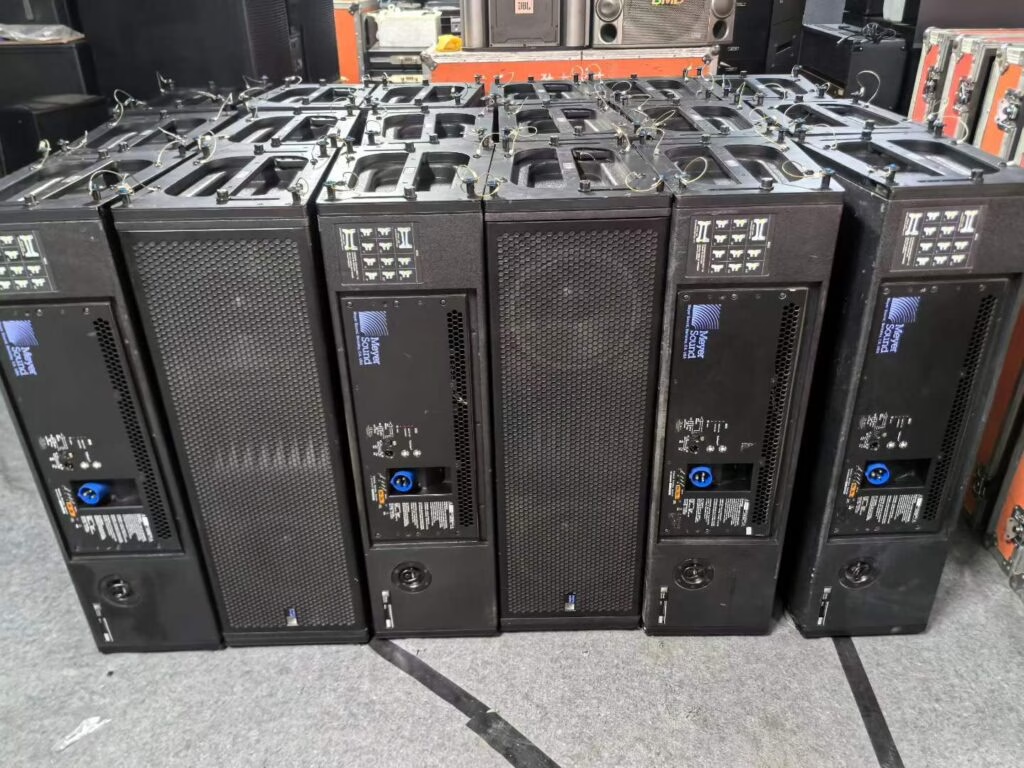
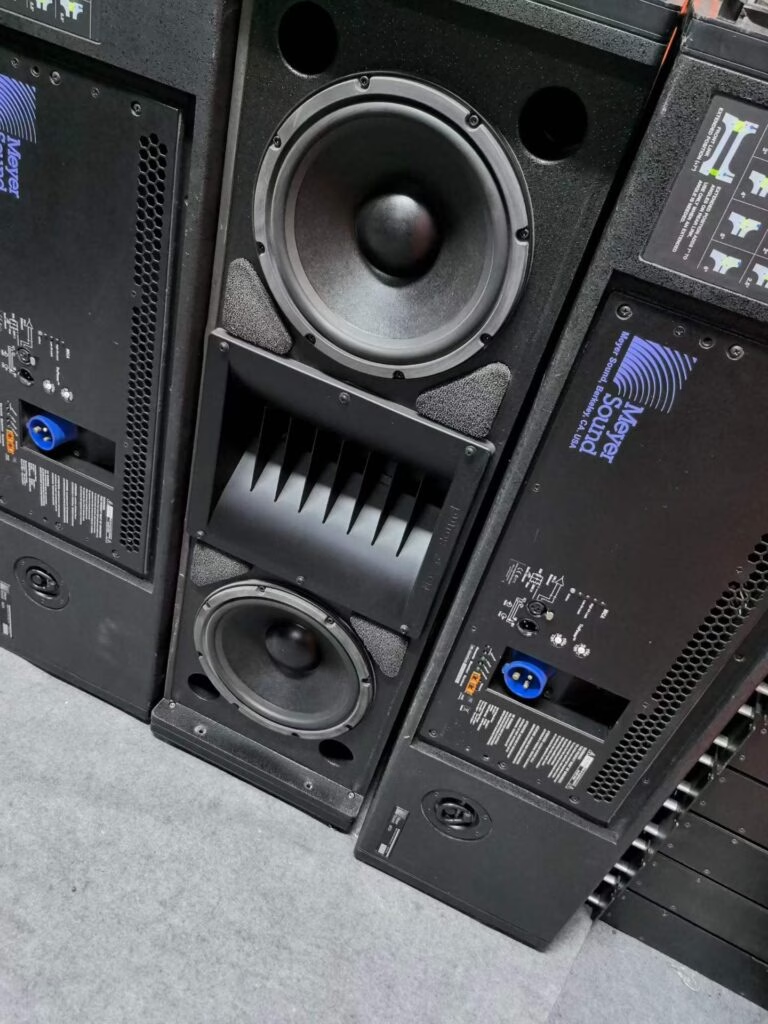
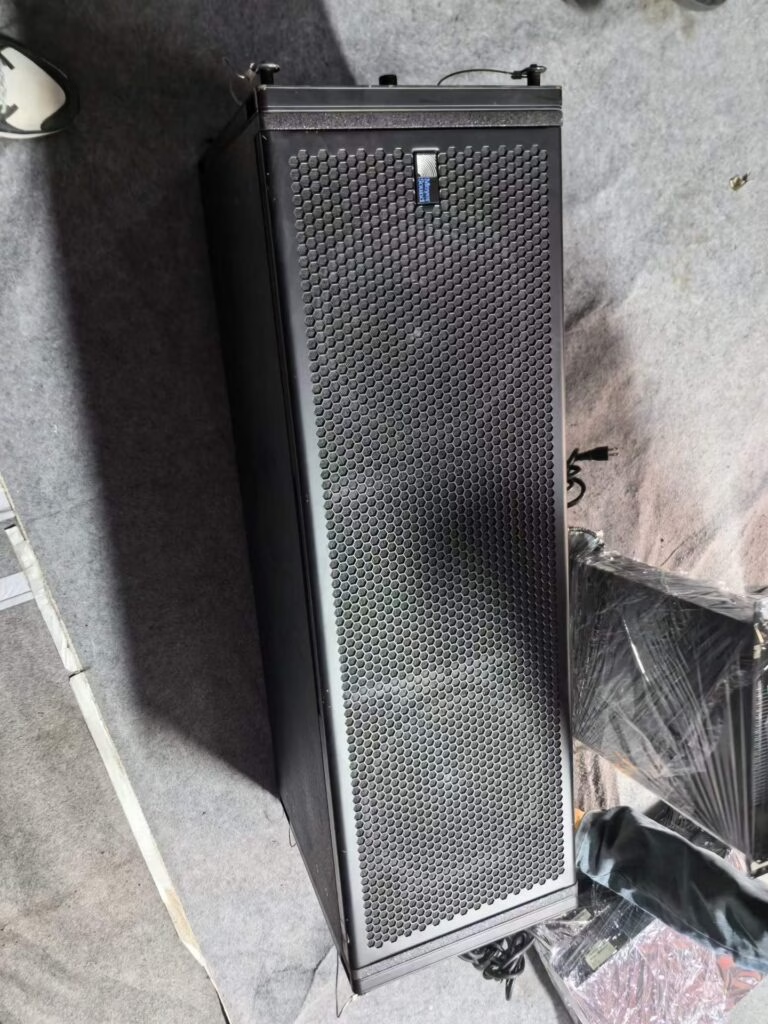
The Meyer Sound MICA is a self-powered, two-way line array element built around two 10-inch low-frequency drivers and a 1.5-inch high-frequency compression driver, with TruPower amplification, onboard processing, limiting and phase correction, 100° horizontal coverage, 137 dB peak output at 1 m and a 60 Hz – 18 kHz (±4 dB) response. This used element is in excellent working condition and available now from stock. Price on application.
MICA — the Meyer Compact Array — was designed for the middle of the market: shows and venues too big for point-source boxes and too modest for a full-size festival hang. Each element is a compact, self-powered cabinet with its own amplifier, DSP and rigging hardware, and the vertical coverage is not fixed in the box at all. It comes from how you hang the array, which is the whole idea behind a line array.
That combination — self-powered, genuinely compact, and fully riggable — is why MICA elements are still working hard in rental inventories, theatres and sports halls years after they left the factory. A hang of MICA per side over 600-HP subwoofers remains one of the most cost-effective ways to cover a 1,000 to 3,000 seat room with real professional sound.
What is the Meyer Sound MICA used for?
MICA is the main PA in mid-size and large rooms: theatres, auditoriums, sports halls, churches with difficult acoustics, corporate general sessions and mid-size festival stages. A typical hang is eight to twelve elements per side, flown from a grid or bumper, with the array curvature set so the coverage follows the audience geometry from the front rows up to the back of the balcony.
It also works as side-hangs in larger venues, as delay hangs in long rooms, and as a central cluster for speech-heavy events where a single point source cannot cover the room evenly. Because each element carries its own amplifier and processing, the system scales in the simplest possible way: add elements to the hang, and you have more array, with no amplifier channels to count and no speaker cable runs to the grid.
Why does the vertical coverage come from the hang and not the box?
Because that is what makes a line array a line array. Each MICA element has a horizontal pattern of 100°, which you choose once when the array is aimed. Vertically, the elements couple with each other: the more of them you hang, the more tightly the array controls its vertical spread, which is how a well-designed hang throws clean, even sound to the back of a hall without blasting the front rows.
Setting that curvature — the inter-element angles — is the real skill in flying a MICA array, and it is why Meyer Sound’s prediction software and rigging frames matter as much as the boxes themselves. A MICA array aimed properly sounds remarkably consistent from the first row to the last; aimed badly, no amount of processing saves it. The good news is that the box itself stays out of the way: onboard phase correction and limiting keep each element behaving predictably whatever angles you dial in.
Meyer Sound MICA specifications
| Type | Self-powered two-way line array element |
| Low frequency | 2 × 10-inch cone drivers |
| High frequency | 1 × 1.5-inch diaphragm compression driver |
| Horizontal coverage | 100° |
| Vertical coverage | Determined by array curvature and splay angles |
| Frequency response | 60 Hz – 18 kHz (±4 dB) |
| Maximum SPL | 137 dB peak at 1 m |
| Amplification | TruPower self-powered module with onboard DSP, limiting and phase correction |
| Inputs and outputs | Balanced XLR input with XLR loop-through |
| Power | PowerCon AC inlet |
| Rigging | Integrated flying hardware for array suspension |
| Condition | Used, excellent, available from stock |
What does 137 dB peak mean for a compact element?
It means MICA is loud in the way that matters: not just on a spec sheet, but in a real hang where each element only needs to cover a slice of the audience. Because the array shares the work across many boxes, individual elements never have to run at their limit to fill a hall, which is why a MICA rig sounds composed at high levels instead of strained.
The two 10-inch drivers give the element enough low-mid weight to cross over cleanly to subwoofers without a hole in the response, and the 1.5-inch compression driver on a 100° horizontal horn carries the vocal range with headroom. Meyer’s TruPower limiting is the safety net that keeps that behaviour consistent night after night, tour after tour.
Do you need a 600-HP subwoofer with MICA?
For music, essentially yes — MICA is specified from 60 Hz up, so the bottom octave comes from subwoofers. The Meyer Sound 600-HP self-powered subwoofer is the standard companion: dual 15-inch drivers, TruPower amplification, and the same self-powered, no-amp-rack workflow as the array. A MICA hang per side over 600-HPs is the classic Meyer system for mid-size venues, and the two are designed to work together.
For pure speech — conferences, lectures, worship services — a MICA array can run full range on its own and sound perfectly natural, because speech lives well above 60 Hz. It is only when you need kick drum, bass guitar and playback music at level that the subwoofers become essential.
Is a used Meyer Sound MICA a good buy?
For a rental company, venue or production house that needs professional line array capability without a new-system budget, yes. MICA elements are out of production but remain highly regarded, and used examples hold their value precisely because engineers know how they behave. Compared with a new self-powered line array of similar output, a used MICA hang costs a fraction of the price.
The honest caveats are rigging and service. Flying hardware must be inspected and certified before it goes overhead — that is non-negotiable, and you should budget for it. Amplifier modules and drivers are the parts that eventually need attention, and Meyer Sound’s support network is well established with parts obtainable. Buy a used MICA hang understanding that it is professional equipment that deserves a proper inspection, and it will keep earning its place on the grid for years.
How does MICA compare with other Meyer Sound systems?
MICA sits between the compact point-source cabinets and the large-format arrays. If you are covering a club, a ballroom or a house of worship without flying, the Meyer Sound UPA-1P self-powered loudspeaker does that job with a 100° by 40° pattern and no rigging. If you need line array behaviour — long throws, even coverage from front to back, a hang that looks and sounds like a real tour system — MICA is the step up.
For monitoring on the same stage, the Meyer Sound USM-1P 12-inch stage monitor shares the self-powered philosophy and keeps the stage side of the rig consistent with the audience side.
Why buy from Used Sound Equipment?
We specialise in professional audio gear sourced from China and shipped worldwide. Every element is inspected and tested before it leaves us, and where you need a full hang rather than a single cabinet we can supply multiples so your array is matched. Price for this MICA element is on application, so tell us how many elements you need, what room you are covering and whether you want 600-HP subwoofers with them, and we will put together the right package — including rigging frames and other Meyer Sound system components you may be looking for.
Key Takeaways
- The Meyer Sound MICA is a self-powered two-way line array element with 2 × 10-inch low-frequency drivers and a 1.5-inch compression driver.
- Horizontal coverage is 100°; vertical coverage is set by the array curvature and splay angles, not by the cabinet.
- Rated 137 dB peak at 1 m with a 60 Hz – 18 kHz (±4 dB) response and TruPower amplification with onboard DSP and limiting.
- Balanced XLR in and loop-out plus PowerCon mains mean no amplifier racks; integrated hardware handles flying.
- Pairs with the Meyer Sound 600-HP subwoofer for full-range music systems in theatres, halls and mid-size venues.
- Used elements are strong value, but flying hardware must be inspected and certified before use.