Description
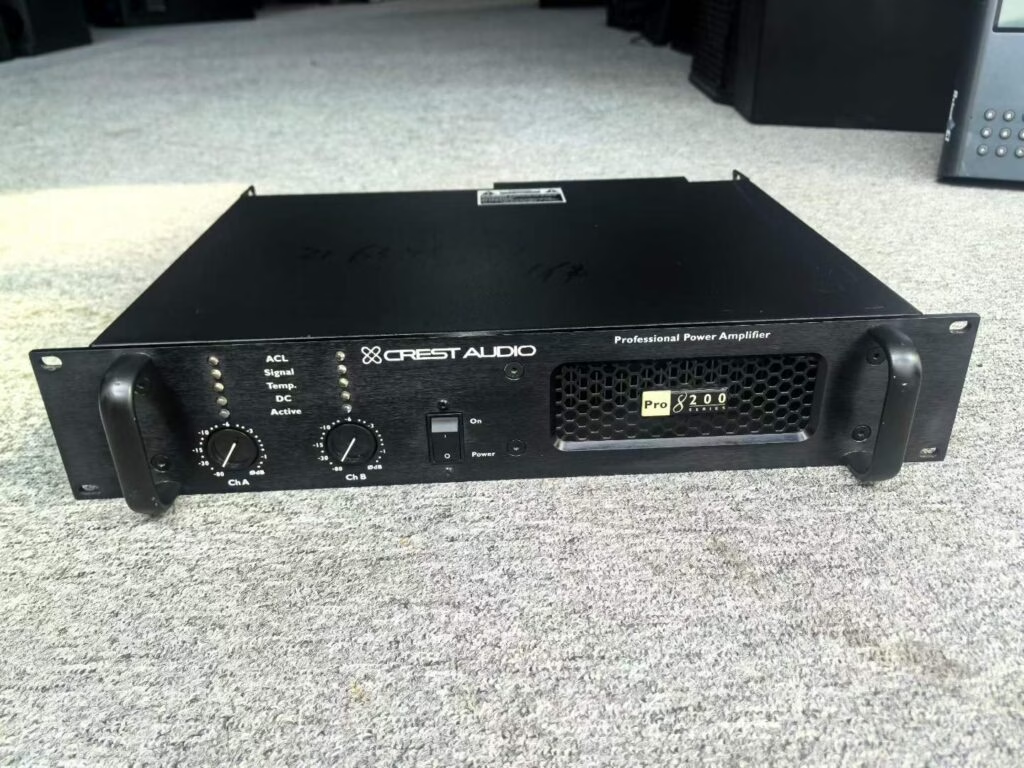
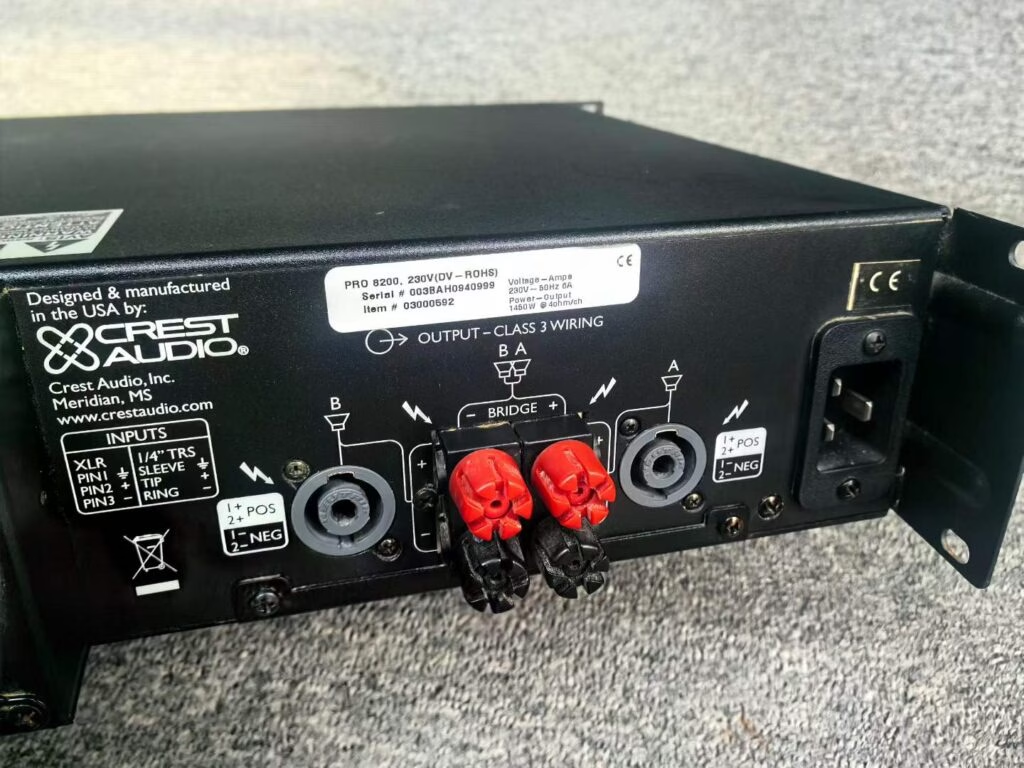
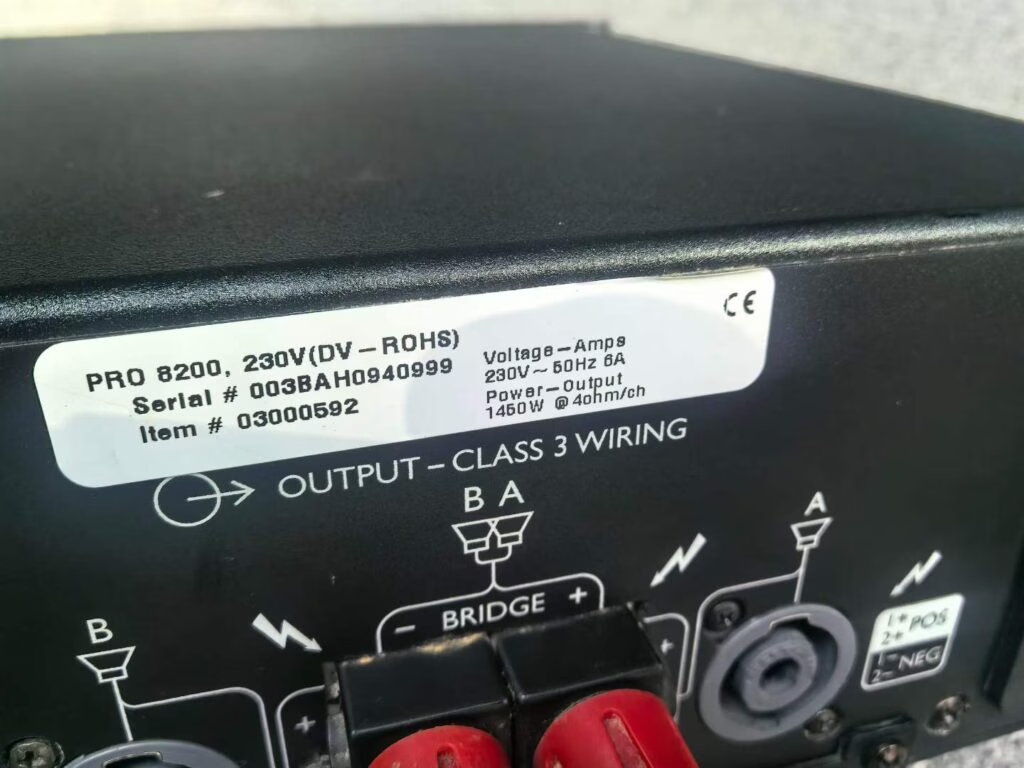
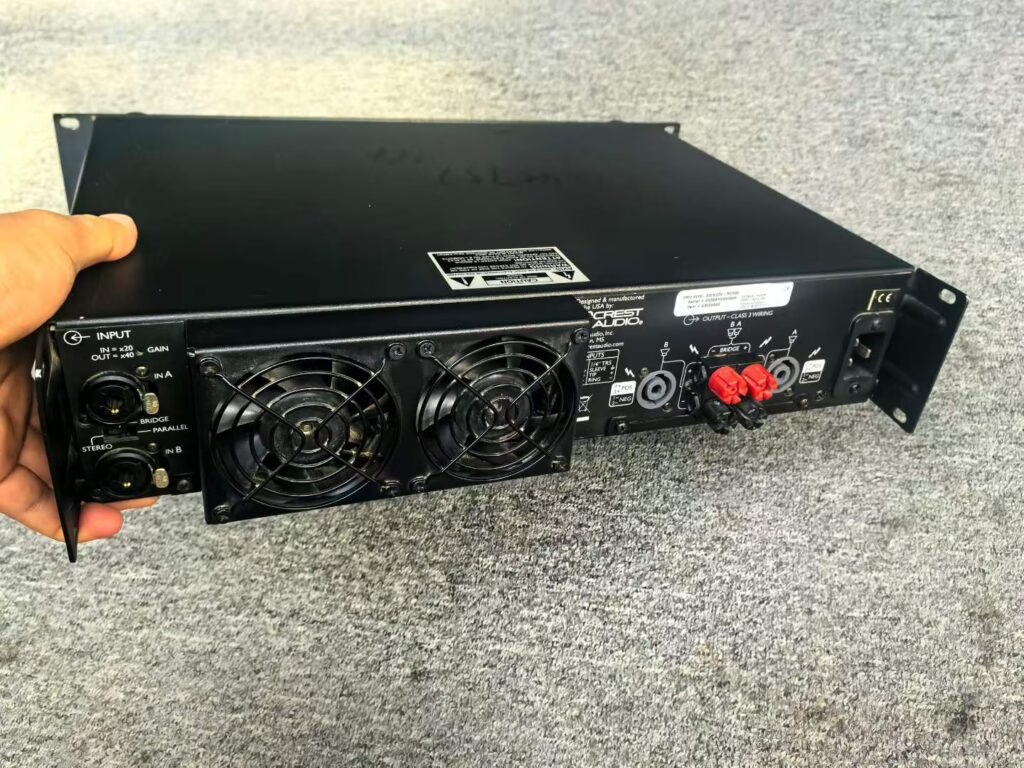
The short answer: this is a Crest Audio Pro 8200, the two-channel 800 W per side power amplifier from the Crest Professional series, in stock now with the price on request. It is the rack-mount workhorse that powered a generation of club systems, monitor racks and install loudspeakers before everyone moved to powered boxes. The one in these photos is a complete, working unit with its handles, front panel intact and both channels tested.
What is the Crest Audio Pro 8200?
The Pro 8200 is a two-channel Class AB power amplifier from Crest Audio, a brand that has been making touring amplifiers out of the United States since the 1980s and became part of the Peavey Commercial Audio group. The Pro series sat below the flagship CA and later Pro-Lite ranges: heavier, more conventional, and considerably cheaper per watt.
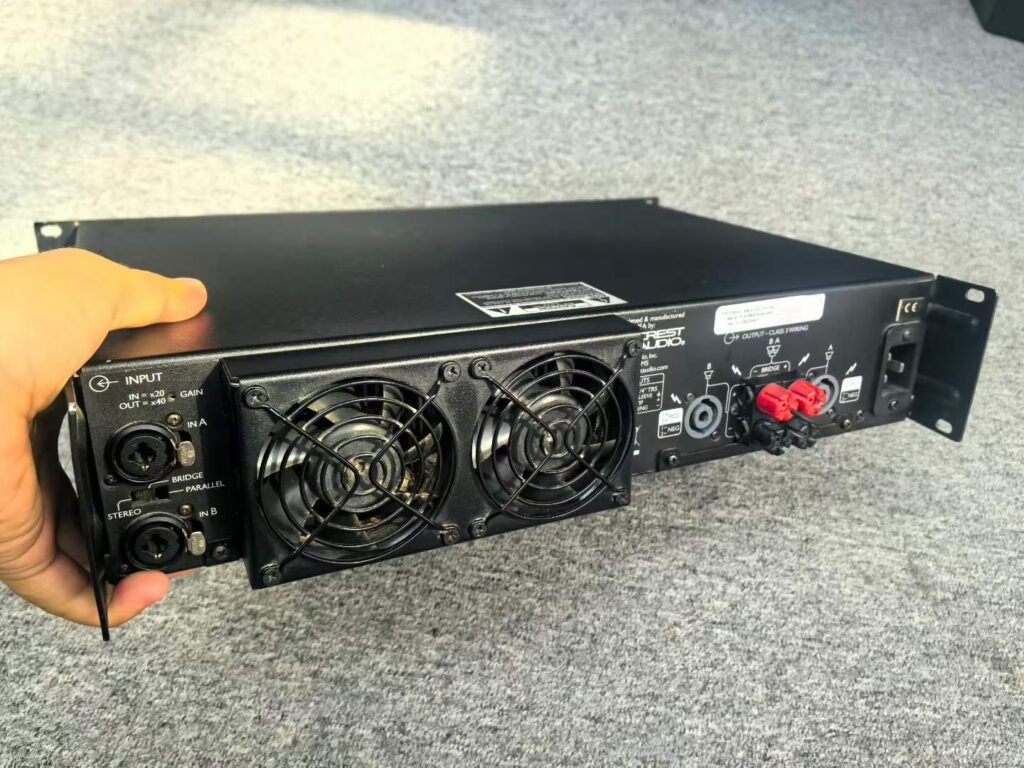
The 8200 is the biggest of the Pro 200 / 4800 / 8200 family. Crest rates it at 800 W per channel into 4 ohms and 1200 W bridged into 8 ohms, with the 2-ohm figure quoted higher again in the manual — we would not run these at 2 ohms for long today, and you will read why below. It is a 2U chassis, fan cooled, with a rear panel carrying XLR inputs, binding post and Speakon outputs, and a ground lift switch.
Specifications
| Parameter | Detail |
|---|---|
| Type | Two-channel power amplifier, Class AB, 2U rack mount |
| Power per channel (8 ohms) | 450 W per channel, 20 Hz–20 kHz, 0.1% THD |
| Power per channel (4 ohms) | 800 W per channel, 1 kHz, 1% THD |
| Bridged mono | 1200 W into 8 ohms |
| Inputs | XLR female, electronically balanced, 20 k ohm |
| Outputs | Speakon and binding posts per channel |
| Front panel | Two gain knobs, ACL, Signal, Temp, DC and Active LEDs per channel |
| Protection | ACL automatic clip limiting, thermal, DC and short circuit |
| Cooling | Variable speed front-to-rear fan |
| Rack height | 2U, rack ears and side handles fitted |
| Approximate weight | 18 kg |
The 8200 was built to drive four-ohm monitor wedges all night
If you have ever run a wedges-from-FOH setup with passive monitors, you know the drill: the amp is the part that fails. Crest designed the Pro series for that job specifically, and the 8200’s headline figure of 800 W a side into 4 ohms is aimed at exactly the kind of load a pair of 15-inch wedges presents. Two wedges per channel, four wedges per amplifier, one 2U space.
The reason people still ask for these specifically is the ACL circuit. Automatic Clip Limiting watches the output and pulls the gain back before the amplifier hard clips, which turns a badly driven monitor mix into something that sounds squashed rather than a blown HF diaphragm. It is not a substitute for setting gain properly and it will not save a driver from a dead short, but on a loud stage it is the difference between finishing the set and going home with a repair bill.
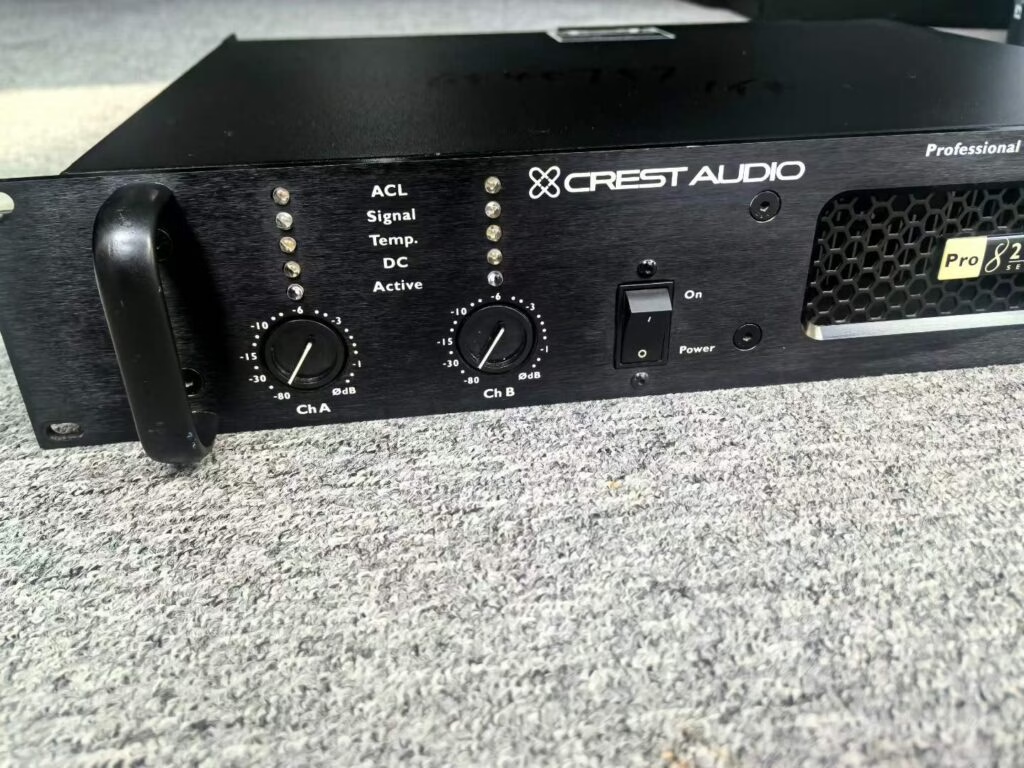
ACL, Temp, DC, Active: how to read the front panel
Each channel has a column of LEDs beside its gain knob. Signal lights from about -20 dB, the level where you can confirm a channel is receiving. Active is the normal operating indicator — if it is on and the others are off, everything is doing what it should. Temp comes on when the heatsink is cooking, usually because the fan has packed in or the amp is in a rack with its front and back blocked. DC is the one that matters: if DC lights and stays lit, stop and switch off, because the amplifier is passing direct current to your loudspeaker and the driver will not survive it long.
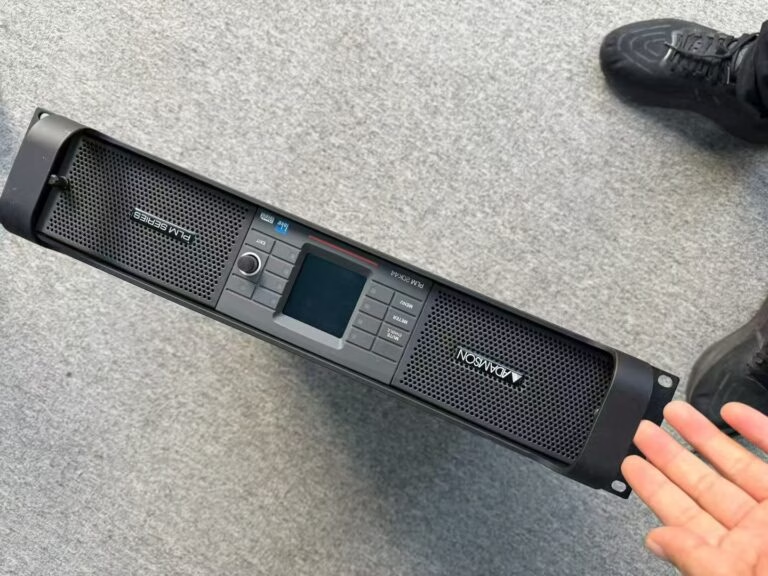
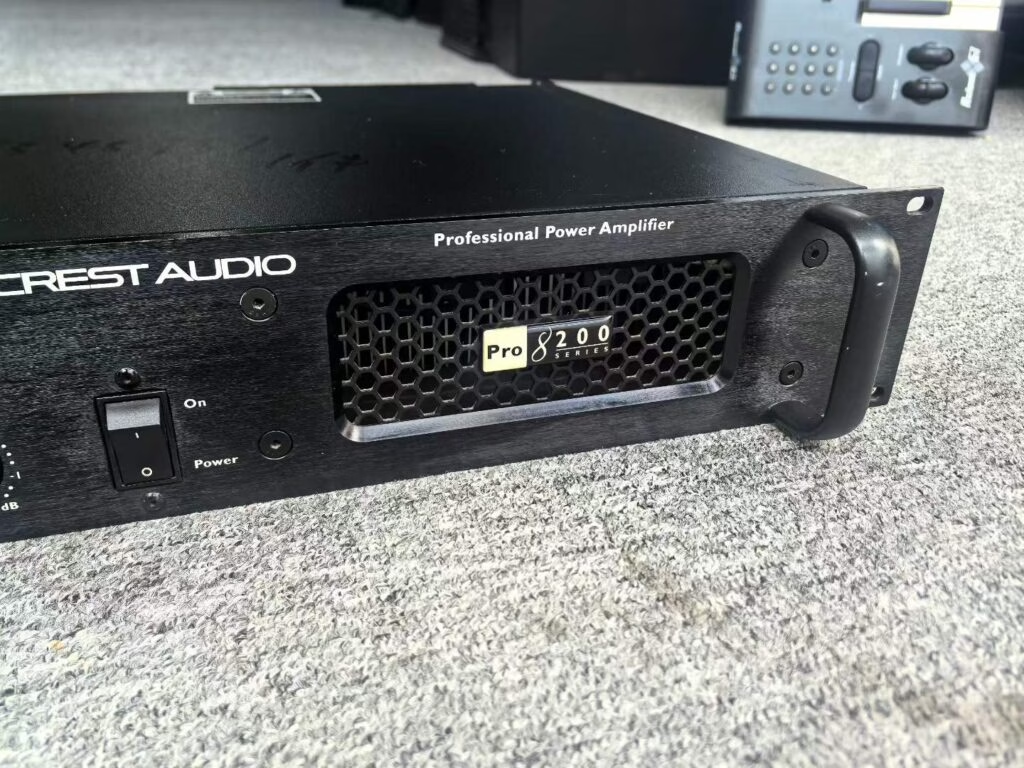
The honeycomb grille across the middle of the front panel is not decoration. That whole area is intake. Leave a rack space above and below this amplifier, or you will be adding to the repair queue on your own account.
Crest Audio Pro 8200 vs the amps that replaced it
The honest comparison in 2026 is against a modern lightweight amplifier of similar rating, and against simply buying powered speakers.
- Against a modern class D amp: a current 2 x 800 W amplifier weighs about 6 kg and costs more. The 8200 weighs around 18 kg, draws more mains current at idle, and puts more heat into the rack. It also sells for a fraction of the money and, when it fails, a competent bench technician can fix it. There are no custom DSP chips to become unavailable.
- Against powered speakers: if you are buying loudspeakers anyway, powered is simpler. If you already own passive boxes — and a lot of installs still do — a used 8200 keeps them earning for very little money.
- Against a new cheap amplifier: this is the real argument. A 2U no-name amp at the same nominal power costs less on paper and typically delivers about half its badge figure with a 20 kHz top end that falls apart. Crest’s ratings are conservative and the transformer in it is the size of a breeze block.
What to check before you pay for a used 8200
An amplifier from this era is a serviceable object, and the checks are quick for anyone with a bench.
- DC offset at the outputs. With no signal and the amp at idle, measure across each channel’s output with a multimeter. Anything over about 50 mV is a warning; over 100 mV, walk away or budget for output stage work.
- Both channels at power. Run pink noise into each channel separately into a resistive load and look at the waveform on a scope. Asymmetry between channels means a failing output device.
- The fan. Listen for bearing noise at startup. A fan is a cheap part but a stopped fan on a Class AB amp is how you get a thermal failure.
- Gain pot noise. Turn each knob through its range with signal running. Crackle means a dirty pot — cleanable, but price it in.
- Rear panel connectors. Speakon sockets take a lot of abuse in touring racks. Check for cracks and bent pins, and confirm the binding posts still tighten.
- Physical history. Look for rack rash on the ears and dents in the steel top cover. Neither affects the sound, but both tell you how the amplifier has lived.
Condition and what you receive
The unit in these photos is used and complete. Both rack ears and both side handles are fitted and straight. The front panel is clean with only light marks around the gain knobs, and every LED window is intact. The grille is undented. Both channels were tested into a load before we listed it: the amplifier comes up on both sides, runs quietly through the fan, and shows no protection faults. It comes as pictured with the power cable. We do not have the original carton.
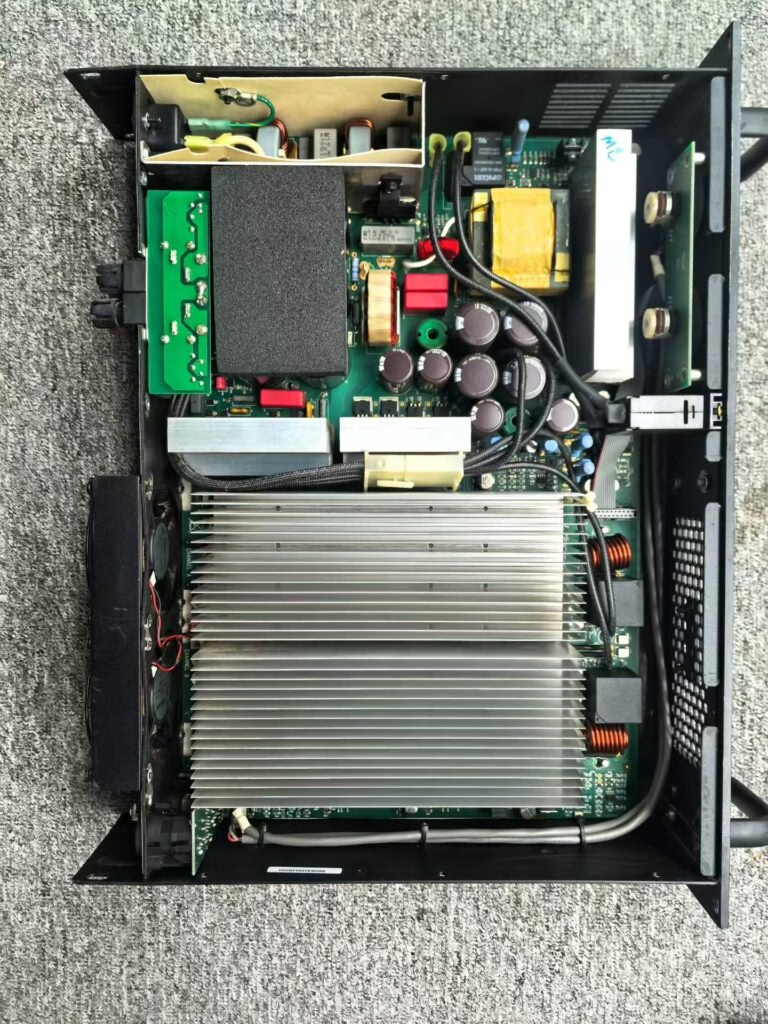
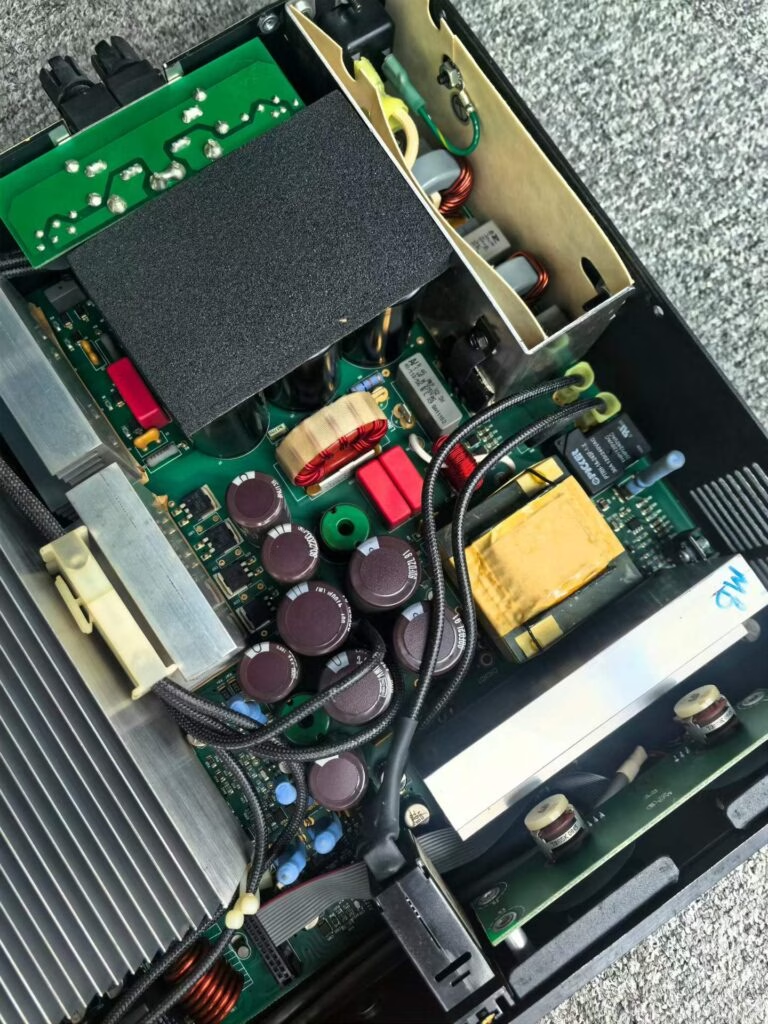
Price is on request for this amplifier and it is in stock now. If you want the internal photographs of the output stage, the transformer or the rear connectors before deciding, ask and we will send them.
Shipping and inspection
We ship from China. Amplifiers of this weight travel badly if the transformer is only restrained by the chassis screws, so these are double boxed with the front panel protected and the unit held off the floor of the carton. We can supply a 220–240 V unit as standard; if your market runs 110–120 V, tell us before dispatch and we will confirm what is available rather than send you something that needs a step-up transformer.
Tell us the destination port and whether you are buying one amplifier or filling a container, because a 2U 18 kg amplifier is a very different freight proposition on its own versus as part of a mixed shipment with speakers and consoles. If you are assembling a passive rig, browse our used amplifier stock or look at the EAW JF56 full-range cabinets these amplifiers pair well with. Need a freight quote or more detail photos? Send us the port and the quantity and we will come back with a landed price.
Key takeaways
- Crest Audio Pro 8200, two-channel Class AB power amplifier, 2U rack mount, roughly 450 W per side at 8 ohms and 800 W per side at 4 ohms.
- 1200 W bridged into 8 ohms; 800 W a side into 4 ohms is the number that matters for passive monitor wedges.
- ACL clip limiting, thermal, DC and short-circuit protection, with per-channel Signal, Active, Temp and DC indicators.
- Used, complete, both channels tested, handles and rack ears fitted, ships from China, price on request, in stock.