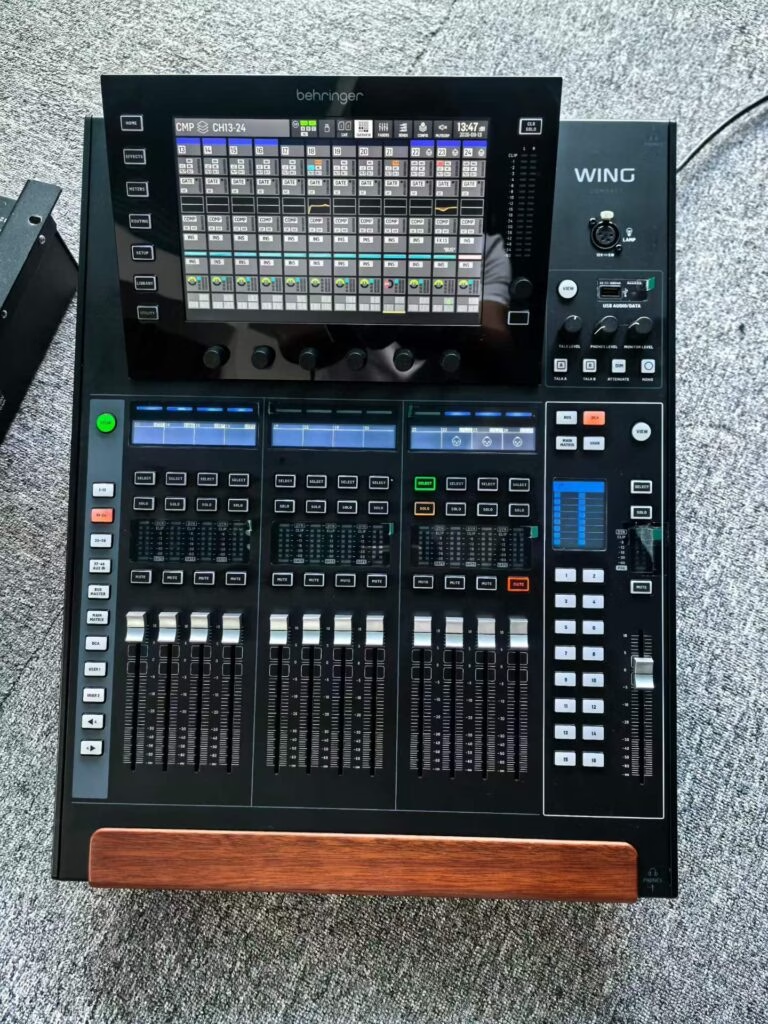
Description
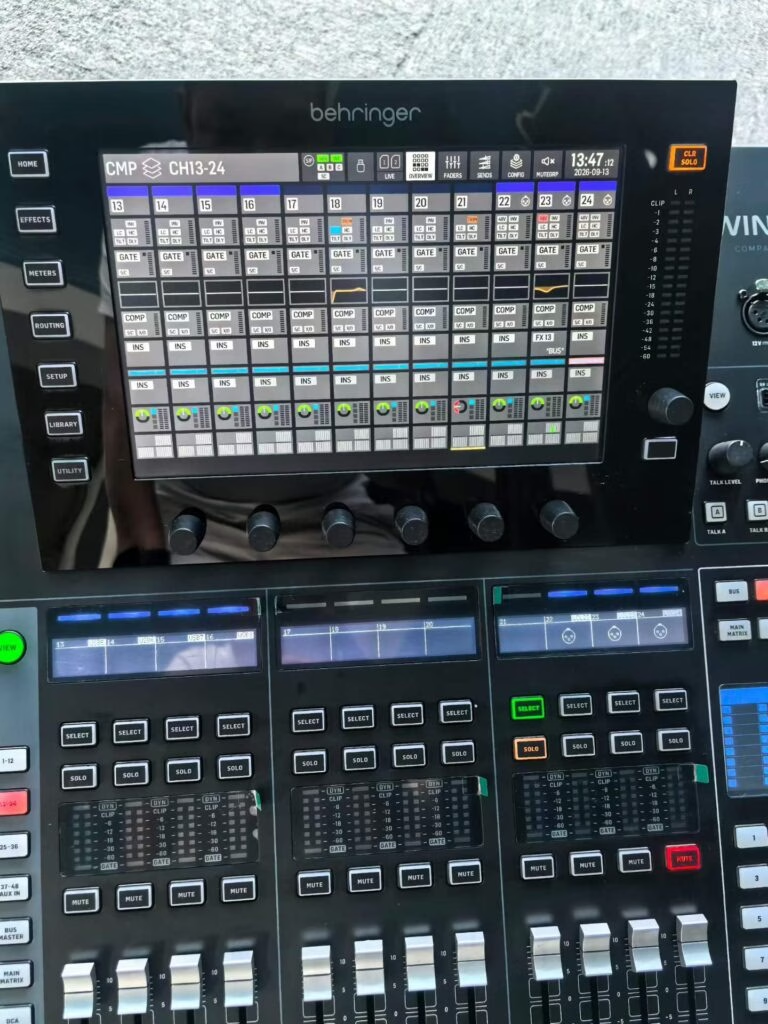
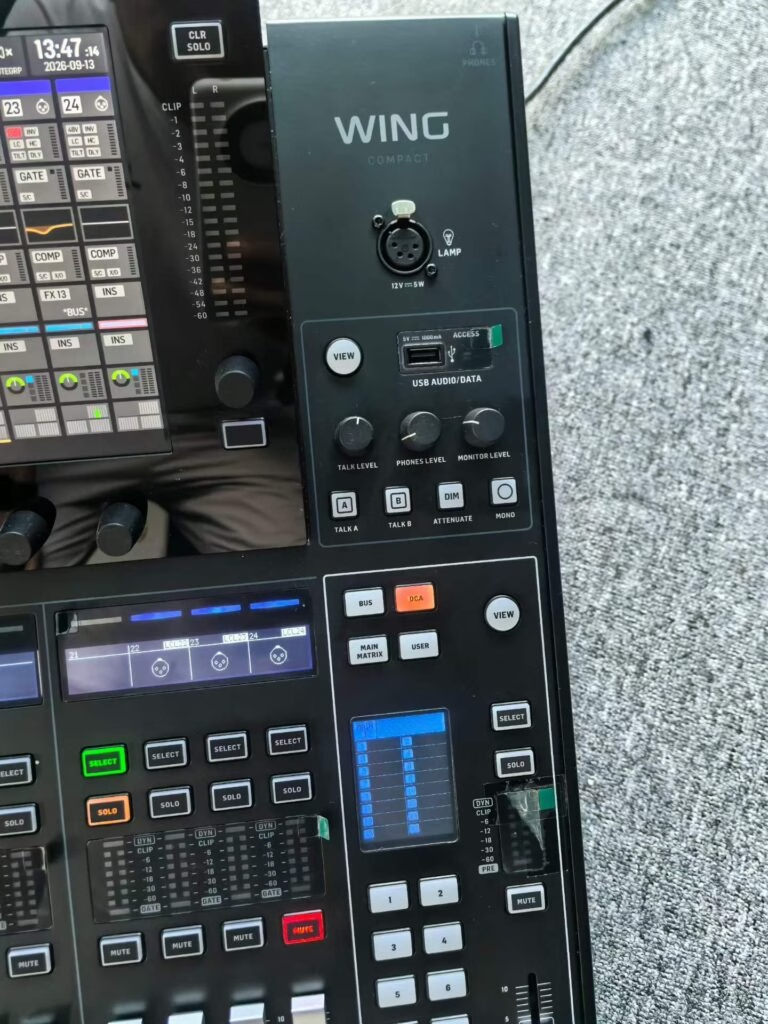
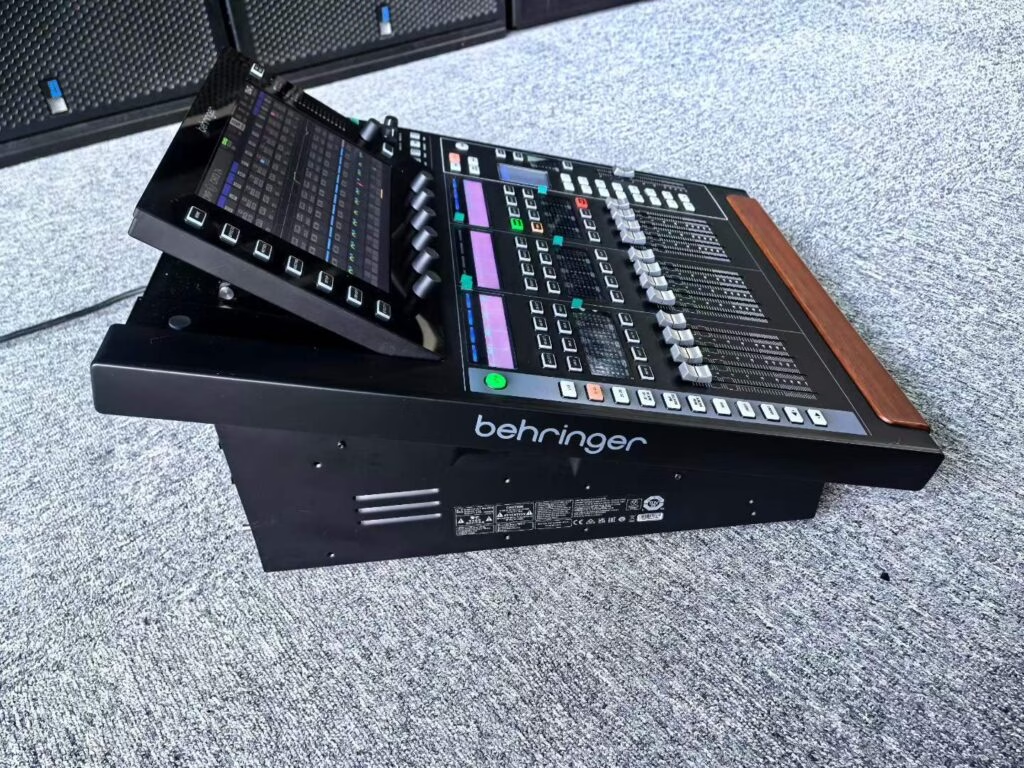
The WING Compact is the 48-channel version of Behringer’s WING console in a smaller frame: 24 Midas PRO preamps, 13 motor faders, a 10.1-inch touchscreen and the full WING engine, at roughly half the footprint of the full WING. This unit is in excellent cosmetic condition, all faders and keys respond, and the price is on request.
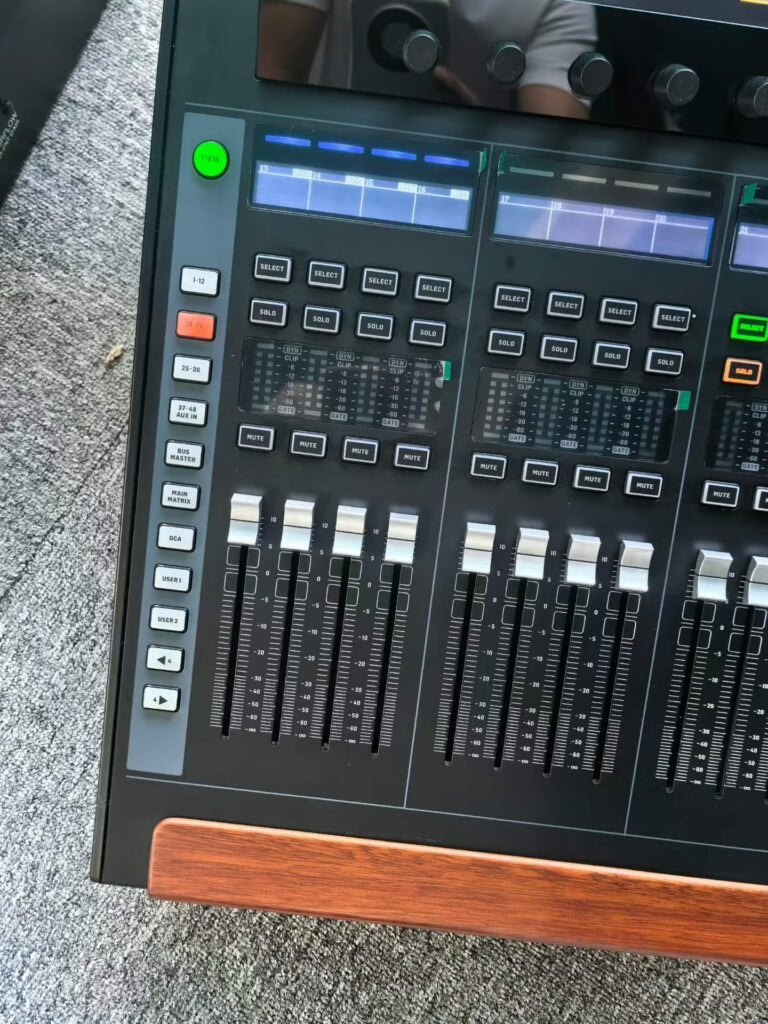
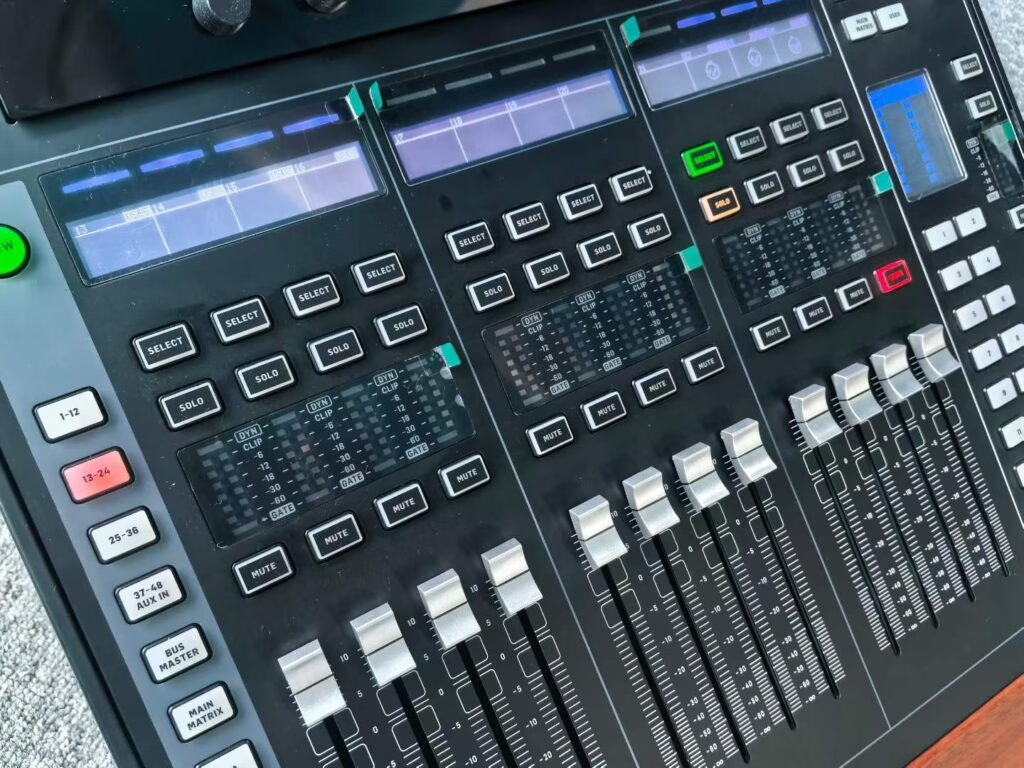
WING Compact exists because the full WING is a big desk. If you mix in a club, a 400-capacity room or a house of worship where the console goes in a corner and stays there, the full WING is more surface than you can use. Behringer kept the processing engine and cut the control surface: 12 channel faders plus a dedicated main fader, with layer buttons to reach the rest.
What does WING Compact actually give you channel-wise?
48 input channels, and every one of them processes mono or stereo without channel linking. That detail matters more than the headline number. A stereo keyboard, a playback laptop or a DJ feed takes one channel instead of two — so 48 channels goes a lot further than it does on an X32 where stereo sources eat pairs.
Behind it sits the WING processing engine, not a cut-down X32 engine. The 16 stereo buses plus 4 main buses and 8 matrices are the same architecture, and the channel strip has gate, dynamics with analogue-modelled compressors, a 4-band parametric EQ with selectable models, and two inserts (one pre-fader, one fixed post-fader). The two insert points are what let you run 16 FX slots on a desk this size without running out of places to put them.
Is 13 faders enough to mix on?
It is enough if you mix in layers, and it is not enough if you expect every input on a physical fader. Twelve channel faders plus the main fader is a working surface for a band that fits on two layers.
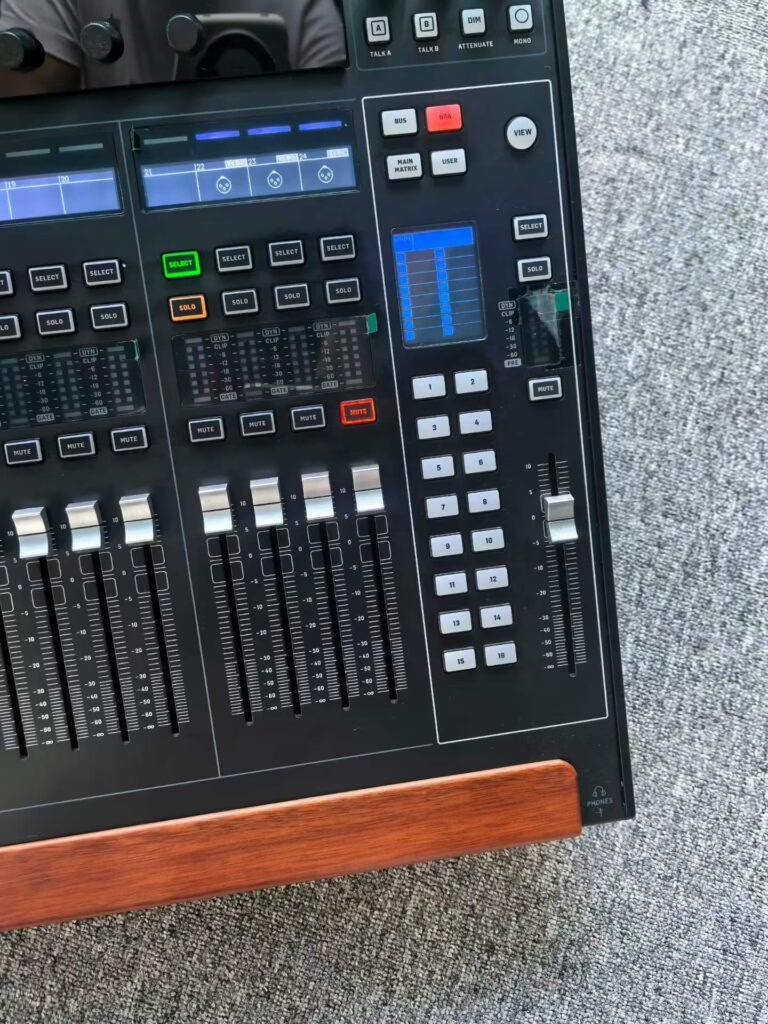
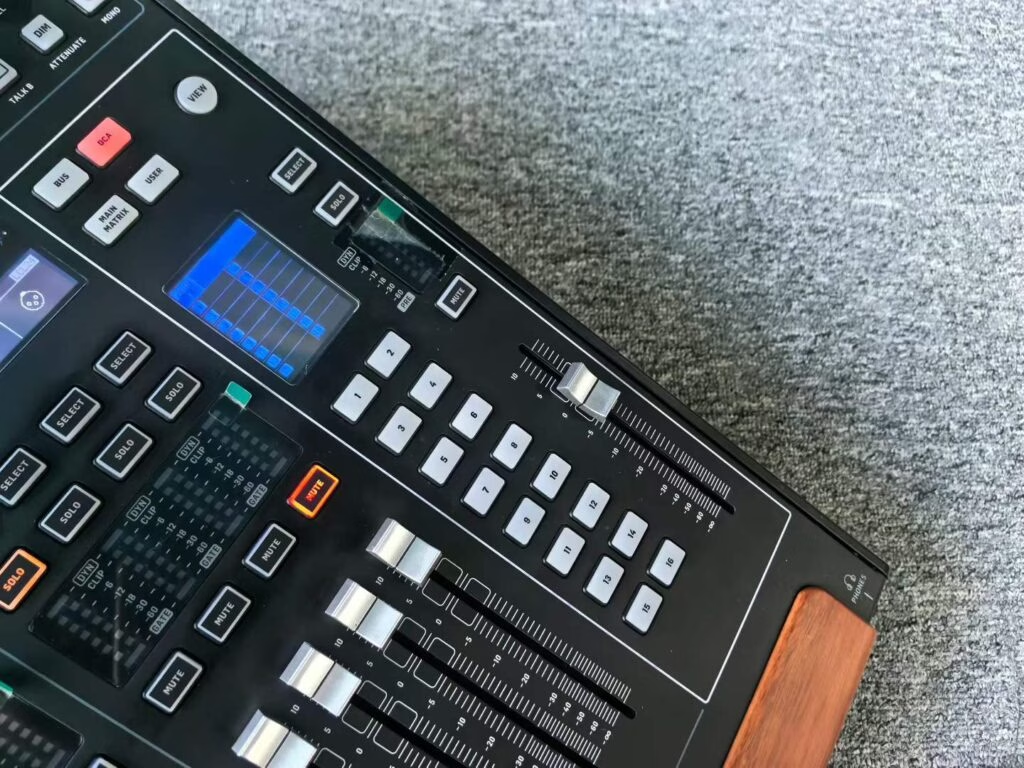
The trick WING Compact is built around is the 16 hot keys on the main fader section. Press one and the 12 channel faders become sends to that bus — the drummer asks for more bass between songs, you press the bus key, push a fader, done. No menu diving. Every fader also has a scribble strip showing number, name and icon, so you are not reading tape labels in a dark room.
If you are coming from an analogue desk with 24 or 32 faders in a row, this will feel like a different instrument. Give it two gigs. The people who struggle with compact surfaces almost always keep trying to mix on one layer.
What is on the back panel?
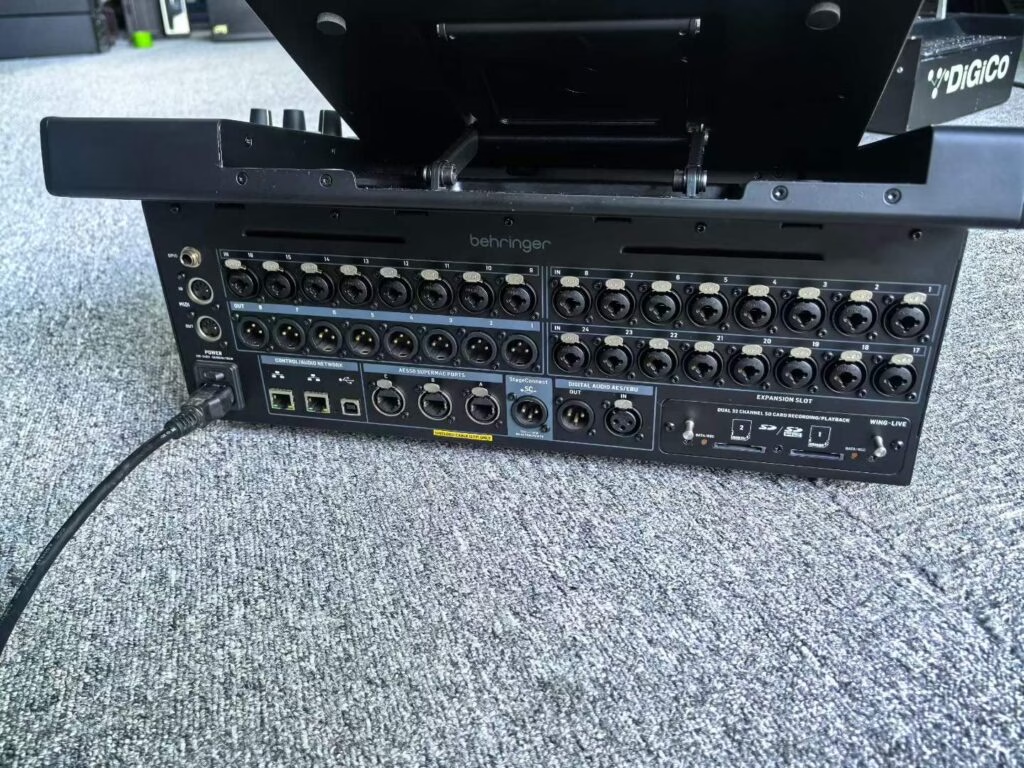
- 24 Midas PRO mic preamps on combo jacks, +48 V phantom switchable per input, EIN around -128 dBu
- 8 XLR outputs, +4 dBu nominal, +21 dBu maximum
- 3 AES50 ports (Klark Teknik SuperMAC, 100 Mbit/s) — 48 in and 48 out each, and X32 stage boxes work with them
- StageConnect host port, up to 32 channels over one standard balanced XLR cable
- AES/EBU digital in and out on XLR
- Dual SD card slots for 32-channel multitrack recording and playback
- USB 2.0 type B for 48 x 48 channel audio and MIDI to a computer
- MIDI in and out, plus two configurable GPIO on TRS
- Ethernet for remote control, plus an expansion slot that takes Dante, AES67 or SoundGrid modules
Three AES50 ports is the number that matters for most buyers. Two is enough for a stage box at each end of the stage; three means you can also hang a monitor-world box or a second desk off it. If you already own an X32 or M32 stage box, it plugs straight in.
How does it differ from an X32 Compact?
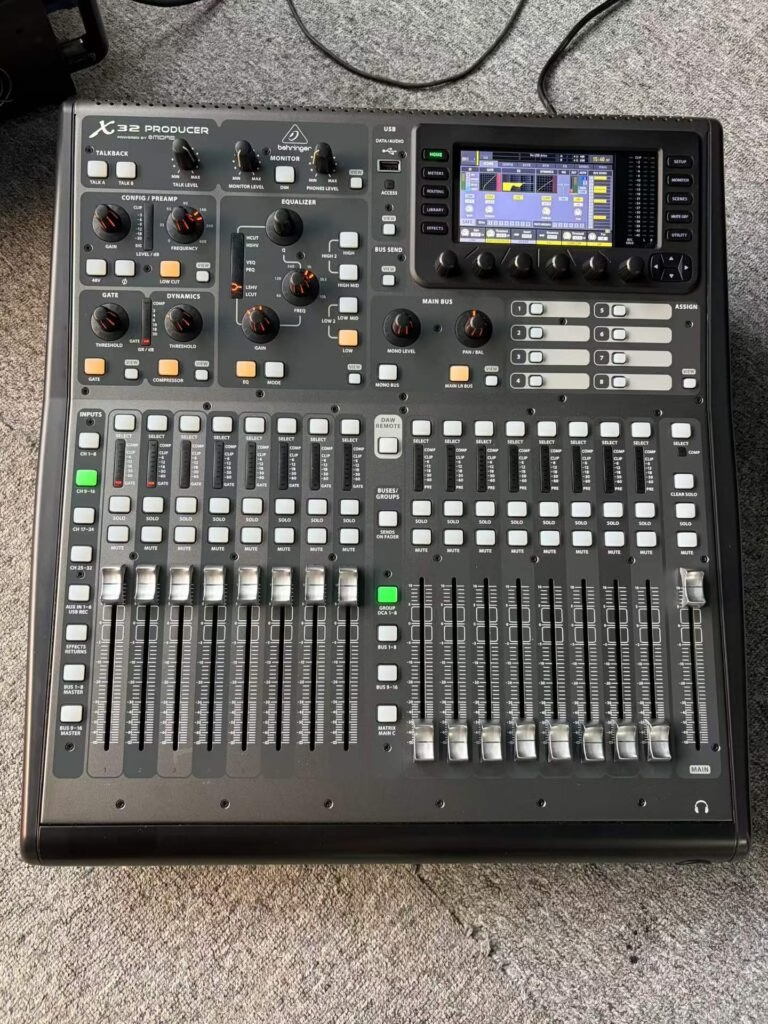
They look similar in a case and they are not the same console. X32 Compact gives you 40 inputs, 16 Midas preamps and 17 faders. WING Compact gives you 48 channels, 24 preamps and 13 faders — fewer faders, more inputs and a much stronger processing engine.
The practical split: X32 Compact wins if you want more things under your fingers at once and you are happy with X32 processing. WING Compact wins if you need channel count, stereo-source efficiency and deeper processing, and you are willing to work in layers. For a band that has grown past 32 inputs because of playback, tracks and a stereo keyboard rig, WING Compact is the more useful desk.
Condition and what we checked
Cosmetically this one is excellent. The screen is clean with no scratches or delamination, the wooden side cheeks are unmarked, and the fader caps show no polishing. Panel lettering is intact everywhere.
Functionally: the unit powers up, the touchscreen responds, all 13 motor faders move under their own power and hold position, and the channel buttons, hot keys and encoders all register. There is one small piece of clear tape over the DYN/CLIP meter area on the right-hand strip — it is tape on the surface, not a repair, and it lifts off.
We have not run it through a full multitrack session with 48 live sources, and we do not claim to have. What we can tell you is what the photos show and what we tested by hand. If you need a specific test run before shipping — phantom power per channel, an AES50 loop with your stage box, a multitrack recording to SD — say which one and we will do it and send the result.
Buying it and shipping it
Price is on request. Send us your destination country and port and we will quote the unit plus freight together, because the shipping cost depends heavily on where it is going and whether it goes by air or sea.
The console is 225 x 453 x 574 mm and 15.4 kg, so it ships as a single carton by air courier without drama. It runs on auto-ranging 100-240 V at 130 W, which means no external transformer is needed in most countries — check your local mains and plug type and we will include the right IEC cable.
Browse the rest of our used digital mixing consoles if you want to compare against a DiGiCo SD12 or the analogue desks we keep in stock. Full stock list on the shop page, or contact us with your channel count and venue size.