Description
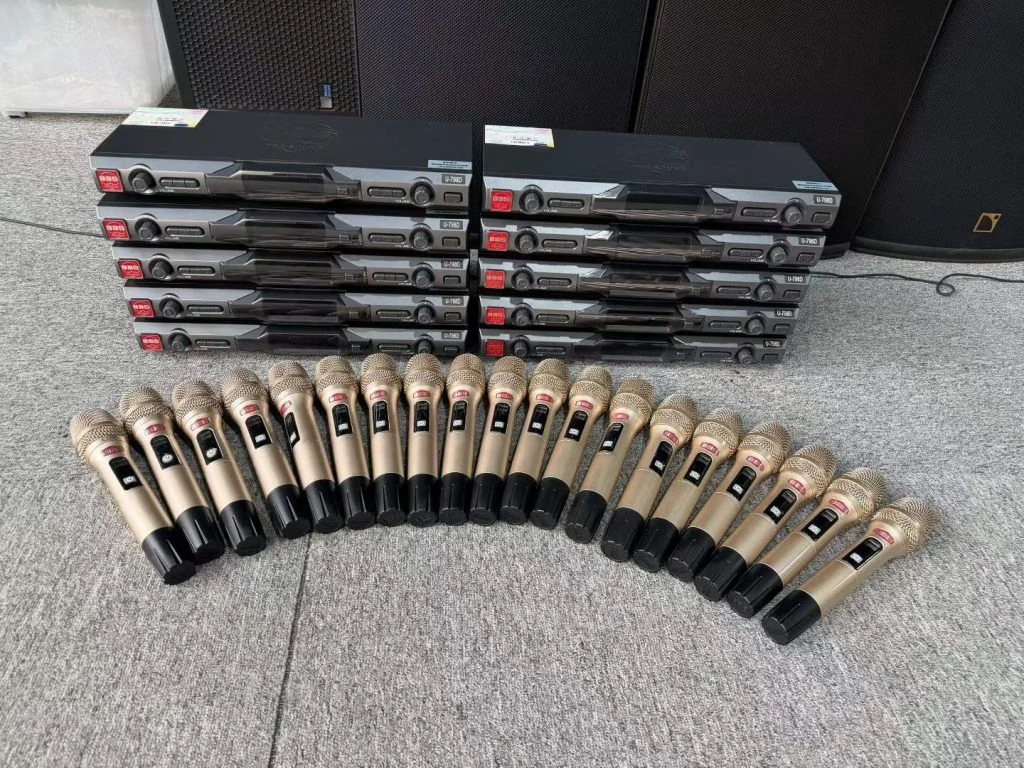
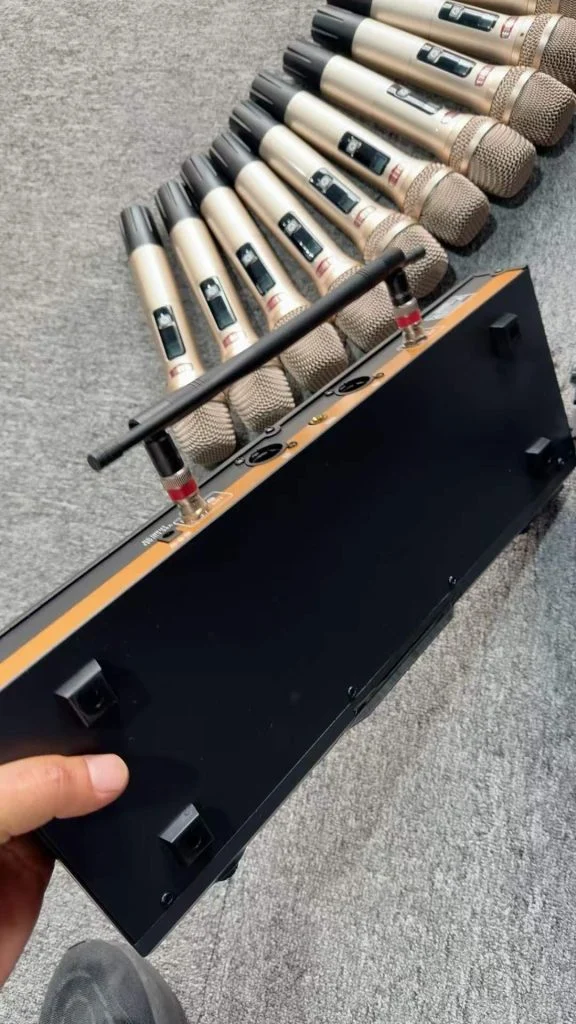
Ten BBS U-798D dual-channel UHF receivers with twenty matching gold handheld transmitters — a complete 20-mic package from one working install. Price on request, in stock.
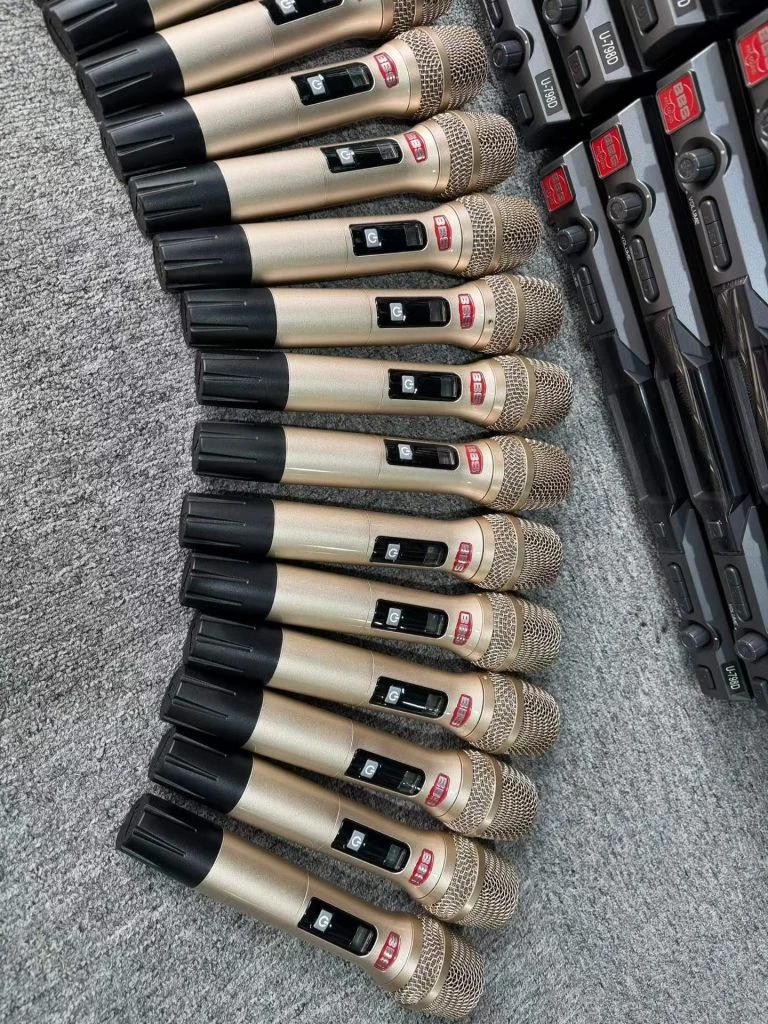
This is the kind of lot that does not come up often: the receivers and the handhelds are matched, they came out of the same venue, and the count is even. Ten dual-channel receivers, two handhelds each, forty channels of wireless in total. Every receiver has both antennas, every handheld has its capsule on, and the set is photographed as it came off the shelf rather than styled for a catalogue.
What is in the lot
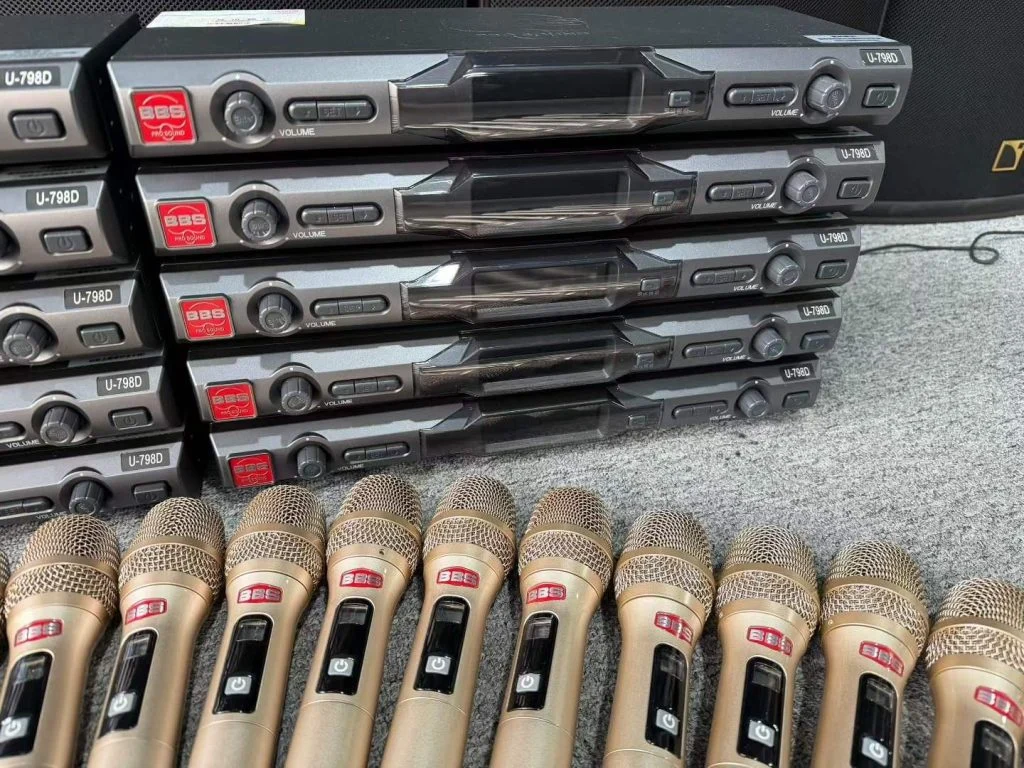
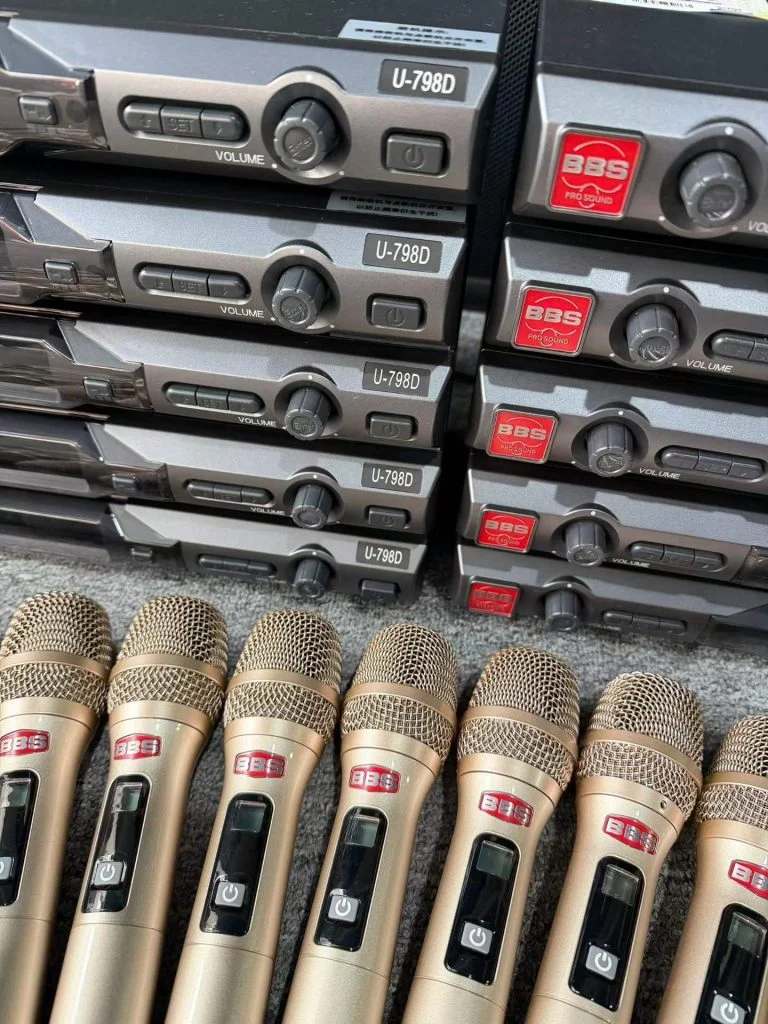
- 10 × BBS U-798D receivers — dual-channel, desktop format, two LCD displays and two volume knobs per unit, rear panel with two BNC antenna inputs, XLR output and DC power inlet
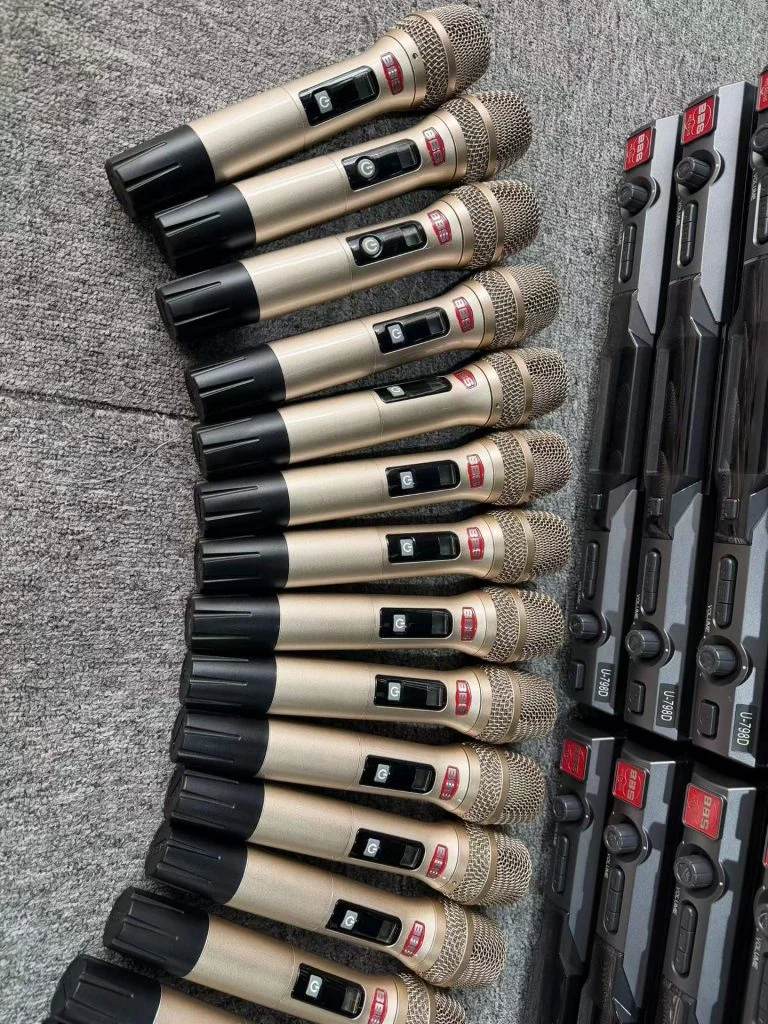
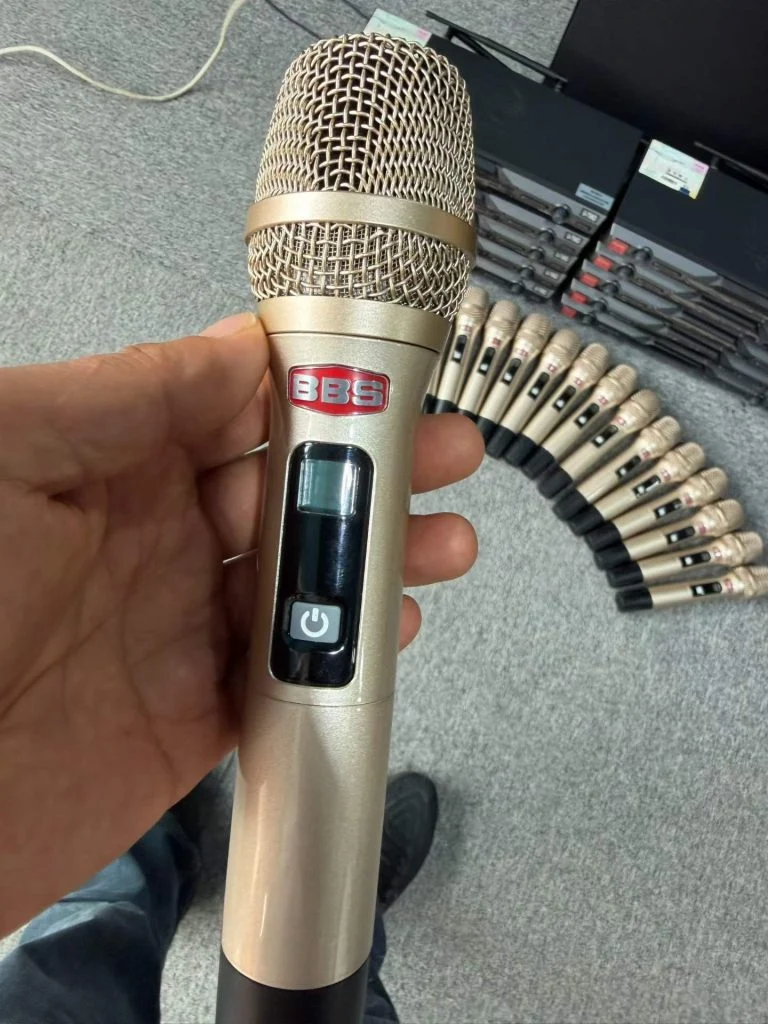
- 20 × BBS gold handheld transmitters — matched to the receivers, gold-plated bodies with black bases, threaded capsule mounts
- 40 channels total — two independent channels per receiver, all ten units the same model and revision
The receivers are desktop boxes, not rack units. That matters if you are building a fixed install: ten of these will not slide into a rack without shelves, and there are no mounting ears on the chassis. If you need them racked, plan for two 3U shelves at five units each, and leave a gap above each shelf for the antennas to clear.
Where a 20-mic package actually gets used
Twenty handhelds is a specific number. It is too many for a small venue and about right for four categories of job:
- Conference and panel work — a room with a long top table, multiple breakout rooms running at once, or a two-day event that needs a fresh mic for each session
- Church and worship — multiple speakers, a choir, a drama team, all live at the same time without swapping batteries mid-service
- Corporate events and AGMs — roving mics for Q&A, spare units on the table so a dead battery never stops the meeting
- Rental and AV companies — a pool of identical handhelds is worth more than a mixed bag, because any transmitter works with any receiver
If you only need four mics, buying twenty is not a bargain, it is storage. Be honest with yourself about that before you ask for a price.
What we can confirm, and what we cannot
We have counted the units, photographed them, and confirmed the model on the receiver faceplates. What we have not done is put every one of the forty channels on a spectrum analyser, and we are not going to publish a frequency list we have not verified.
BBS is a long-established Chinese wireless microphone brand, and the U-798D is an older UHF model with little documentation still available online. Rather than copy specifications from a similar-looking receiver, we will tell you what to check:
- Frequency band — the operating band is printed on the rear label of each receiver and on the body of each handheld. Ask us for photographs of those labels before you buy, and check the band against your local regulations; a band that is legal in one country is not automatically legal in another
- Channel spacing and group — with ten receivers in one room you need them on a coherent frequency plan, not ten random channels. The units should be set up as matched groups before they go out
- Battery type — handheld transmitters in this format normally take AA cells, but confirm on the actual units rather than assuming
We would rather hand you a photograph of a rear label than a specification sheet we invented. Ask, and you will get the photographs.
Condition
Used, and used properly. The handhelds show the wear you would expect from a working set: light scuffs on the gold bodies, no dents in the ball grilles, no cracked battery covers. The receivers are cosmetically clean, displays intact, no missing knobs, and both antennas present on the units we have handled.
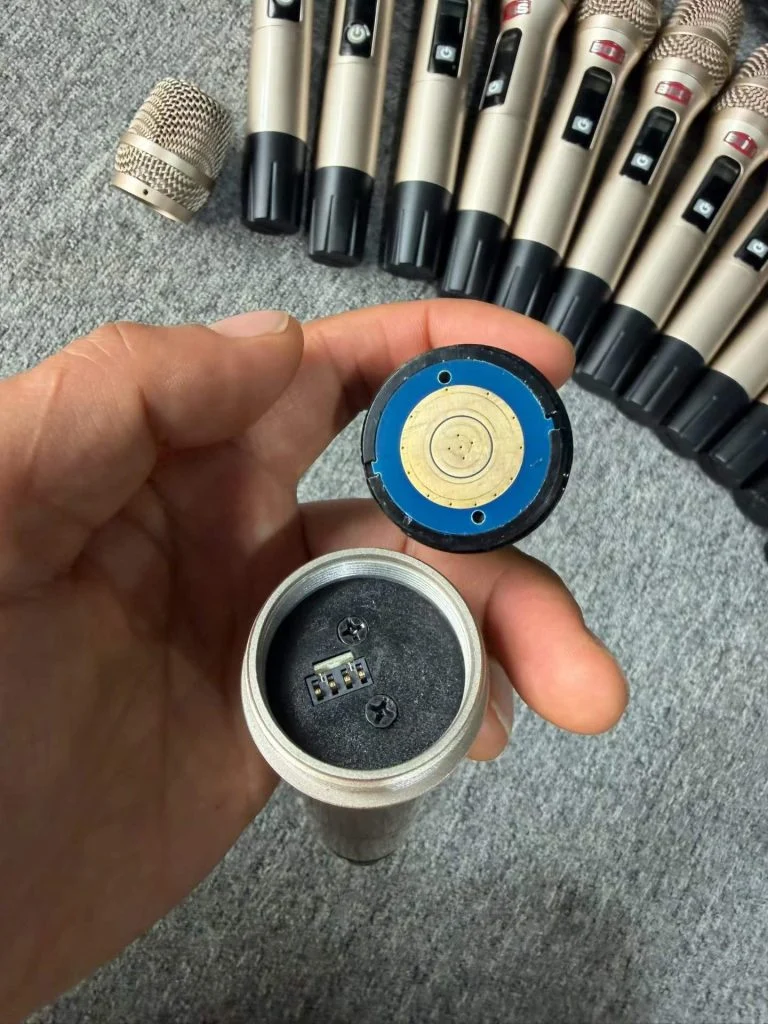
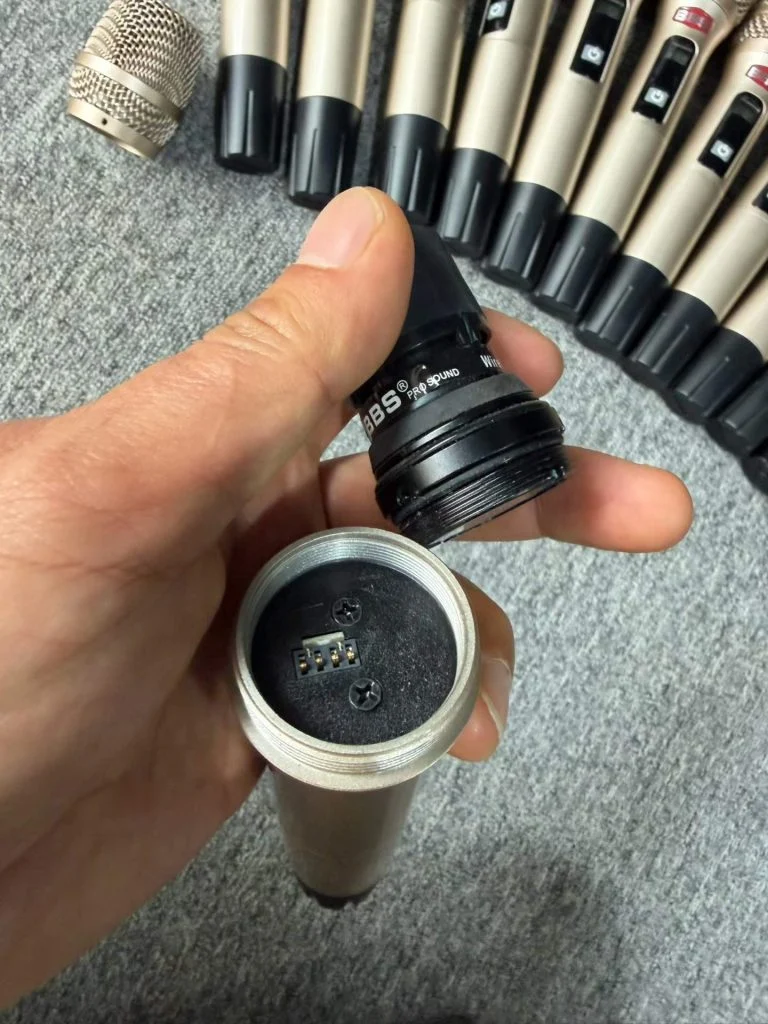
Two photographs in the listing show a handheld with its capsule unscrewed. That was done to show the threaded capsule mount and the condition of the contact pins underneath — it is not a fault report. The capsule screws straight back on, and the internals in the photographs are clean: no corrosion on the pins, no scorched board, no broken wires. We included those shots because buyers ask what is under the capsule, and the honest answer is a normal, intact thread and a clean four-pin contact block.
We have not individually tested all forty channels. What we can say is that the set came out of working use and was stored as a complete system. If you need a tested-and-certified lot, tell us and we will quote separately for bench testing each channel before shipping — that is a real cost and we will not pretend it is included.
Buying the lot or breaking it up
The price is on request because it depends on how much of it you take. Ten receivers and twenty handhelds as one lot is the cleanest deal — matched, complete, and ready to go out as a system.
Smaller quantities are possible. Five receivers with ten handhelds makes a sensible half-lot. If you want a single receiver with two handhelds to start with, ask, but understand that breaking a matched set reduces what the rest is worth, so the per-unit price will not be the same.
Spare handhelds on their own are also available if you already run this model and need replacements. Tell us the band from your existing receiver’s rear label so we send the right ones.
Frequently asked
Are these UHF or VHF?
UHF, based on the model and the rear antenna arrangement. The exact band is on the rear label — ask for a photo rather than trusting a listing.
Will they work in my country?
That depends entirely on the frequency band, and that is something you must confirm before buying. We will send photographs of the labels so you can check against your national regulator’s rules. We will not tell you a band is legal where you are, because we are not your regulator.
Do the receivers come with power supplies?
Ask us before ordering and we will confirm exactly what is included on the day. Power adapters are the single most common thing missing from used wireless lots, and we would rather answer that question now than have you discover it when the box arrives.
Can I run all ten receivers at once?
Physically yes — they are separate units with separate outputs. Practically, ten receivers in one room needs a proper frequency plan, or you will get intermodulation problems that no amount of gain structure will fix. Buy them as a pool and deploy four or five at a time if you are not going to coordinate frequencies.
Are the gold bodies real metal?
They feel like plated metal rather than plastic, and the weight matches. Judge from the photographs and ask if you need a close-up of a specific part.
Who this suits
A venue that has been renting wireless for every event and has finally decided to own it. A church that keeps borrowing mics from a neighbouring congregation. An AV company that wants a consistent pool of handhelds instead of a drawer of mismatched ones. A conference producer who needs twenty working mics and does not care about the badge on the grille.
Ten receivers, twenty handhelds, matched, in stock. Price on request — tell us how many you want and where they are shipping, and we will quote it with freight.