Description
This Meyer Sound UPM-1P is a used self-powered compact wide-coverage loudspeaker in excellent working condition, available now from stock with the price on request.
The UPM-1P is one of the most useful boxes Meyer Sound ever built. It is a small, self-powered, full-range loudspeaker designed for the jobs where a main PA will never fit or never aim properly: front fills, under-balcony delays, stage lip fill, side fills for a small act, or a compact main system for a room of a hundred people. Everything needed to make sound is inside the cabinet, so there is no amplifier rack, no processor rack, and no speaker cable runs to plan.
What the UPM-1P actually is
Meyer Sound built its reputation on self-powered loudspeakers, and the UPM-1P follows that philosophy without compromise. The cabinet holds the drivers, the amplification and the signal processing as one integrated unit. You send it a line-level signal on an XLR and it produces 119 dB of peak output from a box that weighs under ten kilograms.
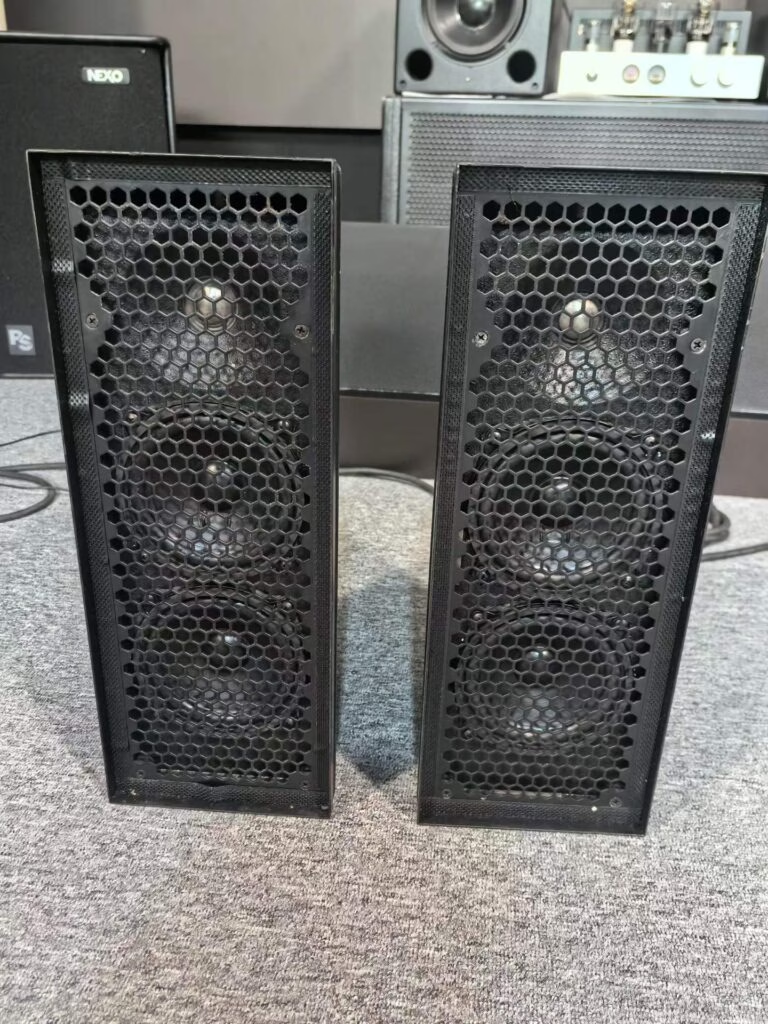
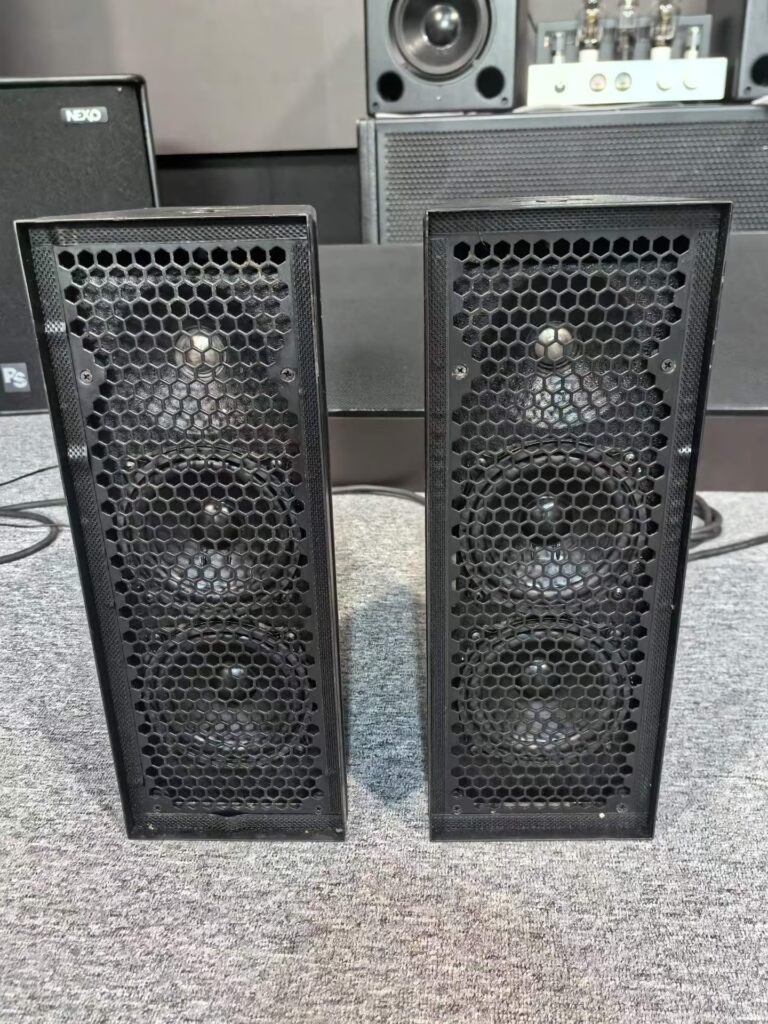
The driver complement is unusual for a compact speaker: two 5-inch mid-woofers and a 1-inch metal dome tweeter, crossed over at 1.3 kHz. That is a genuine three-way layout in the footprint of a two-way monitor, and it is the reason the UPM-1P stays clean at levels where similar-sized boxes start to compress.
Coverage: 100 by 100 degrees, and why it matters
The UPM-1P uses a symmetrical 100° horizontal by 100° vertical coverage pattern. Symmetrical coverage is the detail that separates this speaker from most compact boxes on the used market. A conventional 90 by 60 pattern is designed to be flown above an audience and aimed down; the UPM-1P is designed to be put wherever it needs to go and aimed at what needs to hear it.
In practice, this makes it a natural front fill and delay speaker. Mounted at the stage lip, a pair of UPM-1Ps covers the first three or four rows that the main hangs cannot reach, without spraying energy onto the stage and back into the vocal microphones. Hung under a balcony, one or two units cover the shadowed seating evenly. Wedged on its side at the stage edge, it becomes a compact side fill for a trio or a small club date.
Amplification and headroom
Inside the box, a two-channel Class AB MOSFET amplifier delivers up to 650 W of total peak power across the drivers. Class AB in a compact self-powered cabinet is a deliberate design choice: it keeps the topology simple, robust and serviceable, and it is what gives the UPM-1P the smooth, non-fatiguing character that Meyer users describe. Total harmonic distortion is quoted below 0.02%, which is a genuinely low figure for a loudspeaker of this size and output.
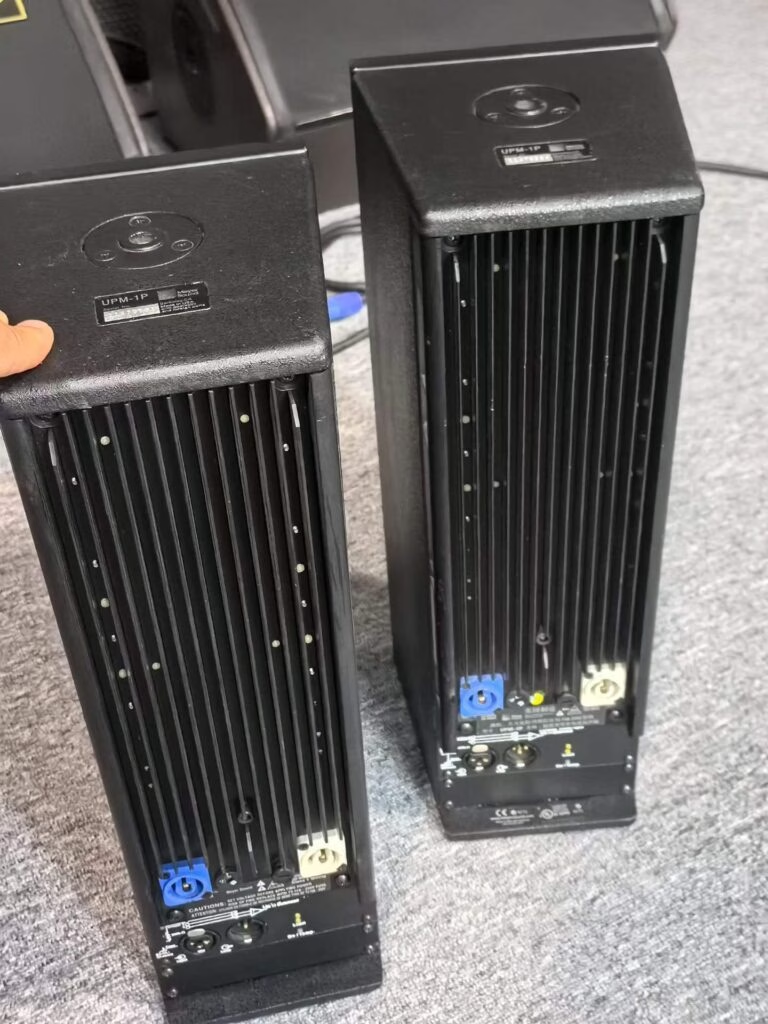
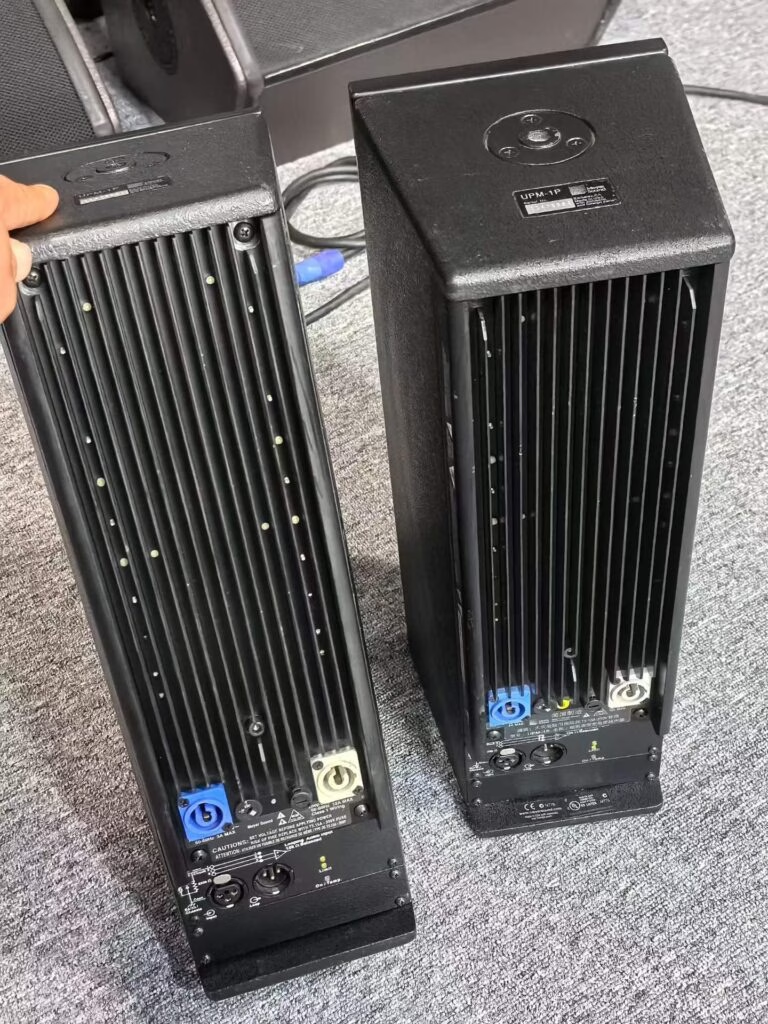
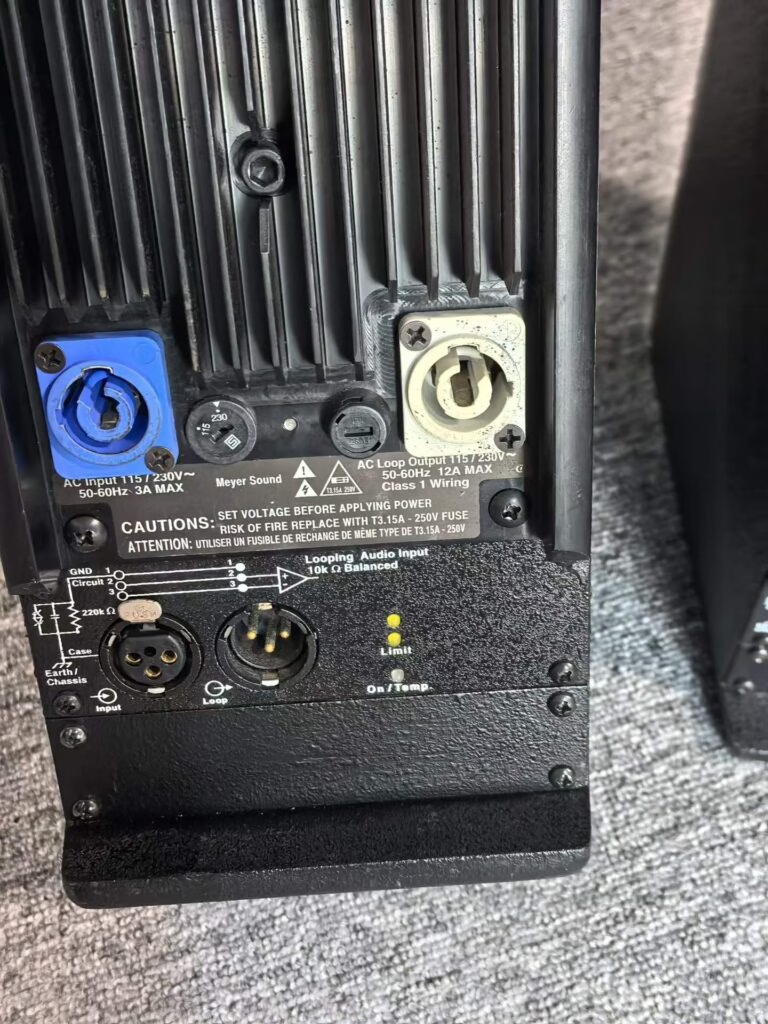
Power is switchable between 115 V and 230 V, so the same cabinet works in North America, Europe, the Middle East and most of Asia with nothing more than the selector and the correct mains lead. The inlet is a PowerCON connector, which locks into place and will not vibrate loose on a stage or in a truck. Audio input is balanced XLR with a loop-through output, so a chain of UPM-1Ps can be fed from a single source without a splitter.
Frequency response and maximum output
Meyer Sound rates the UPM-1P from roughly 75 Hz to 18 kHz, with a peak sound pressure level of 119 dB. That response does not reach the bottom octave, and it is not supposed to. The UPM-1P is a full-range box with a natural low-frequency roll-off around 75 Hz, which suits it perfectly to fills and delays where the subwoofers and main hangs are already carrying the low end. Where it needs to stand alone as a small main system, pairing it with a compact subwoofer gives a complete system with a very small footprint.
| Specification | Meyer Sound UPM-1P |
|---|---|
| Type | Self-powered compact wide-coverage full-range loudspeaker |
| Drivers | 2 × 5-inch mid-woofers + 1-inch metal dome tweeter |
| Crossover | 1.3 kHz |
| Coverage | 100° horizontal × 100° vertical (symmetrical) |
| Amplifier | Two-channel Class AB MOSFET, 650 W total peak |
| Frequency response | Approx. 75 Hz – 18 kHz |
| Maximum SPL | 119 dB peak |
| Distortion | THD < 0.02% |
| Power | 115 / 230 V switchable, PowerCON inlet |
| Connectors | XLR input with loop-through output |
| Dimensions | 174 mm W × 457 mm H × 196 mm D |
| Weight | 9.53 kg per cabinet |
| Rigging | M10 mounting points, stand and hang capable |
Physical format and installation options
The cabinet measures 174 mm wide, 457 mm high and 196 mm deep, and weighs 9.53 kg. That height-to-width ratio is what lets it disappear into an architectural space. Installed upright against a wall or on a shelf, it reads as a piece of equipment rather than a loudspeaker, which is why it turns up in churches, museums, boardrooms, theatres and broadcast studios as often as it does on touring stages.
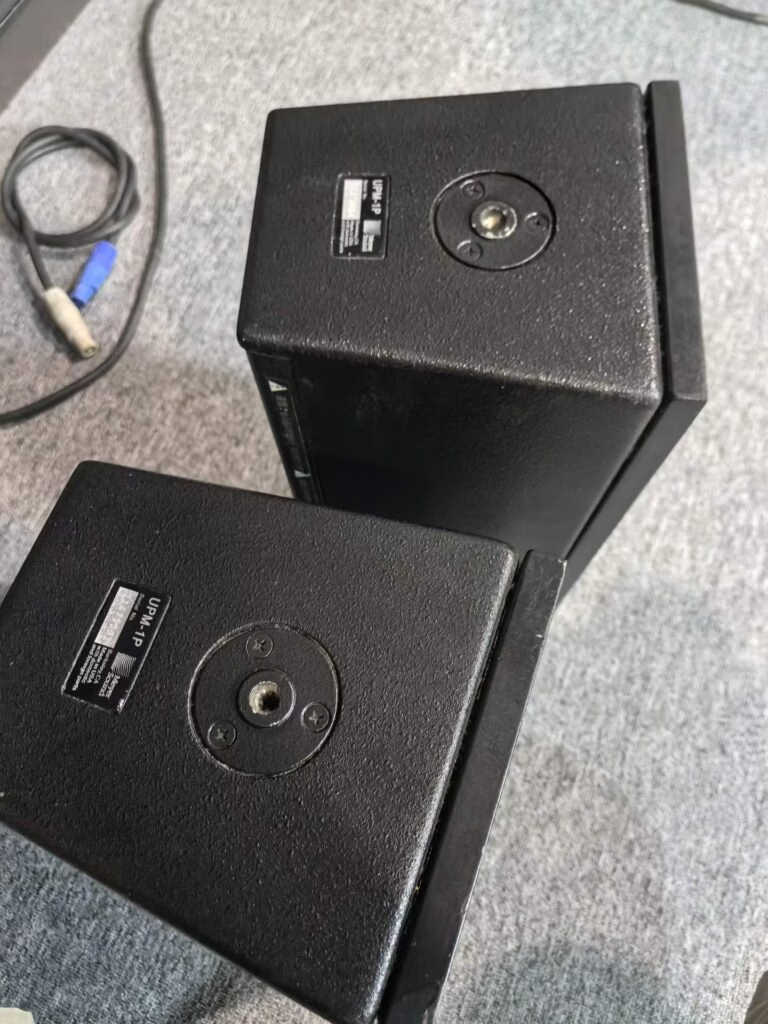
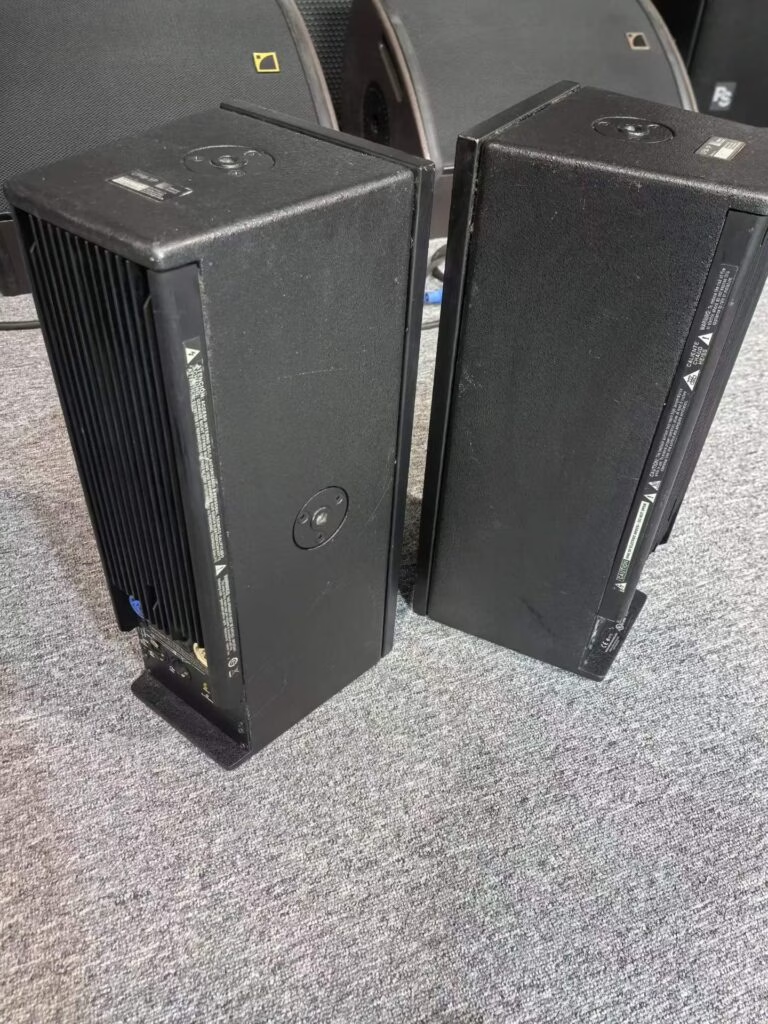
M10 threaded mounting points are built into the cabinet, so it can be hung with standard eyebolts or flown from a bracket, pole-mounted on a subwoofer, or set on a shelf or truss. There is no proprietary rigging hardware to track down and no adapter plate to fabricate.
Where the UPM-1P earns its keep
Front fill and stage lip. Its symmetrical coverage and small footprint make it the classic choice for covering the first rows under a main hang. A pair aimed at the front of the audience fills the hole without leaking onto stage.
Under-balcony and delay. Hung from a ceiling or balcony soffit, it covers the seats that the main system cannot see. Because it is self-powered, a delay position needs only a mains outlet and a signal line, not a rack of amplifiers in a cupboard somewhere.
Stage side fill. For a trio, a small jazz act or a club stage, a pair of UPM-1Ps gives the performers a clean, low-fatigue reference without the bulk of a full monitor wedge.
Compact main system. For a meeting room, a gallery, a restaurant or a rehearsal space, two UPM-1Ps and a small subwoofer form a complete, tidy system with no outboard electronics at all.
Fixed installation. Churches, courtrooms, lecture theatres and studios value it for the same reason: one cabinet, one power cable, one audio cable, done.
Why self-powered Meyer boxes hold their value
When you buy a used self-powered Meyer Sound loudspeaker, you are not buying a cabinet with a driver in it and hoping the amplifier you already own is a match. The amplifier, the processing and the drivers were designed together by the same engineers, and they are matched to each other at the factory. That is why a UPM-1P bought second-hand still behaves predictably: there is no crossover to reconfigure, no gain structure to balance and no risk of driving the wrong amp into the wrong load.
It is also why these cabinets keep working in rental inventories for twenty years or more. The Class AB amplifier module is straightforward to service, and the drivers are field-replaceable. If one of these units does eventually need attention, it is a repair job, not a write-off.
Condition, stock and price
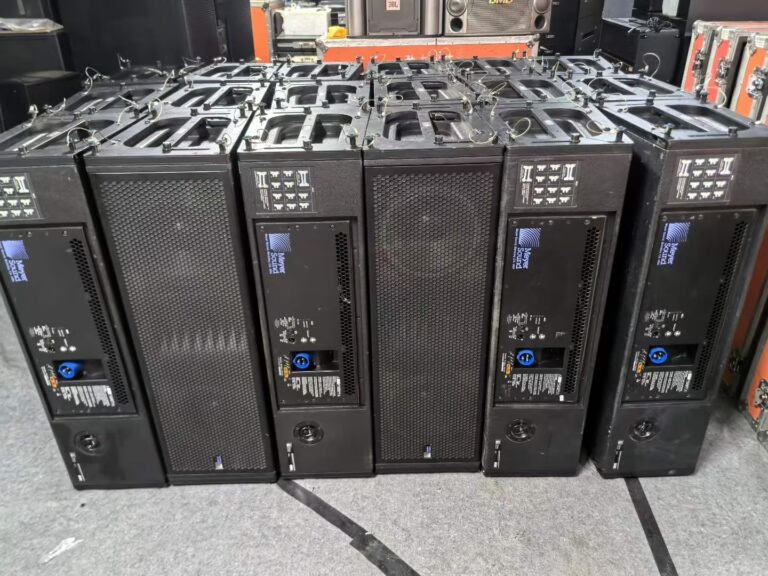
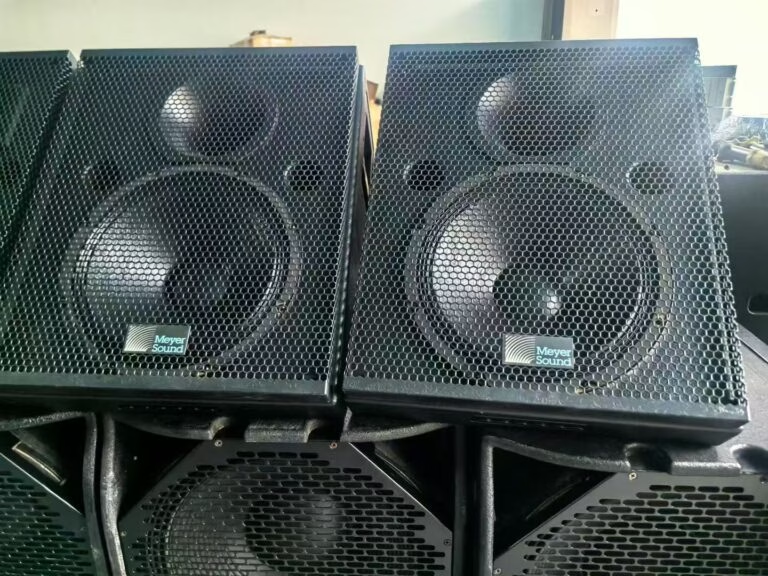
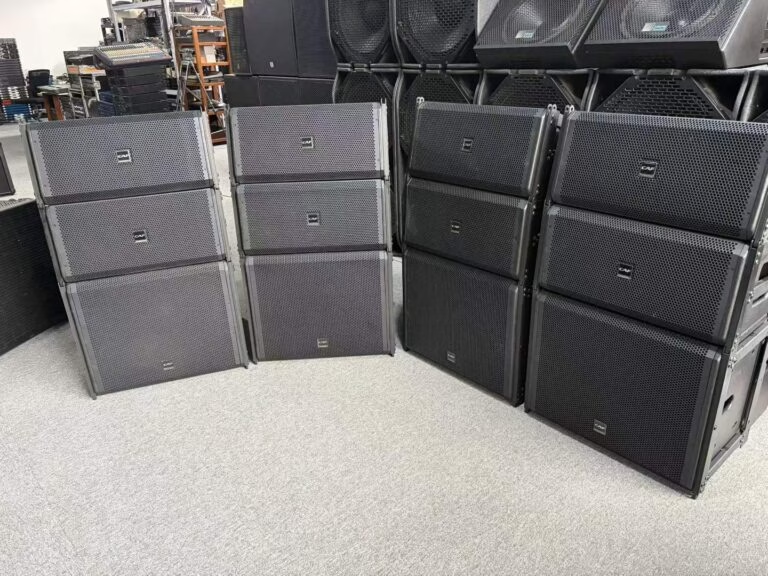
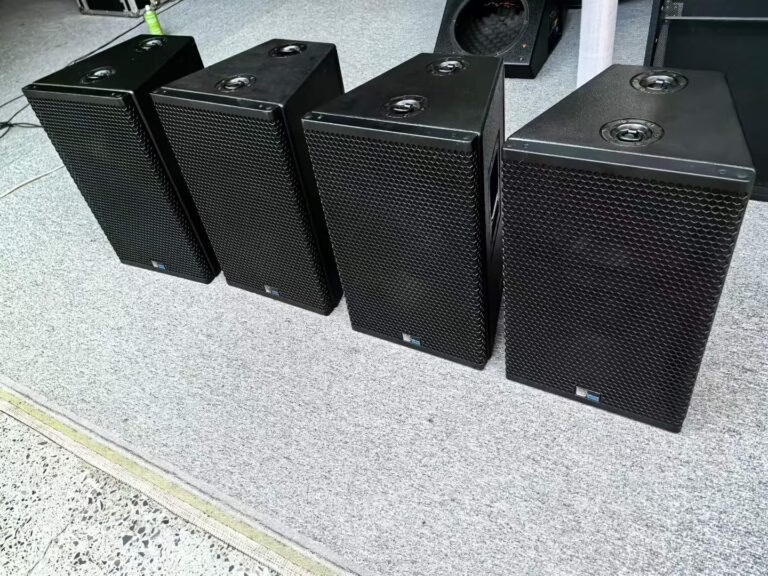
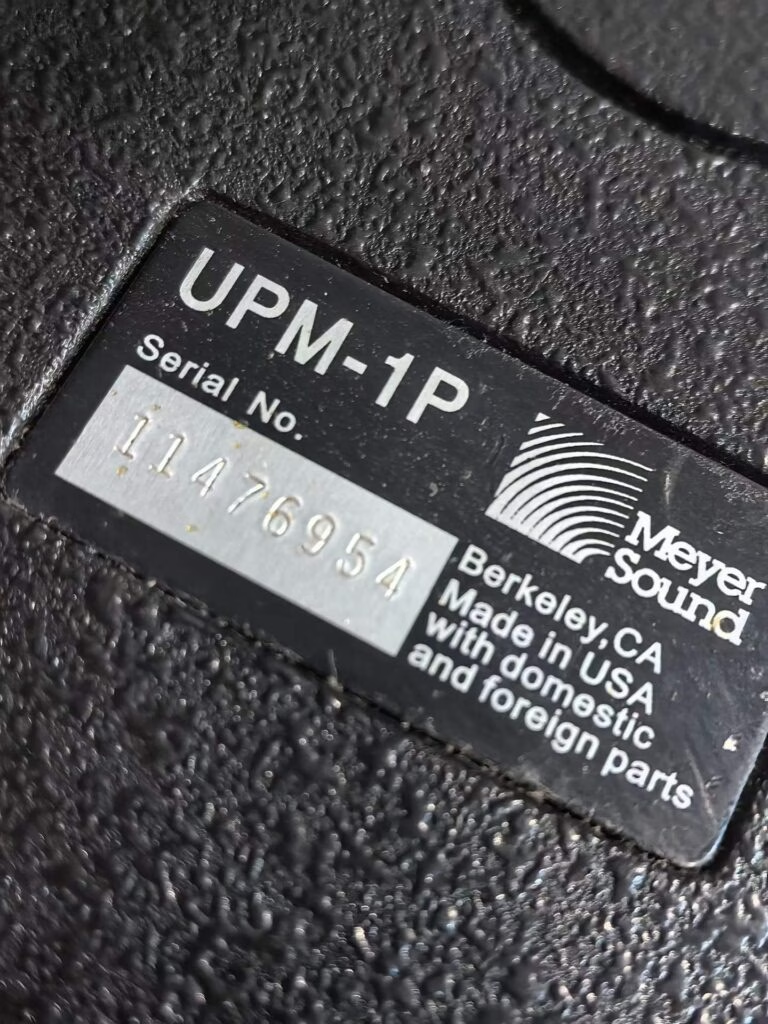
The units offered here are used, in excellent working condition, and are in stock and ready to ship. All eight photographs in the gallery are of the actual cabinets on the shelf, showing the grilles, the cabinet finish and the rear connector panel.
Price is available on request. We quote per unit and discount for pairs and larger quantities. Because these are export sales, we can also advise on shipping, voltage configuration for your territory and the correct mains leads for your destination. If you are building a fill system, tell us the room and the main PA and we will tell you how many UPM-1Ps you need and where they should go.
Questions buyers usually ask
Can a UPM-1P be used outdoors? It is not a weather-rated cabinet, so it belongs under cover or in a protected position. For outdoor events, keep it out of direct rain and off wet ground.
Does it need a processor? No. The processing is inside the cabinet. Feed it a line-level signal and set your system level; there is no external crossover or EQ to configure.
How many do I need for front fill? For most stages, one unit per 3 to 4 metres of stage lip, aimed slightly inward and down. For a small club, two units are usually enough.
Can it be pole-mounted? Yes. The M10 points and the cabinet’s size make it suitable for pole mounting above a subwoofer, or for hanging from a bracket.
If you want a compact, self-powered, genuinely full-range box that you can put anywhere and aim at anything, the UPM-1P is still one of the best answers available, and this pair is ready to go now.
Related Meyer Sound equipment in stock
If you are building a Meyer system, two other self-powered boxes from the same inventory pair well with the UPM-1P:
- Meyer Sound UPA-1P self-powered loudspeaker – a larger full-range cabinet for main hangs and side fills.
- Meyer Sound USM-1P 12-inch stage monitor – the matching self-powered wedge for the performers.