Shipping used audio equipment from China costs roughly $7-12 per kg by air and $1,200-2,200 for a 1-2 tonne LCL sea shipment. A single 20 kg mixing console by air lands at $180-320 in freight. A full 20-foot container of speakers starts around $2,800-4,200 before duty. Add 15-25% for packing, port charges and local delivery.
Those numbers are 2026 estimates for the main routes to Europe, Africa and the Middle East. Freight moves weekly, so treat them as budget bands, not quotes.
Sea or air: which makes sense for audio gear?
| Method | Typical cost | Transit | Best for |
|---|---|---|---|
| Air (courier) | $7-12/kg | 5-9 days | Under 50 kg, urgent |
| Air (consolidated) | $5-8/kg | 10-16 days | 100-300 kg |
| Sea LCL | $1,200-2,200 for 1-2 t | 30-45 days | Speakers, desks, amps |
| 20 ft container | $2,800-4,200 | 28-40 days | 6 t+, full rigs |
The crossing point is around 300 kg. Below that, air consolidation is usually cheaper once you count port fees and destination handling. Above 500 kg, sea wins clearly.
What do the hidden charges look like?
Freight quotes usually exclude four things: export packing, destination port charges, customs brokerage and final delivery. For a 2 tonne LCL shipment, budget $300-600 for crating speakers properly, $150-350 for destination handling, and $100-250 for local delivery to a city address. That is why a $1,400 quote can become $2,100 landed.
How should speakers be packed?
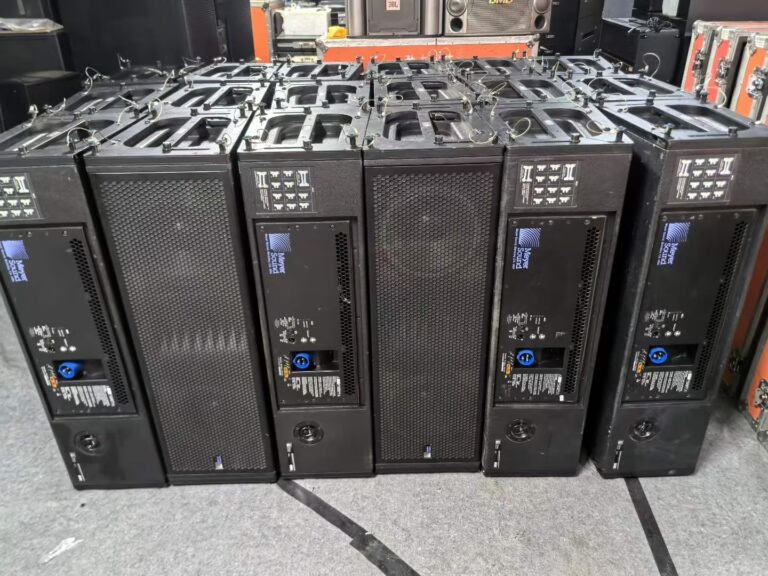
- Each cabinet in a plastic bag, then 20 mm foam on all corners.
- Grilles facing inward when two cabinets share a crate.
- Crates on a pallet, strapped, with a weight mark on the outside.
- Do not stack more than two high; horn sections crack under point load.
Packing is the one line item worth paying for. A crushed horn from bad crating costs more than the crating did.
What about duty and taxes?
Duty depends entirely on the destination. Used professional audio equipment is often assessed as electrical apparatus, with rates from 0% to 25% of the declared value, plus VAT or sales tax. The declared value drives both, which is why some sellers under-declare. Do not accept that. Under-declared shipments get held, and the fine lands on the importer, not the shipper.
Buyers in landlocked countries add one more leg. A container landing in Mombasa or Durban and moving inland by truck can add $400-900 per shipment, and that leg has its own paperwork.
Does the equipment type change the cost?
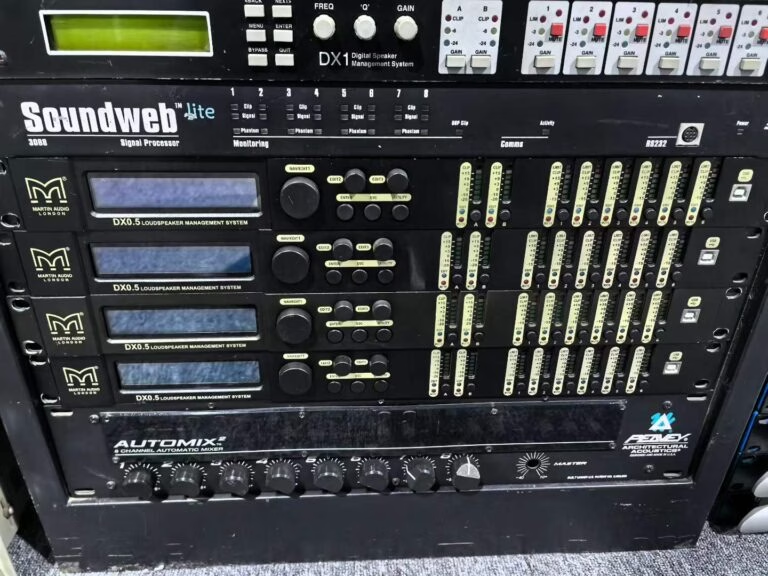
It changes the weight-to-value ratio, which is what really matters. Speakers are heavy and relatively cheap per kilo, so sea freight dominates. Consoles and microphones are light and expensive, so air makes sense. A used digital desk like the Yamaha DM1000 at roughly 22 kg is a textbook air-freight item: $200-300 of freight on a $1,000 purchase is acceptable, while the same $200 on a $300 speaker is not.
How long does clearing customs take?
Sea freight clears in 3-7 working days at a well-run port and 10-14 at a congested one. Air clears in 1-3 days if the paperwork is complete. The paperwork is the variable: commercial invoice, packing list, bill of lading and a certificate of origin. Missing one line on the invoice can add a week and a storage fee of $20-40 per day.
Is buying freight insurance worth it?
Yes, for anything above $500. Cover costs 0.3-0.8% of the declared value, so a $4,000 speaker shipment adds $12-32. Claims are slow and the payout is based on the declared value, which is another reason to declare honestly. Without cover, a dropped crate is simply your loss.
One last tip for first-time importers: ask for the shipment gross weight in writing before accepting a quote. A 2 tonne LCL rate applied to a 3.4 tonne actual load turns a good deal into a bad one, and weight disputes are the most common source of unexpected invoices.
What if you only need one item?
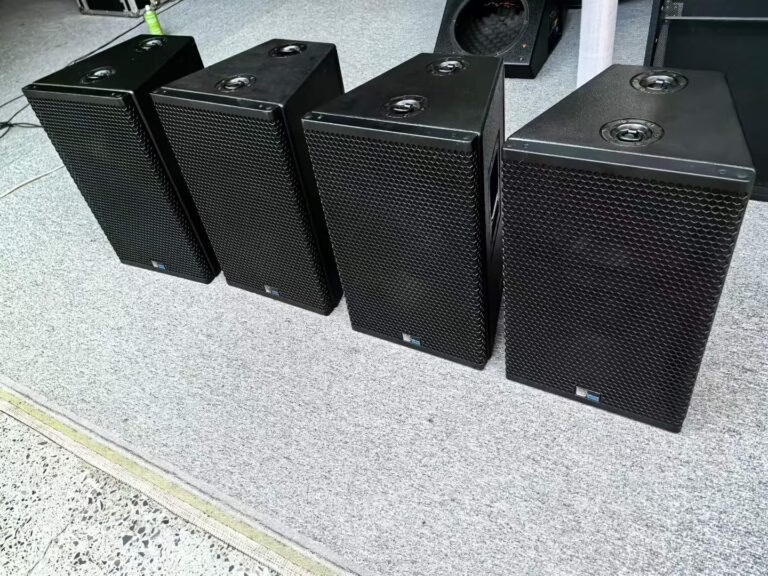
Then you are paying for convenience, and it is worth comparing against a local used listing before ordering from China. One speaker cabinet shipped alone at $8/kg plus crating plus clearance is often within 15% of a local dealer price. The export route pays off from about three units upward.
Key Takeaways
- Air freight: $7-12/kg. LCL sea for 1-2 tonnes: $1,200-2,200.
- Acoustic gear usually breaks even at sea vs air around 300 kg.
- Add 15-25% for crating, port charges, brokerage and delivery.
- Never under-declare: the importer carries the risk, not the shipper.