Description
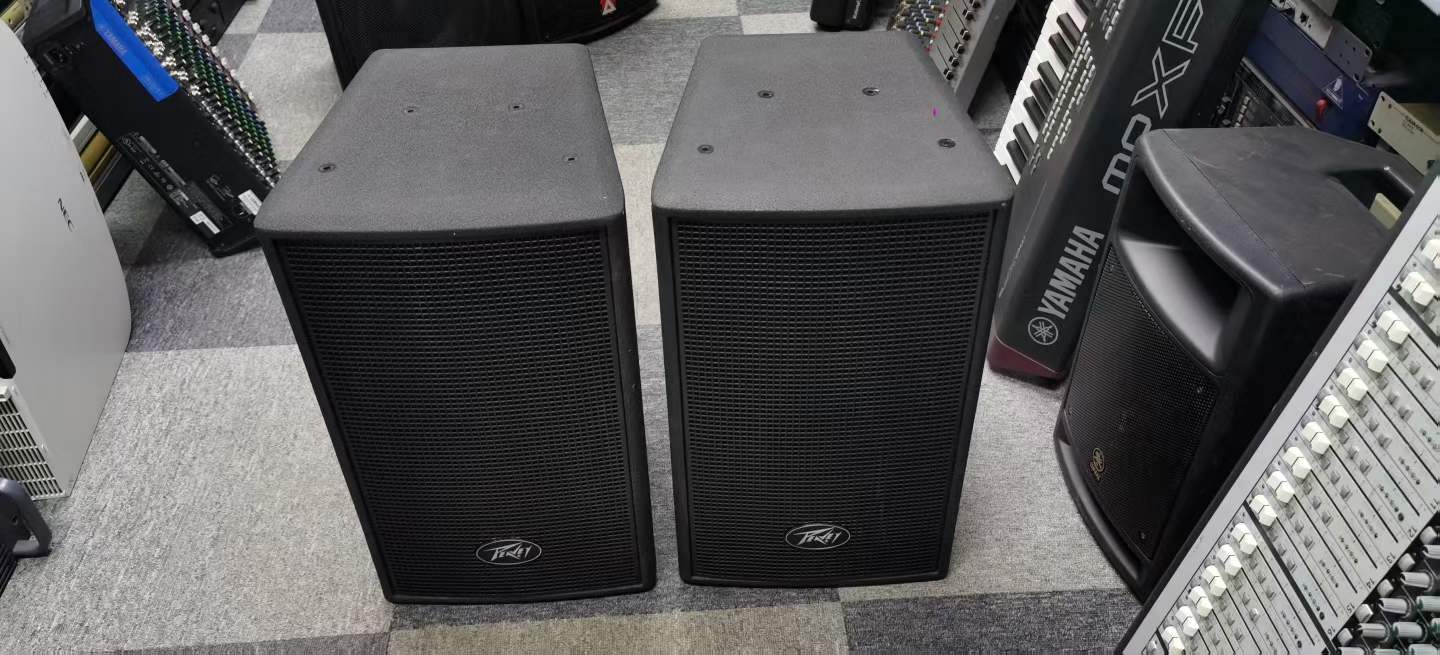
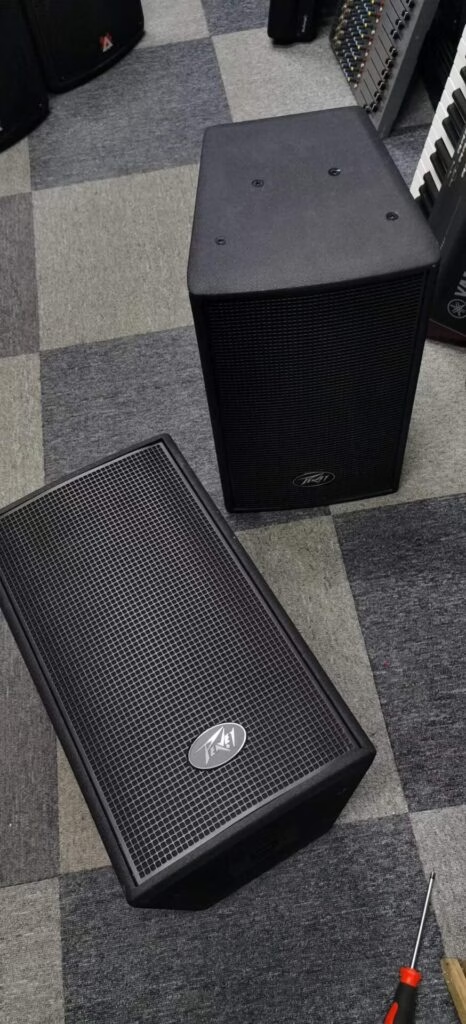
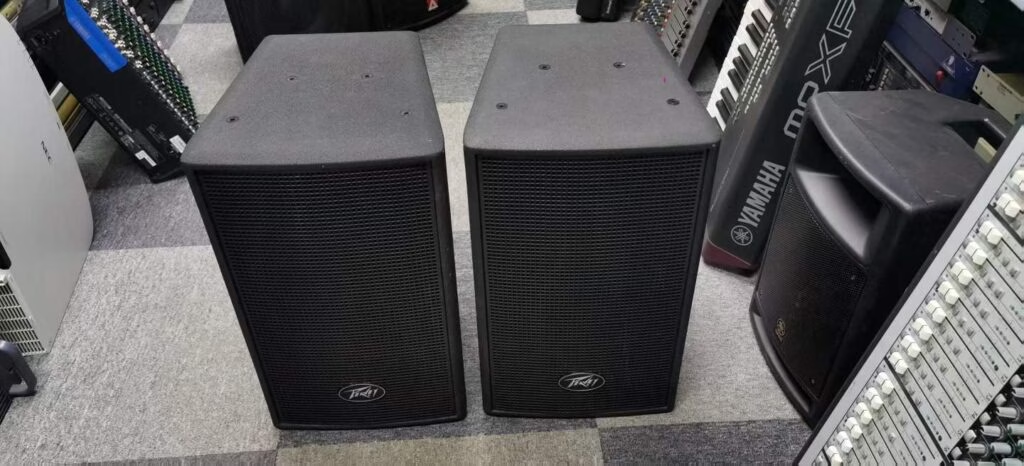
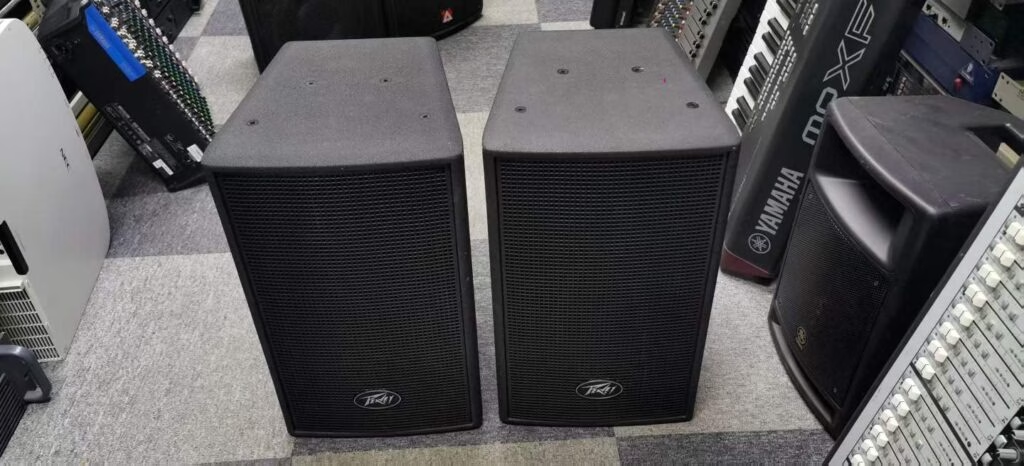
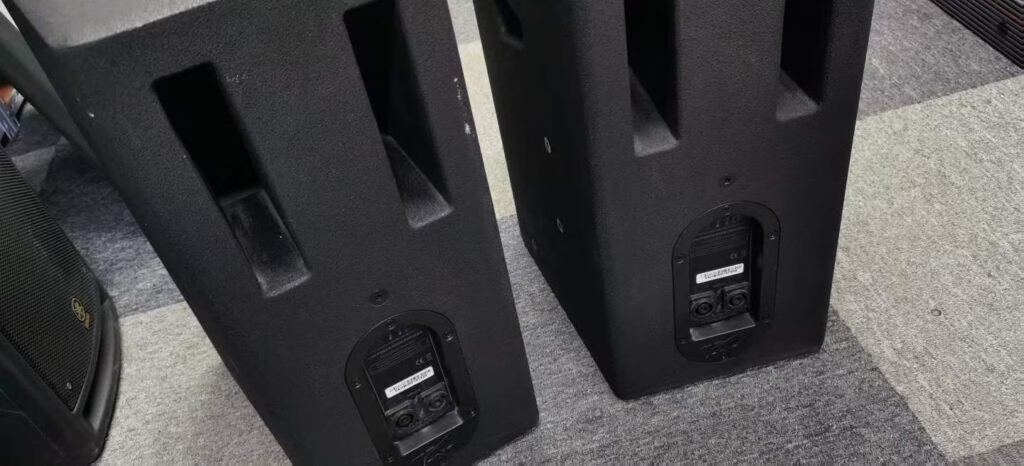
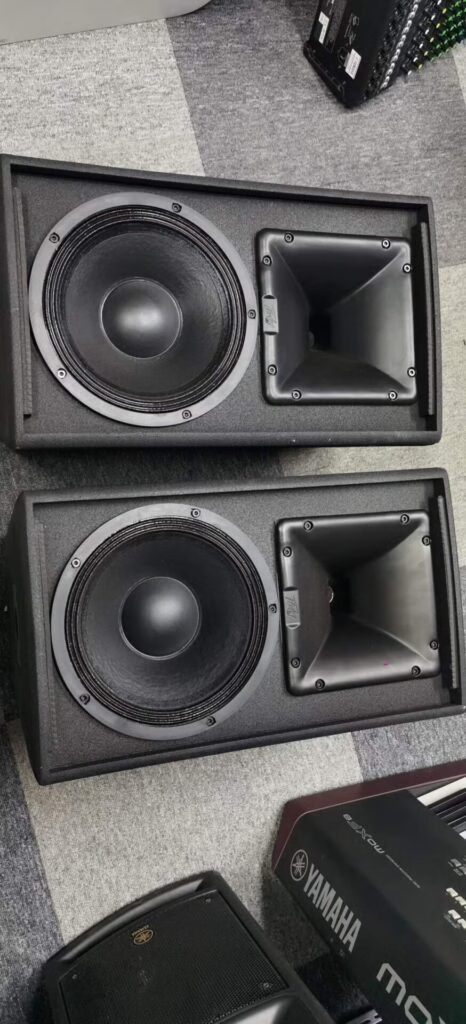
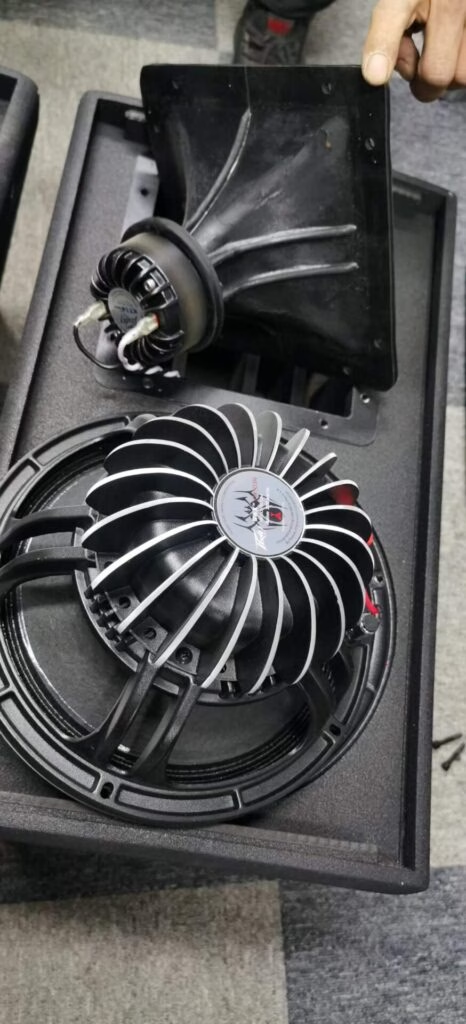
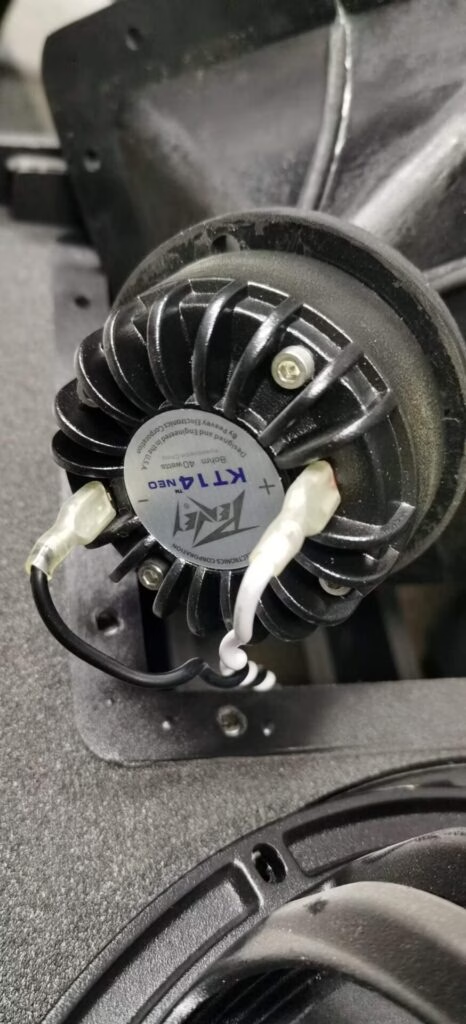
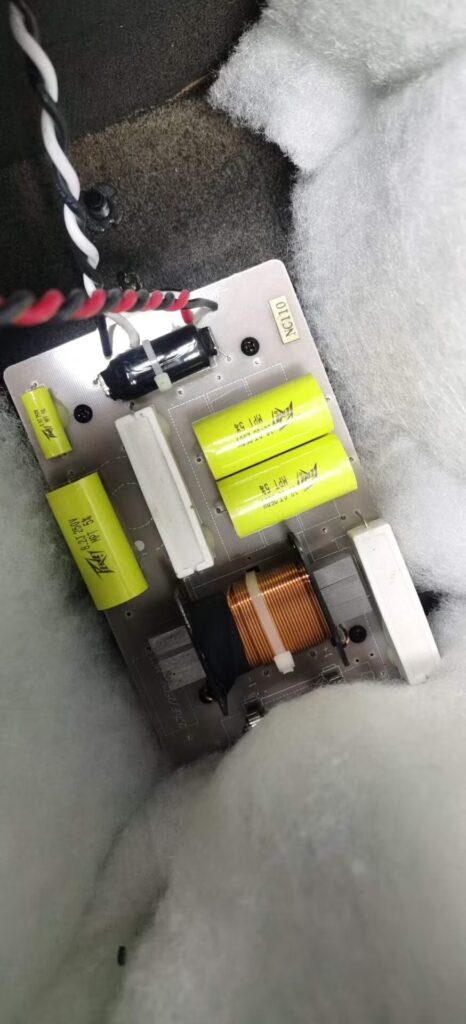
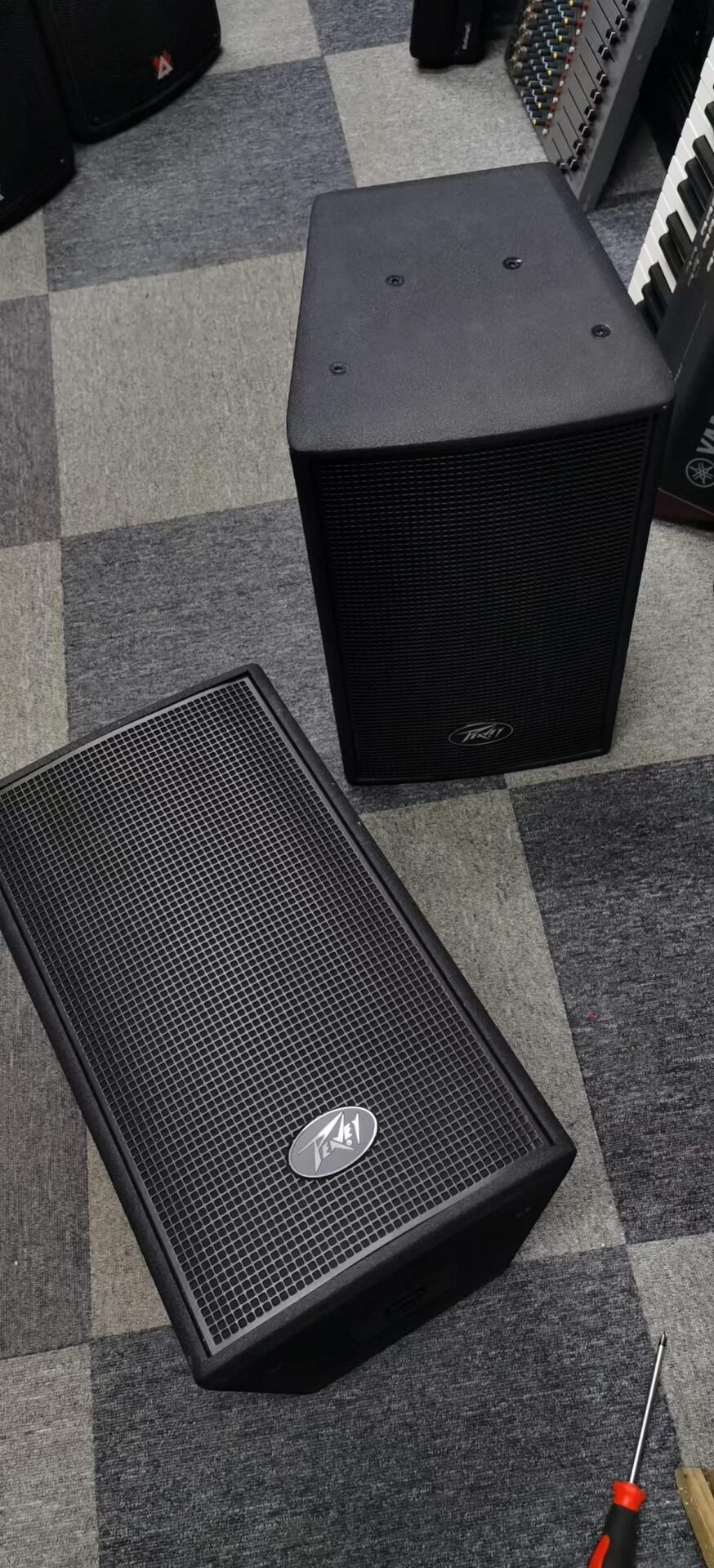
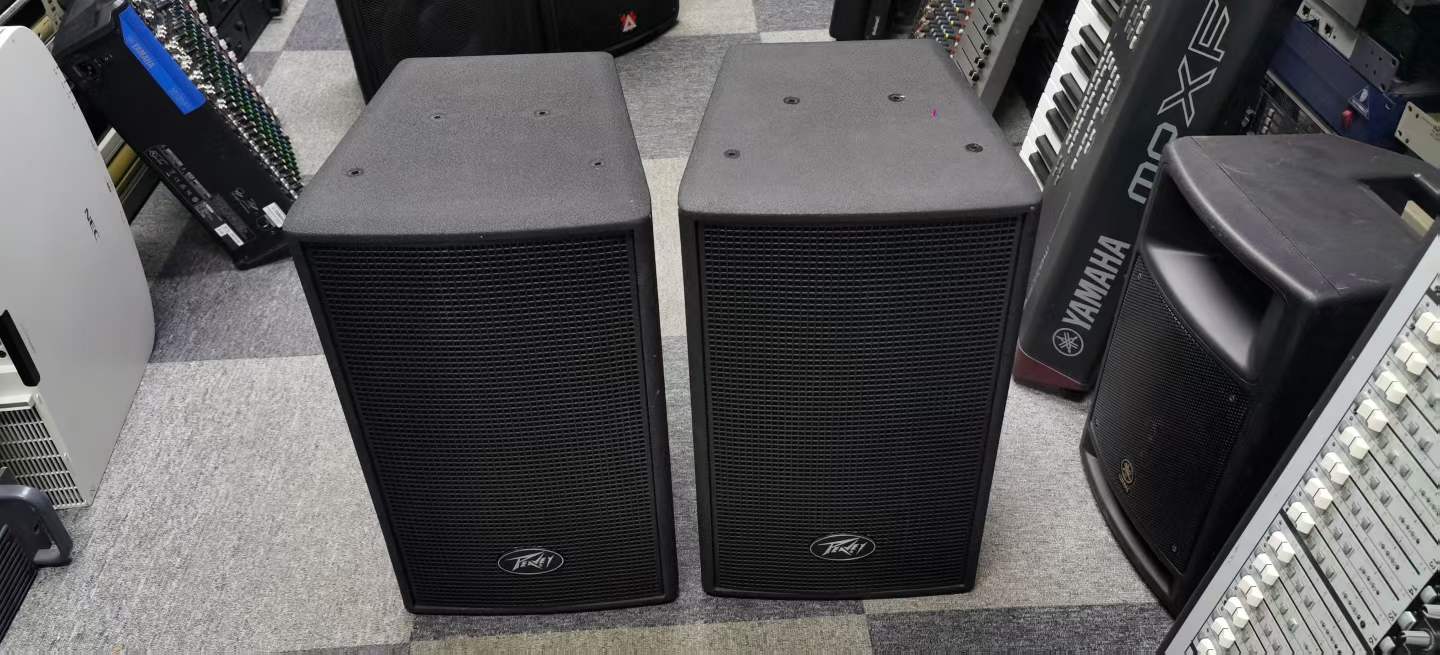
The NC 110 is the smallest box in Peavey’s NC series, and it is the one that ends up doing the most work: wedge on a small stage, infill for a bar system, keyboard or vocal monitor, background music in a room that never asked for a subwoofer. This is a pair, and the photos for this listing cover more than the previous set — you can see the rear panels, the horn driver markings, the crossover board and the cabinet interior, not just the grilles from the front.
Peavey NC 110 specifications
| Parameter | Detail |
|---|---|
| Model | Peavey NC 110 Series |
| Type | Passive two-way full-range loudspeaker |
| Woofer | 10-inch low-frequency driver with vented pole piece |
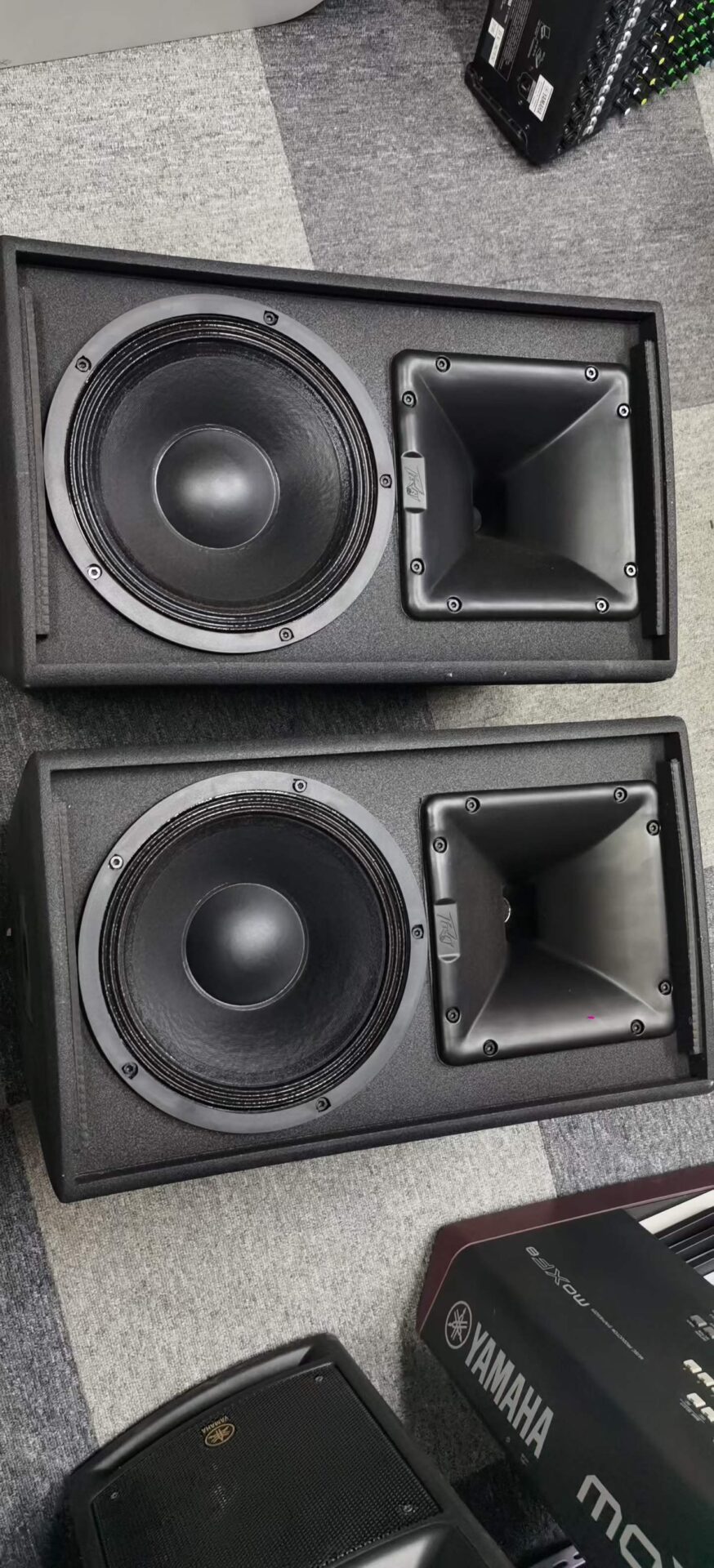
| Horn and driver | KT14 NEO compression driver on a moulded constant-directivity horn |
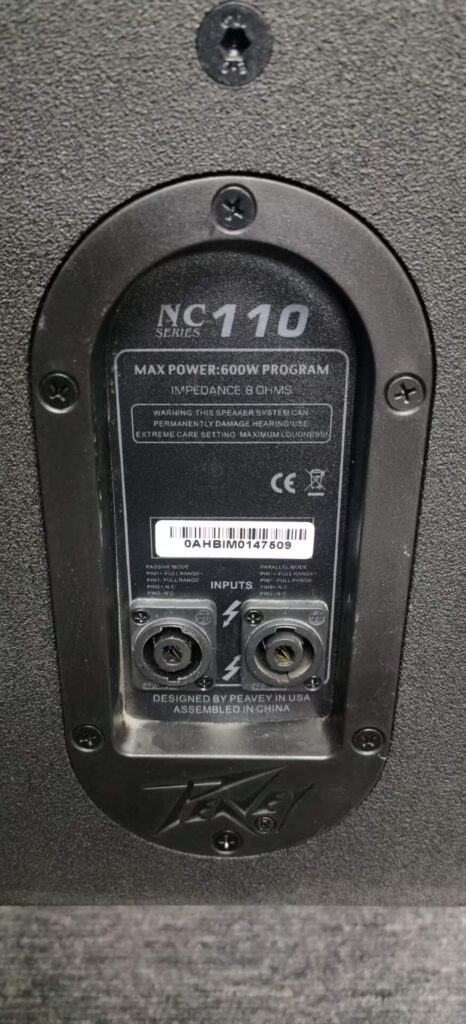
| Power handling | 600 W program, printed on the rear panel |
| Nominal impedance | 8 ohms |
| Inputs | Two NL4 Speakon sockets per cabinet |
| Wiring modes | Passive mode and parallel mode, PIN1+ / PIN1- full range, PIN2+ / PIN2- not connected |
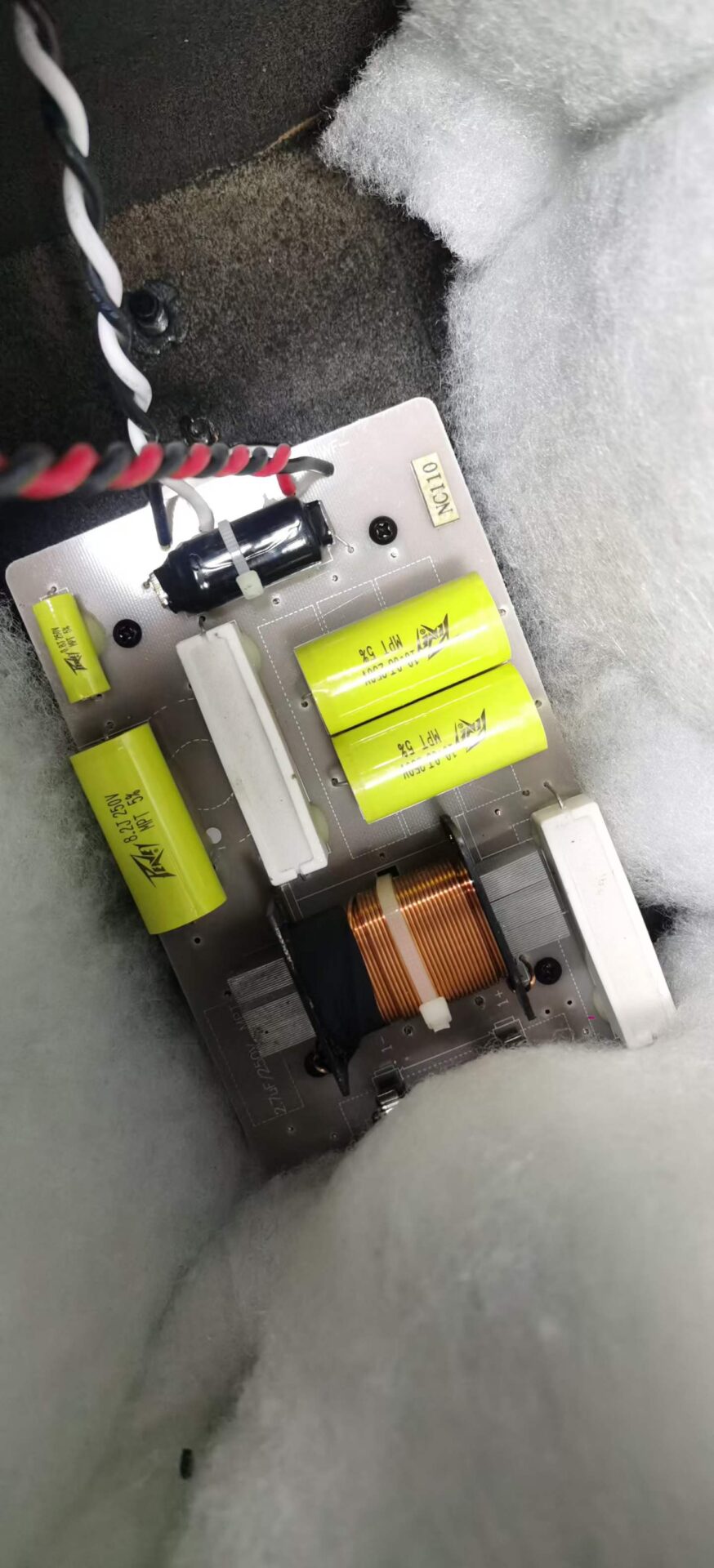
| Crossover | Passive network on PCB marked NC110, with 8.2 uF and 10 uF film capacitors |
| Enclosure | Trapezoidal vented cabinet, matte black textured finish, metal mesh grille |
| Origin | Designed by Peavey in the USA, assembled in China |
| Quantity | Pair, two cabinets |
What is printed on this pair’s rear panels
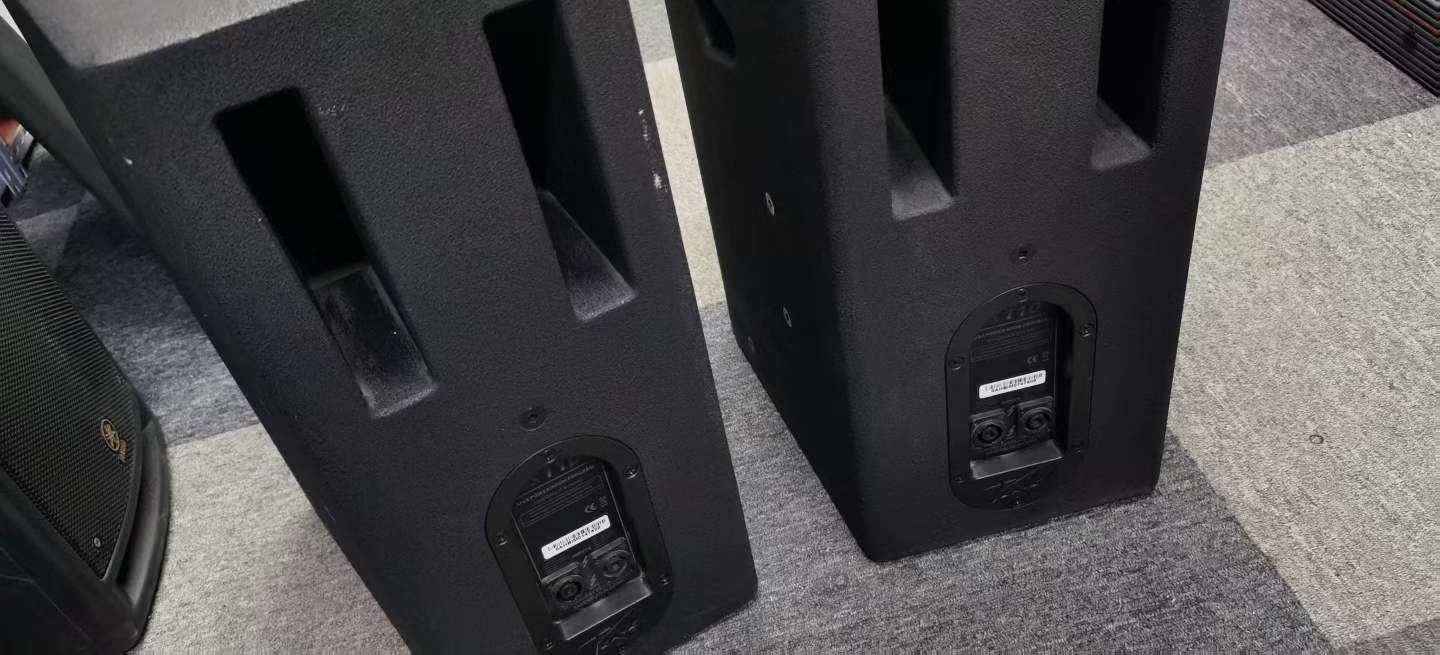
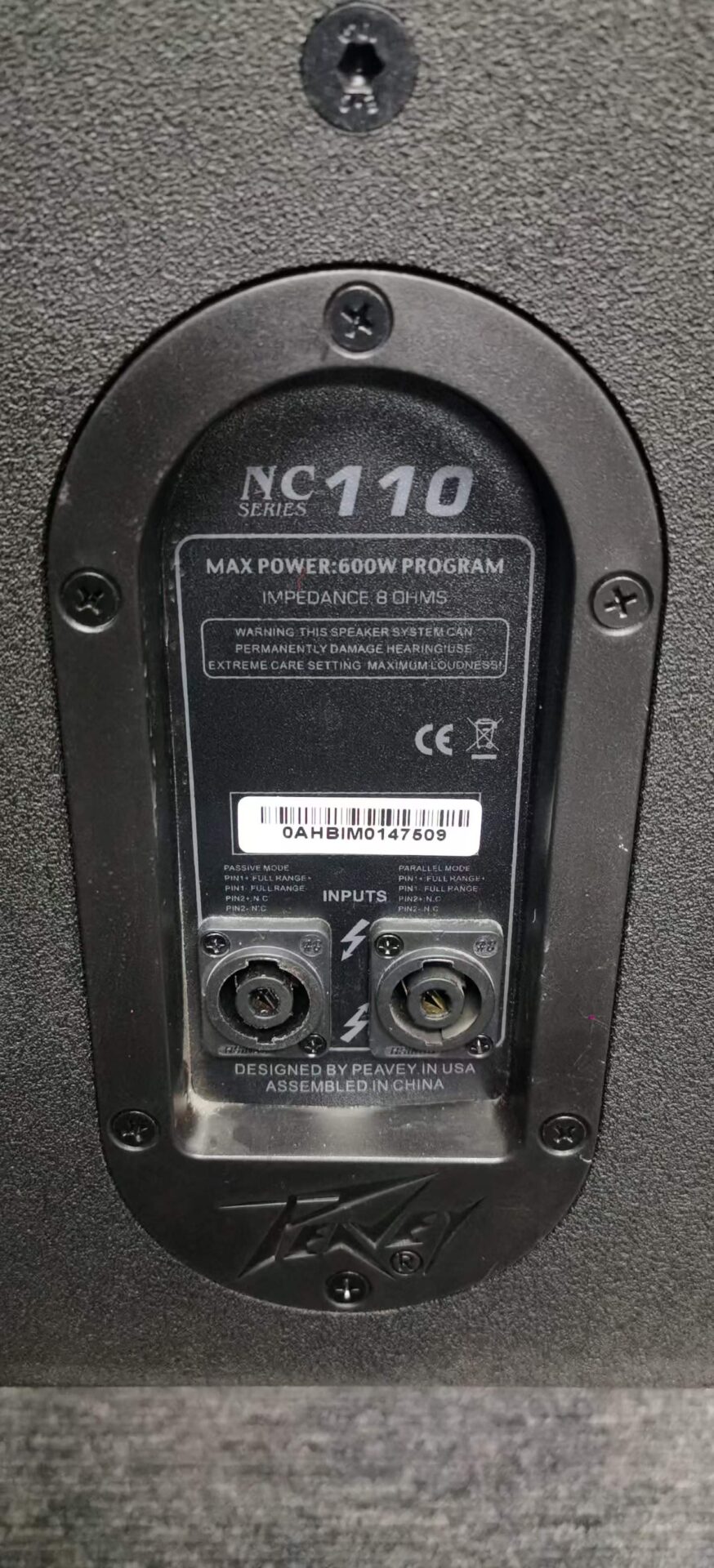
The rear plate on both cabinets reads NC110 SERIES, MAX POWER 600W PROGRAM, IMPEDANCE 8 OHMS, followed by the standard hearing-damage warning and the CE and WEEE marks. Below that the connector section spells out the pinout for both modes: in passive mode PIN1+ is full range positive and PIN1- is full range negative, with PIN2+ and PIN2- marked N.C. Parallel mode is wired identically, which means the second Speakon socket can be used to daisy-chain the next cabinet off the first rather than running a second cable back to the amplifier. The plate is finished with the Peavey logo and the lines Designed by Peavey in USA and Assembled in China.
Two Speakon sockets, two cabinets, one amplifier channel
At eight ohms nominal, two of these cabinets in parallel present a four ohm load to the amplifier. That is the configuration these were designed for: one amp channel, cable to the first box, cable from the first box to the second, done. Because the second socket is a genuine parallel connection and not a passively switched output, the two cabinets see the same signal without any loss or change of level. Four cabinets in the same arrangement would be two ohms per channel, which only makes sense on an amplifier that is rated for it.
Inside: the drivers and the crossover
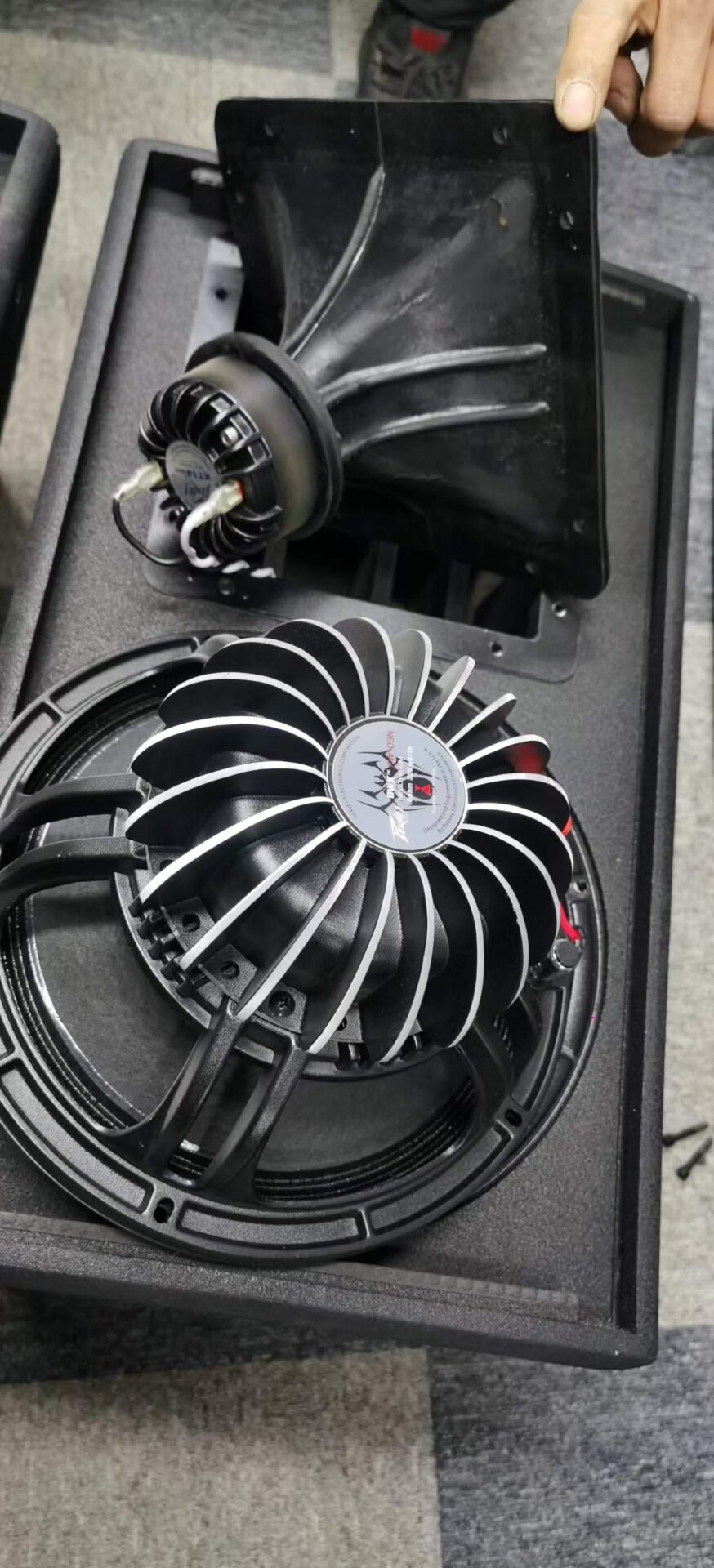
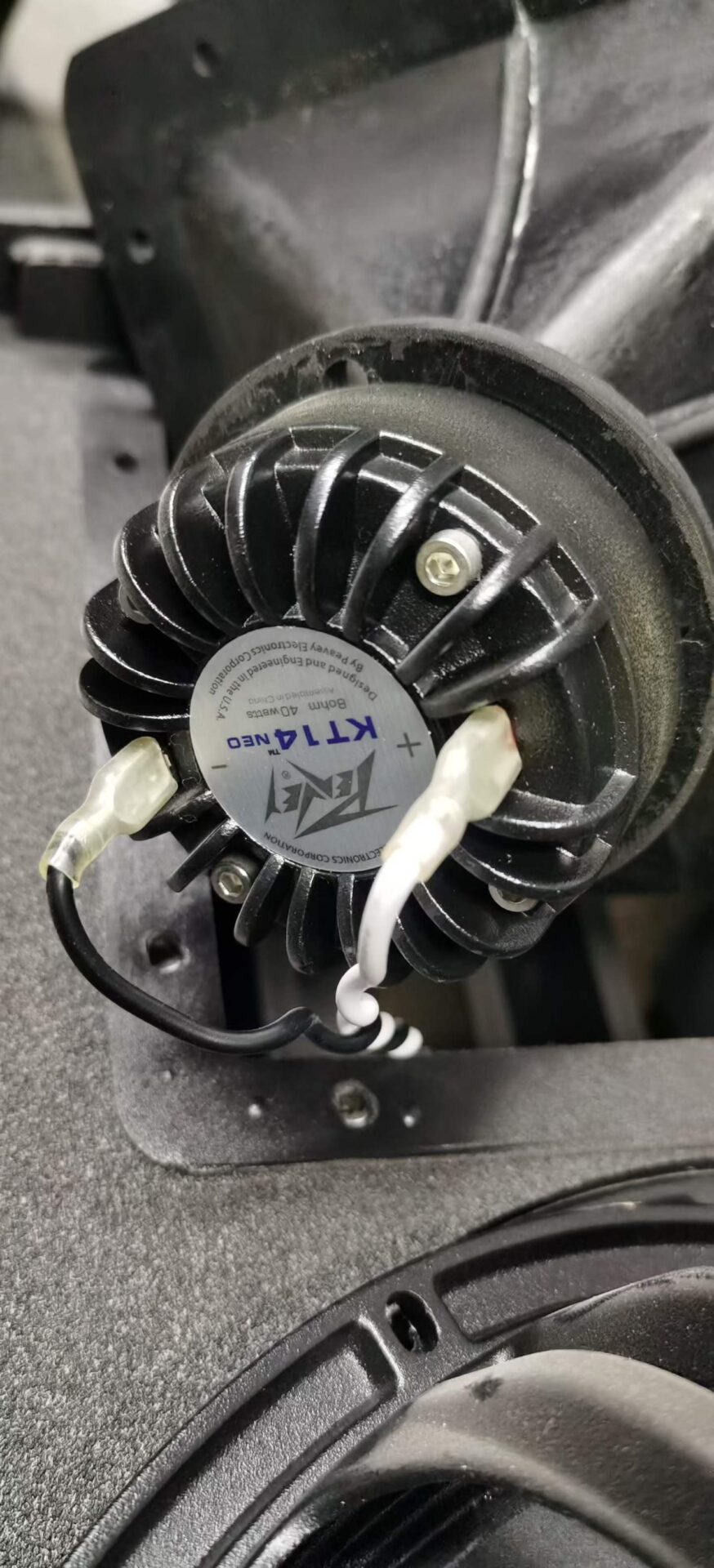
The front of the cabinet carries a ten inch woofer with a pressed steel basket and a vented pole piece, plus a KT14 NEO compression driver bolted to a moulded horn. The driver is marked KT14 NEO, 8 ohm, 40 watts, which is the high-frequency half of the 600 W program figure — the rating that matters is the system rating, not the driver’s own. The crossover is a passive network on a small PCB marked NC110, using 8.2 uF and 10 uF film capacitors plus an air-core inductor, mounted on the rear of the baffle and surrounded by acoustic wadding. The board in the photos is clean, the capacitors are the original Peavey parts, and there is no sign of heat stress or leaking.
Why a passive box still makes sense
There is nothing to switch on, no mains lead to the speaker, no DSP preset to lose and no separate amplifier module that can fail on its own. You drive the NC 110 from whatever amplifier already powers the rest of the system, and if a driver ever gives up you replace a driver instead of writing off a cabinet with a power supply inside it. For rental stock, rehearsal rooms and fixed installs in small venues this is the argument that has kept passive boxes alive long after active speakers became the default.
Condition and what you receive
This pair came out of a working studio and is in very good used condition. The cabinets are square and solid, the grilles are straight and the mesh is intact, the badges are present on both, and the textured black finish shows only light marks consistent with indoor use. Inside, the drivers and horns are intact and the wiring is untouched. The rear panels are clean, the Speakon sockets grip properly, and the serial label is still on the plate. You receive the two cabinets as pictured. They are used equipment, not new stock, so expect the honest signs of a box that has been carried in and out of a room rather than a showroom example.
Shipping and inspection
We ship from China. Cabinets of this size go out individually boxed with corner protection and the grille face padded, and a pair ships as two parcels. Before dispatch each cabinet is checked for driver rub, the horn is checked for a damaged diaphragm, and the Speakon sockets are tested for continuity on both pins. If you need a specific connector type on the cable or a different packing arrangement for a freight forwarder, tell us at the time of order. Price is on request for this pair; they are in stock now.
Key takeaways
Peavey NC 110 passive two-way 10-inch loudspeaker, pair. 600 W program, 8 ohms, KT14 NEO horn driver, dual NL4 Speakon inputs with passive and parallel wiring, passive crossover on an NC110 board. Very good used condition, in stock, price on request, ships from China.
More views