Do the grades mean the same thing everywhere?
**’Like New’** means no visible scuffs, no repaired parts, all original components, typically under 10% cosmetic wear. **’Excellent’** allows light scuffs on the cabinet or rack ears but requires every function to work. Neither grade tells you how old the unit is. That is what serial numbers are for.
There is no industry standard. Every reseller writes their own definitions, and the same physical speaker can be “Excellent” at one warehouse and “Good” at another. Treat the words as advertising and the photographs as evidence. Ask which parts are original, what was tested, and for how long.
What does each grade actually cover?
A workable reading of the common four tiers:
| Grade | Cosmetic | Functional expectation | Discount vs mint |
|---|---|---|---|
| Like New / A+ | Under 10% wear, box or case | 100% tested, 0 repairs | 0% (reference) |
| Excellent / A | Light scuffs, clean grilles | 100% tested, minor service OK | 10-15% |
| Good / B | Visible scratches, dented corner | Works, may need new foam pads | 25-35% |
| Fair / C | Heavy wear, missing grille | Parts or repair, faults declared | 50-70% |
Why is age missing from every grade?
A K-array KF12 in “Excellent” condition from 2019 has been through five years of rental stock. One from 2023 has been through two. Same grade, different remaining life on the drivers and capacitors. Ask for the serial number and check it against the manufacturer date code. On JBL and Yamaha gear that code is printed on the label, and a 2015 build date changes your maintenance budget even if the box looks perfect.
What should you ask beyond the label?
Five questions worth more than any grade:
- How long was it run on test, and at what output level? Ten minutes at low volume proves almost nothing.
- Were any drivers, amp modules or pots replaced, and with original parts?
- Does it include the flight case, power cable and original accessories?
- Is there a photo of the rear panel and serial number, not just the front?
- What happens if one channel is dead on arrival: refund, replacement, or store credit?
Grade inflation is real. A reseller holding 40 identical units will call the whole lot “Excellent” and ship the best three to buyers who ask. Requesting individual photos of the specific serial number you will receive costs nothing and filters out sloppy sellers fast.
When is a lower grade the smarter buy?
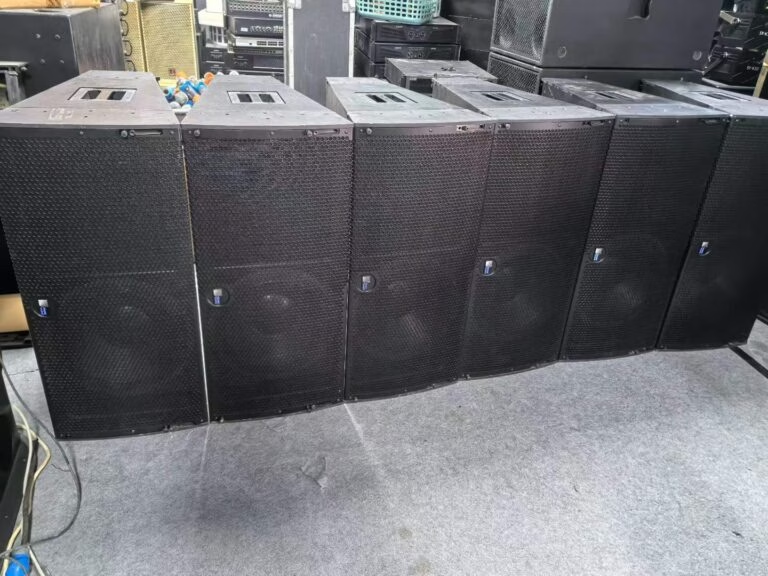
Often. A “Good” pair of passive 10-inch boxes at 40% off, with foam pads you can replace for 25 USD, beats an “Excellent” pair whose price premium rests on clean paint. Paint does not make sound; drivers, cones and amp modules do. Grade up when the unit goes on a rental shelf where clients see it. Grade down when it lives in a fixed install behind a grille.
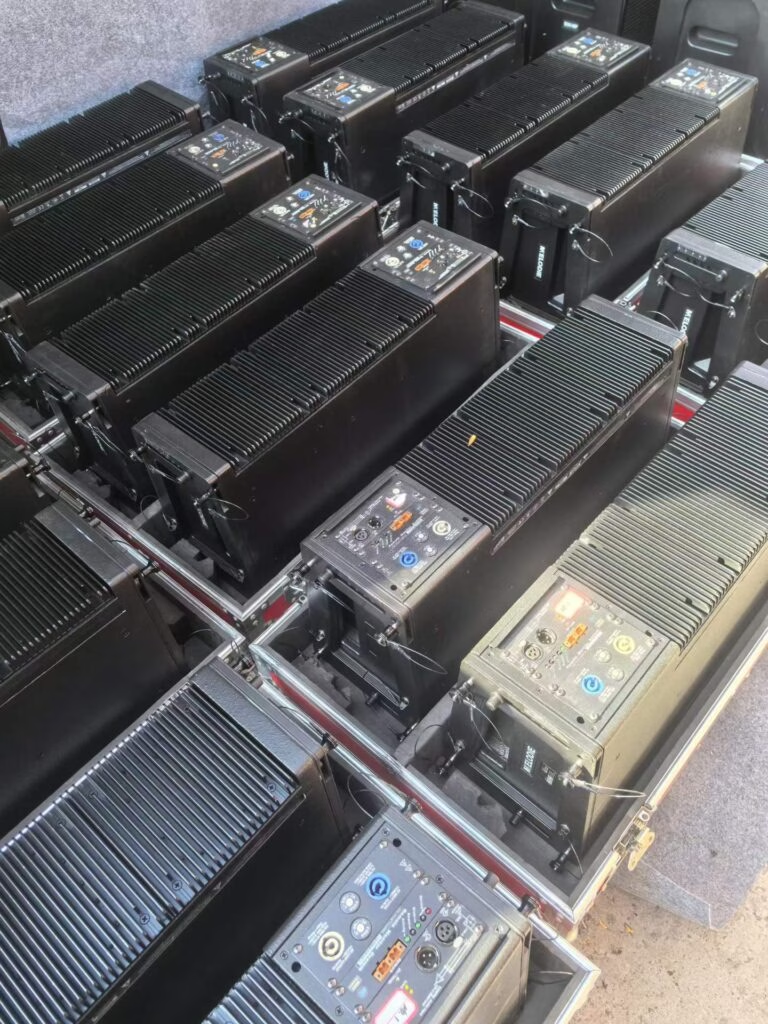
The K-array KF12 self-powered speaker is a good example of a unit where completeness matters more than cosmetics, and all 12 units are documented. For a hands-on check before you accept any grade, the guide on how to test a used PA speaker before you buy runs through the 20-minute bench routine. More stock sits under used speakers.
Key Takeaways
- ‘Like New’ means under 10% cosmetic wear and no repairs; ‘Excellent’ means light scuffs and fully functional.
- No industry standard exists. Grades are seller-defined and often inflated on bulk lots.
- Serial number and build year matter more than the grade label.
- A lower grade with replaceable wear parts is usually the better value.