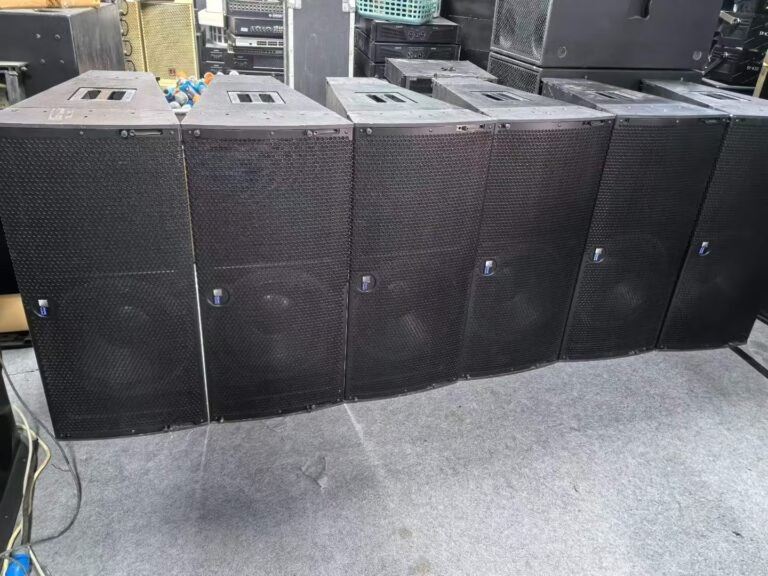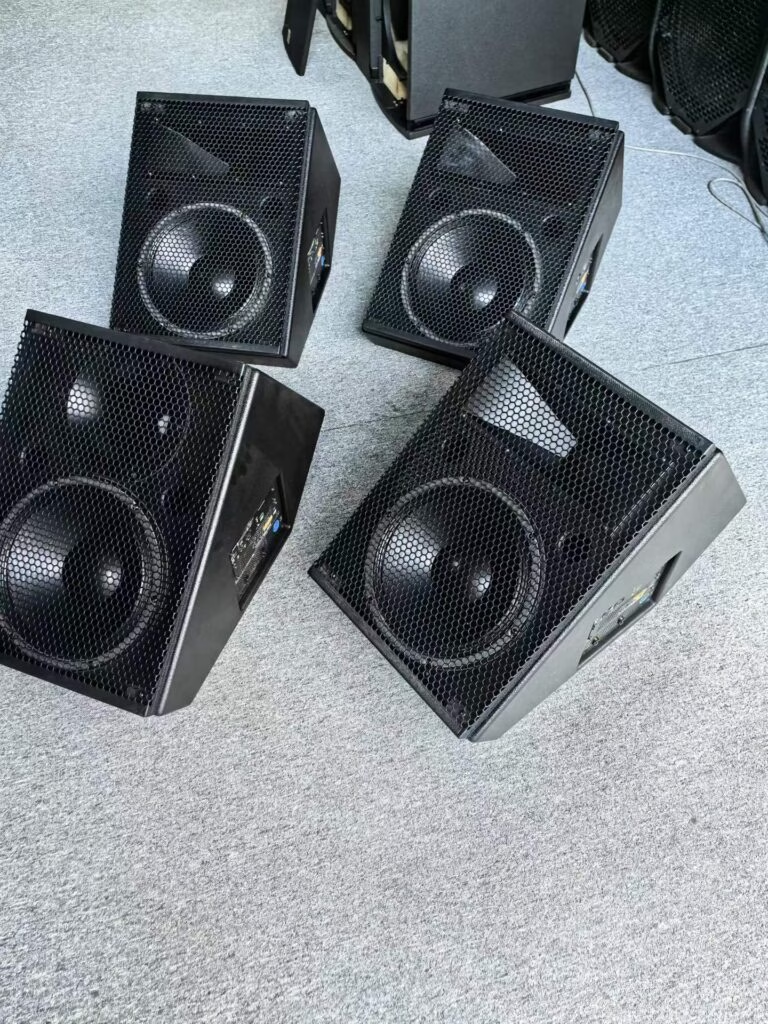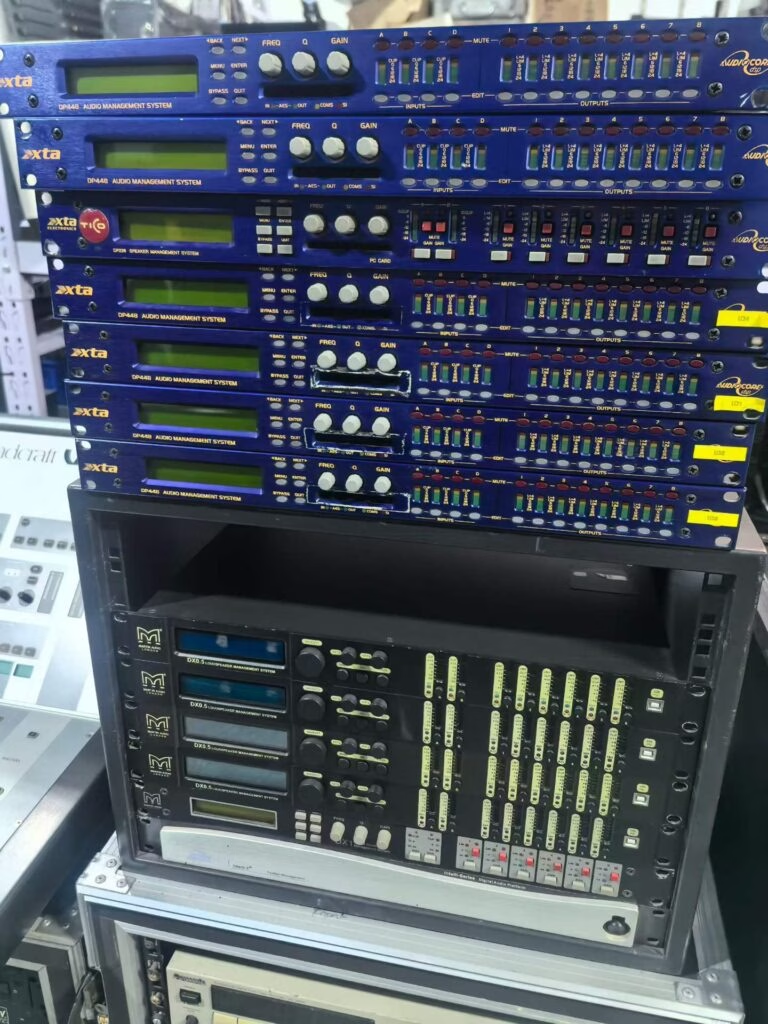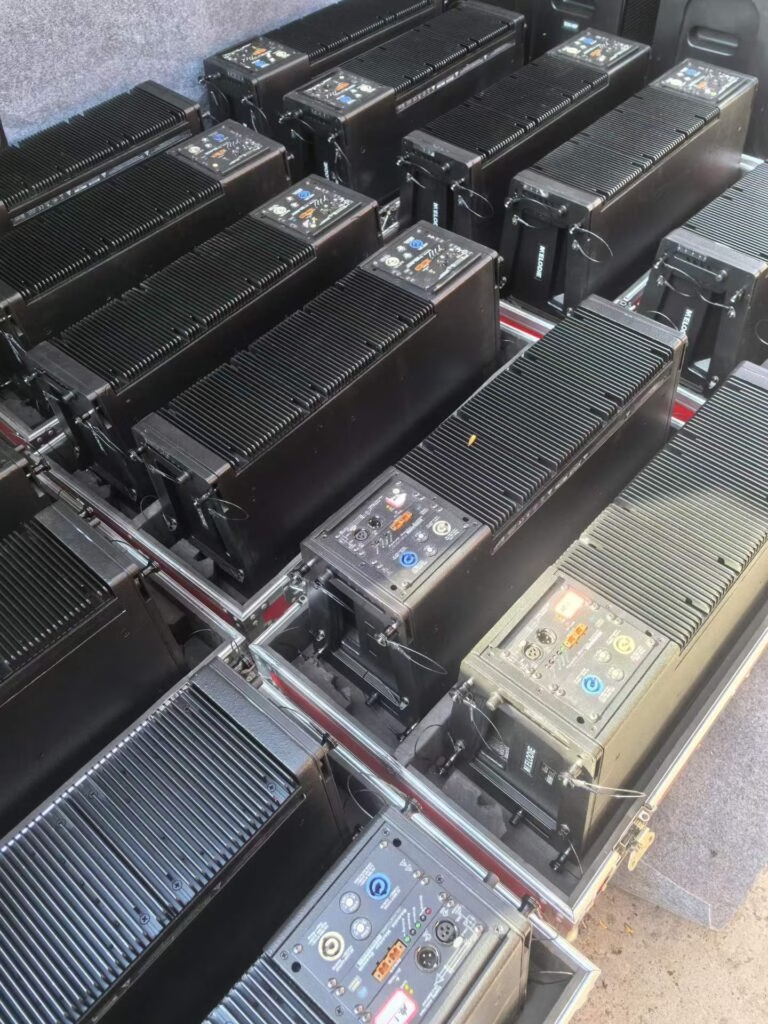
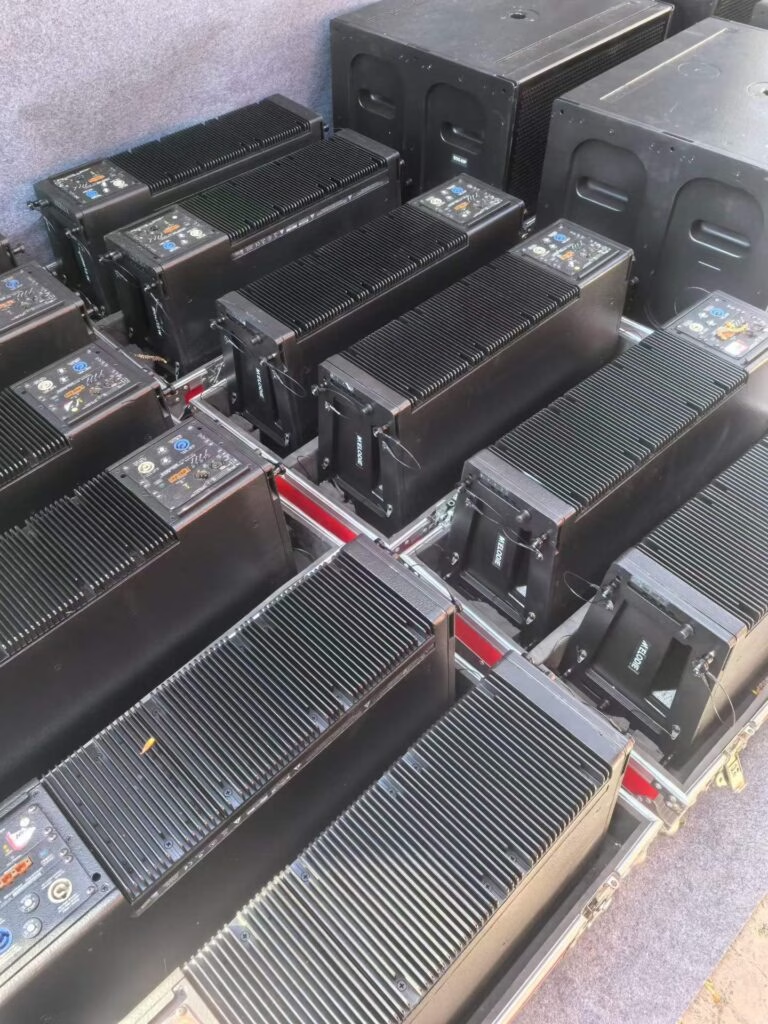
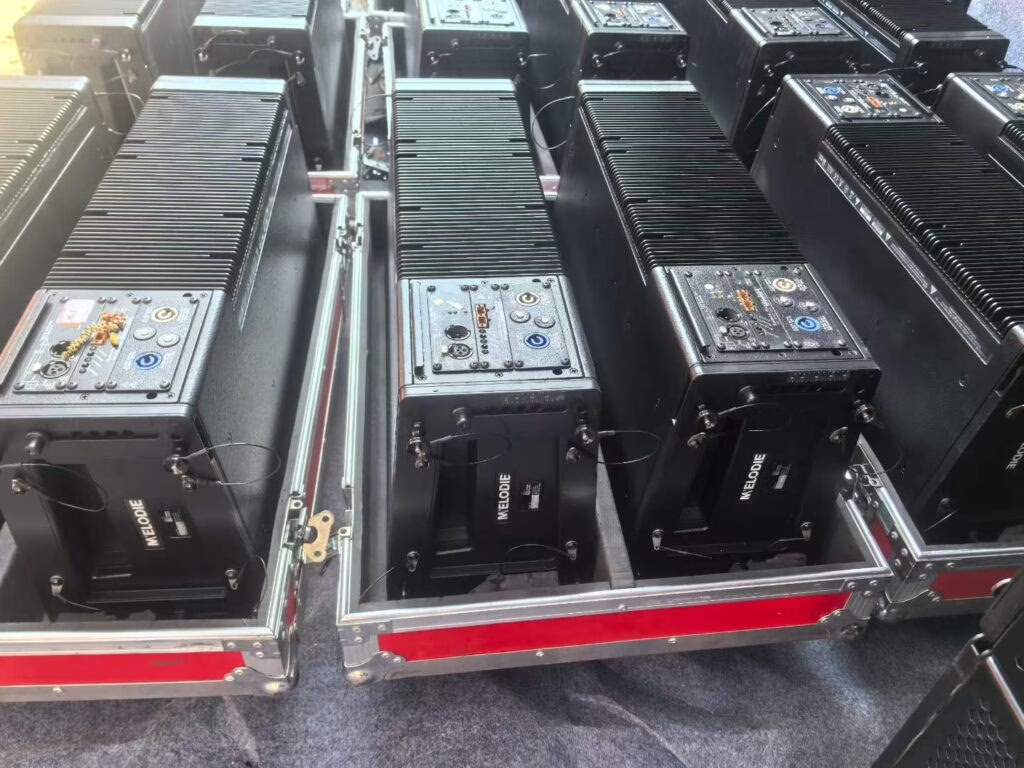
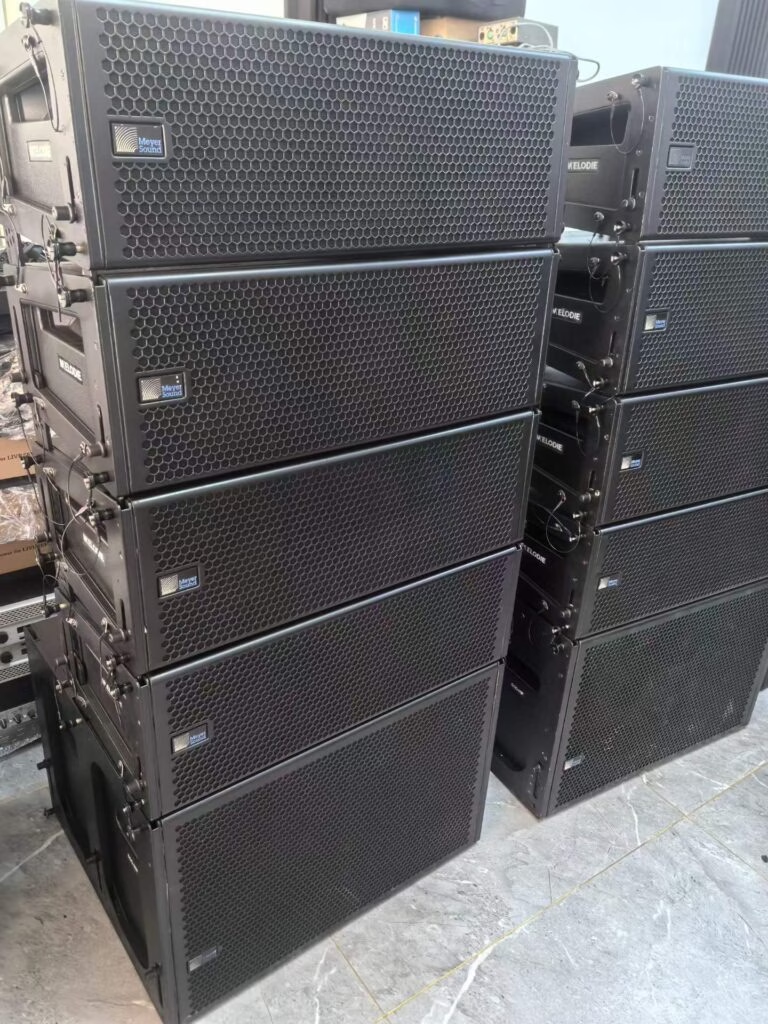
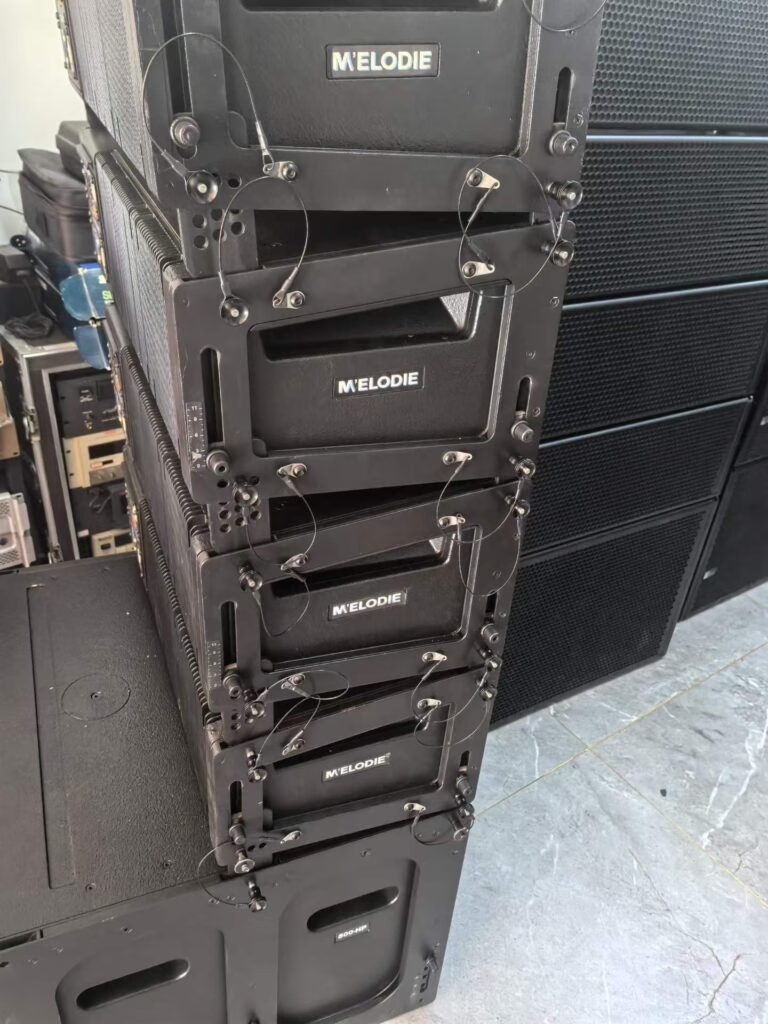
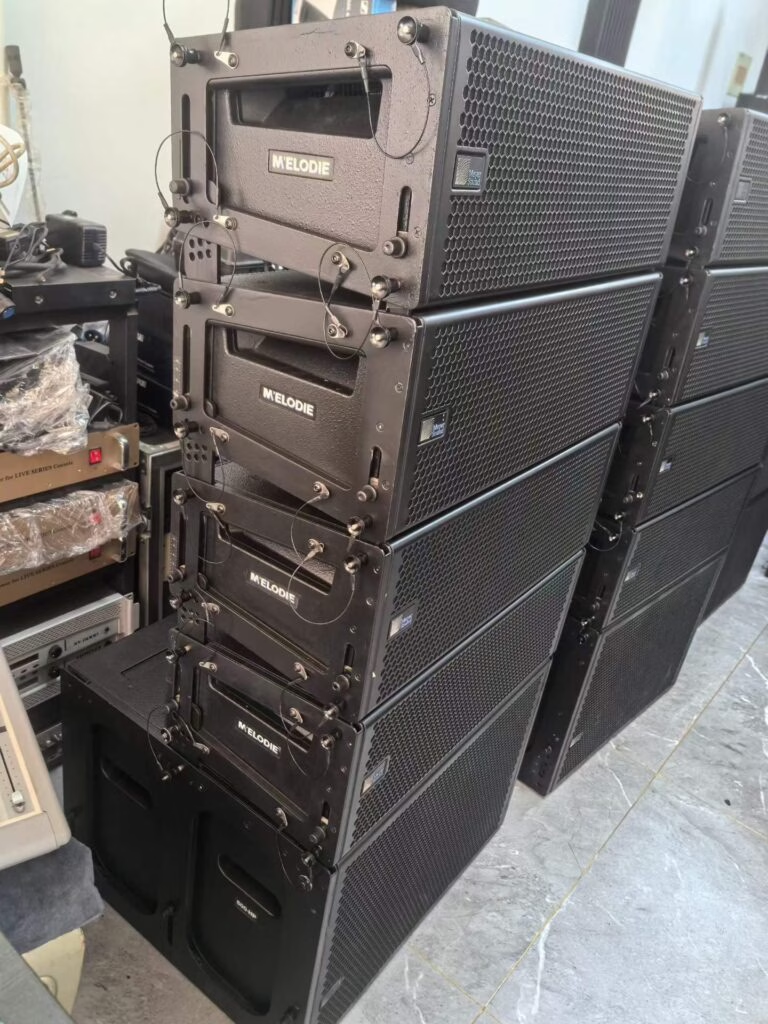
Description
If you are building a main PA for a mid-sized venue and you want real Meyer Sound line-array behaviour without the truck and the rigging crew that a large system demands, the M’elodie is the box that has carried that job for well over a decade. It is a compact, self-powered, curvilinear line array loudspeaker from Meyer Sound — the American manufacturer behind some of the most respected self-powered touring systems in the industry — and it was designed specifically to be flown in small arrays over theatres, clubs, houses of worship, corporate venues and mid-sized arenas.
The units offered here are used, in stock and ready for inspection. They are sold as M’elodie line array elements, and this listing covers both the loudspeaker itself and the practical questions buyers usually ask before committing to a system: what the box actually does, how it behaves in an array, what you need to rig it, and how it pairs with the 600-HP subwoofer that was designed to sit underneath it.
What the M’elodie actually is
The M’elodie is a two-way self-powered line array element. Each enclosure carries two 8-inch low-frequency drivers and a single compression high-frequency driver with a 3-inch voice coil, with dedicated amplification for the low and high sections built into the cabinet. That is the core of the Meyer philosophy: the loudspeaker, the amplifier and the processing are one product, matched at the factory, so what you hang is what was voiced on the design bench.
Because the box is only 233 mm tall, an array of four, six or eight elements stays physically short but still produces a coherent vertical wavefront. That is the whole point of a curvilinear array: the vertical coverage is created by the array, not by a single wide box, so you can put sound exactly where the audience is and keep it off the rear wall and the ceiling.
Key specifications
| Configuration | 2 × 8″ low-frequency drivers + 1 × compression HF driver with 3″ voice coil |
|---|---|
| Coverage (single element) | 100° horizontal × 6° vertical |
| Frequency response | 70 Hz – 18 kHz (±4 dB) |
| Operating range | 65 Hz – 20 kHz |
| Maximum SPL | 134 dB peak |
| Amplification | Self-powered, two-channel Class D, separate LF and HF amplification |
| Processing | Onboard DSP, phase correction, array compensation |
| Dimensions (W × H × D) | 725 × 233 × 324 mm |
| Weight | 28.1 kg per element |
| Arranging | Curvilinear array, adjustable vertical coverage across multiple cabinets |
Why self-powered matters in this size of system
With a passive line array you buy cabinets, then amplifiers, then a processor, then you spend a day making them agree with each other. The M’elodie skips that. Every element has its own amplification and its own processing, so the correction curves, the phase alignment and the array compensation are already inside the box. When you add elements to the array, the system already knows how to behave.
In practice this shortens load-in and shortens setup. You run power and signal, you hang the array, and you are tuning the room instead of tuning your racks. For a venue that hosts something different every night — a conference on Tuesday, a rock show on Friday — that difference in turnaround time is worth as much as the sound quality.
The curvilinear advantage
A conventional point-source box throws a cone of sound. It hits the front rows hard and the back rows with whatever is left. A curvilinear array is different: each element is aimed at a slightly different slice of the audience, so the array behaves like a stack of small boxes each doing one job. The result is more even front-to-back coverage at lower overall level, which is easier on the ears and easier on the room.
The M’elodie gives you 100° of horizontal coverage per element, which is generous for a compact box and reduces the number of hangs you need in a wide room. Vertically, the 6° per element is what you shape: fewer boxes for a shallow room, more boxes for a deep one, with the splay between cabinets set to match the seating.
Pairing with the 600-HP subwoofer
The M’elodie is a full-range element down to about 65–70 Hz, which is plenty for speech, corporate and many music applications on its own. For anything that needs real low-end weight — live bands, DJ events, dance — the natural partner is the Meyer Sound 600-HP subwoofer from the same family. The processing in the M’elodie is designed with that pairing in mind, so the crossover and the alignment fall into place rather than being fought into place.
Because both are self-powered and both use the same control philosophy, a M’elodie / 600-HP system behaves like one product rather than two. That matters when you are running a system without a dedicated system tech every night.
Where this system fits
- Theatres and auditoriums — even coverage across stalls and balcony without blasting the front rows.
- Houses of worship — intelligibility at moderate level, with the array keeping energy off hard rear walls.
- Clubs and live music rooms — four to eight elements per side plus subs gives genuine touring-grade output in a small footprint.
- Corporate and conference venues — fast load-in, single-operator friendly, consistent from room to room.
- Mid-sized arenas and sports halls — as a main PA where a large-format array would be overkill and under-used.
Rigging and footprint
At 28.1 kg per element and 233 mm tall, the M’elodie is one of the easier line array elements to handle. A typical four-to-six element hang can be built by a small crew, and the short cabinet height means the array stays visually discreet in rooms where a large hang would dominate the architecture. The 725 mm width keeps it proportionate in narrow proscenium spaces.
As always with flown systems, the flying hardware and the rigging points are a separate consideration from the loudspeaker itself. Buyers should confirm what frame, bumper and rigging accessories are included in the package they are quoting, and have the hang signed off by a competent rigger for the venue.
Buying used Meyer Sound
Meyer Sound equipment holds its value because it holds its performance. The self-powered architecture means there is no amplifier matching to get wrong, and the cabinets are built for a touring life. When you buy used, the questions worth asking are the practical ones: whether the elements are a matched set, whether the grilles and cabinets are straight, whether the connectors and onboard electronics have been serviced, and whether the flying hardware that comes with the package is complete.
We are happy to answer those questions directly for the units in stock, and to provide additional photographs of any specific detail — rear panels, connectors, cabinet corners, grille condition — on request. If you are comparing several used M’elodie packages, ask each seller the same list of questions and the differences become obvious very quickly.
Availability and enquiries
These M’elodie line array elements are in stock and available now. Pricing is quoted on request, because a fair figure depends on how many elements you need, whether subs are included and where the system is shipping. Tell us the room, the coverage you need and the number of elements you are considering, and we will come back with a package that fits.
For specifications, photographs, condition reports or a shipping quote, get in touch. If you are also outfitting the rest of the system, it is worth looking at our PA systems and speakers ranges for matching elements, monitors and subwoofers.