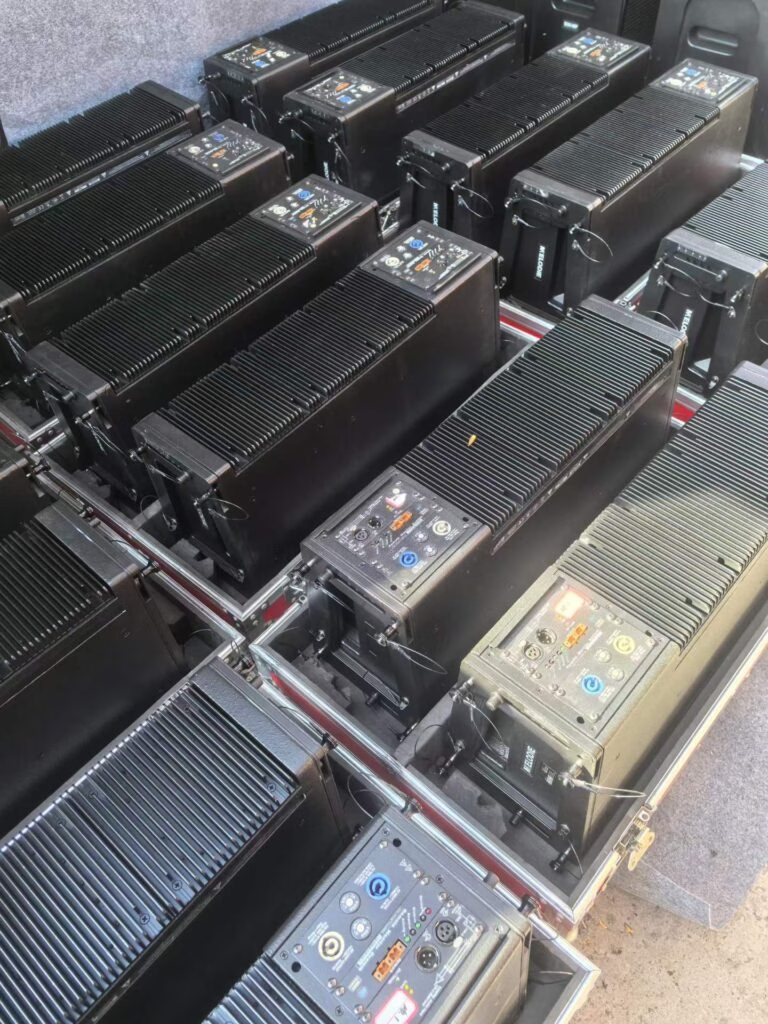
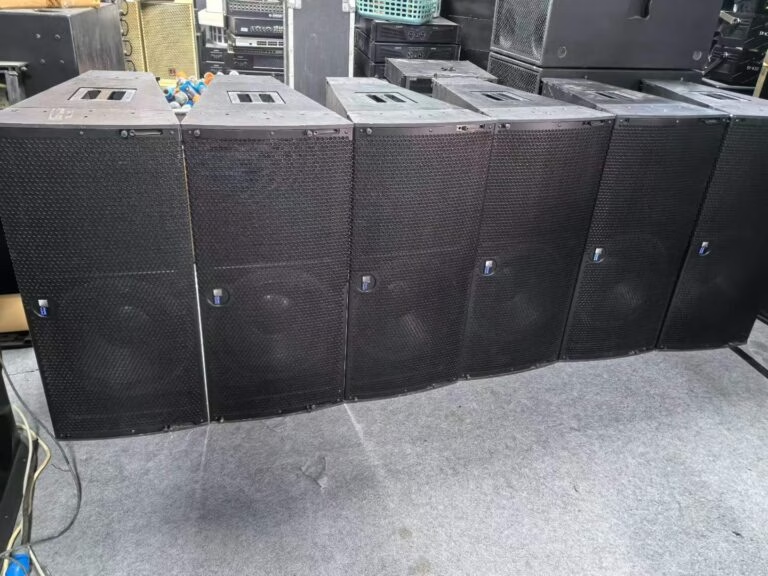
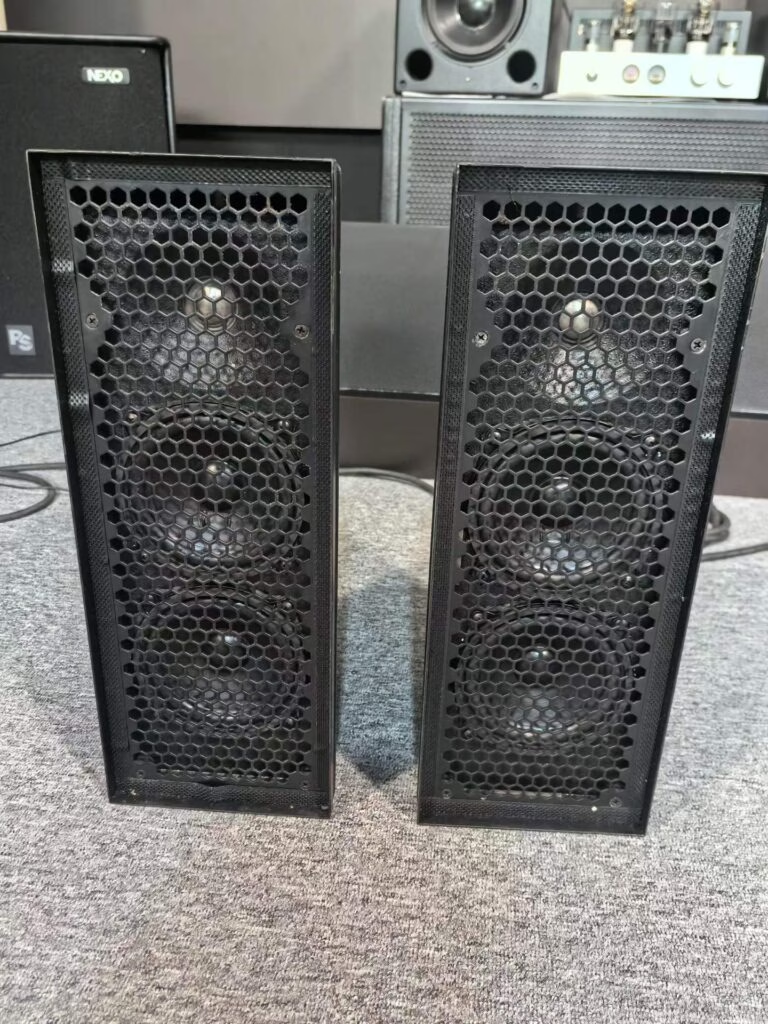
In the used audio trade, ‘Excellent’ means fully working with light cosmetic marks and original parts — usually 80–90% of new value. ‘Like New’ means near-mint cosmetics, under 10 hours of use, with box or flight case — 90–100% of new value. Neither grade says anything about sound quality, so you still test before paying.
The problem with these labels is that sellers define them. German dealers grade strictly, UK pawn shops grade generously, and Chinese export lots often grade per pallet. Same words, very different gear.
What do the standard condition grades mean?
| Grade | Cosmetics | Function | Typical price vs new |
|---|---|---|---|
| New / Open box | Unmarked | Untested or factory tested | 80–95% |
| Like New | No visible wear | Fully tested | 70–85% |
| Excellent | Light scuffs, clean grilles | Fully tested | 55–70% |
| Good | Scratches, faded paint | Works, minor faults | 35–50% |
| Fair / Parts | Dents, missing knobs | Faulty or intermittent | 10–25% |
Note the jump between ‘Excellent’ and ‘Good’. That 20-point gap is where most disputes happen, because a seller’s ‘Good’ often means a blown tweeter or a noisy fader.
Why does ‘used speakers for sale UK’ pricing look so different from China lots?
Retail used listings in the UK — the phrase most buyers type into search — are priced for one buyer walking into a shop, with VAT and a 3-month warranty. Export lots from China are priced per unit for resellers, no warranty, buyer arranges freight. Expect the UK retail route to sit 40–60% above a tested China lot on the same model.
Take a used JBL KP4010 passive 2-way 10-inch speaker. A UK shop might ask £180 each in ‘Good’ condition. A Chinese exporter sells an ‘Excellent’ unit for around $95–$120 FOB. The difference is not the speaker, it is the warranty and the shop rent.
How do you verify a grade before you buy?
- Ask for 8–12 photos: front, rear panel, serial plate, every connector, grille edges, and the corners.
- Ask for a video of a full power-on cycle with audio playing, not a still photo.
- Ask what was replaced. Reconed drivers are fine if they say so; hidden recones are a red flag.
- For consoles, ask for a fader sweep and a photo of the display with all channels idle.
- Confirm the serial number against the manufacturer’s date code if it is still supported.
Which grade should you actually buy?
For rental inventory, buy ‘Excellent’. Cosmetic scuffs do not matter when gear goes out in a road case, and you save 15–20% over ‘Like New’. For resale to end users, ‘Like New’ sells faster and supports a higher margin, but your capital sits longer.
Avoid ‘Fair / Parts’ unless you can repair in-house. A $40 console with two dead channels becomes a $120 repair and a $30 shipping bill. That is not a bargain.
What about the things grades never mention?
- Humidity damage — look for white oxidation on XLR pins and rust on screws.
- Smoke smell — hard to remove from foam grilles and console faders.
- Missing accessories — power cables, rack ears, manuals, and for digital consoles, the licence card.
- Firmware state — an old console firmware can block modern Dante or AES67 cards.
None of these show up in a grade label, and all of them cost money. Our speakers category lists condition notes per unit rather than a single label, which is the only way to compare fairly.
Key Takeaways
- ‘Excellent’ = working, light marks, 55–70% of new price. ‘Like New’ = near-mint, 70–85%.
- UK retail used listings run 40–60% above tested China export lots on the same model.
- Ask for 8–12 photos plus a power-on video before paying.
- Buy ‘Excellent’ for rental stock, ‘Like New’ for resale, skip ‘Fair’ unless you repair in-house.
- Grades ignore humidity damage, smoke smell and missing accessories — ask separately.