Six checks decide almost every used microphone purchase: gentle shake for capsule rattle, a visual on the diaphragm, a phantom power test if it is a condenser, an output level comparison against a reference mic, a grill and foam inspection, and a close look at the label and serial. Skip any of them and you are gambling on a part that costs 60-80% of the mic’s value.
Microphones are the most faked category in pro audio, and also the most repairable. Both facts matter when you are buying second-hand.
What does a capsule rattle tell you?
A lot. Hold the mic near your ear and shake it gently once. A healthy dynamic mic makes almost no sound. A faint tick is usually a loose screw. A clear rattle means the diaphragm assembly has come loose from its suspension, and that mic will produce distortion on loud sources.
For condensers, do not shake. Instead, remove the grille if the model allows it — many large-diaphragm condensers have two or three screws — and look at the gold-sputtered diaphragm under a phone torch. Dark spots, flaking gold or a visible dent are all repairable, but a capsule replacement for a quality condenser runs USD 150-400, which usually kills the deal.
How do you test phantom power and output?
Set up a simple reference test on a mixer: one channel with a known-good mic, one with the mic being tested, both at the same gain. Speak the same sentence into each from 20 cm. The levels should be within about 3 dB. More than that and something is tired — capsule, transformer or output stage.
- Phantom power: a condenser that needs 48V should show a clean, loud signal with phantom engaged and near silence without it. If it works either way, the electronics have been modified.
- Noise floor: turn gain to 80% with no source. A hiss you can hear clearly at normal monitoring level is a failing FET or a dirty capsule.
- Handling noise: tap the body lightly. A thump is normal, a rattle or crackle is not.
- Grill and foam: pop foam degrades after 10-15 years. Crumbling foam means the mic has been stored hot and damp.
How can you spot a counterfeit?
The classic SM58 and SM7B copies are everywhere, and they look convincing at arm’s length. Three quick tells. First, weight: a genuine SM58 is 298 g, a copy is usually 20-40 g lighter. Second, the label: genuine serials are laser-etched and slightly recessed; copies are printed and often smudge. Third, the thread on the grille — genuine Shure grilles turn smoothly and seat flush; copies bind and sit 1 mm proud.
| Check | Genuine | Counterfeit |
|---|---|---|
| Weight (SM58) | 298 g | 250-275 g |
| Serial | Etched, recessed | Printed, rubs off |
| Grille fit | Flush, smooth | Proud, gritty |
| XLR pins | Gold-plated, tight | Silver, loose |
Which used mics are worth the risk?
Dynamic mics, mostly. They have no electronics to fail, the capsules are rugged, and a used SM58 at USD 50-70 is one of the best value buys in audio. Classic broadcast dynamics like the Electro-Voice RE20 and Shure SM7 hold value because they do not really wear out.
Condensers are riskier but still worth it for studio mics with good spare parts support. Cheap Chinese condensers from 2015 onwards are not worth buying used at all — the new price is already low and the capsules age badly.
What if you cannot test it in person?
Ask for a raw recording, not a phone video. A 30-second WAV or 48k MP3 of the seller counting to ten at 20 cm, with no processing, tells you more than any description. You will hear hum, capsule rattle and level problems in seconds. If a seller refuses, that is your answer.
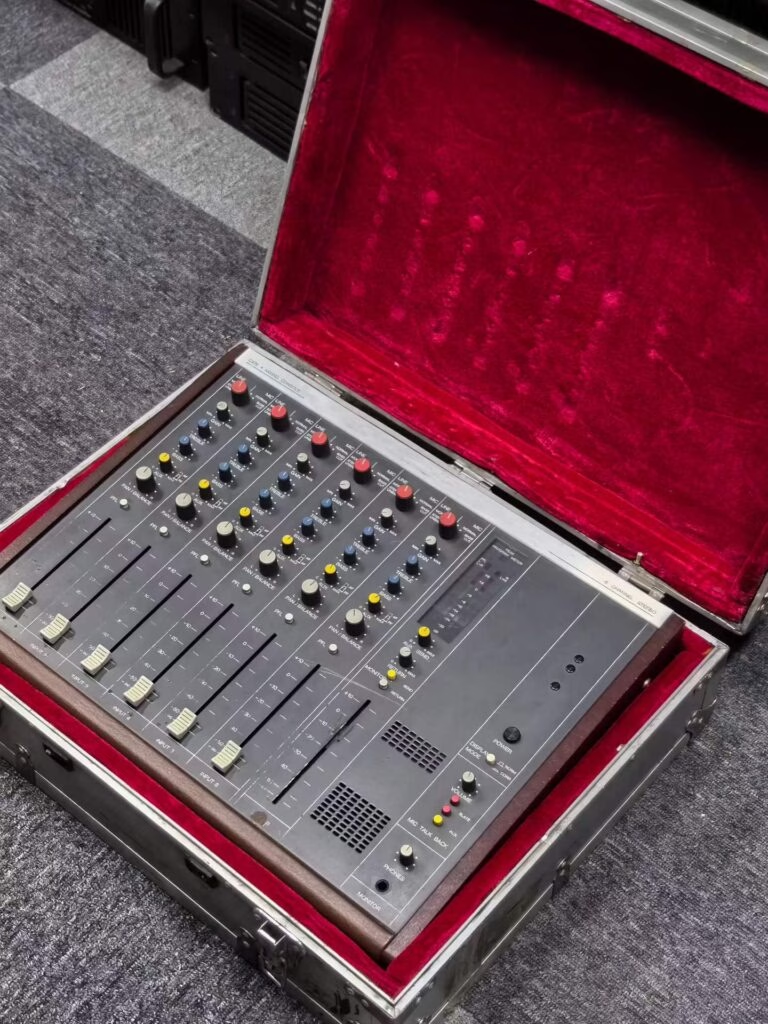
For buyers assembling a full rig, it helps to buy the mic and the console from the same source so the gain structure and connectors are already known to match — a used Yamaha DM1000 mixing console with 48V on every input is an easy bench for testing several mics in one session.
Key Takeaways
- Shake-test dynamics for capsule rattle; never shake a condenser.
- Compare output against a reference mic — stay within 3 dB.
- Genuine SM58 weighs 298 g and has an etched serial.
- Used dynamic mics are low-risk; cheap condensers are not worth buying used.
- Demand a raw WAV recording, not a phone-clip demo.