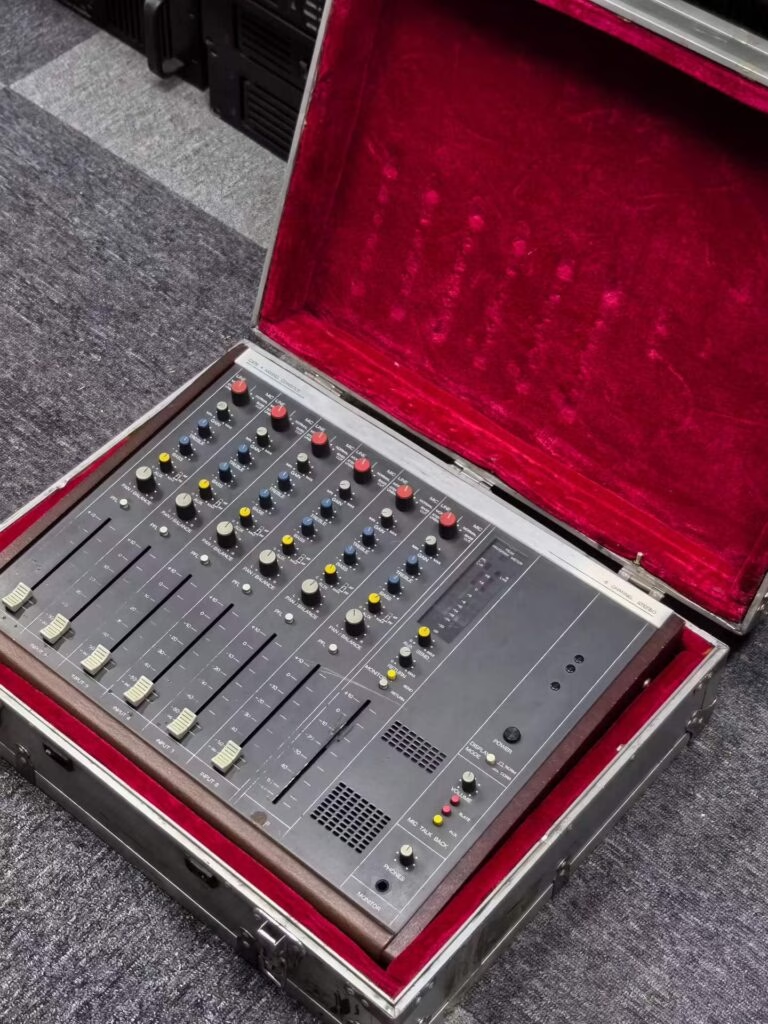
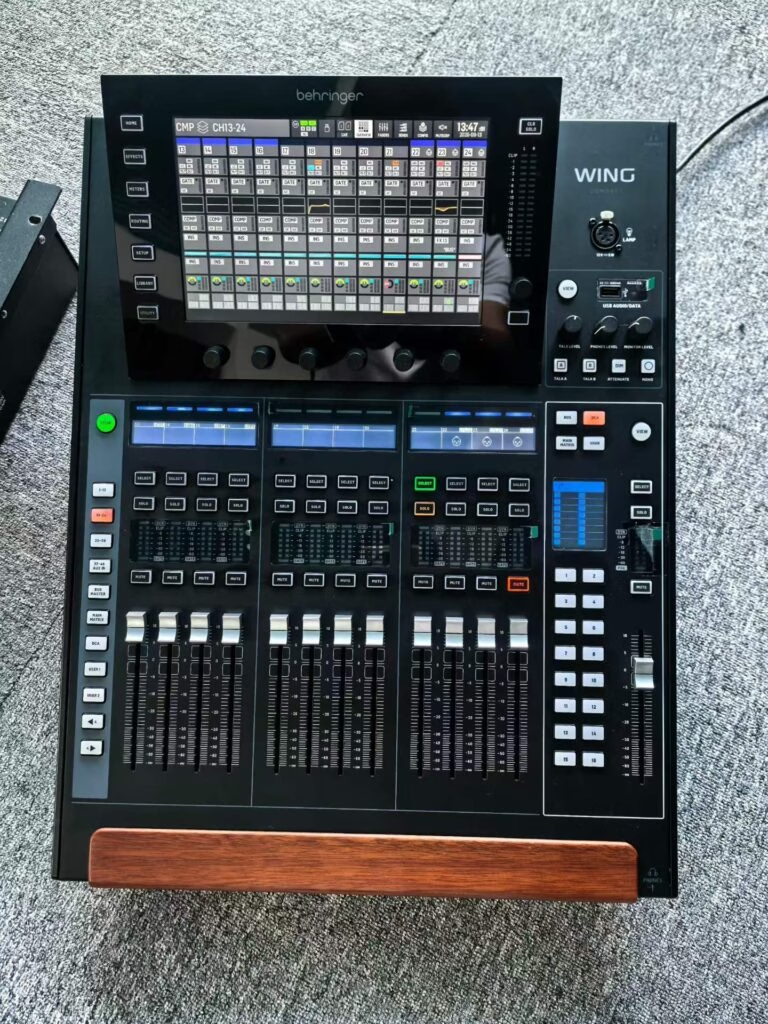
Budget 120-450 USD per pallet by sea, or 6-9 USD per kg by air. A single 20 kg touring amplifier costs about 150 USD to move to Europe; a console in a flight case is 250-450 USD. Paperwork adds a fixed 150-300 USD.
What does it cost by sea?
Sea freight is priced by volume, not weight, for this kind of cargo. A standard pallet at 1.2 x 1.0 x 1.5 metres is charged on about 1.8 cubic metres. From Shenzhen or Ningbo to Rotterdam or Hamburg, expect 120-450 USD per pallet on a shared container service in 2026.
The low end assumes you fill the pallet completely. The high end is what a partial pallet actually costs, because the forwarder charges the same minimum for 60% fill as for 100%.
A single Adamson PLM 20K44 amplifier at around 20 kg fits on a quarter pallet, so it lands at 120-180 USD, plus inland delivery from port to your door at 80-200 USD depending on distance.
What does air freight cost?
Air is 6-9 USD per kg on a consolidated service in 2026, chargeable at the higher of actual or volumetric weight. For audio gear the volumetric calculation usually wins, so a 20 kg amplifier in a 100 x 60 x 40 cm carton is charged at about 48 kg, or 290-430 USD.
Air makes sense for one item under 15 kg when you need it in eight days. It almost never makes sense for a console.
There is also a hybrid: sea freight to the destination port and a local courier for the last 200 km. That combination is usually 30-40% cheaper than door-to-door air and 10-15% cheaper than full sea service with delivery included, because local couriers compete on short runs.
The break-even is around 60 kg. Above that, sea is cheaper unless you are paying for a deadline.
What do the paperwork and duties add?
Export documentation from China is a fixed cost, not a percentage. Expect 150-300 USD for a commercial invoice, packing list, bill of lading and any certificate of origin your buyer’s country requires.
A second fixed cost nobody quotes upfront is insurance. Marine cargo insurance runs 0.3-0.8% of declared value, and on a 20,000 USD container it is 60-160 USD. Skipping it is the one saving that has never worked out for anyone I know.
On arrival, duty depends on the destination and the tariff code. Professional audio equipment typically lands between 0% and 6% in the EU, with VAT on top at the local rate. Used goods are not exempt, and undervaluing the invoice is how shipments get held.
Add 100-250 USD for port handling and customs brokerage on a small shipment. That is the number people forget, and it is why a 300 USD amplifier can cost 550 USD landed.
How do you pack this stuff properly?
Pallet, then crate, then padding. A flight case on a pallet is fine. A bare cabinet is not, because a 1.5 metre drop in a container happens more often than anyone admits.
Cases are not optional on heavy items. A console in a proper flight case arrives in one piece; a console in a carton with foam corners arrives with bent rack ears. The case costs 200-400 USD and it is the difference between a saleable desk and a spare parts source.
Crates for consoles should be plywood at 12 mm minimum with a 100 mm base clearance so a forklift can lift from underneath but cannot spear the contents.
Weigh the pallet before it leaves. Freight is quoted on volume, but a pallet over 1,000 kg triggers different handling charges and a lot of forwarders quote first and explain later. A pallet of amplifiers at 600 kg is comfortable; the same pallet with cases can cross the line.
Moisture is the quiet killer on a 30-day sea voyage. Silica bags at 400 g per cubic metre and a moisture-barrier liner cost 20-40 USD per pallet and save a lot of corrosion on potentiometers.
How do you decide between sea and air?
Work out the landed cost per unit. Take the item cost, add the share of freight, paperwork, duty and port handling, then compare that to the local second-hand price. If you are within 15% of local, buy local and keep your capital free.
Then work out the risk. Sea takes 28-40 days to Europe and a shipment can sit in customs for two weeks. Air takes 5-10 days door to door and fails less often.
Finally, count the fixed costs per shipment rather than per item. Paperwork at 150-300 USD does not shrink when you ship one amplifier instead of ten. That single number is the strongest argument for buying in bulk, and it is the reason a lot that looks expensive per unit is often the cheapest option on the table.
For high-value, low-weight items, air is usually right. For ten amplifiers or a pallet of cabinets, sea is the only sensible answer.
Key Takeaways
- Sea freight is roughly 120-450 USD per pallet from China to a European port in 2026.
- Air is 6-9 USD per kg chargeable, and volumetric weight usually applies on speakers.
- Add a fixed 150-300 USD for export paperwork plus 100-250 USD for port handling and brokerage.
- Silica at 400 g per cubic metre and a moisture liner cost 20-40 USD per pallet and prevent corrosion.