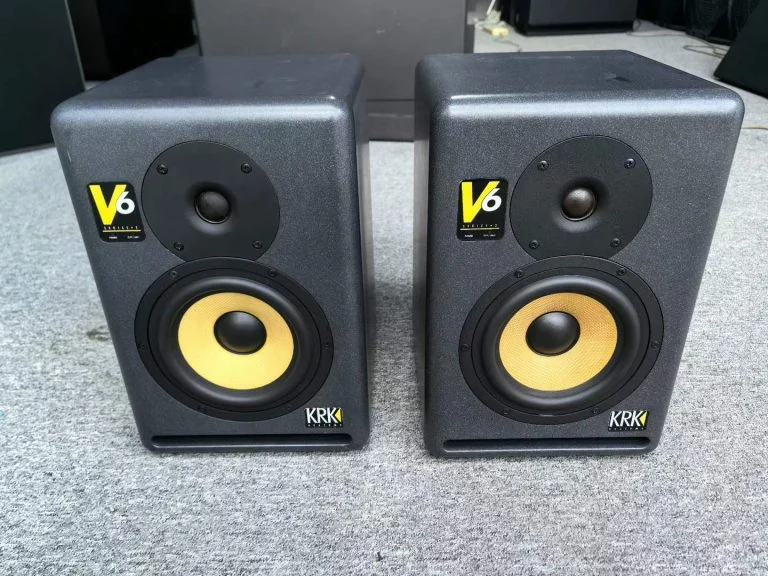
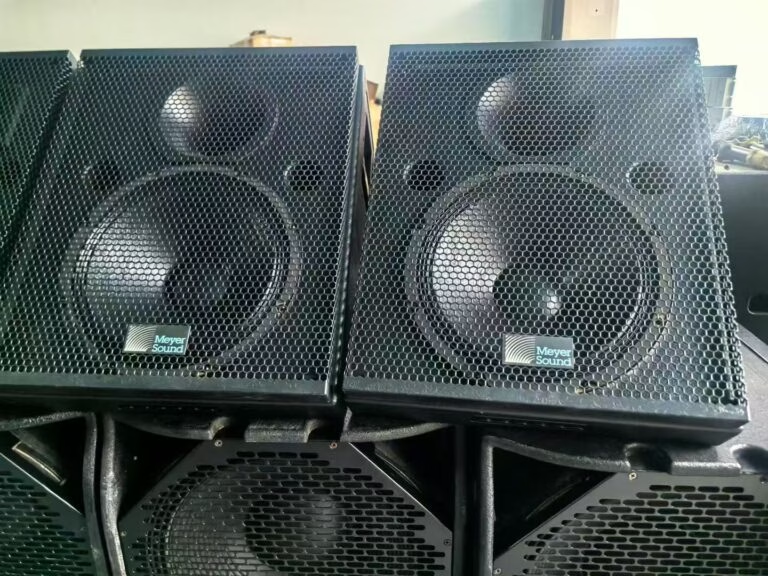
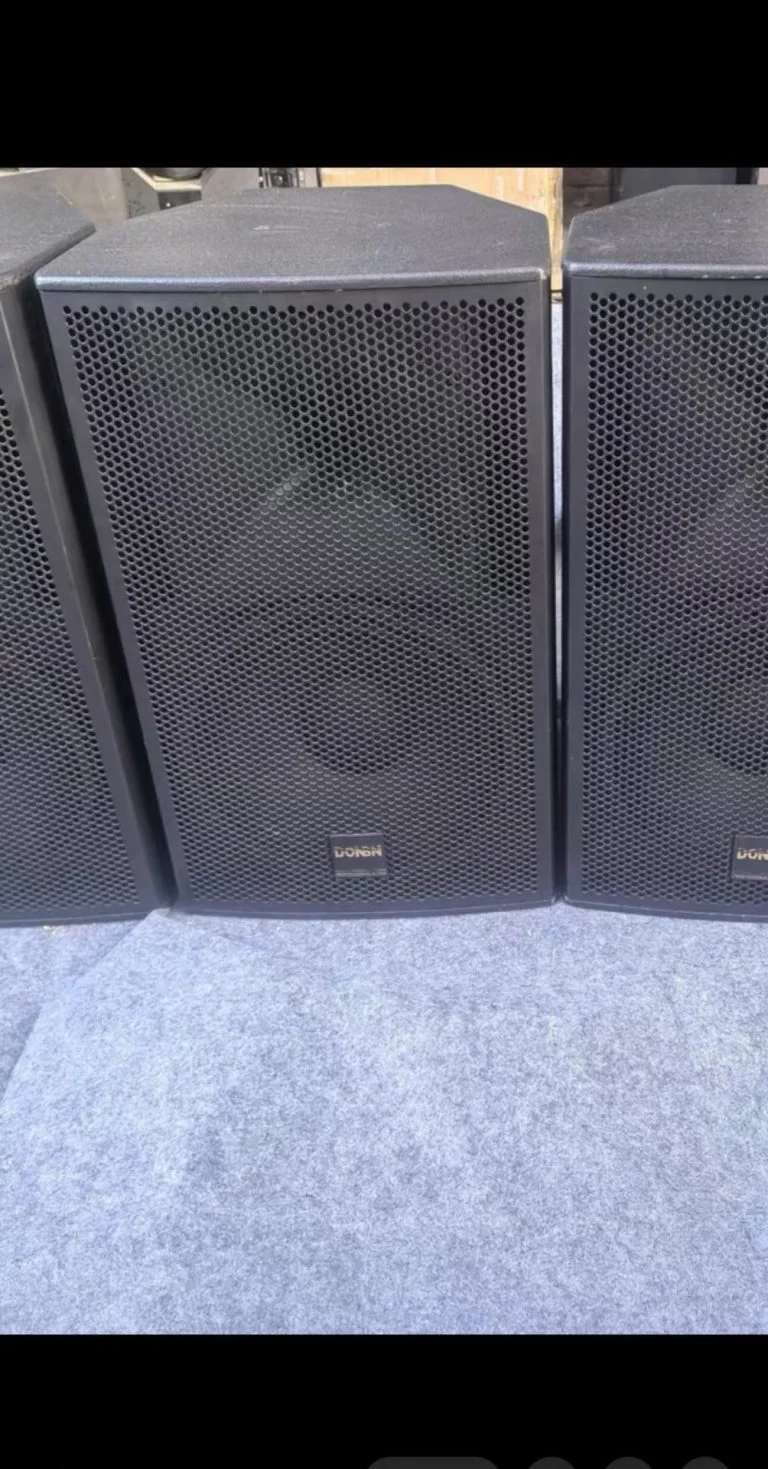
Tweeters at ear height, an equilateral triangle 1.2-1.8 m wide, and at least 30 cm of air between the cabinet back and the wall. That covers most of it. In a room under 20 square metres, placement changes what you hear more than the monitors themselves do.
Why is the corner wrecking your bass?
A cabinet in a corner gets reinforced by two boundaries. Bass can rise 6 dB or more below 100 Hz, and worse, the SBIR notch from the wall behind lands lower and deeper. You end up mixing bass light to compensate, and the mix sounds thin everywhere else.
Pull the speakers forward. Wall distance and the frequency of the cancellation are linked: 1 m from the wall notches around 86 Hz, 0.6 m notches around 143 Hz. Neither is where you want a hole.
How far apart should they be?
Form an equilateral triangle with your head. In small rooms that usually means 1.2-1.8 m between speakers and the same distance to your ears. Wider than that and the centre image collapses in a narrow room; narrower and you lose stereo width.
Toe them in about 15-30 degrees so the tweeter axes cross slightly behind your head. Straight ahead often sounds bright and thin at close range.
Desk or stands?
- On the desk: the surface reflects midrange straight up into your ears. Put something absorbing under the cabinets, or tilt them up 5-10 degrees.
- On stands: better, but fill the tubes with sand or shot. Empty stands ring at 150-300 Hz.
- Wall mounted: fine if the bracket is rigid. Any wobble blurs the bass.
What about the desk and screen position?
Your desk is a big reflective plane between you and the speakers. Pull the monitors just past the desk’s rear edge so the first reflection skips the surface. A thick fleece or a moving blanket behind the screen kills a surprising amount of comb filtering for under $30.
What should you fix before buying better monitors?
| Problem | Cheap fix | Cost |
|---|---|---|
| Corner bass buildup | Move speakers forward, add corner bass trap | $40-120 |
| Desk reflection | Absorbing pad under monitors or behind screen | $20-40 |
| Ringing stands | Fill with sand | $5 |
| Uneven low end at listening spot | Move your chair 30 cm forward or back | $0 |
When is it the monitor’s fault?
If one side sounds different after you swap the cabinets left to right, it is the monitor. If the problem stays on the same side, it is the room. That single test saves people from buying new pairs they did not need.
When you do upgrade, check surrounds and amps first — our guide to the used studio gear range covers what fails on older nearfields.
Key Takeaways
- Tweeters at ear height, equilateral triangle 1.2-1.8 m.
- Keep 30-60 cm of air behind the cabinets; corners cost you 6 dB of bass accuracy.
- 1 m from the wall notches around 86 Hz — pick your poison deliberately.
- Fill stands with sand; empty tubes ring at 150-300 Hz.
- Swap monitors left to right to prove whether the room or the speaker is at fault.
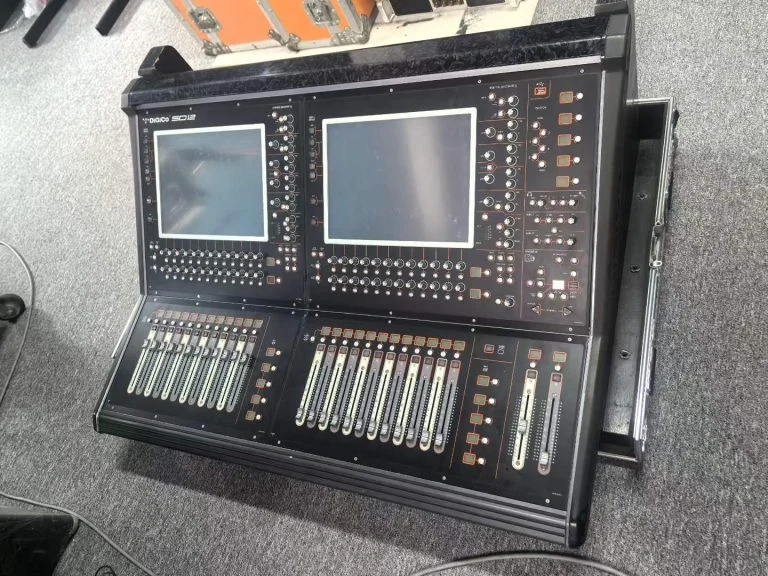
Pair placement work with a decent used digital console for monitoring control and talkback.