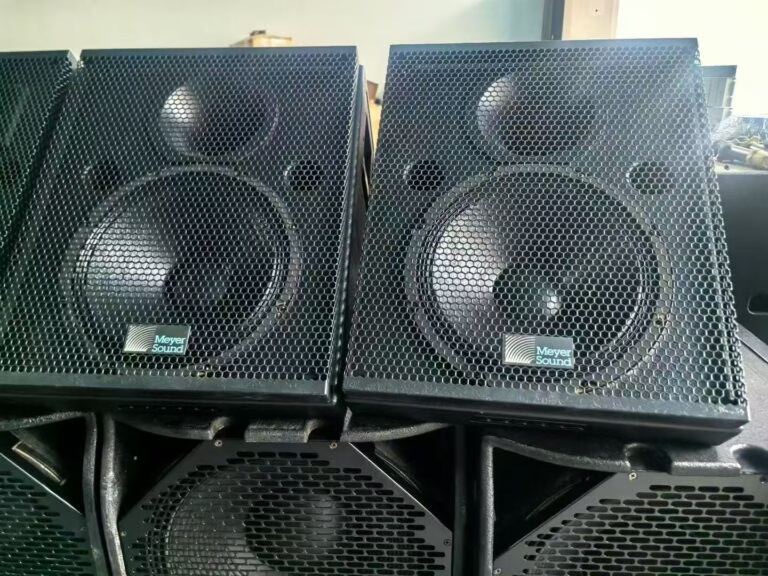
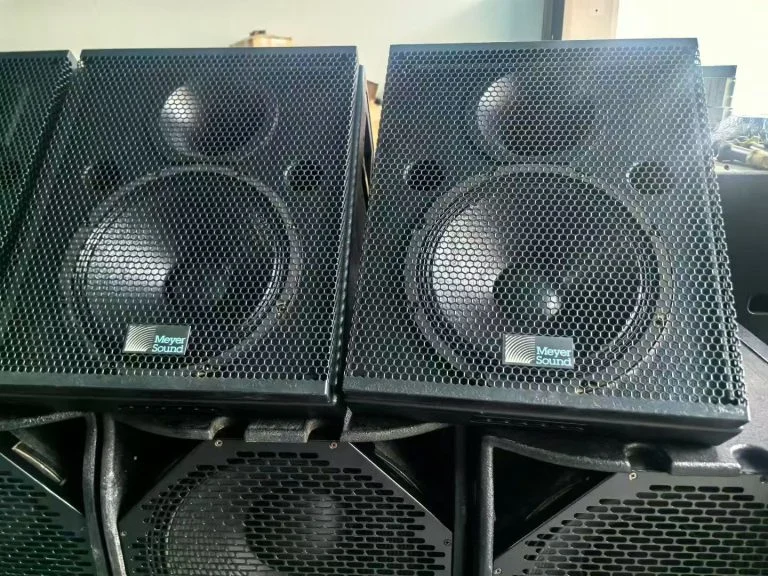
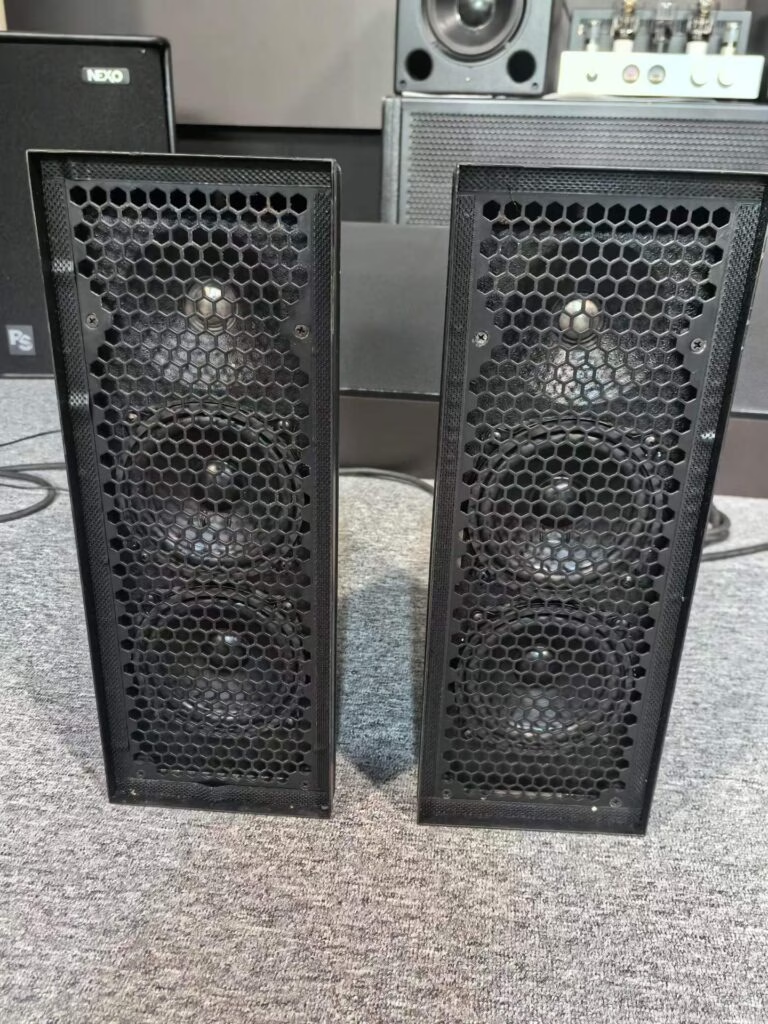
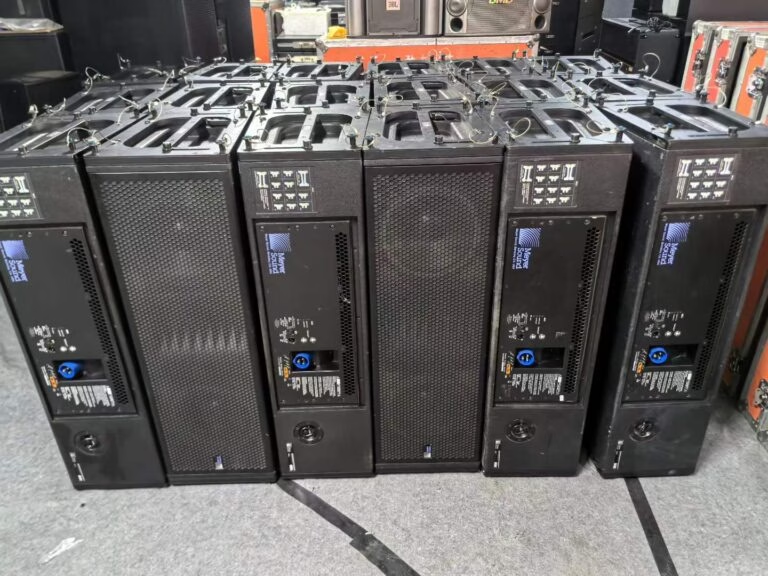
A used Meyer Sound USM-1P pair runs about $1,200-2,200 in 2026 depending on cosmetics and amp health. It is genuinely one of the best wedges ever made, and the honest catch is that the self-powered electronics inside are now 15-20 years old, so you are buying a loudspeaker and an amplifier together, and only one of them ages gracefully.
Why do engineers still ask for the USM-1P?
Because it sounds like the mix, not like a wedge. The 12-inch woofer and 1.75-inch horn sit in a compact cabinet with a passive crossover tuned for vocal intelligibility, so singers hear themselves without the box smearing the mids. Meyer’s own power module adds 100dB-plus of headroom with no amplifier rack to carry.
It is a stage monitor, not a PA speaker. Put it in a room as a main and it will run out of low end by 90Hz. Use it where it belongs.
What fails on a USM-1P, and what does it cost?
- Electrolytic capacitors in the amp module dry out. Recapping a pair is $250-450 with a good tech.
- Fan and thermal shutdown – the module runs warm and dust-loaded fans trip the protection circuit mid-show.
- Input connectors – XLR sockets crack after years of being stood on.
- Grille and foam – cosmetic, but foam behind the grille crumbles and rattles at high SPL.
The amp module is the real risk. If it fails beyond repair, there is no drop-in modern replacement, and a pair with one dead module is worth maybe $400 as parts.
Is it cheaper than a modern powered wedge?
On paper yes, in practice it depends on the tech you have. A new 12-inch powered wedge from a reputable brand is $900-1,400 each. A used USM-1P pair at $1,800 is a third of that. But if you cannot solder and you do not have a repair shop within driving distance, the maths flips the first time a module goes down mid-tour.
For fixed installs with a house engineer, the USM-1P is close to a free upgrade over anything modern in the same price band. For fly-by-night touring, buy modern and sleep.
What should you ask the seller?
Three questions decide it. Has the amp module been serviced, and when? Do both boxes pass a 20-minute full-level test without thermal cutoff? What is the serial number range, since Meyer revised the module at least twice?
Ask for a photo of the back panel with the fan grille visible. A clean fan and a clean heat sink says the boxes lived indoors. Compare it with other Meyer Sound USM-1P stage monitors we list, and check impedance and power figures before you commit a wedge send.
Who should skip it?
Anyone running a powered-digital stage where monitors are on a network and gain is set remotely. The USM-1P has a knob on the back, and no DSP. It will not talk to your console, and pretending otherwise wastes a rack space.
Key Takeaways
- Used USM-1P pairs trade at $1,200-2,200 in 2026.
- Expect $250-450 to recap a pair’s amp modules.
- One dead module drops the value of the pair to roughly $400.
- Best for fixed installs with an in-house tech, not fly dates.