Use your own voice, not a music track, and wiggle the XLR connector while you talk. Music hides plosive crackle and intermittent dropouts; speech does not. If the seller only sends a video of a song playing, you have not tested anything yet.
Also tap the body while the mic is live. A rattle or a dull thud means a loose capsule mount, and that is a rebuild rather than a cleaning job.
Does the cable matter in your test?
yes, use one you trust. A dead cable mimics every fault you are looking for — crackle, hum, dropout. Bring your own XLR and your own headphones, and eliminate them as variables first.
What is the fastest voice test?
Hold the mic 10 cm from your mouth and say ‘she sells sea shells by the sea shore’, then a long sustained ‘ahh’ at moderate level. Listen for crackle on the plosives and for level wobble in the sustain. Then rotate the mic while speaking — a capsule with a loose connection will drop out at certain angles.
Why does the connector matter more than the capsule?
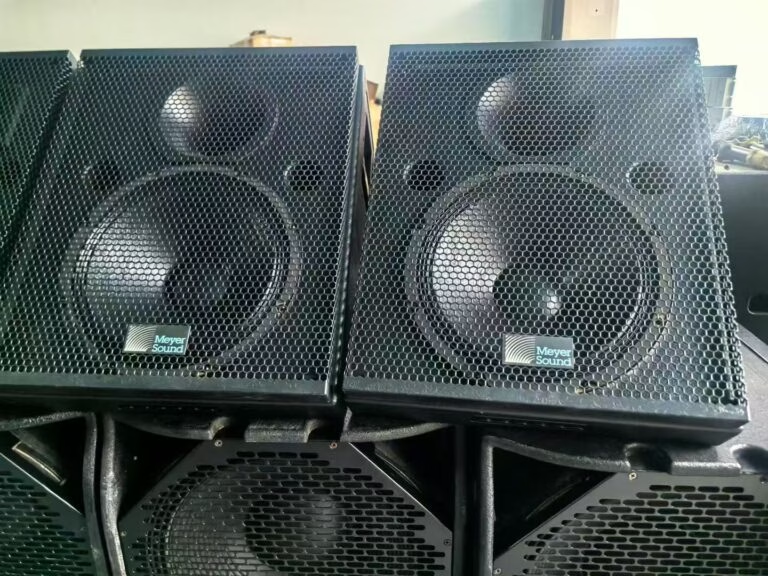
Because it fails first. Wiggling the XLR while talking is the single most useful test you can run in 30 seconds. Any dropout means the socket contacts are worn or a solder joint inside is cracked. On a used Shure SM58 the connector is $12 and easy; on a wireless handheld the equivalent part may not exist. Microphones get sold alongside passive speaker systems in most package deals, and the mic is always the part that was tested least.
How do you spot a worn capsule without opening it?
- Look through the grille with a torch for foam fragments or sticky dust on the diaphragm
- Shine a light at an angle — a diaphragm with pinholes reflects unevenly
- Sniff near the grille: cigarettes and club smoke leave a smell that never leaves
- Compare two mics of the same model side by side; a 3 dB difference means a tired capsule
Foam inside a 2010-era SM58 degrades into sticky dust that sits on the diaphragm and dulls the top end. A fresh grille is $8. A replacement capsule for most discontinued models does not exist at any price.
What should you pay for used mics in 2026?
Dynamic workhorses: SM58 at $45–75 used against $110 new; SM57 at $40–70. Large-diaphragm condensers: $180–600 used against $500–1,800 new. Vintage ribbon mics are their own market — expect $900 upward and insist on a ribbon tension test.
What is the one test you cannot do remotely?
Off-axis rejection and self-noise. Both need a quiet room and a measured level. Ask the seller to record 30 seconds of silence at maximum gain with nothing in the room — hiss level tells you more about capsule health than any music demo.
Key Takeaways
- Test with speech, never with music: plosive crackle and dropouts are what fail.
- Wiggle the XLR while talking; connector faults are the most common used-mic issue.
- Check grille foam — degraded foam dulls the capsule and costs $8 to replace.
- US prices in 2026: SM58 $45–75 used, condensers $180–600 used.