Ten minutes and four tests will tell you more about a used microphone than any listing photo. Tap, speak, wiggle, look. If it passes all four at full output with no rattle and no dropouts, the odds are good. What you cannot test in ten minutes is capsule ageing on a condenser – for that, listen at three distances and trust your ears.
Why does the tap test matter so much?
Because it finds loose hardware before it finds you at a gig. Hold the mic body and tap it with one finger, then shake it gently next to your ear. You should hear nothing. A rattle means a loose transformer, a detached PCB screw or a broken capsule mount – all fixable, none cheap on a condenser.
On a dynamic mic like an SM58 copy, a rattle is usually the grille ball coming loose. On a large-diaphragm condenser, a rattle can mean the capsule is no longer seated, which changes the polar pattern.
What does the breath test reveal?
Diaphragm condition. Speak close – 2 cm – and say a plosive-heavy phrase. A healthy capsule handles it. A collapsed or contaminated diaphragm produces a thin, papery distortion on plosives and a dull top end above 8 kHz.
Then step back to 30 cm and 1 m. If the level drops faster than you expect, the capsule may be losing sensitivity. Compare against a known-good mic if you can bring one.
How do you catch a bad cable or connector?
Wiggle. Plug in, monitor on headphones, and flex the cable at the XLR exit while someone talks. Clicks, pops or dropouts mean a broken solder joint inside the connector – a $5 fix if you can solder, a $25-40 repair at a shop.
Also look inside the connector. Corroded pins are common on mics stored in humid climates. Three slightly green pins on a 20-year-old mic is normal; black is not.
What should you inspect visually?
- Grille dents that reach the capsule – a pushed-in grille on a condenser often means a pushed-in diaphragm.
- Foam inside the grille. On older condensers this foam turns to dust and gets inhaled onto the diaphragm.
- Body screws: missing screws suggest someone opened it and did not finish.
- Serial and label condition – a scratched-off serial is a red flag for stolen gear.
Which mics are worth the risk used?
| Type | Used risk | What fails |
|---|---|---|
| Dynamic handheld (SM58 style) | Low | Grille, switch, cable |
| Large-diaphragm condenser | Medium-high | Capsule, foam, tube (if valve) |
| Small-diaphragm condenser | Medium | Capsule contamination |
| Ribbon | High | Stretched ribbon, needs re-ribboning |
Dynamic handhelds are the safest used buy in audio. There is almost nothing inside to fail, and a used pair costs $40-90 against $200 new. Condensers deserve more caution and a lower price.
Should you buy a mic you cannot test?
Only if the price assumes risk. A used condenser at 25% of new with no test is a gamble worth maybe one in three. If the seller will not send a 30-second voice recording through the mic, assume the worst. Anyone with a working mic and a phone can do that in under a minute.
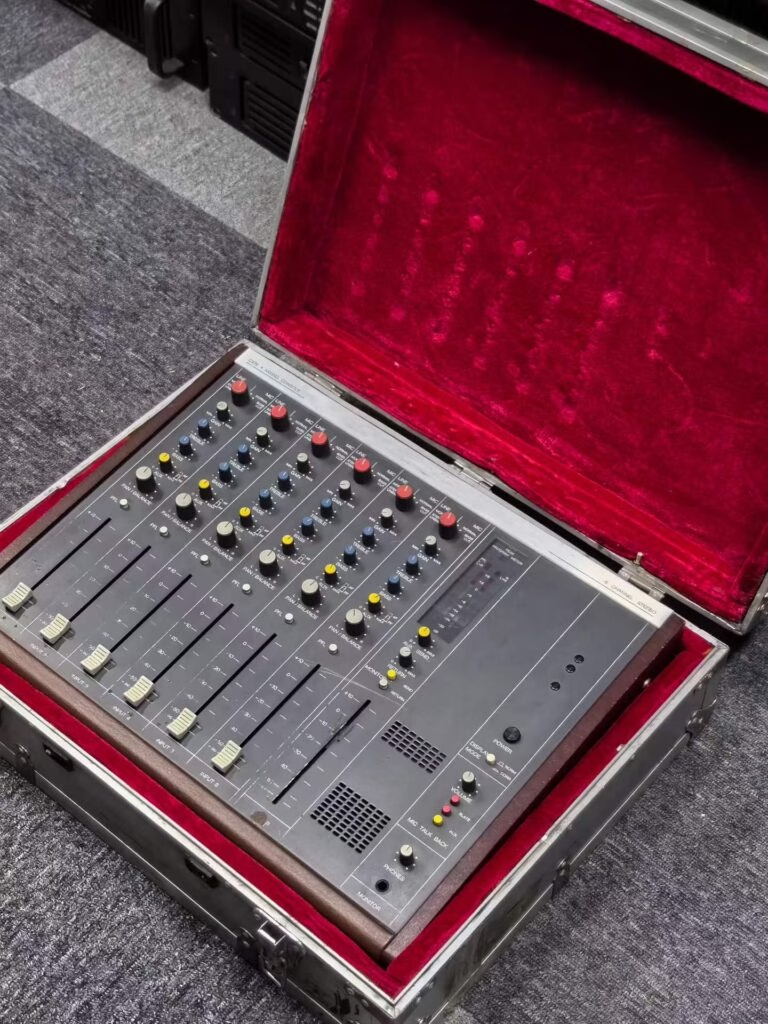
Pair your mics with something worth hearing them through – our microphone category and used mixer listings cover the rest of the chain.
How do you test a mic you are buying online?
Ask for three things: a 30-second spoken recording made with the microphone, a photo of the capsule through the grille with a light behind it, and a photo of the connector pins. Anyone selling honestly will send all three. Anyone who sends only stock photos is hoping you will not ask.
Pay through a channel that protects you, and test within the first hour of arrival. A mic that arrives dead is a return, not a repair project.
Key Takeaways
- Tap and shake first: a rattle means loose hardware, and on a condenser it can mean a loose capsule.
- Speak at 2 cm, 30 cm and 1 m. Papery plosives and a dull top end mean a tired diaphragm.
- Wiggle the cable at the XLR while monitoring – dropouts point to a $5 solder joint, not a dead mic.
- Used dynamic handhelds are the safest buy; ribbons and large condensers carry real capsule risk.