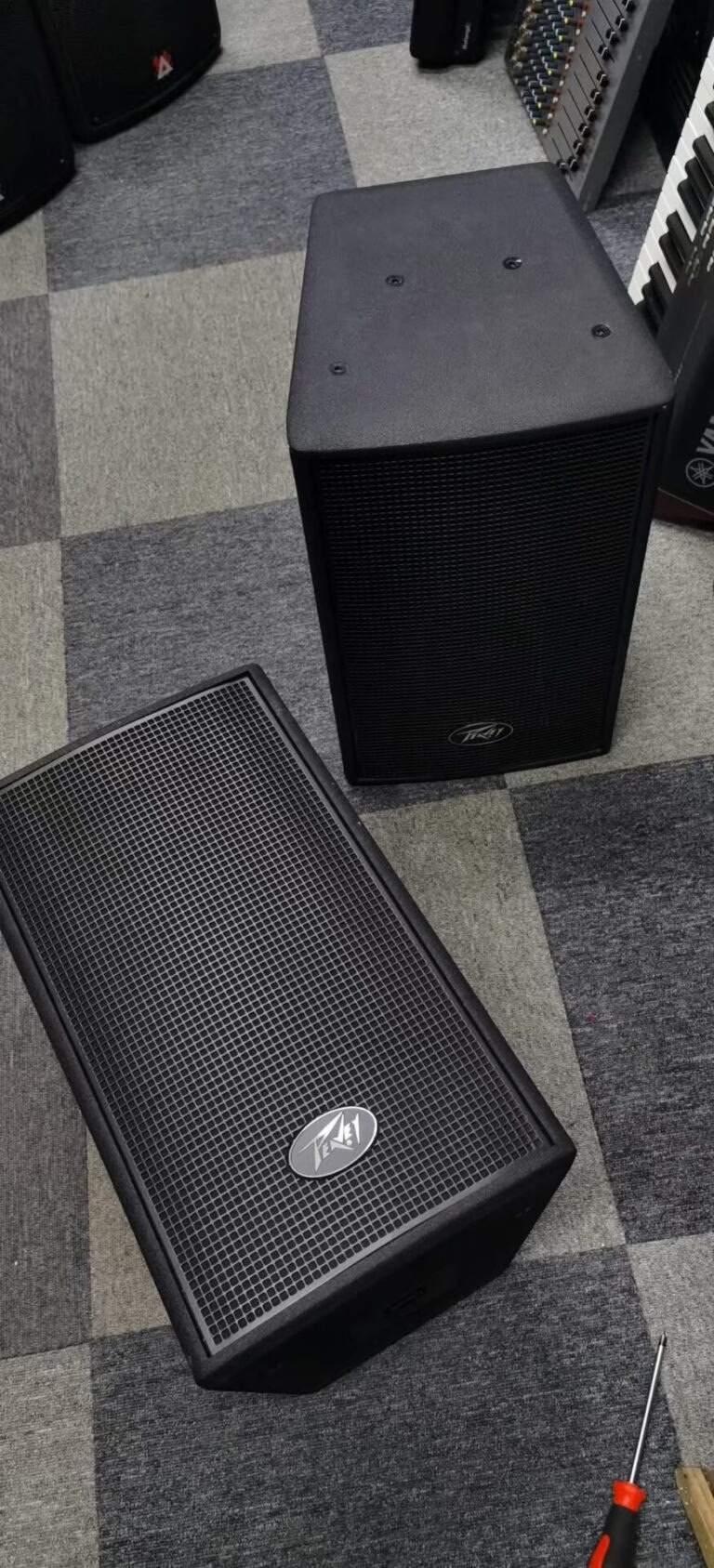
The amp module is the most expensive failure point on any used active speaker, and it is the part you cannot see. Replacement modules run $300 to $700 fitted depending on the model, which is often 20 to 30 percent of what you are paying for the box. Test it in five minutes before money changes hands.
Active speakers put a switch-mode power supply, a Class-D amplifier and a DSP board inside a sealed cabinet that can hit 50 °C in use. Electrolytic capacitors are rated for a finite number of hours at high temperature, and the ones nearest the heat sink die first.
What is the five-minute amp module test?
- Power on with no input. Listen for hiss or a ticking sound at the cone — a ticking noise is a failing supply.
- Turn the volume to zero and put your ear near the cabinet after 10 minutes. Excessive transformer hum means the supply is stressed.
- Play pink noise at moderate level for five minutes, then check whether the rear panel is too hot to touch. It should be warm, not hot.
- Drive it hard for one minute and listen for the limiter engaging early — a tired module limits long before the spec suggests.
- Power cycle three times. A module that fails to start on the second or third try has a tired relay or supply.
Why does heat matter so much?
Capacitor life halves for every 10 °C rise. A module that ran at 55 °C for six years has used up far more of its design life than one that ran at 40 °C in a studio. Rental stock sits in hot trucks, so a used active box from a rental company carries a different risk from one that lived in a fixed install.
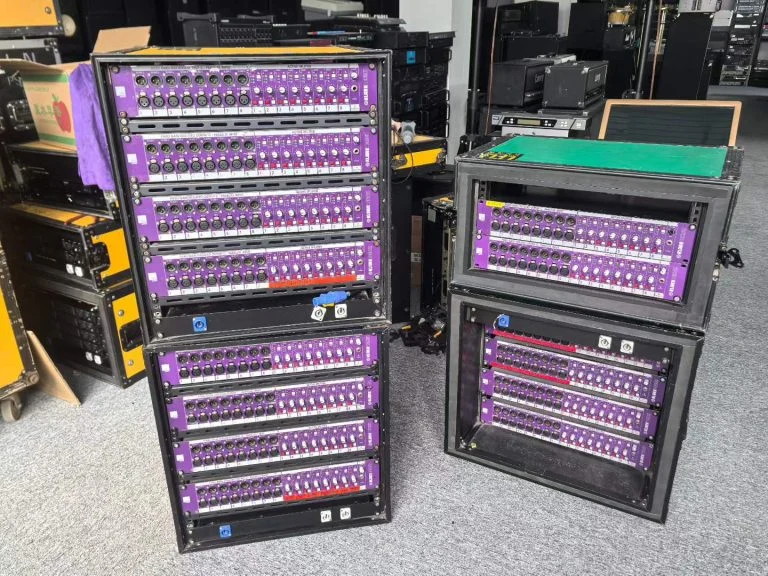
This is why the sticker on the back matters: rent-to-own or ex-hire units usually have inventory labels. Twelve units from one rental fleet is a coherent risk. Twelve units from twelve owners is twelve different histories.
Which parts can you actually replace?
| Part | Typical cost | Repairable? |
|---|---|---|
| Complete amp module | $300 – $700 | Yes, if still in production |
| Power supply capacitors | $60 – $120 | Yes, with soldering skill |
| DSP board | $200 – $400 | Model dependent |
| Driver recone | $120 – $250 | Usually yes |
Before buying any model, search for its amp module availability. A box whose module is out of production is worth scrap value once the amp dies, however good it sounds today.
Does this change what you should pay?
Yes. Price a used active box at roughly 40 to 50 percent of new if the module is current and serviced, and 25 to 30 percent if you cannot test it. Never pay premium prices for untested powered gear, whatever the brand story says.
If you want a box whose module is definitely current, the K-array KF12 is still in production. For a cheaper active pair where a module failure costs less, the RCF ART 310 pair is worth a look.
How do you tell a tired module from a dead one?
A dead module gives no sound at all. A tired one still works but limits early, runs hot, or ticks at idle. Tired modules are what you find in rental stock, and they are the ones sellers price as if they were fine.
The tick is the tell. Switch on, put your ear close to the cone with no input, and listen for a faint irregular tick. That is a switch-mode supply with failing capacitors, and it will strand you at a gig within a year.
Is it cheaper to buy new instead?
Sometimes. A used active box at 45 percent of new plus a possible $500 module repair is close to a new box at 100 percent with a warranty. Run the numbers before you feel clever about the saving.
Buying used makes sense when you are buying several units from one fleet, when the model is still in production, or when you can test before paying. It makes little sense for a single untested box from a stranger.
Key Takeaways
- Amp module replacement: $300–$700 fitted.
- Ticking at idle or early limiting means a tired module.
- Rear panel should be warm after 10 minutes, never hot.
- Capacitor life halves per 10 °C of extra heat.
- Untested powered gear is worth 25–30 percent of new, not more.