Jog wheels first, then cue buttons, then USB ports. Those three account for most used DJ failures. A CDJ with a worn jog is a $250-400 repair; a controller with a dead USB port is often a $15 part but tells you the unit lived in a bag, not a case.
Most buyers check the screen. The screen almost always works. It is the mechanical parts that go, because they are the parts that get hit 200 times a night.
What should you test on the jog wheels?
- Spin both by hand. They should feel identical — different resistance means one bearing is going.
- Press the top plate on four sides. Any click that does not register means a dead switch under the plate.
- Check the platter rim for wobble. A wobbling jog means a dropped unit.
- Run vinyl mode and scratch. Latency or skipping indicates an encoder fault.
Pioneer CDJ jog assemblies have been the number one wear item since the CDJ-1000. On a 2014 CDJ-2000NXS2, expect real wear by now. That is not a dealbreaker at the right price, but it is a $250-400 line item.
How do you check the cue and hot cue buttons?
Press each one ten times and watch the screen. Missed presses mean the tact switch is dying — a cheap part, but there are 20 of them and a full replacement is a bench job. Pay particular attention to the play/pause and cue buttons nearest the left jog, since those take the most abuse.
Why do USB and SD ports matter so much?
Because a worn USB port means the deck was plugged and unplugged constantly, likely in a bag or on a table with no case. The port itself costs $15. The board it sits on can cost $150. Beyond the part, it is a proxy for how the gear was treated.
Bring two USB sticks and a known-good track. Play the full track — not ten seconds. Drift, stutter or a dropout mid-track means the firmware or the storage controller has issues, and that is not fixable at home.
What about the software licence?
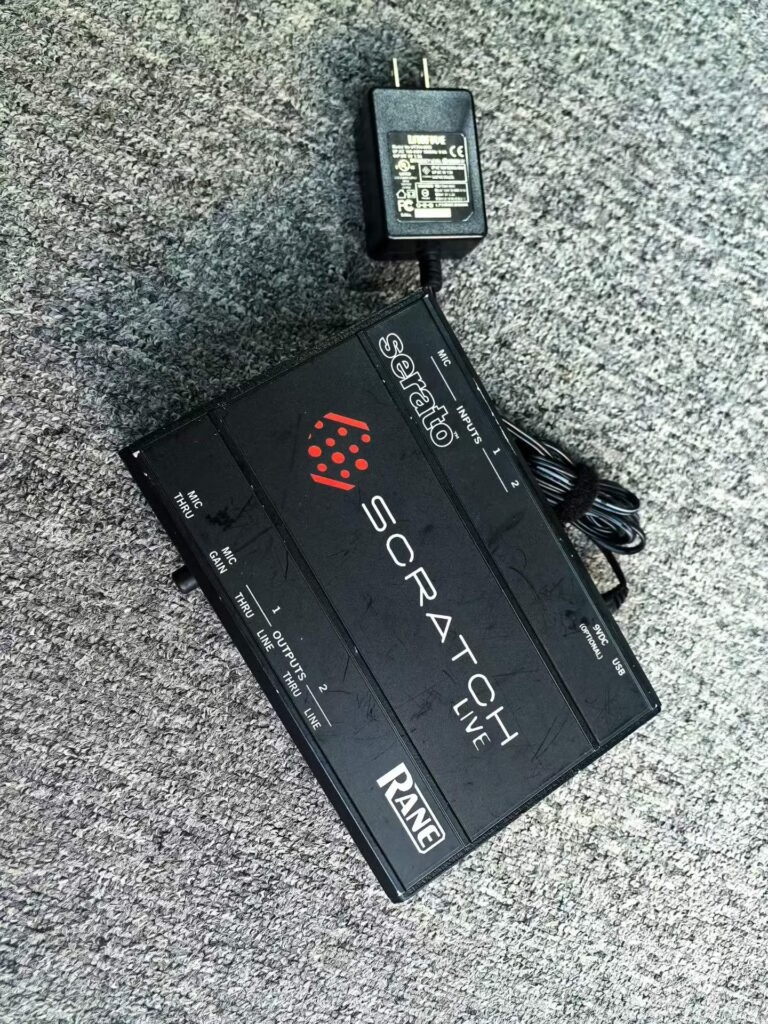
This is where controllers bite. Many DJ controllers are tied to a software licence that does not transfer cleanly. A used controller at $300 that needs a $200 software licence is a $500 controller. Ask explicitly whether the licence transfers and whether the seller will deregister the unit first.
Standalone gear — CDJs, media players, analog mixers — has no such problem. That is why standalone holds value better than controllers.
What is a fair price in 2026?
| Gear | Used price | Watch out for |
|---|---|---|
| CDJ-2000NXS2 (pair) | $3,200-4,200 | Jog wear, USB ports |
| 2-channel controller | $250-500 | Software licence transfer |
| 4-channel club mixer | $800-1,400 | Crossfader, channel faders |
| Budget controller | $80-180 | Plastic jogs, no repair path |
Browse the used DJ gear range for standalone decks, and remember: freight runs $180-320 per crate by sea, so buying one deck alone rarely makes sense.
Should you buy a used controller at all?
Only if it is cheap and the licence transfers. Controllers are the least repairable DJ category — plastic chassis, glued boards, proprietary firmware. A mixer or a deck can be serviced for decades. A controller from 2018 is a disposable item with a shelf life.
Key Takeaways
- Test jog wheels first: spin, press all four edges, check for wobble.
- Press cue buttons ten times each — missed presses mean dying tact switches.
- Play a full track off USB; drift mid-track is usually terminal.
- Confirm the software licence transfers before paying for a controller.
- Standalone CDJs and mixers hold value; controllers do not.