Start with the crossfader, then the jog wheels, then every cue and play button, then the USB ports. That order matches failure frequency on used DJ gear. A worn crossfader is a $30-90 part. A dead USB port on a controller usually means a mainboard, which can cost half the unit’s value.
Why does the crossfader matter more than anything else?
It takes more physical abuse than any other control. A club deck can see 200,000 crossfader movements in three years. Test it by scratching slowly through the centre and listening for dropouts or a crackle. Then test the cut-in curve at both extremes.
Replacement is cheap on most models: $30-90 for a magnetic or conductive-plastic fader, ten minutes with a screwdriver. So a worn fader is not a reason to walk away — but it is a $60 negotiation point.
How do you test jog wheels properly?
- Spin each wheel by hand and feel for grit or wobble in the bearing.
- Check touch sensitivity — touch the top and see if playback stops instantly.
- Look for cracks around the centre spindle, common after drops.
- On CDJ-style units, test the tension adjuster through its full range.
A jog wheel that responds late is usually a dirty encoder ring, fixable for $20-50. A wobbling wheel means a bent spindle, which is not fixable cheaply.
What do the buttons and ports tell you?
Press every cue, play and hot-cue button twice. Sticky buttons mean spilled drinks, and spill damage spreads to the PCB underneath. Then plug a USB stick into every port and confirm the unit reads a track from each. Dead ports on a controller are the single most expensive common fault.
Check the headphone jacks on both 3.5 mm and 6.35 mm if present. A cracked jack housing is a $40-80 repair but a sign the unit was gigged hard.
What is a fair price in 2026?
| Item | New | Used 2026 | Walk away under |
|---|---|---|---|
| 2-channel controller | $600-1,200 | $230-520 | $150 |
| 4-channel controller | $1,100-2,500 | $450-1,100 | $300 |
| Single CDJ-class deck | $1,200-2,400 | $500-1,000 | $350 |
| 2-channel battle mixer | $700-1,600 | $280-700 | $180 |
| DJ headphones | $99-299 | $35-110 | $20 |
Anything far below the “walk away” line has a fault the seller knows about. Controllers are the fastest-depreciating category in audio — a 2019 controller is worth about 35% of new in 2026, because software support stops and laptop OS updates break drivers.
Does software support matter when buying used?
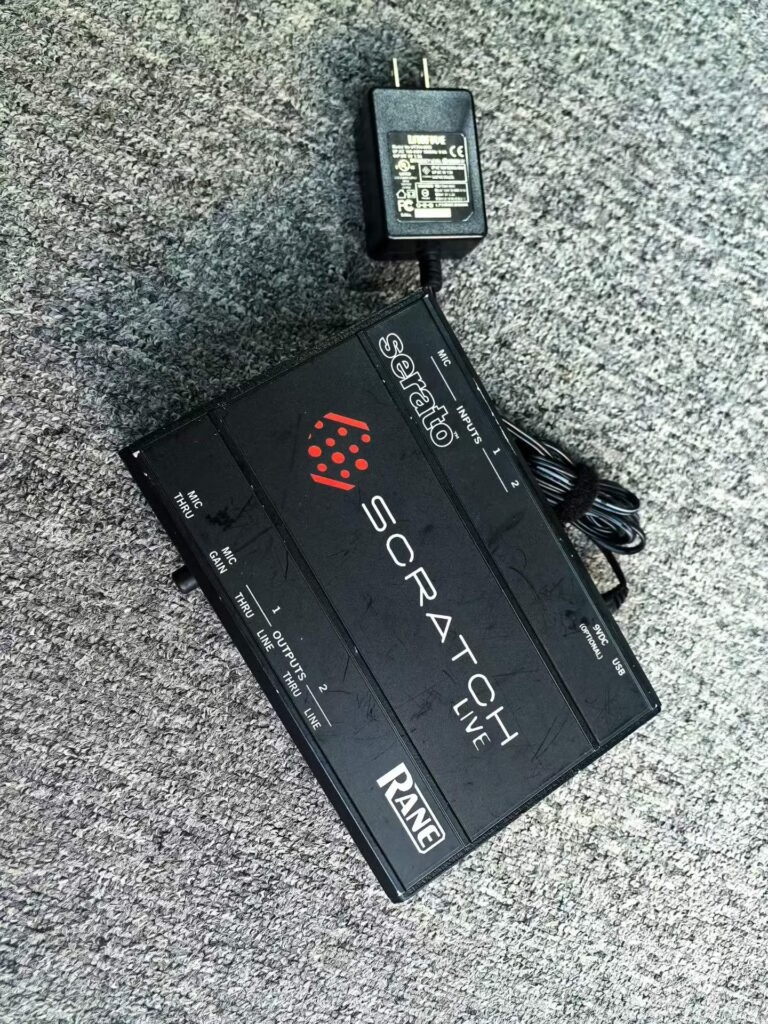
More than the hardware. Check whether the unit still gets driver updates for your OS. A controller that needs an old version of Serato or rekordbox is a paperweight if you update your laptop. Verify the exact model against the software vendor’s supported-hardware list before paying — this takes five minutes and prevents the worst kind of regret.
Also confirm the licence situation. Some controllers ship with a software licence tied to the original owner’s account. If the seller cannot transfer it, you are buying hardware and paying separately for software. See the DJ gear category for units listed with their software compatibility.
Should you buy one big unit or two smaller ones?
Two separate decks plus a battle mixer cost more but survive failures better — one dead deck still leaves you a show. An all-in-one controller is lighter, cheaper and simpler to carry, but if it dies you are silent. For mobile work I would take the all-in-one; for a club install, separates.
If budget is the binding constraint, put money into the mixer and headphones first. They affect what you hear and how you cut. Controllers improve convenience, not sound.
Key Takeaways
- Test in this order: crossfader, jog wheels, buttons, USB ports, headphone jacks.
- Crossfader replacement is $30-90 — negotiate, do not walk.
- A dead USB port often means a mainboard repair worth half the unit.
- Verify software support before paying; a 2019 controller is worth about 35% of new.
- For clubs buy separates; for mobile work an all-in-one is lighter and cheaper.