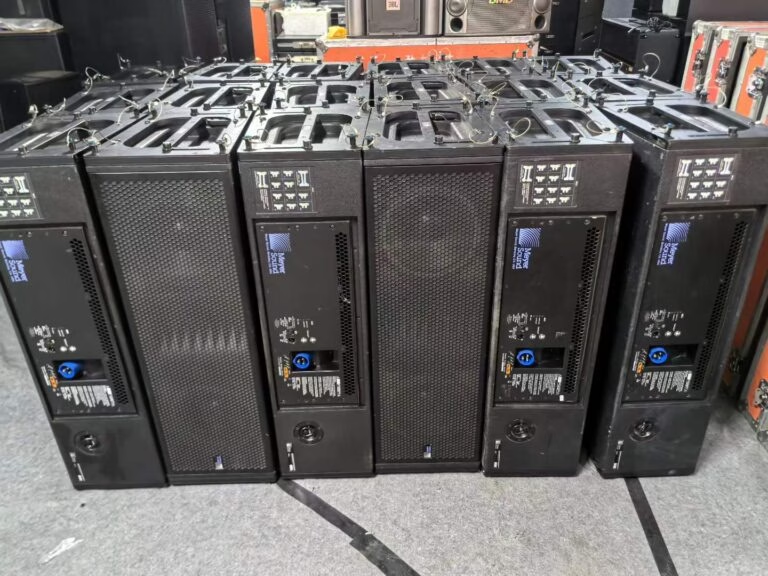
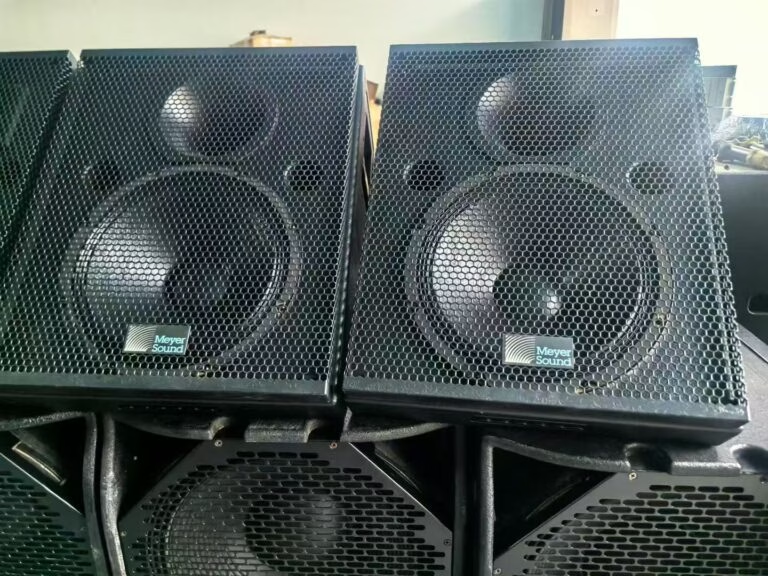
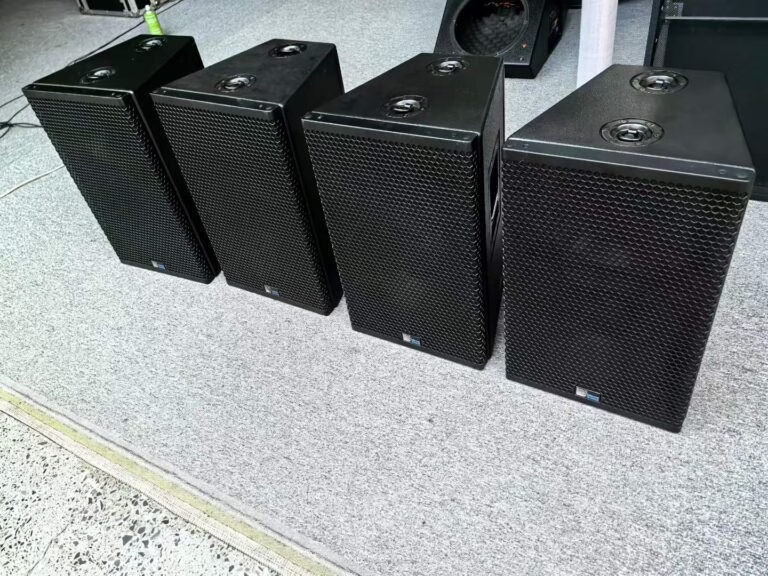
Like New should mean the unit has under roughly 10 hours of use, ships in original packaging and shows no marks you can see from one metre away. Excellent means fully functional with light scuffs and no component swaps. Both are seller labels. Neither has a legal definition, and none of them replace a test.
This matters more for audio gear than for most electronics, because a speaker can look perfect and still have a tired voice coil. Cosmetics tell you how the box was handled. They say nothing about how it sounded.
How should each grade be defined?
| Grade | Use hours | Cosmetics | Repairs allowed |
|---|---|---|---|
| New / sealed | 0 | Factory box, unopened | None |
| Like New | <10 | No visible marks | None |
| Excellent | 10-200 | Light scuffs, no dents | Grille or feet only |
| Good | 200-2,000 | Visible wear, paint chips | Minor |
| Fair / parts | Unknown | Heavy wear | Anything |
A used K-array KF12 sold as Excellent should still have its original 12-inch woofer and horn driver. If the seller has swapped a driver, the grade drops to Good no matter how clean the paint looks.
What photos should you demand before buying?
- Rear panel with all connectors and the serial plate readable.
- Each driver cone shot straight on, no flash glare.
- The grille removed, if the seller will do it.
- The power socket and fuse holder, which show heat damage fast.
- One photo of the unit powered on with meters lit.
Five photos, ten minutes of the seller’s time. If they will not send them, the grade on the listing is guesswork.
Does Excellent mean the drivers are healthy?
No. Condition grades describe the object, not the sound. A speaker with a rubbing voice coil can be cosmetically Excellent and acoustically Fair.
Run four checks on arrival. First, press the cone gently and listen for scraping. Second, measure DC resistance across the terminals; a nominal 8-ohm driver should read 6.2-7.4 ohms. Third, sweep a 40 Hz to 16 kHz test tone at low volume and listen for rattle. Fourth, check the cabinet joints with a flashlight for cracks.
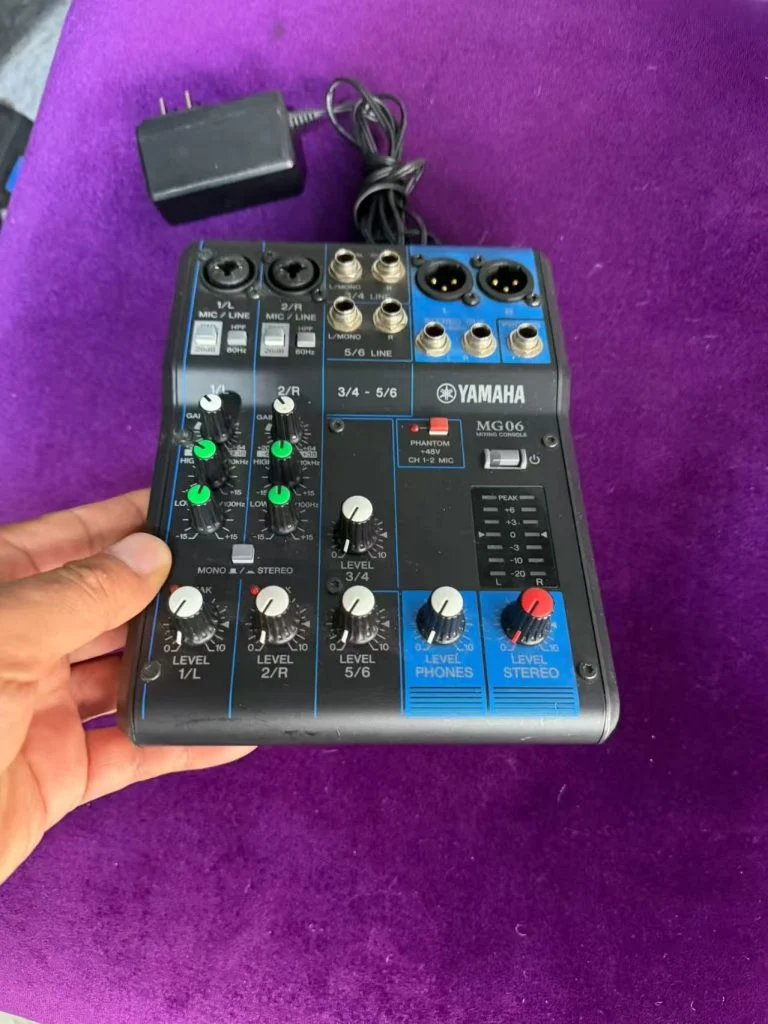
On a console like the Yamaha DM1000, the equivalent test is simpler: push every fader to both ends, confirm each input meter registers, and check that no channel reads noise with nothing plugged in. Twenty minutes of work that catches most problems.
What is a grade worth in money?
Between Like New and Good, expect a 30-45% price gap on the same model. That is real money on a USD 3,000 speaker pair, about USD 900 to USD 1,350. Paying Excellent prices for Good stock is the most common way buyers lose money on the secondhand market.
My advice: buy Good if you can test it yourself or the seller offers a 14-day return. Buy Like New when you need the unit on a stage next week and cannot afford a surprise. You can see how we describe condition on the KF12 product page, where the listing states units available and cosmetic level.
Key Takeaways
- Like New means under 10 hours of use and original packaging, not a factory certificate.
- Excellent should mean light scuffs and no driver swaps.
- Ask for five specific photos, including the rear panel and serial plate.
- Test DC resistance: an 8-ohm driver should read 6.2-7.4 ohms.
- The Like New to Good gap is 30-45% of price, so grades cost real money.