Description
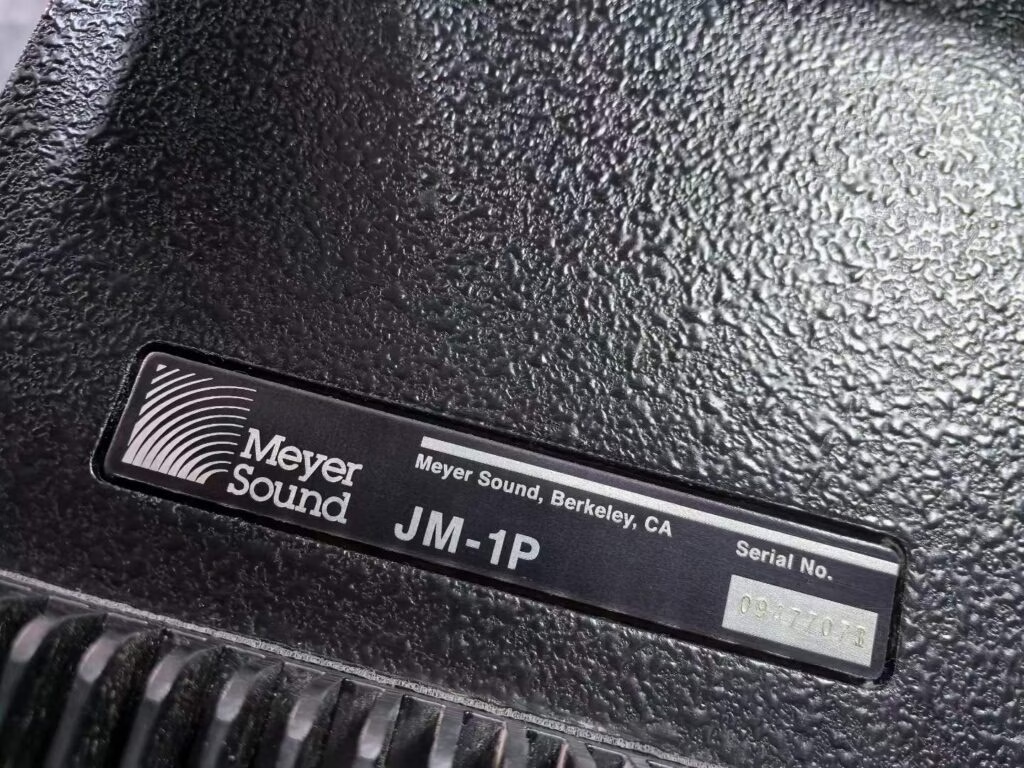
This Meyer Sound JM-1P is a used self-powered arrayable point-source loudspeaker in excellent working condition, available now from stock with the price on request.
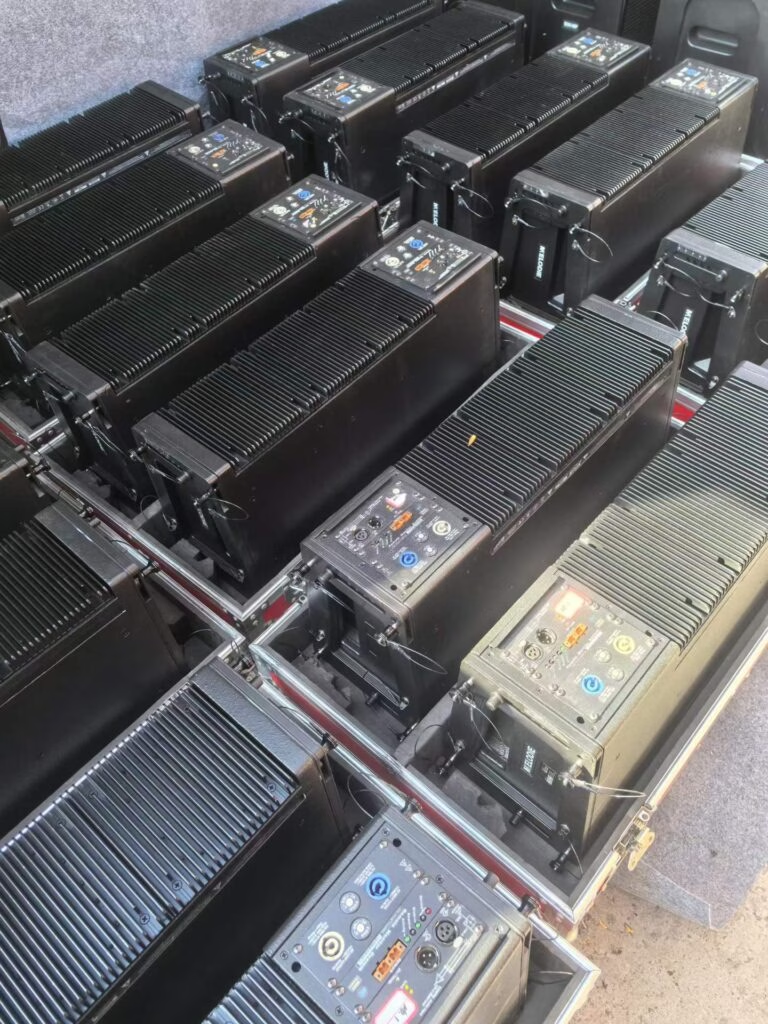
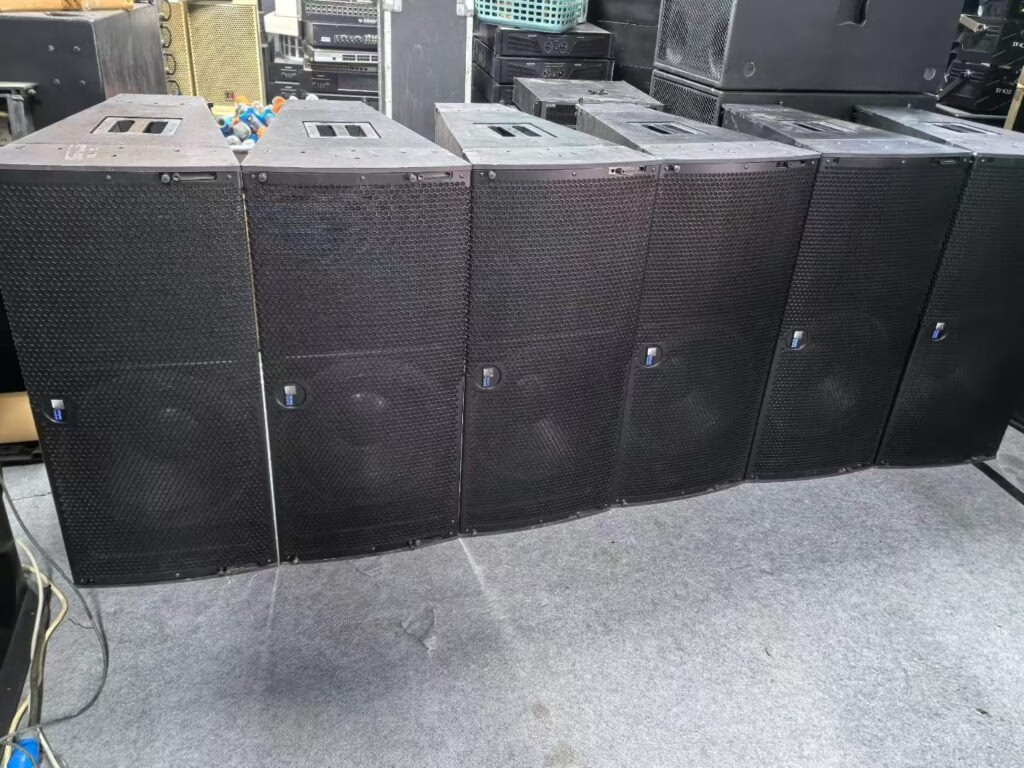
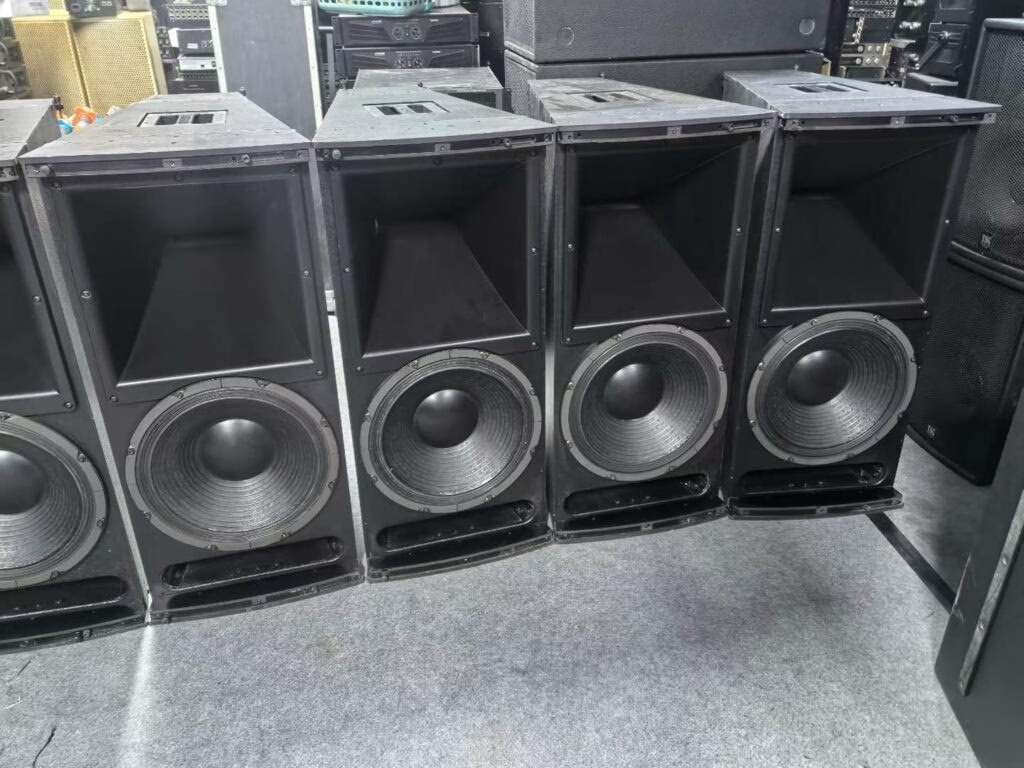
The JM-1P is one of the classic Meyer Sound designs, and it is still doing serious work on stages around the world. It is a self-powered, arrayable point source: a single trapezoidal cabinet with a 15-inch woofer and a 4-inch voice-coil compression driver, built to be hung in horizontal rows and splayed into a curved array. That is exactly the configuration in the photographs: multiple cabinets locked together side by side, each one covering a slice of the audience.
Everything needed to make sound is inside the box. There is no amplifier rack to source, no processor to configure, no speaker cable to guess the gauge of. Send it a line-level signal and it produces up to 138 dB of peak output from a cabinet that weighs under 67 kg.
What the JM-1P actually is
Meyer Sound built its reputation on self-powered loudspeakers, and the JM-1P follows that philosophy without compromise. The cabinet holds the drivers, the two-channel amplification and the signal processing as one integrated unit, with independent drive for the low and high sections and EQ, phase correction and crossover handled internally.
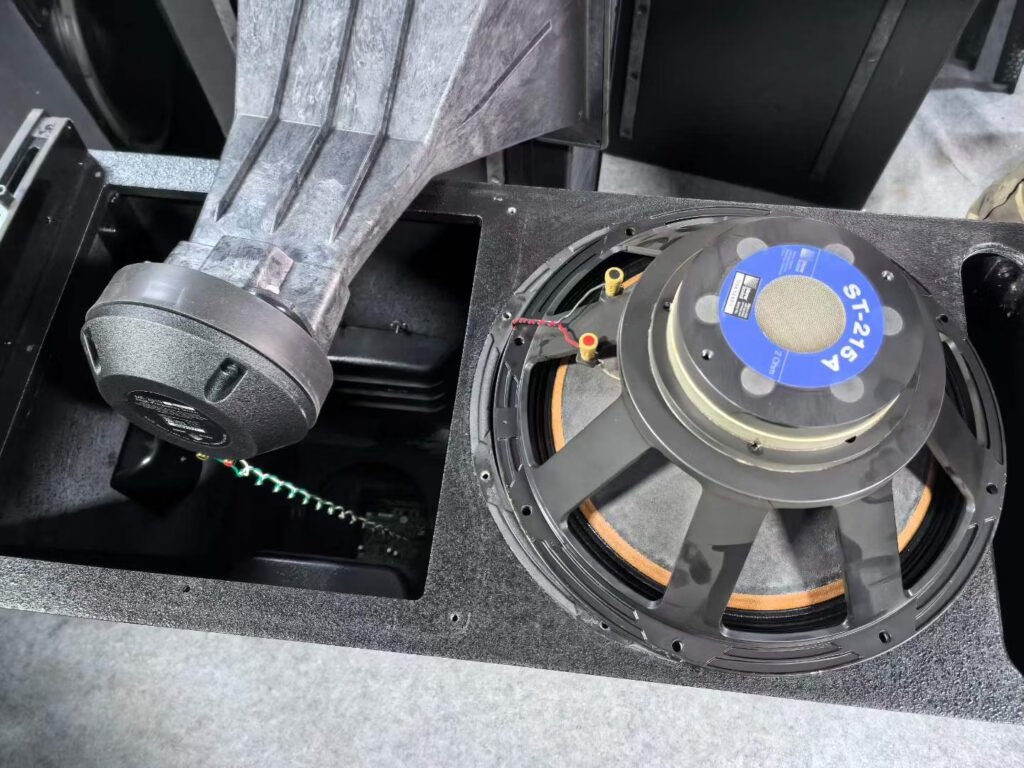
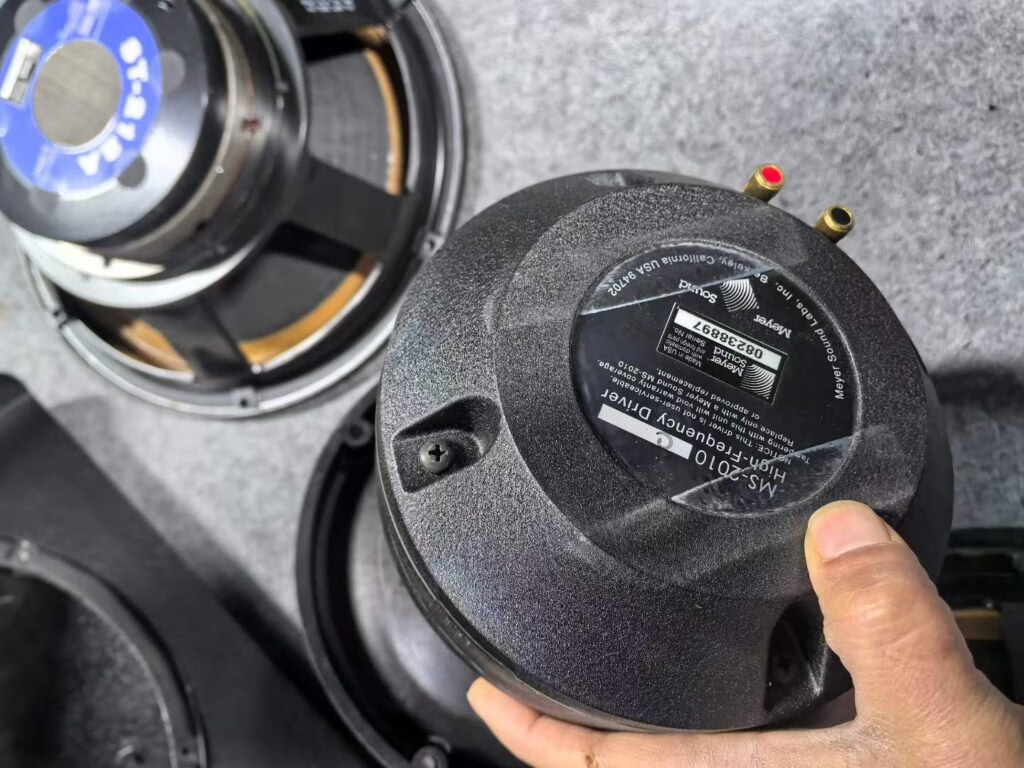
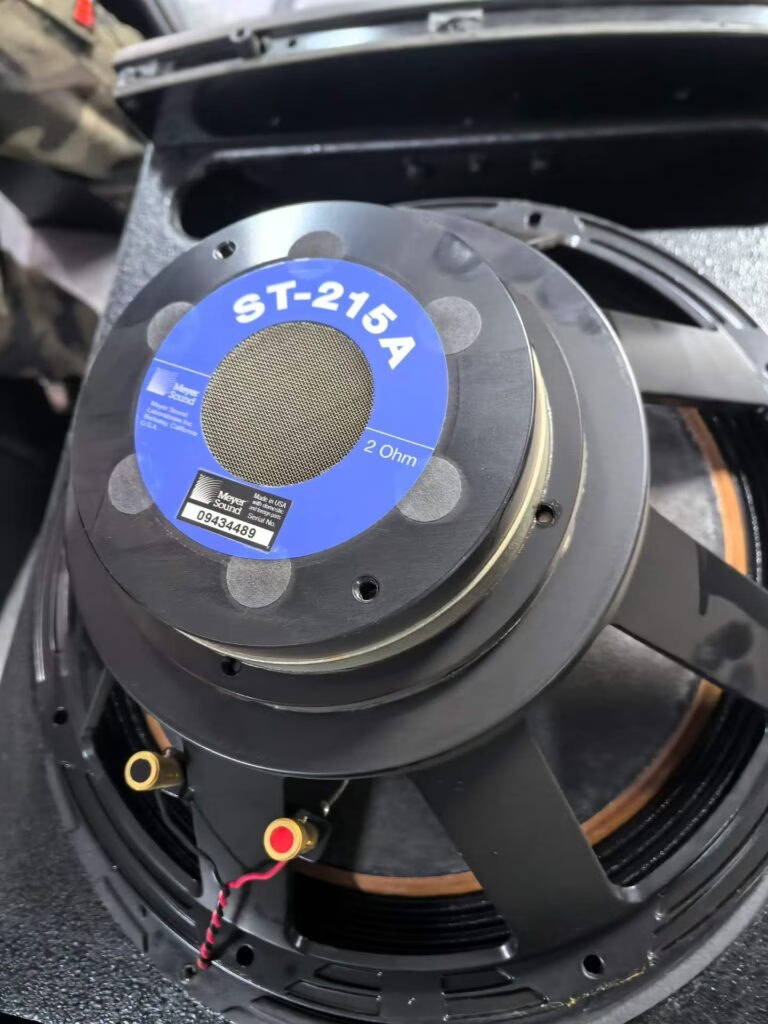
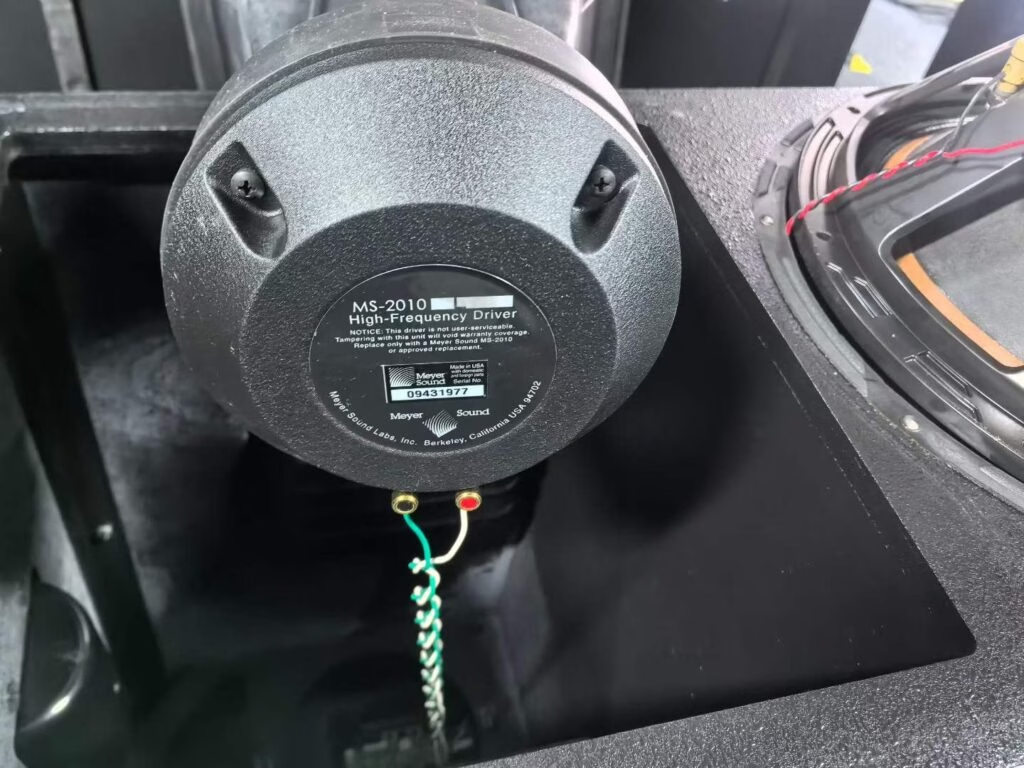
The driver complement is a 15-inch neodymium woofer, the ST-215A, running at 2 ohms, paired with a 4-inch voice-coil compression driver, the MS-2010, at 8 ohms. That is a serious low-frequency motor for a cabinet this size, and it is the reason the JM-1P has the weight and punch that smaller array elements simply cannot produce.
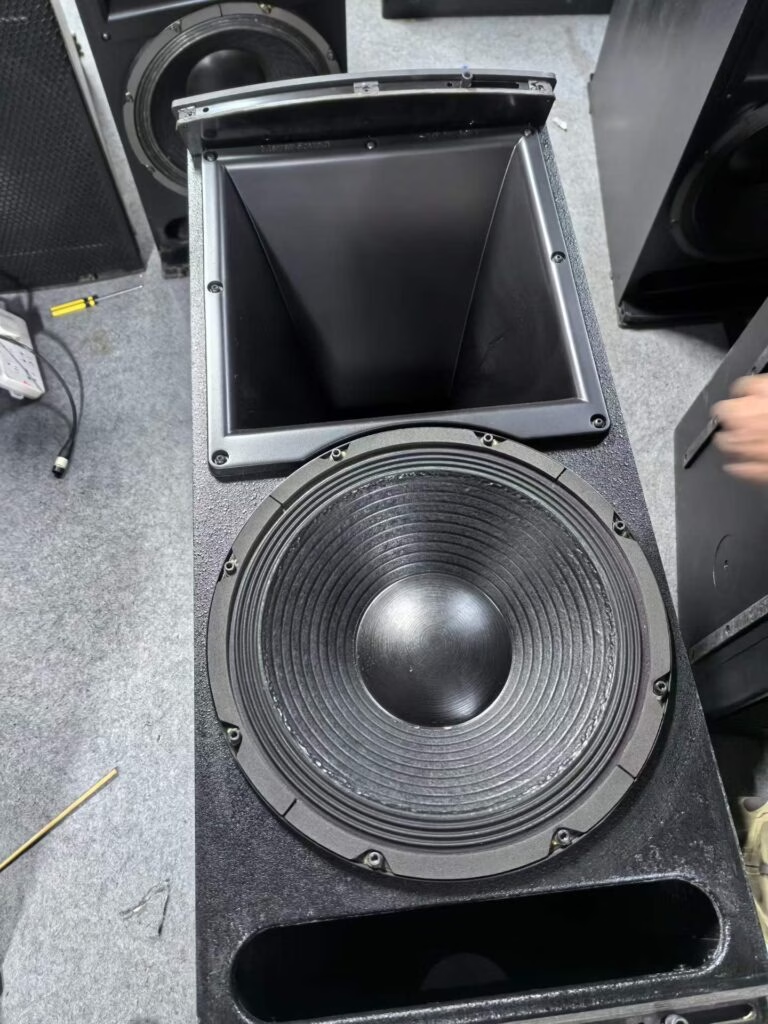
The horn is where the JM-1P differs from a conventional point source. Meyer’s REM waveguide gives the cabinet a 20-degree horizontal by 60-degree vertical pattern. Read that again in the context of how these boxes are used: each cabinet is deliberately narrow in the horizontal plane so that a row of them can be splayed into a curved array, each one covering its own slice of the audience with minimal overlap.
Coverage: 20 by 60 degrees, and why it is shaped that way
A 20-degree horizontal pattern is narrow on purpose. Used alone, a single JM-1P throws a controlled vertical band of sound a long way, which makes it useful as a delay or fill box aimed at a specific seating area. Used in a horizontal row, six or eight cabinets side by side cover a full 120 to 160 degrees of audience with each element handling a narrow slice.
This is the classic approach to covering a wide, shallow venue or the front of a large stage without a line array. The vertical pattern stays at 60 degrees across the array, so the throw remains consistent from the centre to the edges of the coverage, and the array can be curved to follow the audience rather than left flat.
Because the cabinets are trapezoidal and the rigging hardware is supplied, the array can be assembled quickly and flown or stacked as a unit. That hardware is part of what makes this a usable system rather than a collection of boxes, and it is included with this set.
Amplification, headroom and output
Inside the cabinet, a two-channel self-powered amplifier drives the woofer and the compression driver independently. Frequency response is quoted at 56 Hz to 16.5 kHz within plus or minus 4 dB, with an operating range down to 53 Hz and up to 18 kHz. Peak output is 138 dB.
That combination of numbers is what separates the JM-1P from a compact array element. It reaches down to a genuine 56 Hz, which means it can carry a full-range vocal and instrument mix without a subwoofer under it for speech, corporate work and smaller music applications. For a full concert system, it hands off cleanly to subwoofers at the bottom of its range.
Headroom is the practical benefit of self-powered design. The amplifier is matched to the drivers by the manufacturer, with limiting and phase correction built in, so the cabinet cannot be overdriven in the way a passive box paired with the wrong amplifier can. Push it hard and it protects itself rather than destroying a driver.
Dimensions and weight
The cabinet measures 427 mm wide, 916 mm high and 744 mm deep. Each unit weighs 66.7 kg. The trapezoidal multi-layer hardwood enclosure is built to be flown, and the rigging hardware is included.
Those numbers matter when you plan an install. A row of six cabinets is a considerable load and needs proper flying points and a rigging plan; stacked on the floor, the width and depth make the array stable but the stack is tall. Plan the transport as well: at 67 kg per cabinet, this is a two-person lift per box and a van or truck rather than a car boot.
Condition and what is included
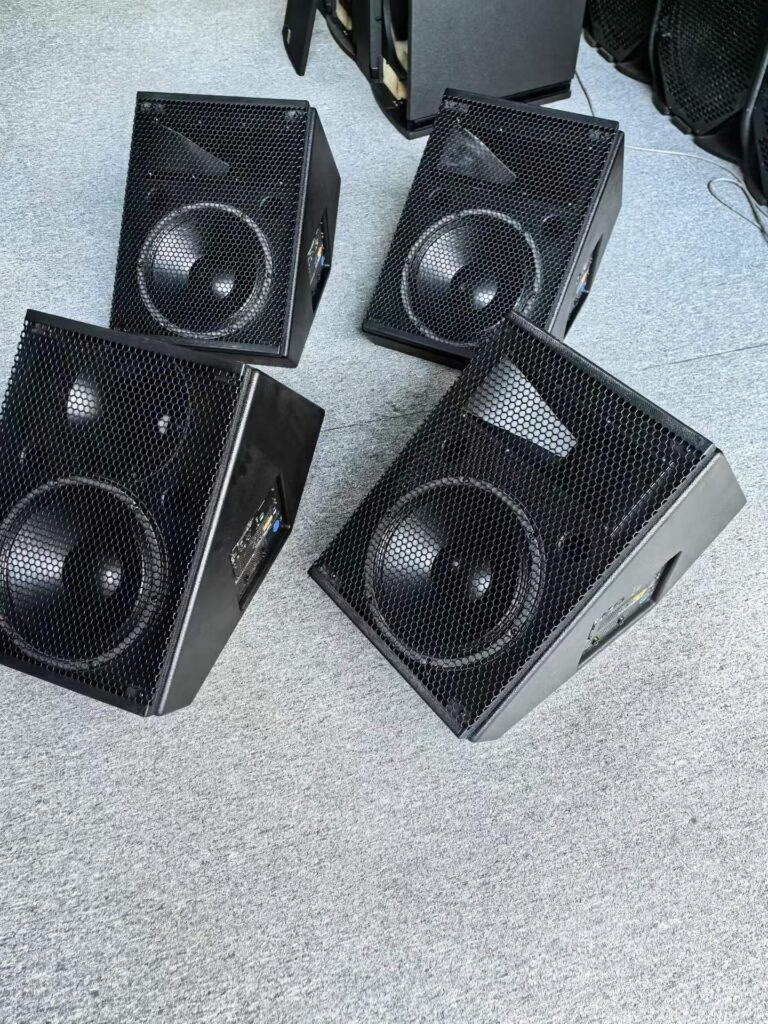
This set is used and in excellent working condition, available now from stock. The photographs show the cabinets as they are: the enclosures, the grilles, the horn throats and the rear amplifier panels. The rigging hardware that accompanies the cabinets is included.
If you need a specific configuration, larger or smaller quantity, or the matching subwoofers to go underneath, tell us what you are covering and we will tell you how many cabinets that takes and how they should be splayed.
What the JM-1P is used for
Main system for a wide, shallow room. A horizontal row covers the front of a venue evenly, with the curve of the array matching the curve of the audience. This is where the narrow horizontal pattern earns its keep.
Delay and fill. A single cabinet throws a controlled 20 by 60 degree band a long way, which makes it a precise delay speaker for a balcony or the back of a long room.
Large stages and touring. The self-powered design means fewer racks, fewer cables and less to go wrong, and the 138 dB peak output means the system has the level for a large stage without running at its limit.
Fixed installs. The trapezoidal cabinet and supplied hardware suit flown installations in venues that need coverage from a compact number of boxes.
Questions buyers usually ask
Is the JM-1P a line array? No. It is an arrayable point source. The cabinets array horizontally rather than vertically, which is why the horizontal pattern is narrow and the vertical pattern is wide. It covers a wide, shallow audience exceptionally well and is not a substitute for a vertical line array in a deep room.
Does it need an external processor? No. The processing, crossover, EQ and phase correction are inside the cabinet. Feed it a line-level signal and set your system level.
How many cabinets do I need? Work from the horizontal coverage you need. At 20 degrees per cabinet, six cabinets cover roughly 120 degrees of audience, and eight cover around 160. Tell us the room width and the distance to the back row and we can work it out with you.
Can it be stacked instead of flown? Yes. The cabinets are designed to be flown or stacked, and the supplied hardware supports both. Stacked, the array needs a stable base and a safe height for the top cabinet.
Will it work with a subwoofer? Yes. The JM-1P reaches down to 56 Hz, and crossing to subwoofers below that extends the system into full-range concert territory.
Related equipment in stock
If you are building or extending a Meyer Sound system, other self-powered boxes from the same inventory work well alongside the JM-1P:
- Meyer Sound MICA self-powered line array element – the vertical line array element for deep rooms where a horizontal row will not throw far enough.
- Meyer Sound UPM-1P self-powered wide-coverage loudspeaker – a compact wide-coverage cabinet for front fills and delays.
If you want a self-powered arrayable cabinet that covers a wide audience from a compact row, this JM-1P set is ready to go now. Tell us the room and we will tell you how many you need.