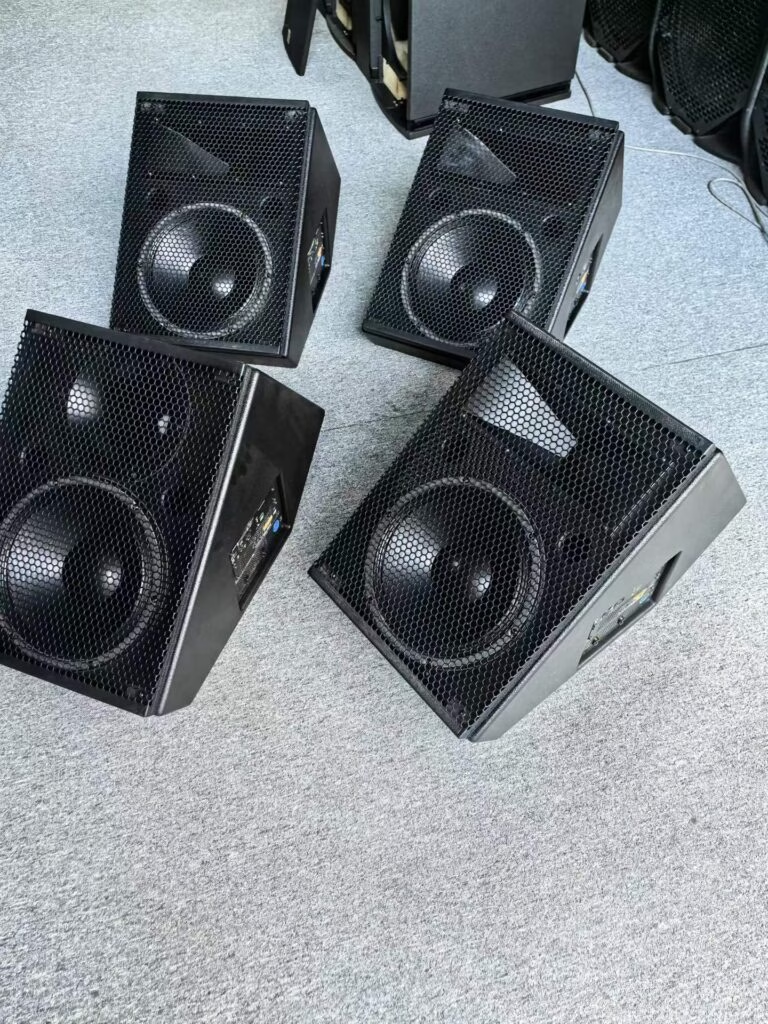
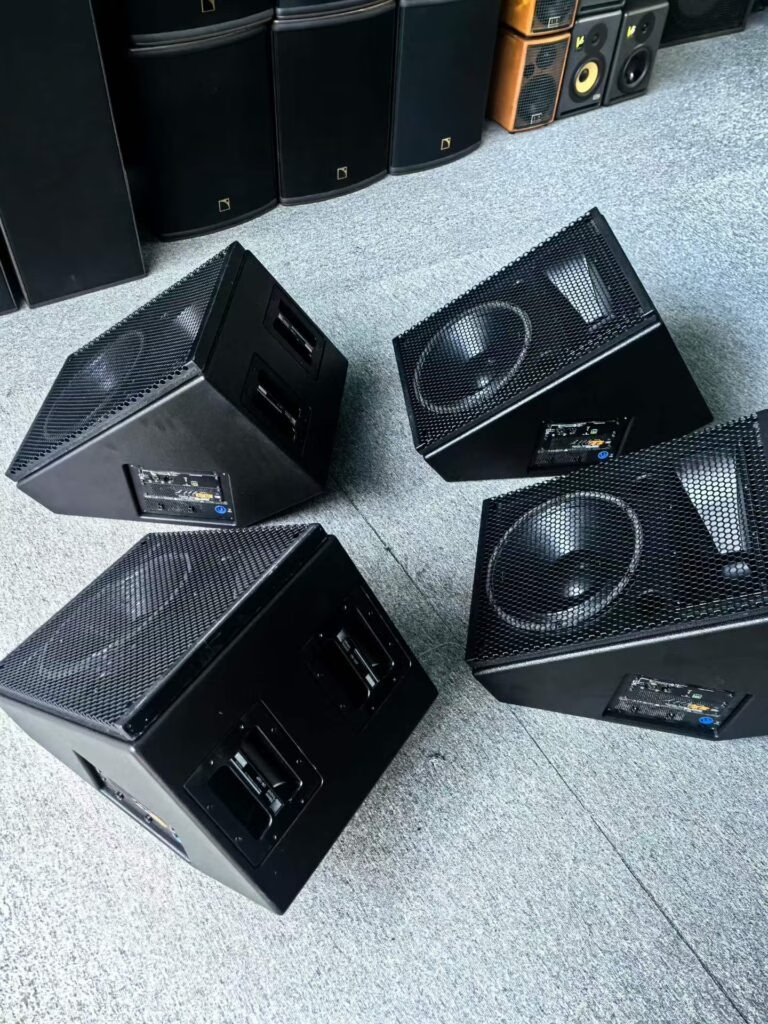
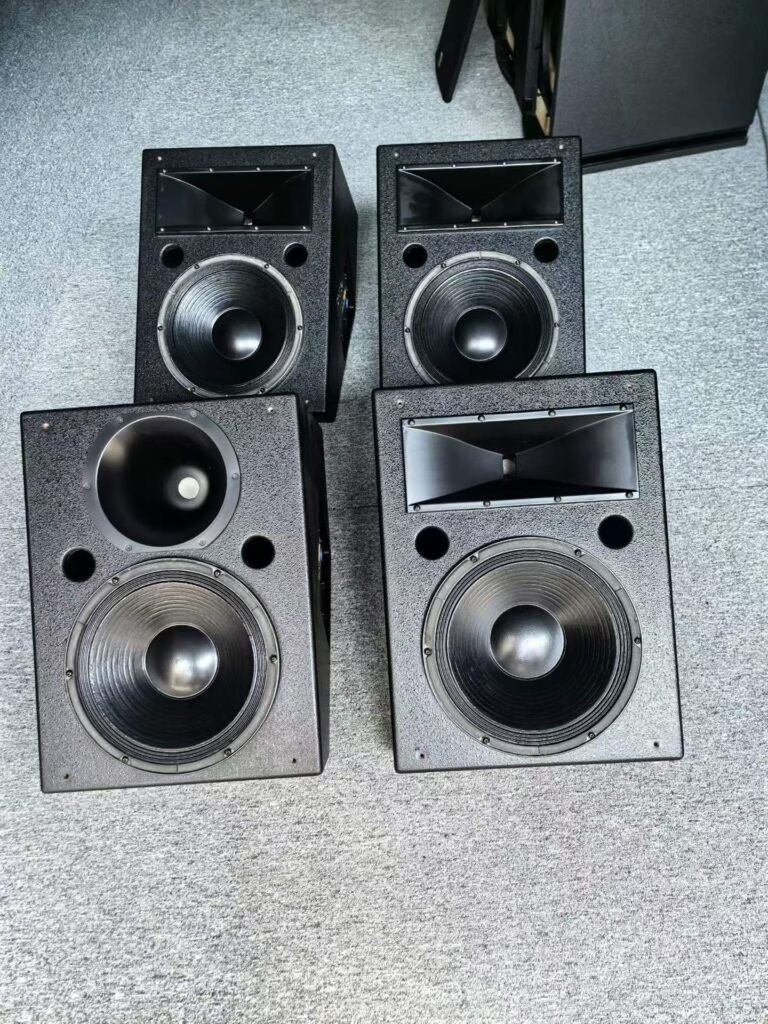
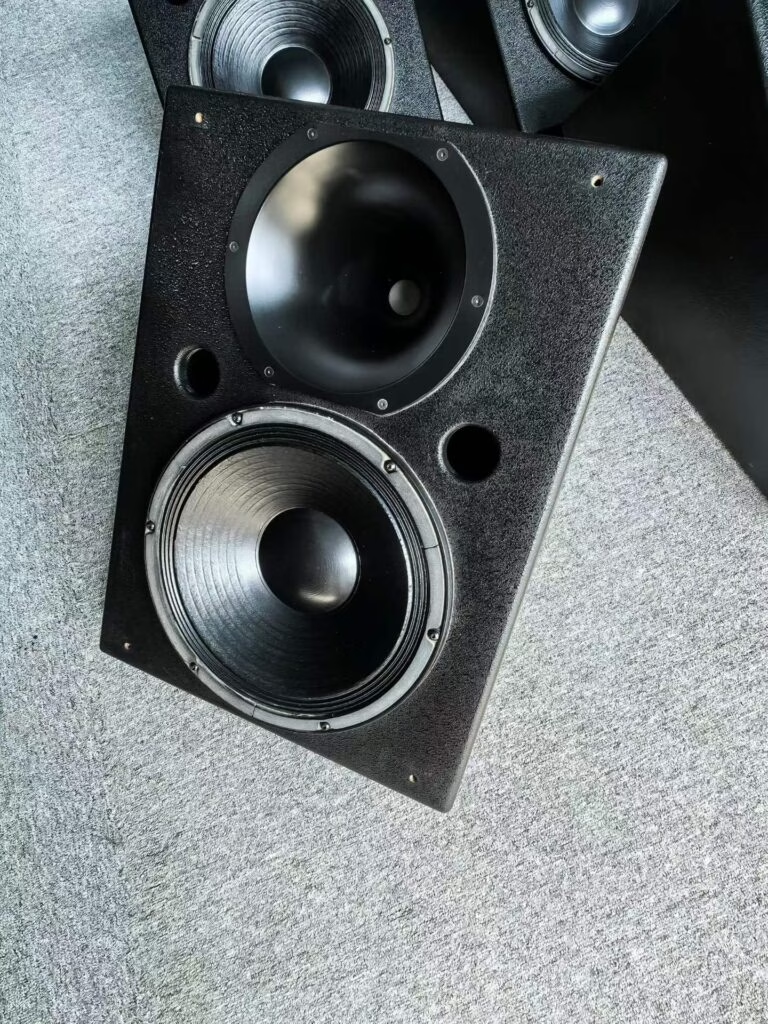
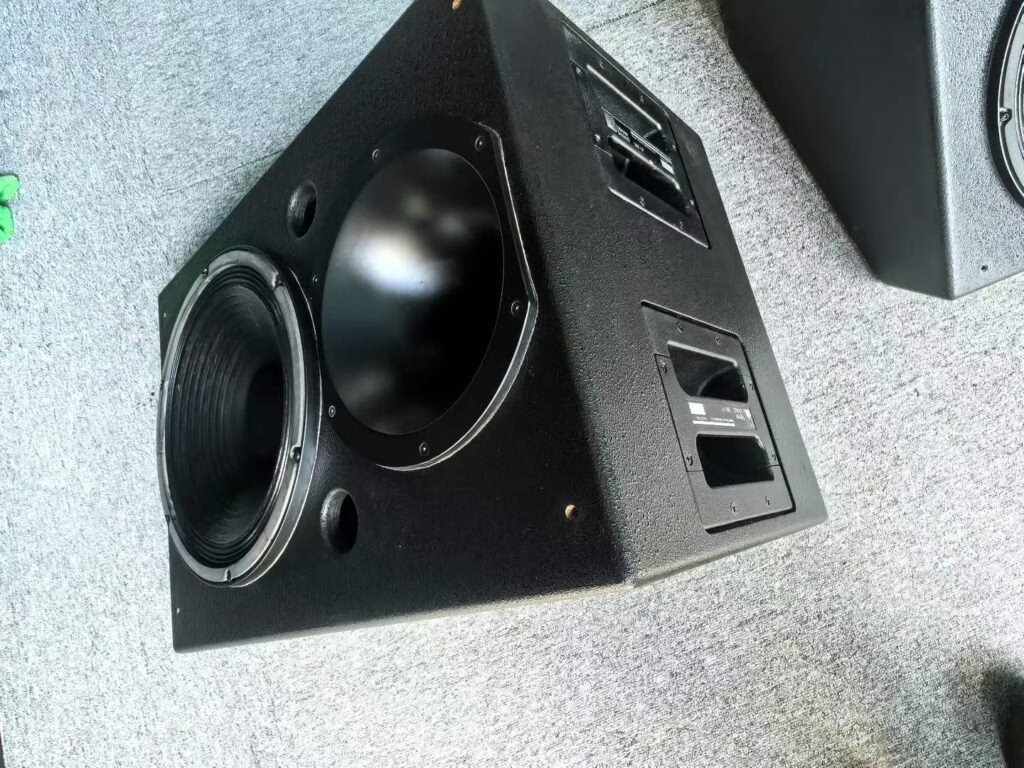
Description
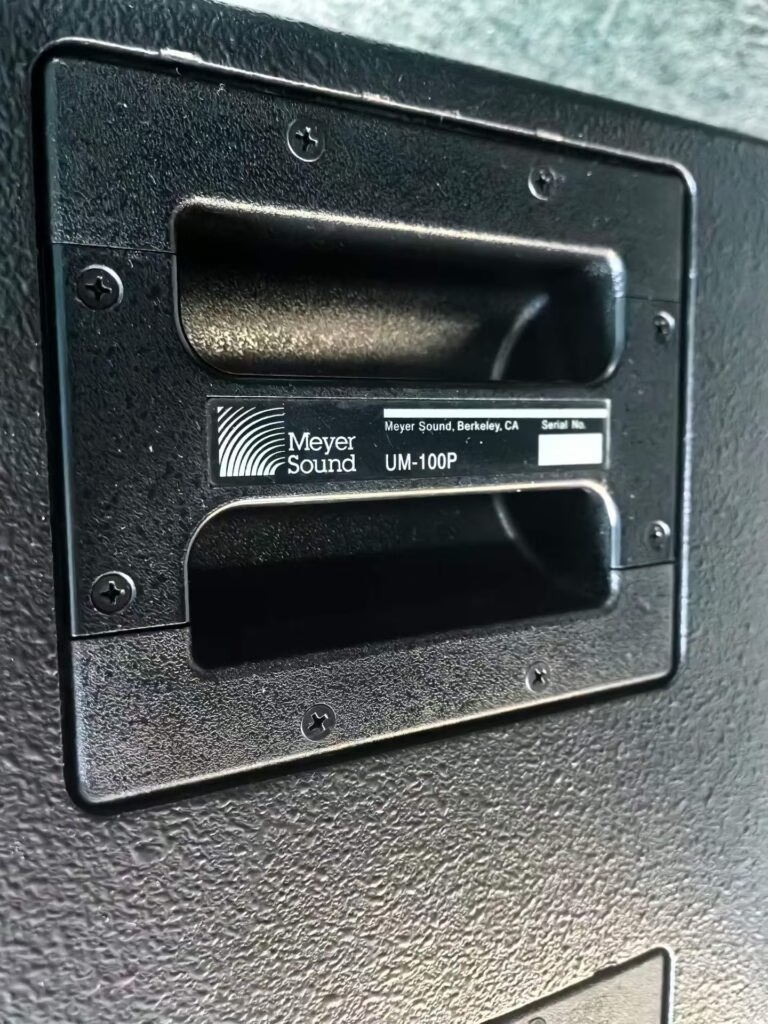
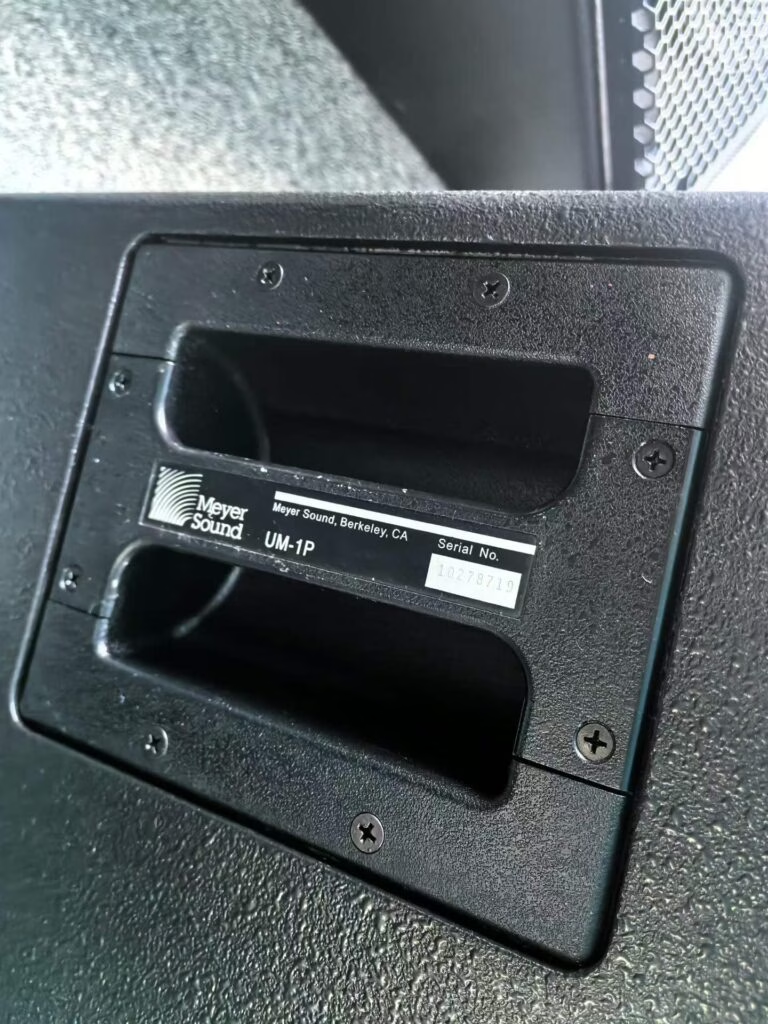
The short answer: Meyer Sound UM-1P and UM-100P self-powered stage monitors, in stock, price on request. Both are the same monitor in two coverage patterns — a 12-inch woofer with a 3-inch diaphragm compression driver, 350 W per amplifier channel, 60 Hz–18 kHz and 131 dB peak SPL. The UM-1P is the narrow one at 45° × 45° for a single vocalist; the UM-100P is the wide one at 100° × 40° for a band sharing wedges.
What are the UM-1P and UM-100P?
They are the classic Meyer Sound self-powered stage monitors — a wedge with the amplifier, the processing and the protection already inside the box. You give it mains power and a line-level feed, and it works. There is no amp rack, no processor, no speaker cable run back to a rack side stage.
Meyer built its reputation on exactly this idea in the 1980s and 1990s: put a purpose-designed amplifier and a Meyer-designed control circuit inside every cabinet, so the loudspeaker and its amp are one matched, tested product. The UM series was the monitor arm of that range, and these two models are the ones you still see on touring stages decades later.
What is the difference between UM-1P and UM-100P?
Almost nothing except the horn. Same woofer, same compression driver, same amplifier, same frequency response, same peak SPL. The difference is the coverage pattern, and that single spec decides which rooms and which stages each one suits.
| Parameter | UM-1P | UM-100P |
|---|---|---|
| Type | Self-powered stage monitor | Self-powered stage monitor |
| Low frequency driver | 12-inch | 12-inch |
| High frequency driver | 3-inch diaphragm compression | 3-inch diaphragm compression |
| Coverage | 45° H × 45° V | 100° H × 40° V |
| Amplification | 2-channel, 350 W per channel | 2-channel, 350 W per channel |
| Frequency response | 60 Hz – 18 kHz | 60 Hz – 18 kHz |
| Peak SPL | 131 dB | 131 dB |
| Horn | Constant-Q | Constant-Q |
Why does 45° × 45° matter for a lead vocalist?
A narrow pattern is about isolation. A 45° square puts a tight cone of sound on one performer’s head, and everything outside that cone gets considerably less. On a loud stage, that is the whole game: the wedge is pointed up at a face, not out at the drum kit, not into the back of the singer’s own vocal mic, and not into the front-of-house mics on the drum riser.
The mechanics matter too. Any cardioid or supercardioid vocal mic has a rear null, and the way you avoid feedback is to put the monitor directly in that null and keep the wedge’s output away from the capsule. A tight horn gives you far more freedom in placing the wedge before gain-before-feedback collapses. Singers who work close to the mic and ask for a lot of vocal usually get a better result from a 45° wedge than from a wider one at the same level.
And why 100° × 40° for a band?
Because sharing is the point. A 100° horizontal pattern spreads the same monitor across two or three positions, so one cabinet can cover a guitarist and a bassist standing shoulder to shoulder, or a pair of backing vocalists, without a second wedge and a second amplifier draw.
The 40° vertical is the trade. It is broader than the 45° of the UM-1P in the horizontal plane but tighter than it vertically, which keeps energy off the ceiling and off the floor — useful in low-ceilinged clubs and in rehearsal rooms where you are not fighting a big room but you are fighting reflections off a hard back wall.
What do 350 W per channel and 131 dB peak actually mean?
They mean this is a monitor that does not need to be pushed. Two channels of 350 W into a 12-inch and a compression driver is not a big number by modern standards, but Meyer’s amplifiers are matched to the drivers and the peak limiter is part of the design rather than an afterthought. The result is a wedge that reaches a loud stage level with headroom left, which is why they survive decades of touring while cheaper wedges do not.
131 dB peak is a measurement at one metre, and it is the number to quote when someone asks whether these will keep up with a rock stage. They will. What they will not do is deliver subwoofer content; 60 Hz is the bottom of the response, which is normal for a monitor and the reason a drum fill usually gets its own low-frequency support.
Is self-powered better than passive and an amp rack?
For monitors, usually yes, and the argument is mostly logistics. Ten wedges on a stage means ten amplifier channels, ten speaker cables and a rack at side stage — or ten IEC cables and ten XLRs. Setup, teardown, troubleshooting and replacement all get simpler when every wedge is complete in itself. If one dies, you swap it and keep going rather than chasing a channel in a rack.
The trade-off is that a self-powered box carries its own failure points: the amplifier, the power supply and the internal processing are inside the cabinet, and when one fails the whole monitor goes down. On a Meyer, that internal electronics package is well built and serviceable, which is why used units are worth buying rather than scrapping.
What should I check on a used UM series monitor?
These cabinets are old enough that condition matters more than specification. The list we would go through, and can go through on request before shipping:
- Both amplifier channels working. Feed pink noise and confirm output from the woofer and from the horn separately; a dead high channel is a common fault and is not always obvious on a vocal-only test.
- Power-up behaviour. Meyer self-powered boxes have a defined power-up sequence; clicks, a slow start or a protection light that stays on suggests a power supply problem.
- Grille and cabinet condition. The hexagonal grille is distinctive and also the first thing to get dented in a truck pack. Dents are cosmetic; a pushed-in grille touching the woofer is not.
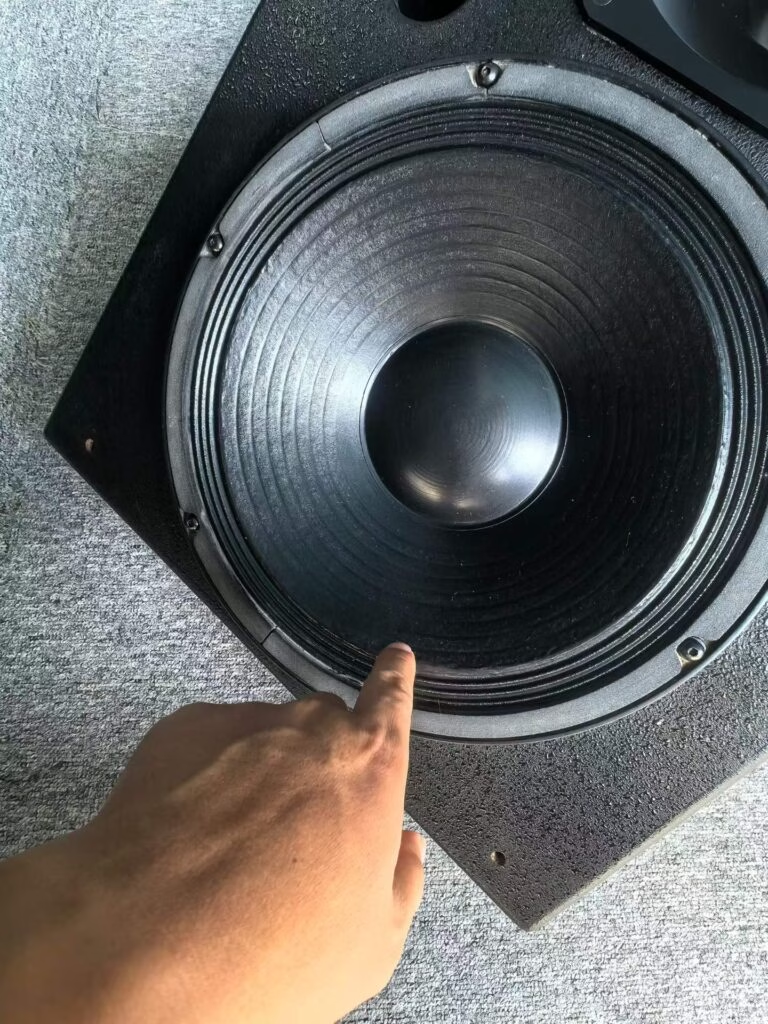
- Driver condition. Listen for rattle at high level and look for foam rot around the woofer surround on units this age.
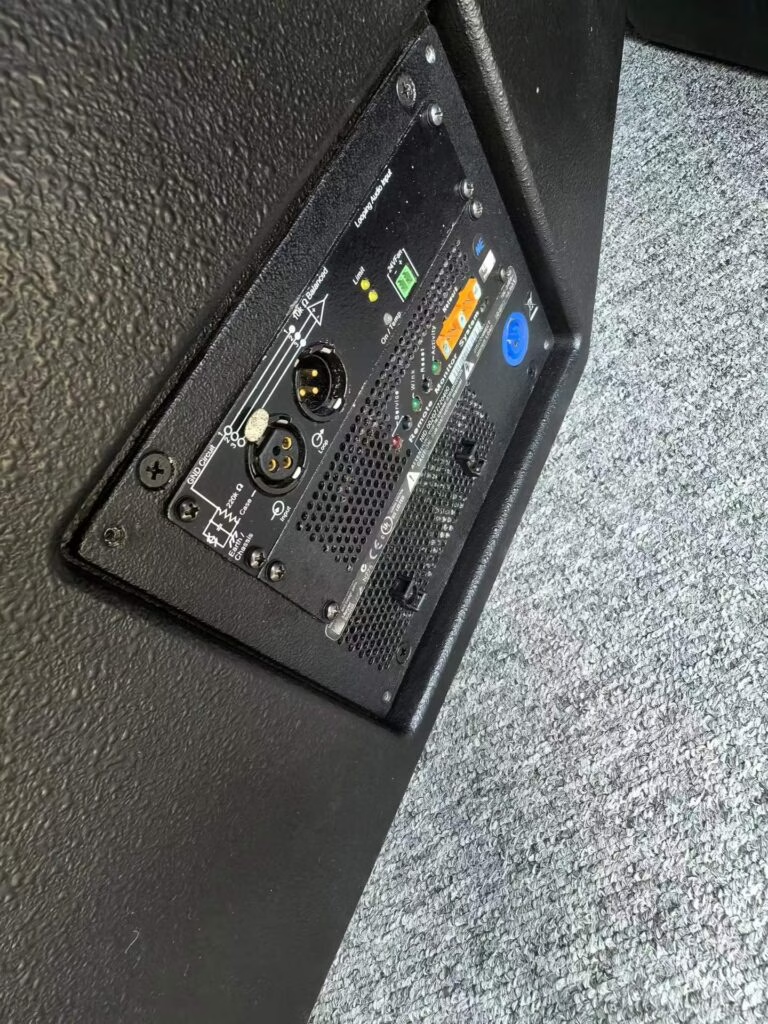
- Connectors and controls. Check the input XLR, the level control and the power inlet for looseness.
We have not run a full measurement sweep on these units. If you want impedance and frequency-response data, a photo of each serial label, or per-unit listening reports before you commit, ask and we will produce them.
Should I buy both models together?
Often, yes, and that is why we are listing them as one item. A typical stage uses narrow wedges where the singer stands and wide wedges where two or three players share — the UM-1P at the vocal positions and the UM-100P on the guitar and bass side is a sensible split. Buying a mixed set from one seller means matched cosmetics, matched age and one shipment.
If you only need one type, tell us which and we will quote the units you want separately. If you are building a monitor system from scratch, we also stock PA systems and amplifiers, and we can consolidate a stage package into a single shipment.
Availability and how to ask about these monitors
UM-1P and UM-100P monitors are in stock now, in black, priced on request. Several units are available across both models. We ship worldwide from China and can consolidate with other stage equipment from the same warehouse.
Tell us how many of each model you need, what stage they are going on, and what they will be fed from. If you need a specific mix of coverage patterns, or you want the units tested and reported before they ship, say so and we will confirm what is available. Photos of the actual cabinets in stock are available on request.