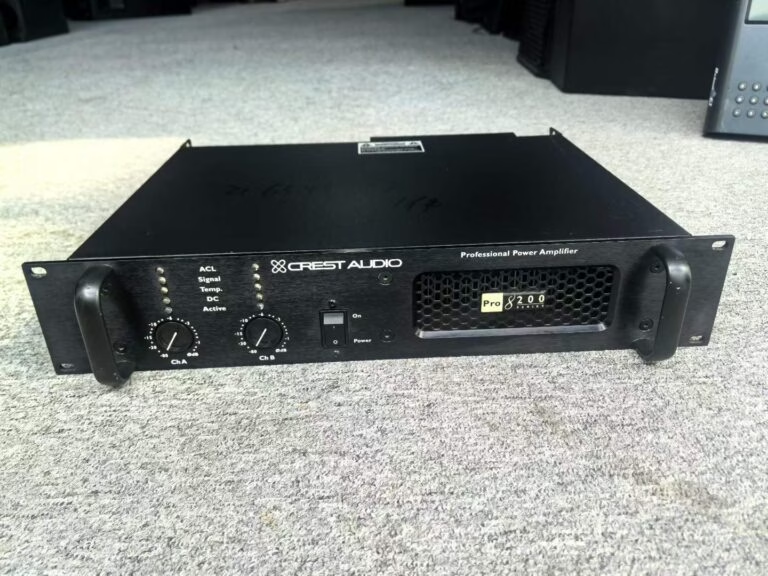
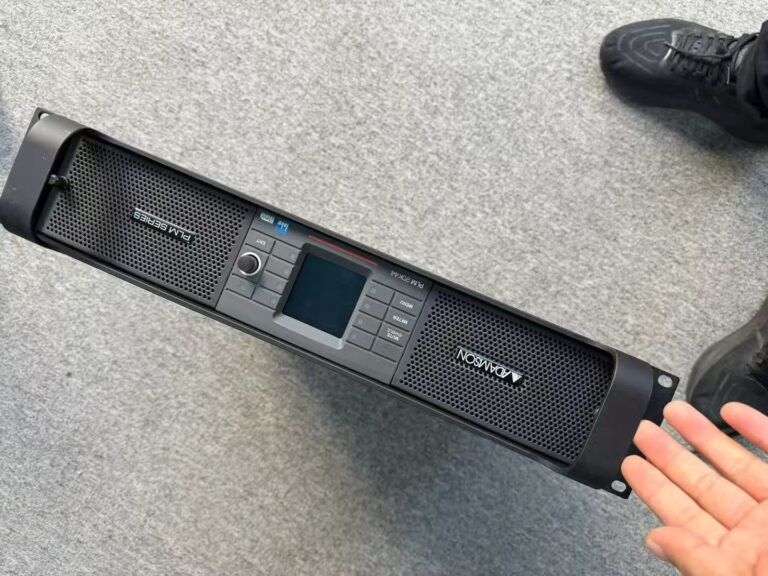
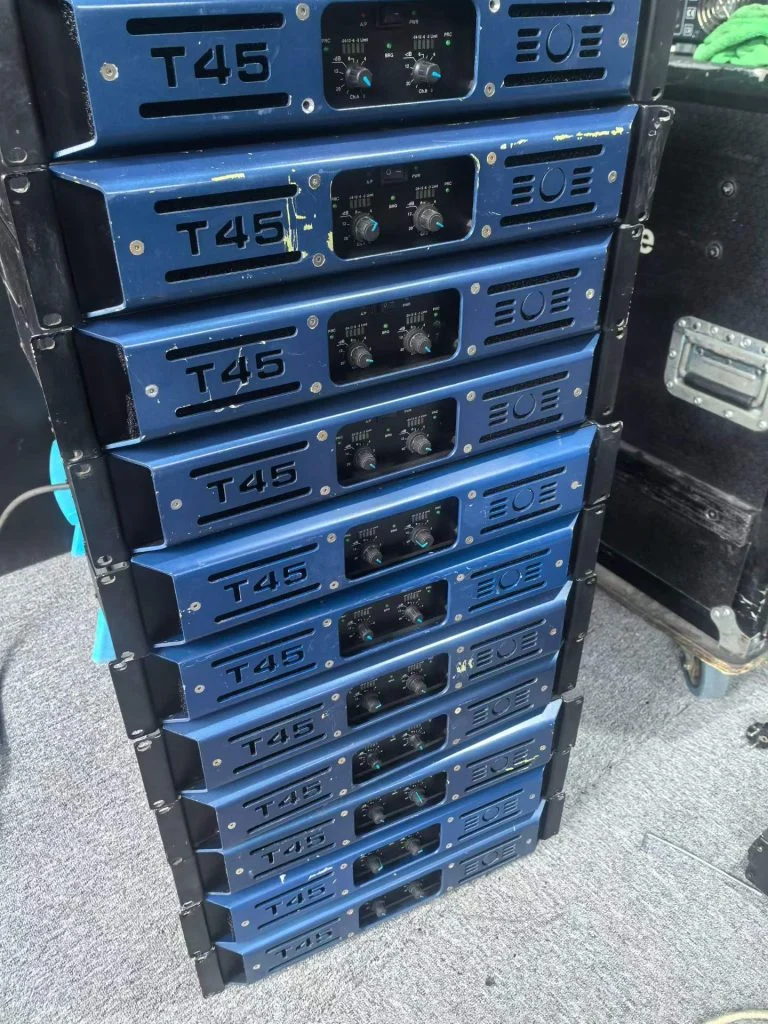
Four things give away a used power amp that has been cooked or repaired: discoloured PCB around the output stage, non-matching output transistors, fan filters packed with dust, and solder joints that look newer than the rest of the board. Two of those are cosmetic. The transistor mismatch is the one that costs you money later.
Why does transistor matching matter so much?
A push-pull output stage splits the work between two sets of transistors. They are matched at the factory so they share current evenly. Replace one dead transistor with a different part number, or one from a different batch, and the load shifts. The new device runs hotter, drifts, and one day takes the whole channel with it. This is not theoretical; it is the most common failure path on older QSC, Crown and Crest amps.
When you open the lid, look for two device numbers on the same heatsink row. Same number is fine. Same number plus a different suffix, or a completely different part, means someone repaired it and you should price the amp as a repair risk.
Where exactly should you look on the PCB?
- Around the power resistors and output stage: a brown or tan halo on the board means sustained heat. Normal use leaves it clean.
- Electrolytic capacitors: domed tops or brown crust at the base means they have been overheated and are near end of life.
- Fan grilles and filters: if a foam filter is packed solid, the amp has been running restricted airflow for years.
- Solder joints on the output connectors: shiny new solder on a 15-year-old board is a rework sign.
What does a burn-in test reveal that a visual check does not?
Run the amp for 30 minutes at moderate level into a real load, not open circuit. Then put your hand near the exhaust. Warm is normal. Too hot to hold for more than three seconds is a problem. A dying amp often passes a five-minute test and fails at minute twenty-five, which is exactly when your event starts.
Listen for a faint 50 or 60 Hz hum with no input connected. That points to failing filter capacitors, a $60 to $150 part per rail plus labour. On a $400 used amp that is a real cost; on a $1,200 amp it is worth fixing.
Should you pay more for a factory-serviced amp?
Yes, and the premium is usually 20 to 30 percent. A factory service record with replaced capacitors and matched output devices is worth more than the discount on an unknown amp. If a seller cannot produce a service record, assume no service was done and price accordingly.
How does an amp repair change the rest of your rig?
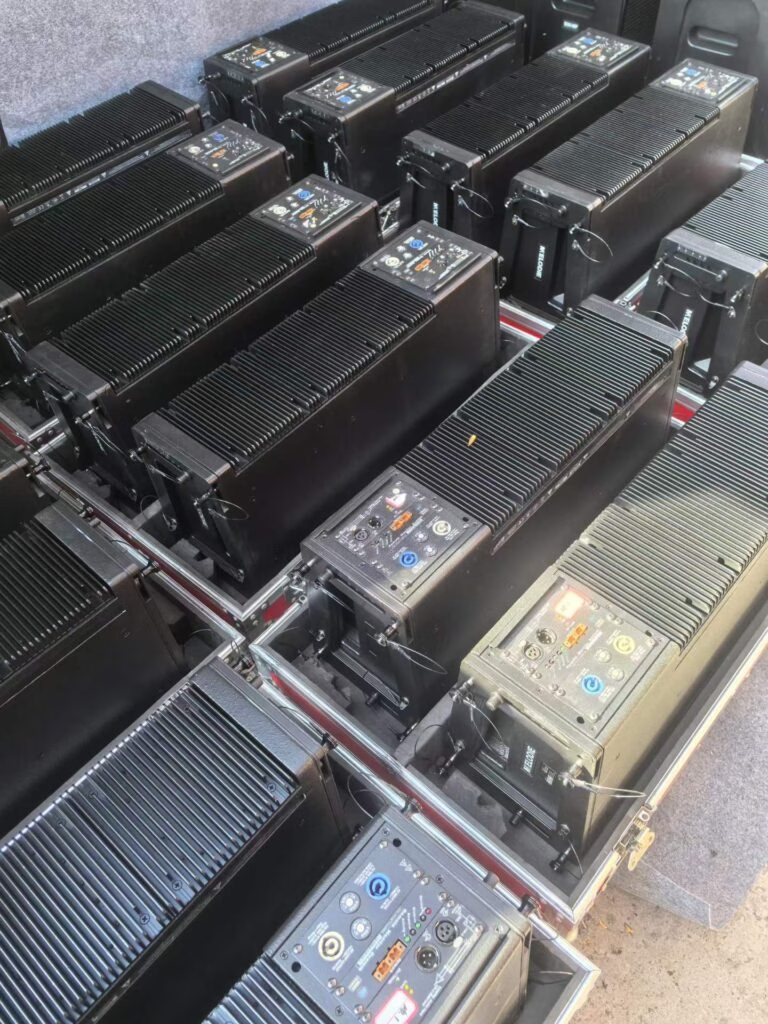
An underperforming amp makes good speakers sound bad, and the reverse is also true. If you are running passive boxes, the amp is the piece to spend on. If you are running self-powered speakers, there is no external amp to worry about, which is why many buyers now look at self-powered speakers first and add amplification only when they need passive boxes for a fixed install.
What is a fair price for an old pro amp?
| Type | Used price range | Notes |
|---|---|---|
| 2-channel 500W class AB | $250-$450 | Heavy, hot, cheap to fix |
| 2-channel 1000W class H | $400-$800 | Common in installs, plentiful parts |
| 4-channel DSP amp | $700-$1,400 | Presets may be locked to a brand |
| Class D touring amp | $900-$2,000 | Light, efficient, harder to repair |
One counterintuitive point: newer class D amps are lighter and cooler but harder to repair. A 15-year-old class AB amp with a local tech who knows it may outlast a five-year-old class D amp with no service network in your country. Availability of repair matters more than age.
Key Takeaways
- Check for mismatched output transistors first. That is the expensive failure.
- Brown halos on the PCB and domed capacitors mean heat damage.
- Run a 30-minute burn-in, not a five-minute check.
- Pay 20-30% more for documented factory service; it is cheaper than a surprise repair.
- Local repair availability should outweigh amp age when you choose.