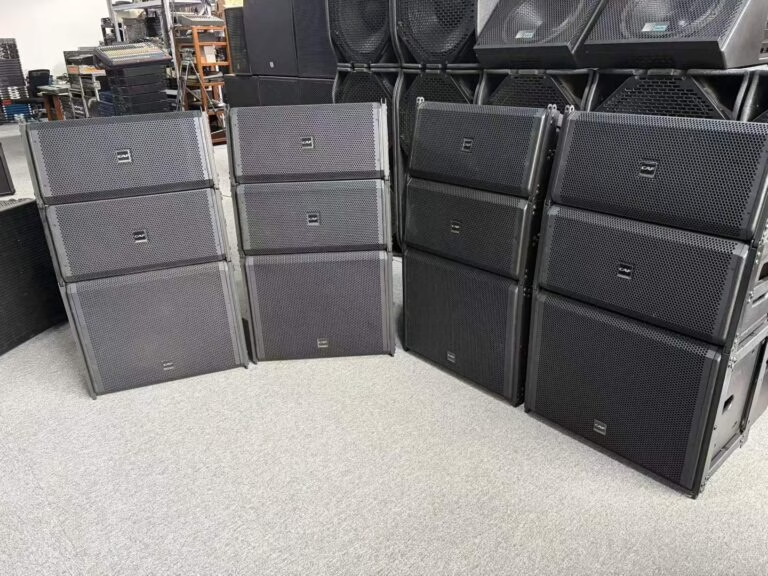
A used line array cabinet typically sells for $800 to $2,500 per box. A used 12-inch point-source speaker with similar output sells for $250 to $600. The ratio holds across brands, from L-Acoustics K-series down to Chinese clones. You are not paying for better sound per box. You are paying for the rigging frame, the extra amp channels, and the fact that nobody sells a used array one box at a time.
What exactly does the extra money buy?
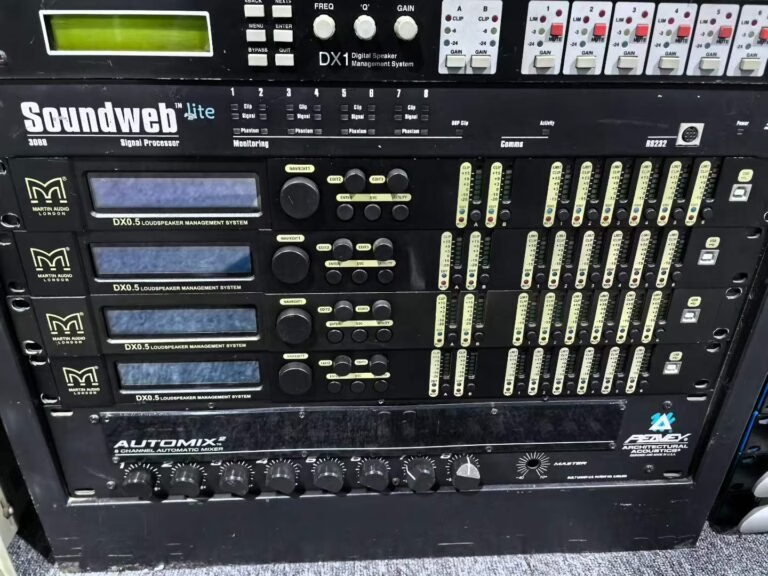
Three things, in order of cost. First, the flying hardware: a genuine bumper or fly bar for a 12-box array is $3,000 to $8,000 on its own, and arrays without original rigging are near-impossible to resell. Second, amplifier channels. A single line array box is often 2-way active with dedicated processing, so an 8-box hang needs 16 amp channels and a DSP with factory presets. A point-source box needs one channel, maybe two.
Third, and least obvious: the set. Arrays are tuned as a system. A used array sold as six boxes includes the specific presets, the specific angles, and the specific processing that makes those six boxes behave like one source. Split them and you have six expensive speakers that no longer predict each other’s coverage.
When is a point-source speaker the smarter buy?
Rooms under about 800 seats, wedding and corporate work, and any gig where you load in alone. A pair of K-array KF12 self-powered speakers covers a 300-guest room with no flying hardware, no amp rack, and no rigging certification. Setup is one trip from the van.
The honest downside of point-source: throw. Past 25 to 30 metres the level drops and the pattern widens, so the back rows get mud. You cannot fix that with more boxes without creating comb filtering.
How do you spot a line array that is priced too cheap?
A 12-box array advertised at $4,000 total is usually one of three things: stolen, water-damaged, or missing its fly bar. Ask for the rigging serial numbers and photos of the bumper before you wire a deposit. Genuine arrays keep a paper trail because tour companies insure them.
- Fly bar included? No bar means $3,000+ to fabricate a safe substitute.
- Original amp presets? Without them the array will not array.
- Matching serial range? Boxes from different production runs have different drivers.
- Any box with a replaced HF diaphragm? Expect level mismatch across the hang.
What does shipping change about the maths?
A 12-box array plus bar plus amp rack is roughly 1.8 to 2.4 cubic metres and 600 to 900 kg. Sea freight from China to a Middle East or African port runs $180 to $320 per cubic metre, so $450 to $700 for the shipment. The same shipment of eight point-source speakers is about 1.1 cubic metres. When the freight is a smaller share of a cheaper item, the point-source route wins on delivered cost even before you count rigging labour.
One more number worth knowing: a line array needs a licensed rigger or a certified ground-support tower. That is $500 to $1,500 per event in most markets. Point-source on tripods needs nobody.
Key Takeaways
- Used line array boxes run $800-$2,500 each; comparable point-source speakers $250-$600.
- The premium is rigging hardware and amp channels, not sound quality per box.
- Arrays must be bought and used as sets with original presets to perform.
- A $4,000 twelve-box array is almost always missing its fly bar or worse.
- Under 800 seats, self-powered point-source is cheaper delivered and cheaper to operate.
Comparing a specific hang against a point-source rig? Send us the room size and we will tell you which one actually fits. Browse used PA systems or ask for a quote.