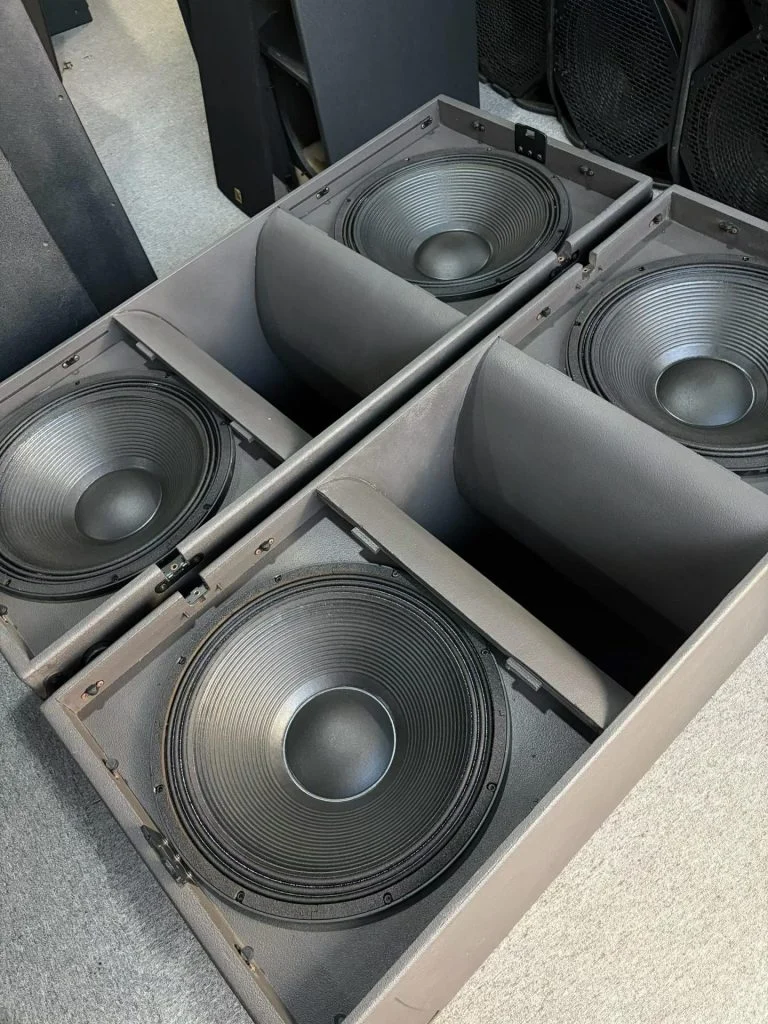
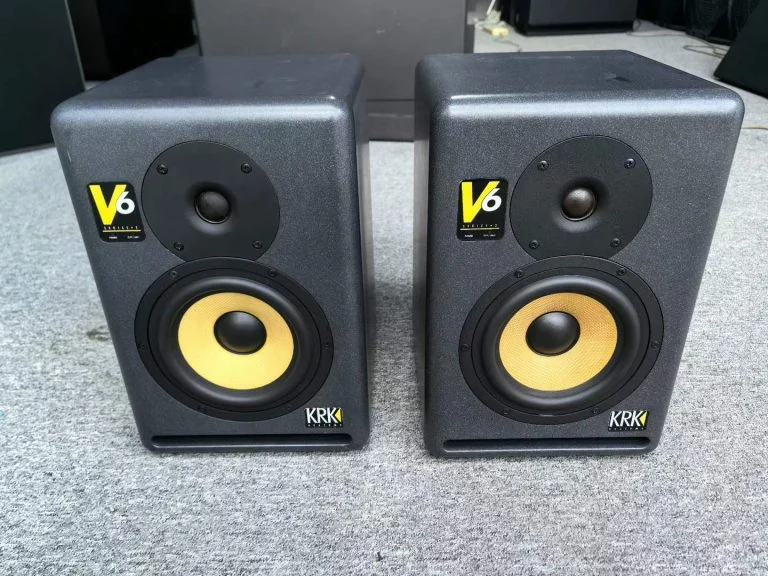
Buy the drivers, not the badge. A used PA speaker is worth what its components cost to replace. Cabinets where the woofer and horn are still available new at reasonable prices hold value for years; cabinets built around a discontinued module are worth scrap plus whatever you can sell the box for.
What do used PA speakers actually sell for in 2026?
Realistic ranges for single cabinets in decent working order:
| Type | Used price | New equivalent |
|---|---|---|
| Passive 10 inch, generic | $120-180 | $260-380 |
| Passive 12 inch, brand driver | $240-420 | $600-900 |
| Powered 12 inch, mainstream | $380-650 | $900-1,400 |
| Powered line array element | $900-2,400 | $2,600-6,000 |
Which cabinets hold value and which ones do not?
Hold value: point-source boxes from brands with an active rental fleet, because rental companies keep buying drivers. Skip list: any cabinet where the horn diaphragm is proprietary and out of production, which includes a lot of 2008-2014 Chinese-made budget lines.
Here is the check I use. Find the driver part number on the basket, search it, and count how many listings are under $90. If the answer is zero, the cabinet is a one-way ticket.
How do you test a passive cabinet in five minutes?
Bring a small amp and a phone. Play a sine sweep from 60 Hz to 8 kHz. Listen for a buzz at the crossover point, which usually means a loose coil or a cracked solder joint on the board. Then push each cone inward slowly with two fingers spread wide. It should move smoothly and return with no rubbing.
Check the horn separately. A blown compression driver often still passes signal quietly, so the sweep alone will not catch it. Cup a hand behind the horn and listen near the throat.
Are powered speakers a better second-hand buy?
Sometimes. Powered boxes save you amp racks and cable runs, which matters for rental. But the amp module is the first thing to fail, and on many models it is a sealed assembly you must buy whole. On a 12-year-old powered box, budget $150 to $300 for a module, and check whether it is still orderable before you pay.
The speaker I keep pointing buyers toward is the K-array KF12 self-powered 2-way speaker, because the cabinet is light, the amp section is serviceable, and the value holds better than most plastic boxes in the same bracket.
What is the biggest mistake buyers make?
Buying a pair to “match” without checking that both cabinets are the same revision. Manufacturers quietly change drivers between runs. Two visually identical boxes from 2015 and 2019 can have different woofers, and they will not sound the same in a room.
Key Takeaways
- Price the drivers, not the brand badge, when judging a used PA cabinet.
- Passive 10 inch generic boxes run $120 to $180; powered 12 inch run $380 to $650.
- Search the woofer part number before paying; zero listings under $90 is a red flag.
- A sine sweep plus a manual cone push catches most failures except a dead HF driver.
- Matching pairs must be the same revision, not just the same model number.
How much does cabinet condition change the price?
Cosmetics matter less than most sellers believe, but installation buyers care more than rental buyers. A scuffed cabinet that a venue client can see from the floor takes about a 15 percent hit. A cabinet with a repainted front takes 25 percent, because the buyer assumes it is hiding grille dents. Behind a grille in a nightclub, nobody looks.
Mechanical condition is where the real money sits. A cracked basket, a bent horn throat or a rattling grille changes the sound and drops value by 40 percent or more, even when the driver still plays.
Does a matched pair really sell for more than two singles?
Yes, by roughly 20 to 30 percent, and it takes about the same effort to sell. Buyers want matching serials because they want to trust the pair. If you own two identical cabinets with different revision numbers, list them separately instead of forcing a pair price.
What should a buyer measure before paying?
- Impedance on a meter: an 8 ohm cabinet reading 5.9 ohms DC is healthy, one reading 2 ohms has a shorted coil
- Cabinet dimensions against the manufacturer datasheet, to catch swapped cabinets
- Grille removal for a photo of the actual driver, not the badge
- Weight, since a cabinet that is 3 kg light has a smaller magnet than it should