Usually no. Most pro audio gear made since 2010 is labelled 100-240V, 50/60 Hz and works anywhere. If the rear panel says 220-240V only, you need a step-down or step-up transformer rated at 1.5-2x the device’s power draw. Read the label before buying anything.
How do you read the voltage label?
Look at the rear panel near the IEC inlet. Three labels are common:
- 100-240V, 50/60 Hz: universal input, no converter needed.
- 220-240V, 50 Hz: needs a step-down transformer in 110-120V countries.
- 100-120V, 60 Hz: needs a step-up transformer almost everywhere else.
Universal input does not mean the manufacturer shipped one version worldwide. Some brands build a 230V-only variant for Europe and a 115V-only variant for the US under the same model number, so the rear label is the only reliable source.
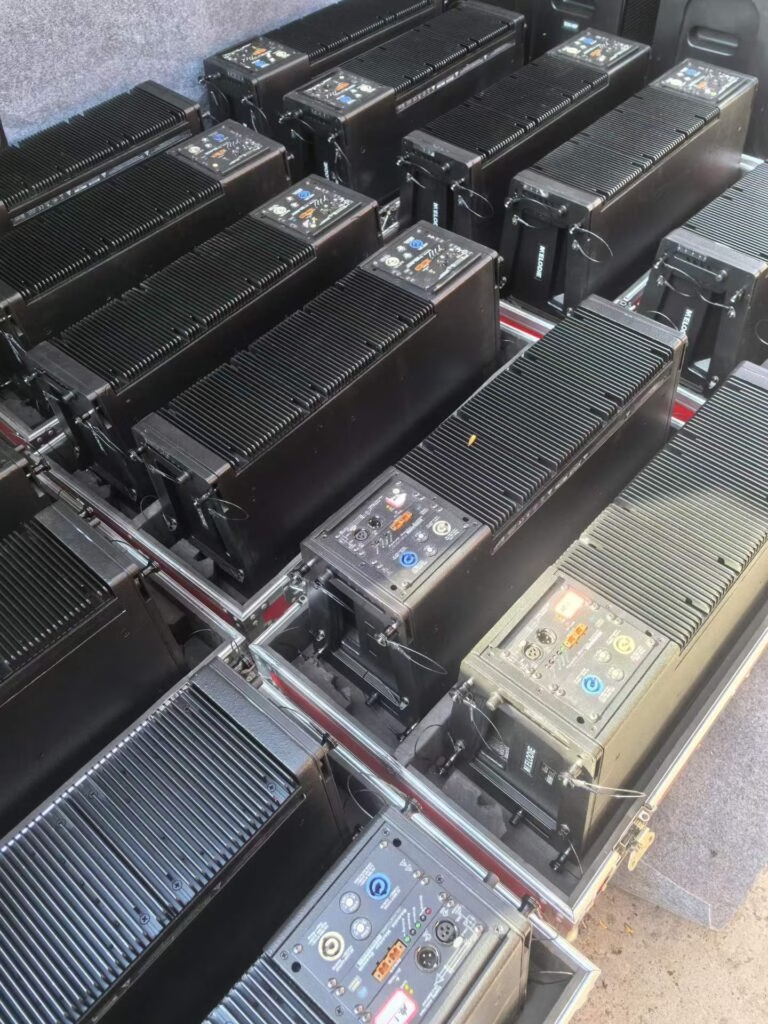
A K-array KF12 powered speaker uses a switch-mode supply with universal input, which is typical of modern active designs. A 1990s analog power amp almost never does.
Why does the converter need to be oversized?
Amplifiers draw far more than their idle rating on bass transients. A 1,000W class D amp might idle at 60W but pull 900W on a kick drum hit. A converter sized to the idle figure will trip or cook.
Size at 1.5-2x the amplifier’s rated power draw. For a 1,000W amp, use a 2,000W transformer. For a console, 1.5x is plenty because the load is steady and small.
Transients are not the only trap. A transformer running at 90% load gets hot, and heat shortens its life to a couple of years. Leave headroom, especially in a rack where there is no airflow.
Cheap transformers marketed as 3,000W often handle 1,200W continuously. Look for a continuous rating in the spec sheet, not a peak number on the box.
What is the difference between a converter and a transformer?
A transformer changes AC voltage with copper windings and no electronics. A converter can be a transformer, a triac dimmer, or a switch-mode device, and the triac type is bad for audio.
Triac converters chop the sine wave and can inject buzz into amplifiers and mixers. For audio, always use an isolating transformer type.
Which gear is safest to import without a converter?
| Device type | Typical input | Converter needed? |
|---|---|---|
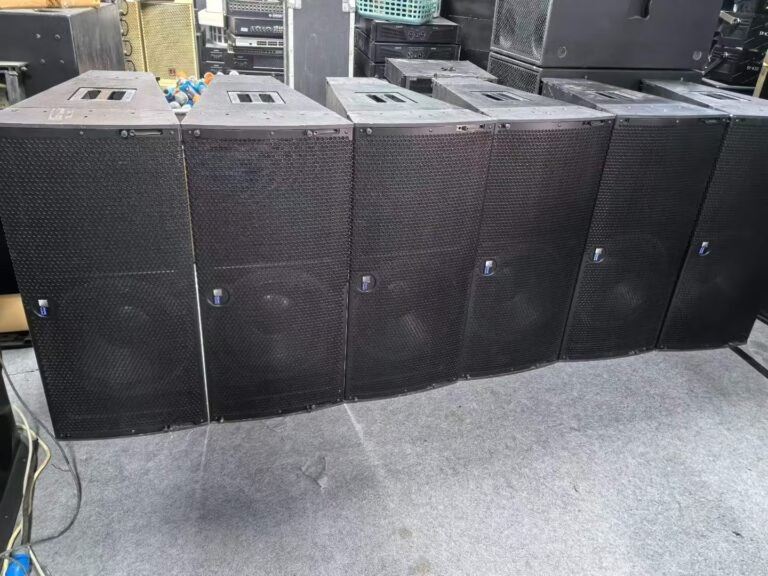
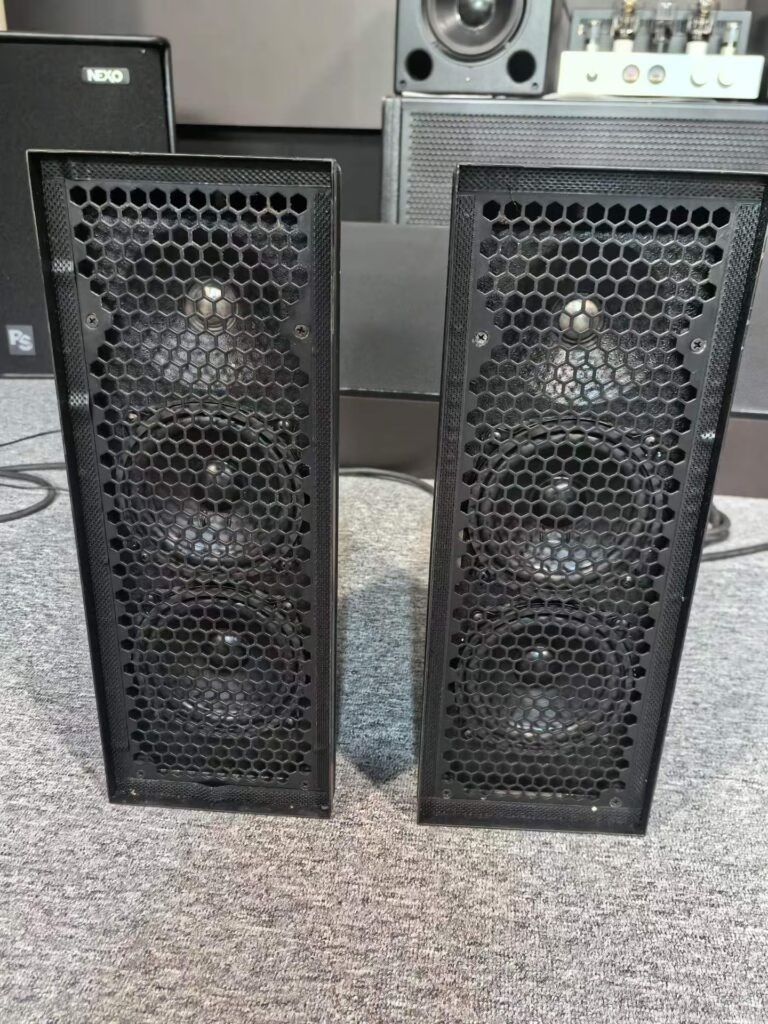
| Modern powered speaker | 100-240V | No |
| Digital console (post-2010) | 100-240V | No |
| Class D amplifier | 115/230V switch | Only if fixed 115V |
| Vintage analog amp | 117V or 230V only | Usually yes |
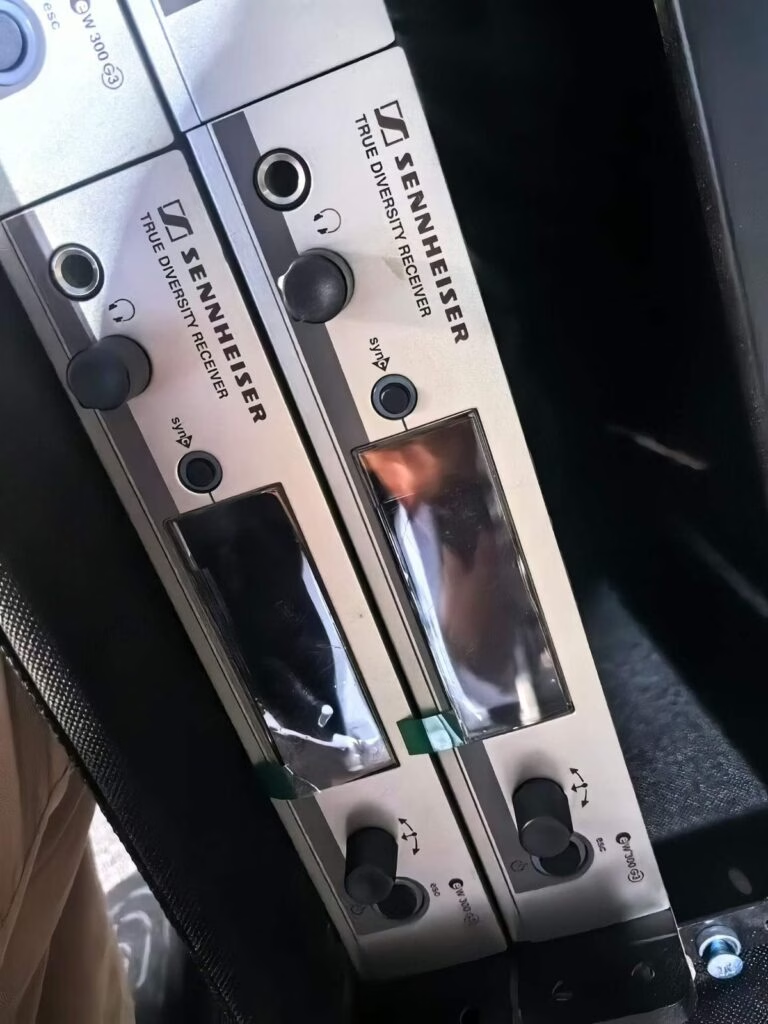
| Wireless mic receiver | 100-240V | No |
If the label is unreadable, treat the unit as needing a converter. Buying a $150 transformer is cheaper than a $400 power supply board, and much cheaper than a fire.
Some units have a recessed voltage selector switch rather than auto-switching. Check that too, because a 230V setting on a 110V supply will just not power up, and the reverse will destroy the supply.
What about frequency, 50 Hz vs 60 Hz?
Modern switch-mode supplies do not care. Vintage gear with a mains-frequency-dependent circuit does, but that is rare outside turntables and old tape machines.
Some 1970s tube amps are another exception, because their power transformers saturate differently at 50 Hz and run hot. Those are collector items, not touring gear.
Turntables are the main exception. A 50 Hz motor in a 60 Hz country spins 20% fast, and no transformer fixes that. Check the pulley or the servo design before importing a turntable.
Browse the amplifiers category for units with switch-mode supplies that travel well.
What else should you budget for?
One overlooked cost: certification. A converter that is not CE or UKCA marked may be refused at customs in the EU or UK, and returning it costs more than the unit.
Plug adapters: $3-8 each, mix of local and universal. A 2,000W isolating transformer: $120-280. A rack-mounted power conditioner with voltage regulation: $200-500 and often the better buy for a touring rig.
If you are importing a full system, price the converter or conditioner before you commit. On a $400 mixer, a $200 transformer changes the deal. For a console purchase, it is noise.
Key Takeaways
- Gear labelled 100-240V, 50/60 Hz needs no converter anywhere in the world.
- Size a transformer at 1.5-2x the amplifier’s rated draw, not its idle figure.
- Avoid triac converters for audio; they inject buzz. Use isolating transformer types.
- Vintage analog amps and 117V gear usually need a step-up or step-down.
- Turntable motors are frequency-dependent; a transformer will not fix 50 vs 60 Hz.
Want gear that travels without a transformer? See universal-voltage speakers in stock.