Yes, in most cases. Used powered PA speakers sell for 40-55% below new, and the only serious risk is the built-in amp module. If the DSP boots, every preset switches, and there is no hiss at zero input, you are buying a solid box at roughly half price.
What makes powered speakers riskier than passive ones?
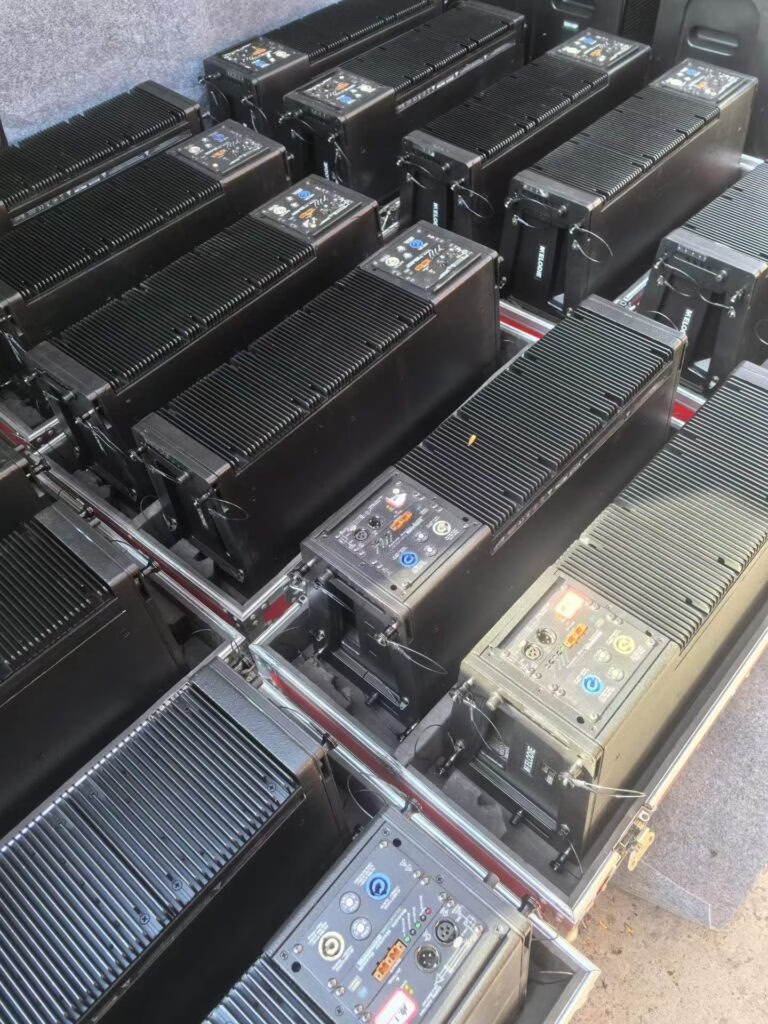
A passive cabinet is a box, two drivers, and a crossover. Almost nothing in it fails expensively. A powered cabinet adds a class D amp, a switch-mode supply, and a DSP board, all packed behind a hot aluminum plate.
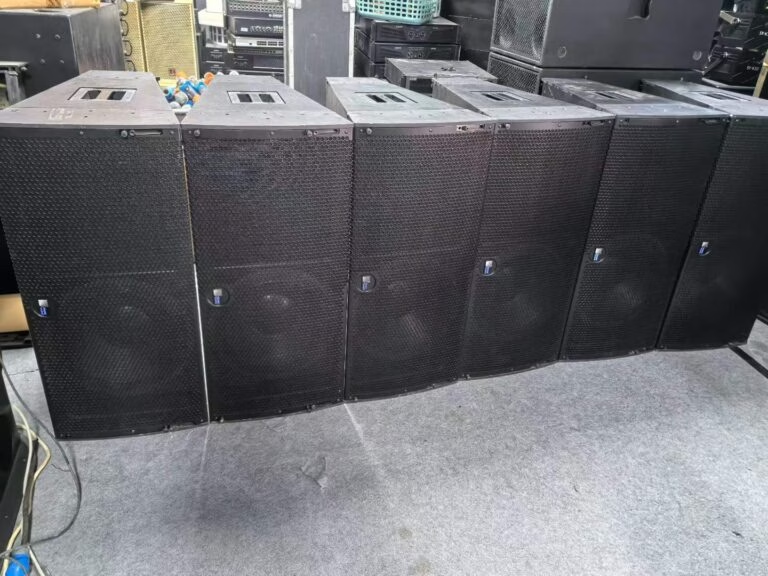
That is also where the savings come from. New powered 12-inch boxes run $650-900. Used working units trade at $180-420, which is about what a bare passive cabinet costs. You get amplification bundled in for the same money, provided the electronics are healthy.
How do you test the amp module quickly?
Twenty minutes is enough. Power it up with no input and put your ear 30 cm from the horn. You should hear nothing at all. A steady hiss means the DSP or supply is tired.
- Cycle every preset. If one preset is silent, the DSP memory is corrupt.
- Push a 100 Hz sine at moderate level for two minutes and feel the rear plate. Too hot to hold means the fan or thermal path is failing.
- Wiggle the IEC inlet. Crackle there is either a $5 socket or a $200 supply.
- Run a swept sine and listen for cabinet rattle at 300-500 Hz. Rattle is loose hardware, not a driver fault, but it tells you how the box was treated.
Is a used powered speaker cheaper than passive plus amp?
Often yes. Two passive 12-inch boxes plus a four-channel class D amp costs roughly $700-900 used and fills a rack unit with cabling. Two used powered boxes at $300 each does the same job for $600, with one XLR per side.
Passive still wins when you need long cable runs or a single amp rack feeding eight boxes from one location. Powered wins when you set up and tear down four nights a week and every minute on site costs money.
Where do these speakers fail in real service?
The common failures are boring and predictable: fan bearings after 5-6 years, electrolytic capacitors in the supply after 8-10, and ribbon cables to the front panel after a few hundred load-ins.
Cap replacement is a $40 parts job if you can solder. Fan replacement is $12. The killer is a discontinued DSP board, which is why you should check parts availability before buying an orphan brand nobody services anymore.
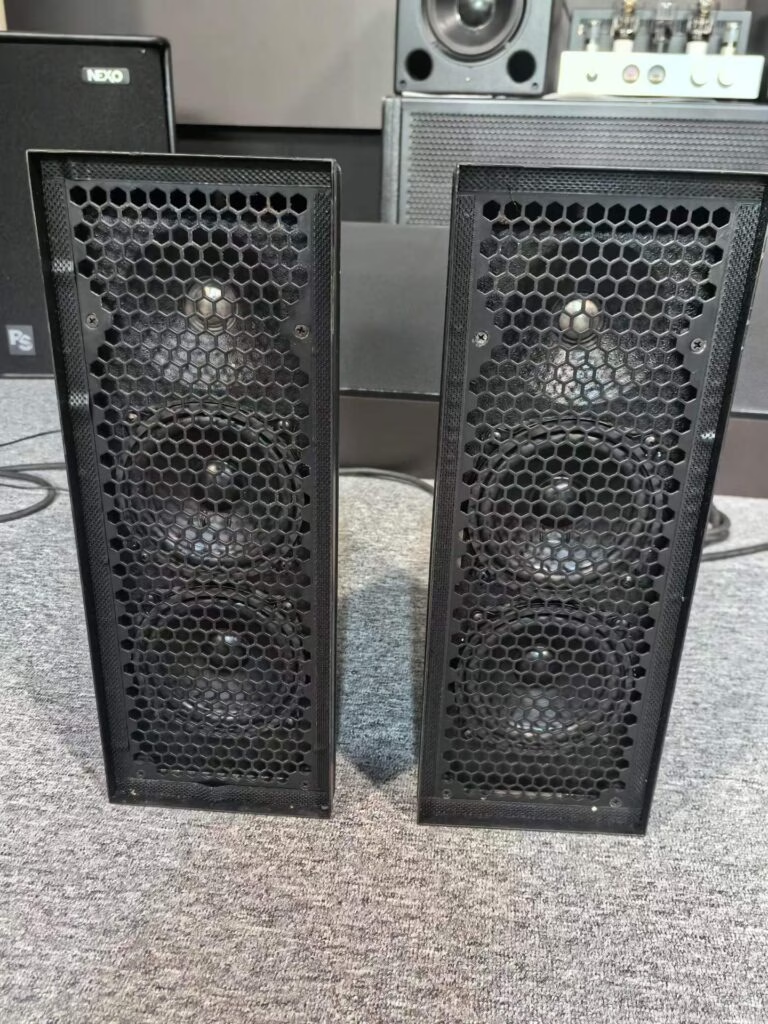
The K-array KF12 is a fair example of a model with parts still circulating: 12-inch two-way, self-powered, and common enough in rental stock that replacement modules change hands.
When should you skip used and buy new?
Skip used if the box will run 12 hours a day in a fixed install, or if the model is discontinued with no parts channel. Skip anything sold without a power-on video. There is no polite way to say it: no video, no deal.
For mobile DJs, weekend bands, and rental overflow, used powered boxes are the best value in pro audio right now. For a venue that opens six nights a week, a new box with warranty is the cheaper decision over five years.
Browse the speakers category for current stock and quantities.
Key Takeaways
- Used powered PA speakers cost 40-55% less than new and are usually a good buy.
- Hiss at zero input is the fastest sign of a tired DSP or power supply.
- Fans fail at 5-6 years, supply caps at 8-10; both are cheap to replace.
- Check that the DSP board is still available before buying an orphan brand.
- Best fit: mobile DJs, weekend bands, rental overflow. Worst fit: 12-hour installs.
Comparing options? See powered and passive speakers in stock.