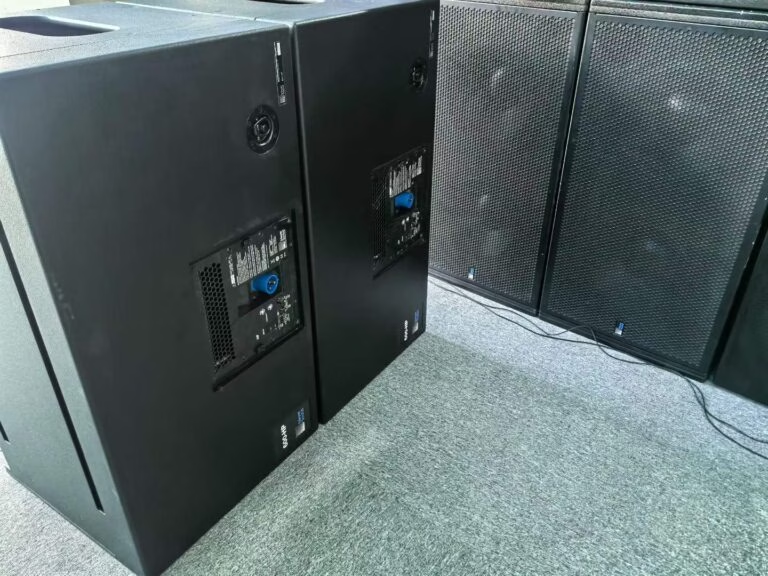
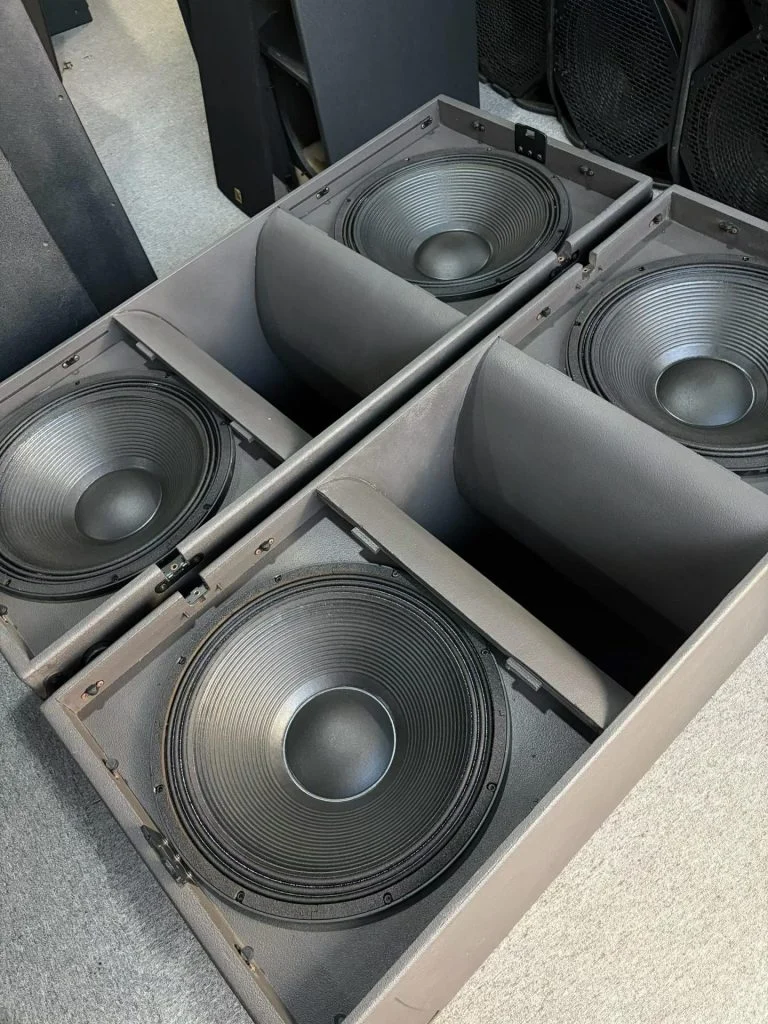
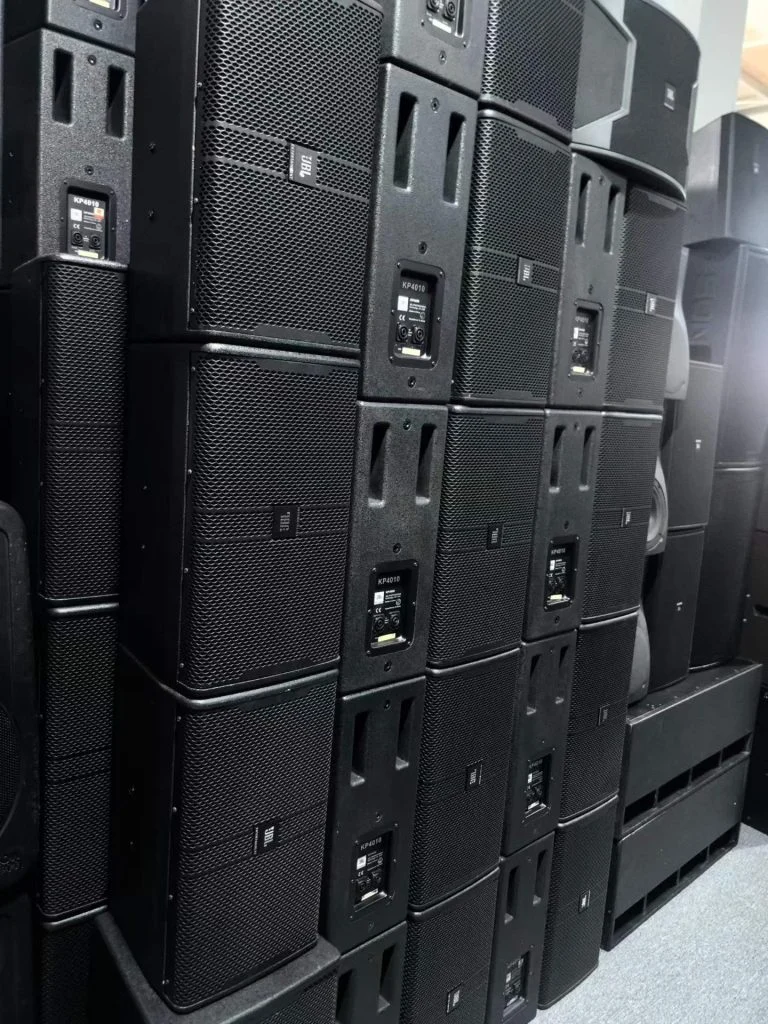
Yes, usually. A used powered PA speaker sells for 40-60% of new and, unlike passive boxes, needs no external amp. The risk sits in one component: the amplifier module. Test it properly and a used powered box is one of the better deals in audio right now. Skip the test and you buy a heavy cabinet with a dead board inside.
New K-array, RCF and QSC boxes start around $1,400-2,200 per unit in 2026. Used powered alternatives land at $400-900, which is the actual reason this category exists.
Why do powered speakers fail more than passive ones?
Heat and capacitors. A powered box packs a switching amplifier and a DSP board into the same air volume as the driver’s backwave. Class-D modules run hot, and electrolytic capacitors dry out in 8-12 years regardless of use. Passive boxes have no such clock ticking. That single fact is why I price powered gear lower per year of expected service.
How do you test a used powered speaker in ten minutes?
- Power it on cold. Listen for relay clicks and fan noise; a grinding fan means bearing wear.
- Play pink noise at low level, then walk the cabinet. Buzz at one frequency is a loose driver.
- Turn it up to about 90 dB for two minutes. If the thermal LED blinks at moderate volume, the module is tired.
- Check the limiter engages before distortion, not after.
- Feel the rear panel for hot spots after five minutes; uneven heat suggests a failing channel.
A K-array KF12 powered 2-way speaker gives you a good benchmark: the amp module should reach operating temperature within two minutes and stay stable, with no audible hiss at idle.
When is a used powered speaker a bad idea?
Three cases. First, when the manufacturer has discontinued the amplifier module and no third-party board fits. Second, when you need rider compliance; touring engineers will not accept a 2011 box on a 2026 show. Third, when the cabinet has been re-coned twice, which means the driver geometry is suspect and the box was pushed hard.
Also skip anything sold without a power cable that looks original. Odd as it sounds, mismatched cables often mean the unit was pulled out of a rack by someone who did not care.
How much should you budget for repairs?
| Failure | Typical repair | Worth it? |
|---|---|---|
| Dead amp module | $200-400 | Only on $800+ boxes |
| Blown HF driver | $60-140 | Yes, usually |
| Dried caps | $80-150 | Yes if tech is local |
| Cracked cabinet | $0-50 epoxy | Cosmetic only |
Rule of thumb: if used price plus likely repair exceeds 65% of new price, buy new instead. That threshold keeps the maths honest.
What about matching powered speakers to subwoofers?
Powered tops and powered subs rarely match in phase or crossover slope, and that is the biggest setup problem buyers hit after the purchase. A used powered top with a fixed 100 Hz high-pass will fight a sub crossed at 120 Hz, and you get a bump you cannot EQ out without a processor.
Check the crossover options before buying. Boxes with selectable high-pass (80/100/120 Hz) are far more useful in mixed rigs. If the used unit you are looking at has a fixed crossover and no bypass, plan on adding a DSP unit at $250-500, and factor that into what you are willing to pay.
Is a used powered speaker better than passive plus amp?
It depends on how much you want to carry and how much you like soldering. Powered boxes mean one cable per speaker and no amp rack. Passive plus amp means fewer failure points inside the cabinet and easier repair when something does break, because the amp is a separate $300-600 box rather than a board glued to the back of a cabinet.
For a fixed install, passive wins on serviceability. For mobile work where setup time is money, powered wins. Neither is wrong, but buying powered gear for an install you plan to keep for a decade is the mismatch I see most often.
Key Takeaways
- Used powered PA speakers save 40-60% versus new in 2026.
- The amp module is the only serious risk; test it cold and hot.
- Capacitors dry out in 8-12 years whether the box is used or not.
- Skip units where the amp module is discontinued with no third-party replacement.
- Walk away if used price plus repair exceeds 65% of new.