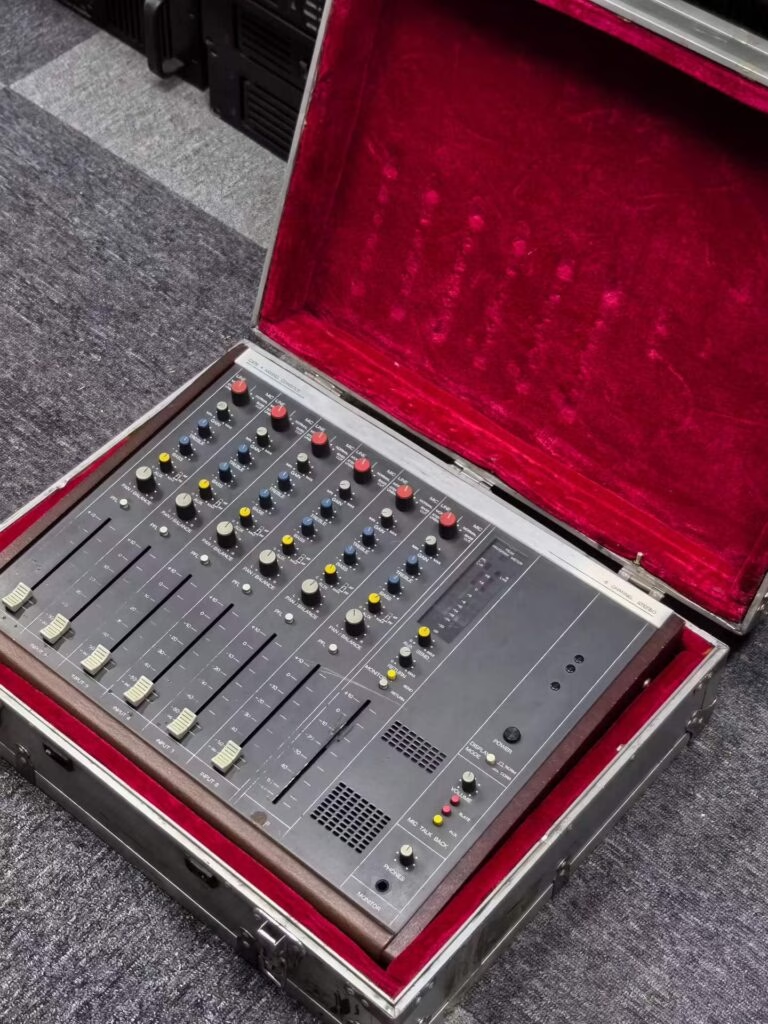
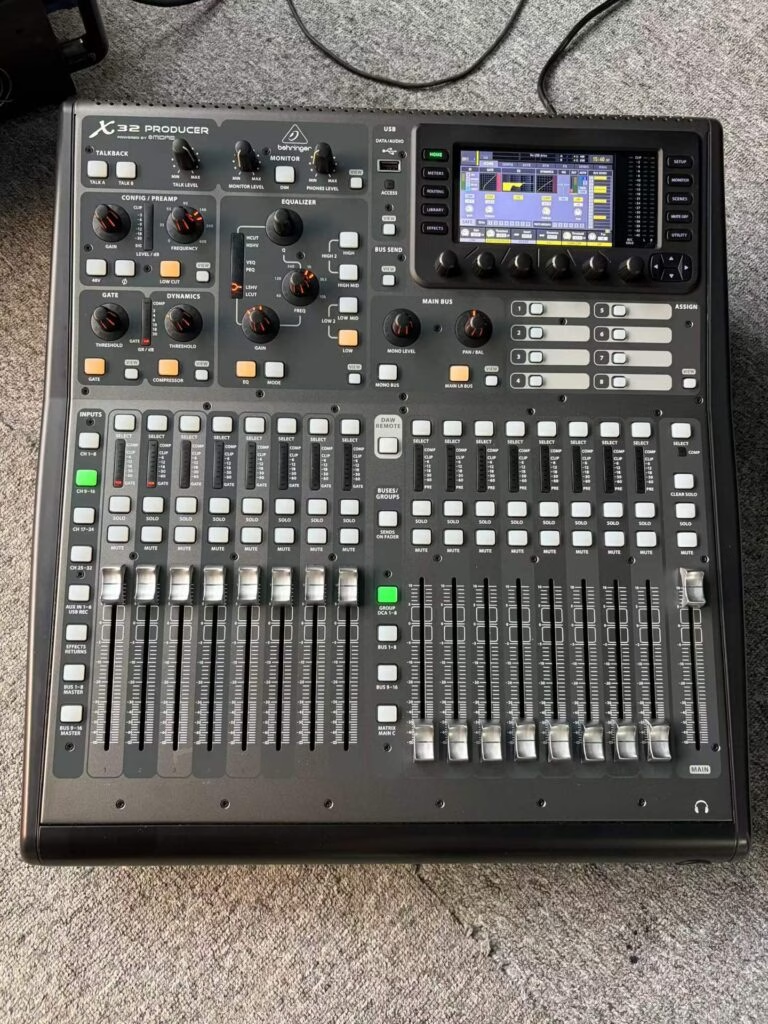
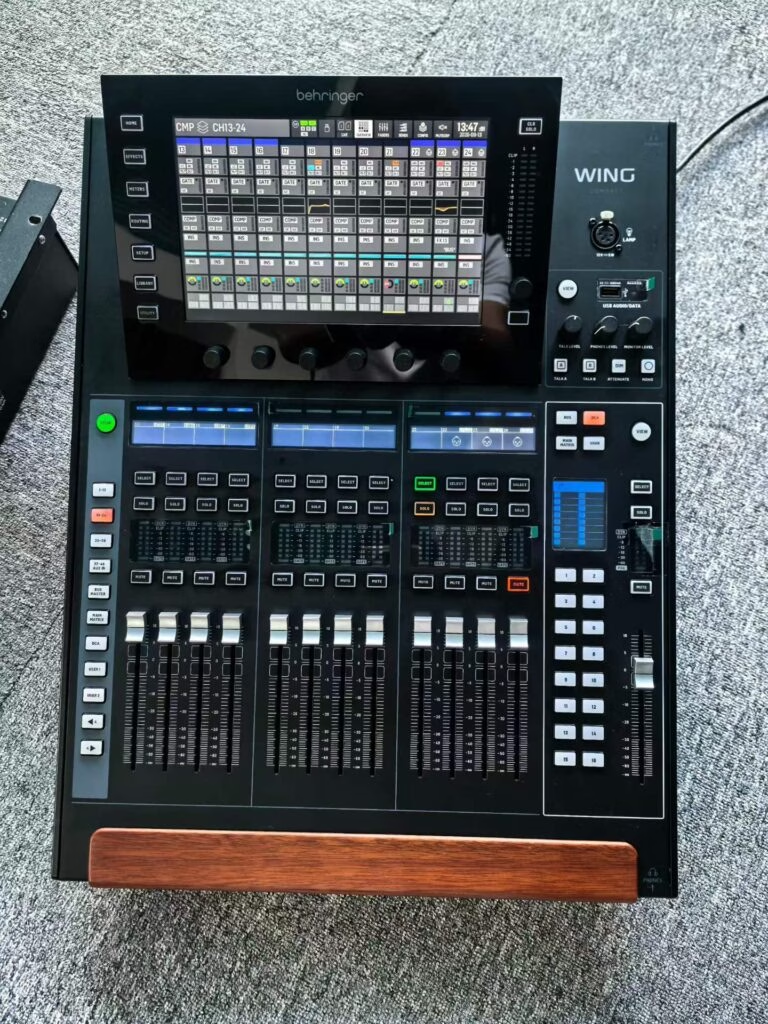
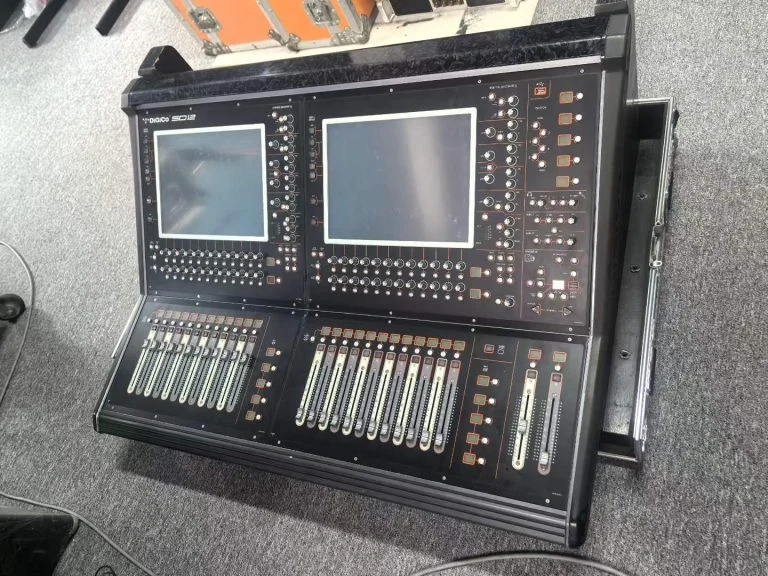
Short answer: for a fixed install with one band and a modest budget, a used analog console at USD 600-1,200 is hard to beat. For anything mobile, anything with more than 16 inputs, or anything where you change bands nightly, a used digital console wins because of scene recall. The decision is about workflow, not sound quality.
There is a real myth worth killing here: that analog sounds warmer. A well-maintained analog desk and a modern digital desk at the same output level are within a fraction of a dB across the band. The difference people hear is usually gain staging, not electronics.
How do the two fail, and what does repair cost?
This is the part that should decide your purchase, and almost nobody talks about it.
| Used analog | Used digital | |
|---|---|---|
| Most common failure | Dirty faders, scratchy pots | Dead fader, failed PSU, screen backlight |
| Typical repair cost | USD 0-40 (contact cleaner, solder) | USD 150-500 (board or fader motor) |
| Who can fix it | Any local tech | Authorised service or a donor unit |
| Spare parts | Generic, easy | Model-specific, often discontinued |
| Recall / scenes | None | Full |
| Typical used price | USD 600-1,200 (24 ch) | USD 900-2,500 (32 ch) |
That table is the whole argument. Analog breaks in ways a teenager with a soldering iron can fix. Digital breaks in ways that need a PDF service manual and a board that may no longer exist.
Which used digital consoles are still a safe buy?
Look for models from 2004-2012 that sold in large numbers, because the used parts market follows installed base. The Yamaha DM1000, Behringer X32, A&H Qu series and Midas M32 all pass that test: thousands of units in service, cheap spare faders, and mature firmware that does not need updating.
The Yamaha DM1000 digital mixing console is a good example of the pattern. It gives you 48 channels, 96 kHz operation and 8 onboard effects engines in a 2U-ish footprint, and it sells used for a fraction of what it cost in 2005. Firmware is stable, the metering is honest, and spares are still around. The catch is the screen — a 20-year-old LCD can go dim — and the lack of modern remote control apps.
What should you check on a used digital desk?
- Every fader, by hand. Move each one through its full travel and listen for a motor grinding or a fader that does not follow the scene recall.
- Firmware version. Photograph the boot screen. If the model is still supported, confirm the update path exists.
- Screen and backlight. Look at it from 60 degrees off-axis. Dim corners mean the backlight is near end of life.
- Inputs and preamps. Plug a mic into every XLR and listen for noise on each channel. Dead pres are common on desks that lived in dusty venues.
- Recall test. Store a scene, change everything, recall it. If anything does not snap back, the desk has a memory or motor fault.
What about analog desks — is there a catch?
Two. First, weight. A 32-channel analog desk with a power supply is a 150-200 kg object, and shipping that from Asia can cost more than the desk. Second, tired capacitors. Anything built before 2000 will have electrolytics that are past their rated life, and a full recap on a large frame is a 40-80 hour job.
Smaller analog desks — 16 to 24 channels — are the sweet spot. They are light enough to ship, simple enough to repair, and there is still demand, which means resale value holds.
Which should you buy?
- Fixed venue, one band, tight budget: used 16-24 channel analog.
- Mobile work, multiple bands per week: used digital with scene recall.
- Recording or broadcast: digital, and pay extra for a unit with a working screen.
- Teaching or a rehearsal room: analog, because students can see every signal path.
Key Takeaways
- Analog desks fail cheaply; digital desks fail expensively.
- A 24-channel used analog console runs USD 600-1,200; a 32-channel digital runs USD 900-2,500.
- Buy digital models that sold in volume from 2004-2012 — the used parts market follows installed base.
- Test every motorised fader and photograph the firmware boot screen.
- Analog desks over 32 channels cost more to ship than to buy.