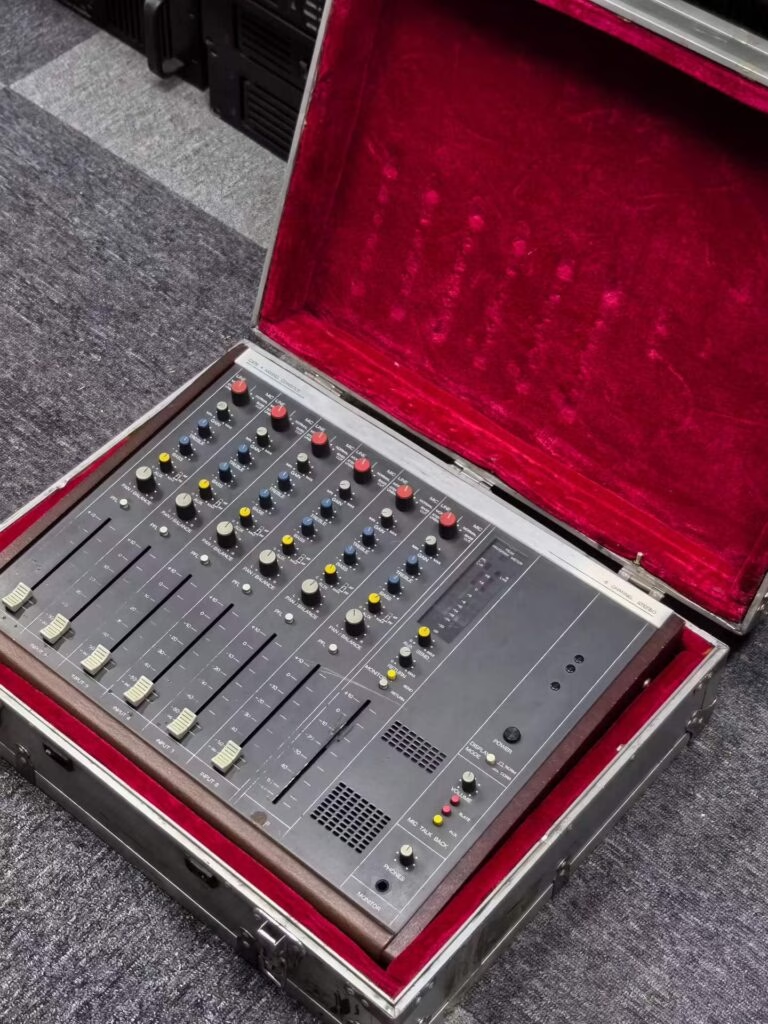
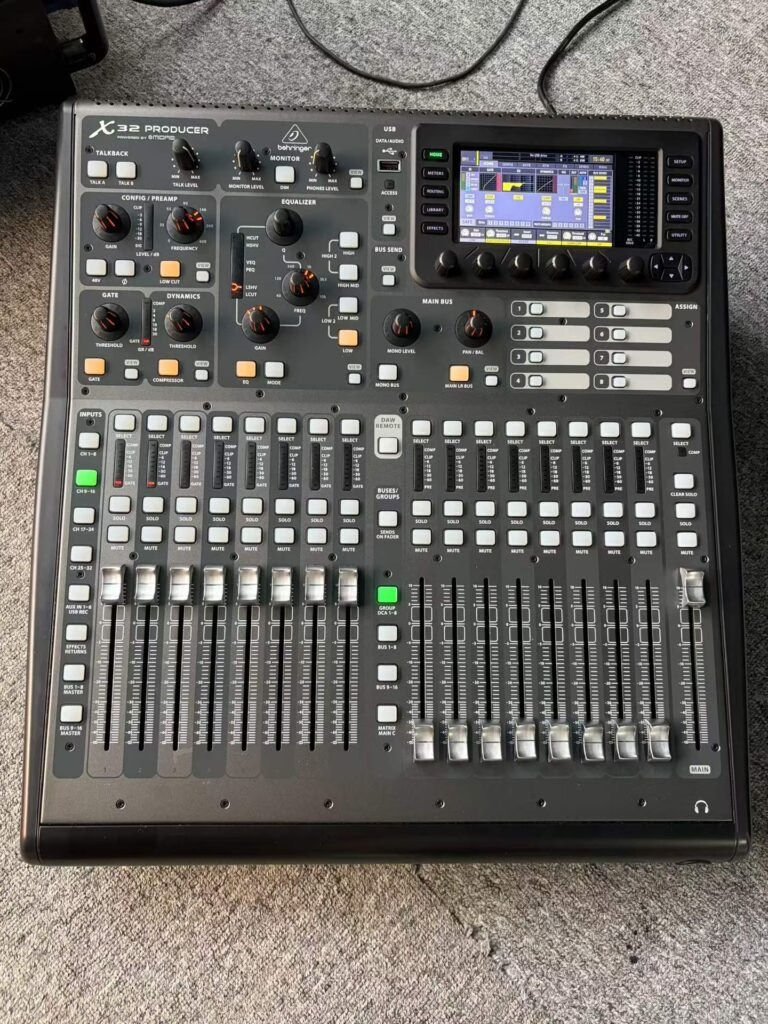
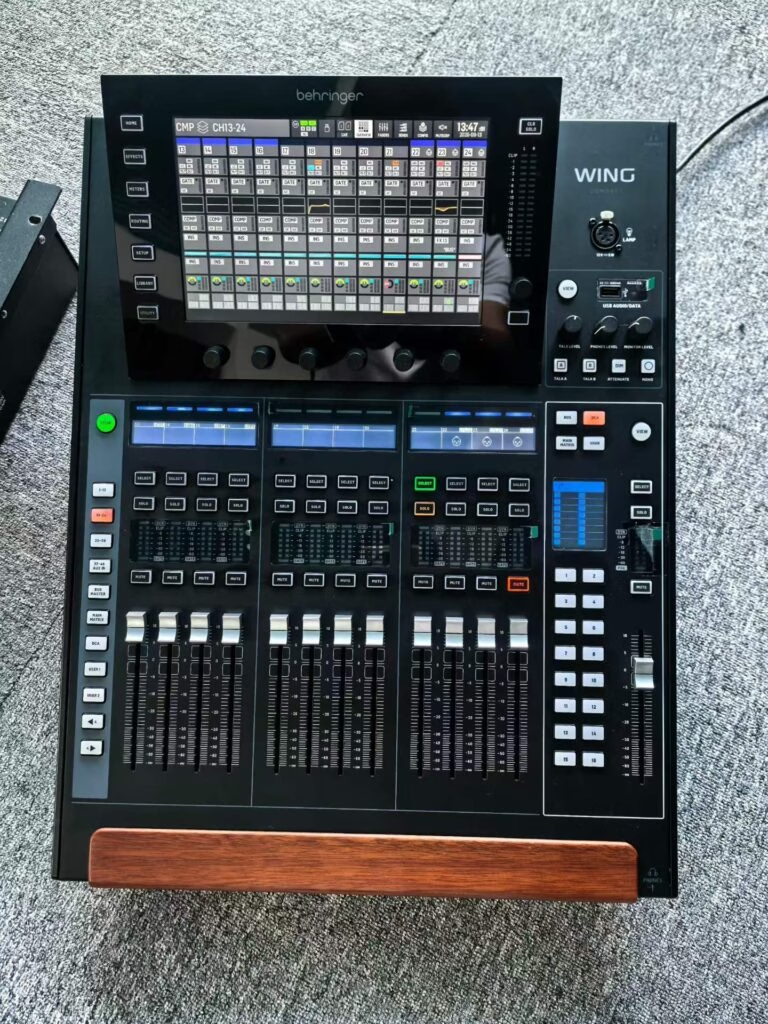
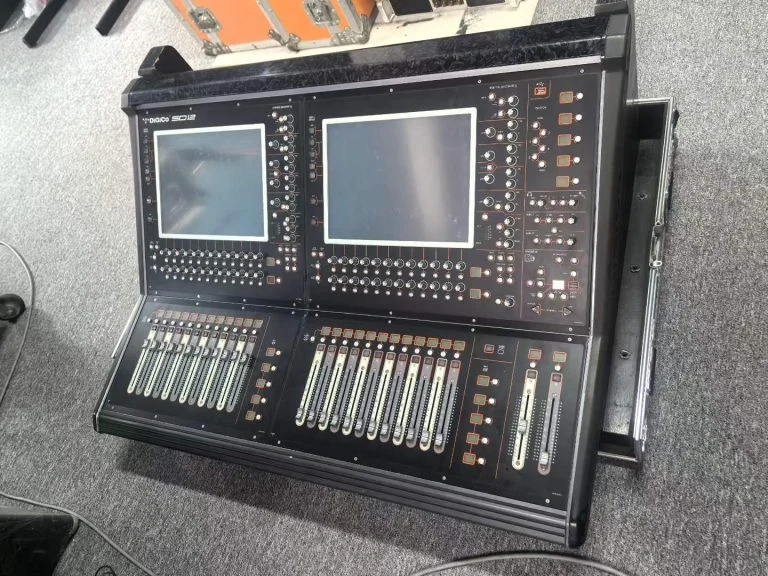
Digital wins on channels per kilo, analog wins on repairability and years of service. A used 32-channel digital desk like the Yamaha DM1000 costs $900-$1,600 and fits in one 90 kg rack with built-in EQ, dynamics and reverb. An analog desk with 32 channels costs $400-$1,500 and ships in a case the size of a small table, but any competent tech can fix it in an afternoon.
Most buyers get this wrong by comparing features instead of failure modes. Features matter for two weeks. Failure modes matter for ten years.
What does each type actually cost used?
| Metric | Used digital (DM1000 class) | Used analog (32-40 ch) |
|---|---|---|
| Price range | $900-$2,600 | $400-$1,500 |
| Weight | 85-120 kg in rack | 40-70 kg in case |
| Channels + processing | 32-48 ch with full EQ/dyn/reverb built in | 24-40 ch, needs $600-$1,500 of outboard |
| Boot time | 25-60 seconds | Instant |
| Repair cost | Board-level, $200-$800, sometimes unrepairable | $20-$150, most techs can do it |
| Scenes / recall | Yes, this is the real reason to buy digital | No, or limited |
That last row is the deciding factor for touring and corporate work. If you do the same 20 gigs a year with different bands, scene recall saves more time than the desk costs.
Where does digital actually earn its price?
Three places. First, channel count in a small footprint: 48 channels of EQ, compression and gate on every input, no rack of outboard, no patching decisions at load-in. Second, scene recall as I said. Third, built-in effects that are good enough: the reverbs on a 2005-era Yamaha desk are not a Lexicon, but nobody in a 400-cap room can tell.
The cost is fragility in the wrong hands. Firmware corruption after a bad shutdown, a screen that dims to unreadable, and fader banks that decide to fail one at a time. On a desk with 100 faders, each replacement part runs $40-$70.
When is analog the smarter buy?
- Fixed install in a venue where the desk is set once and never touched.
- Anywhere the desk may be operated by volunteers or hired staff with no digital training.
- Long-term ownership where a 20-year-old desk with $60 of new capacitors is preferable to a 10-year-old digital board with a dead screen.
- When your genre wants drive and saturation, and you’d rather push a preamp than model one.
Also: if you already own analog outboard, buying analog means you use it. Buying digital means ignoring $2,000 of compressors because the desk has them.
What breaks first on each?
On digital: faders (moving parts, dirt ingress), LCD backlight and display module, backup battery, and power supply. On analog: scratchy pots and faders, dirty insert jacks, and cap aging that shows up as channel imbalance or hum after 15-20 years.
Both fail on connectors. XLR sockets that have taken 10,000 plugs wear out, and that is $8 of part plus labor. The difference is that an analog desk keeps working with a dead channel, while a digital desk with a corrupted boot file keeps working not at all.
What about a used Yamaha DM1000 specifically?
It’s the classic middle case: 48 channels, 7-inch-era display, 2003-vintage design, and a large installed base so parts and knowledge exist. At $900-$1,600 it makes sense for anyone who needs 32+ channels cheaply. You can see what a tested unit looks like on the Yamaha DM1000 digital mixing console page, including fader and channel test details.
Caveats: the display is the weak point, and there’s no USB audio. If you need to record 32 tracks from the desk, budget $200-$400 for an interface or spare cards.
Key Takeaways
- Digital: $900-$2,600, 32-48 channels in one rack, scene recall, 25-60 second boot, board-level repairs.
- Analog: $400-$1,500, instant on, $20-$150 repairs, but needs outboard for processing.
- Choose digital if you need channels and recall; choose analog for fixed installs and long ownership.
- On any used digital desk, check the display, faders and boot behaviour before paying.