Short answer: buy used digital if the desk has to travel, run dozens of channels, or be operated by staff who change weekly. Buy used analog if you record acoustic sources, want zero menu latency, and have a tech within driving distance. Everything else is a budget question.
What changes when you go digital in the used market?
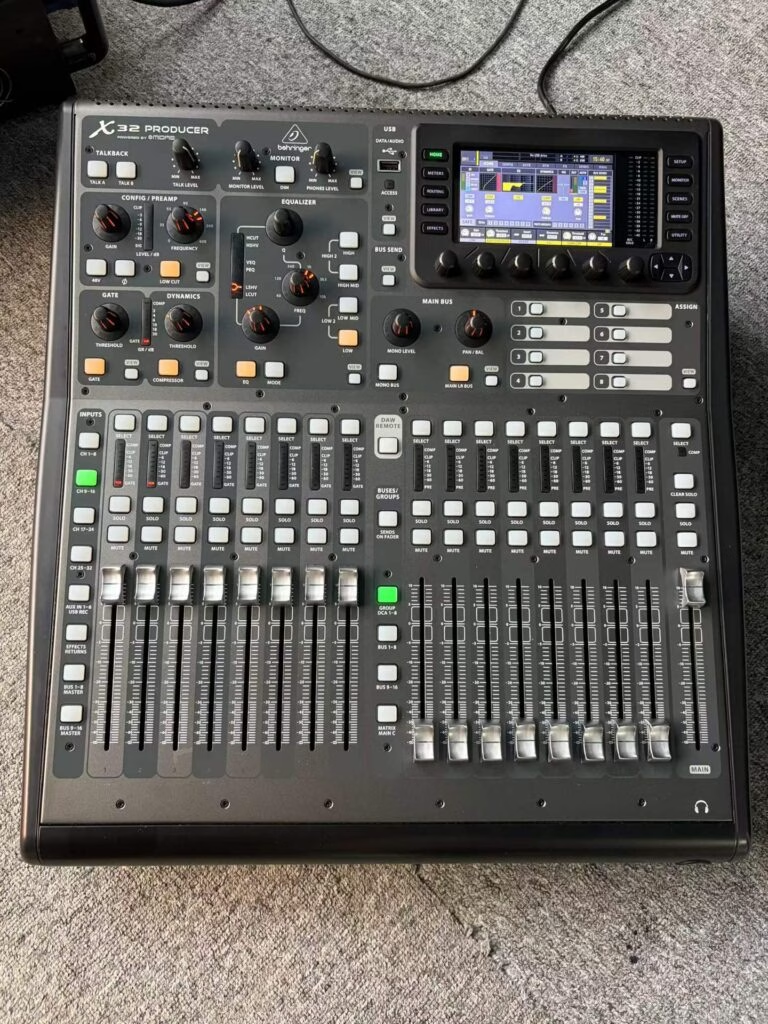
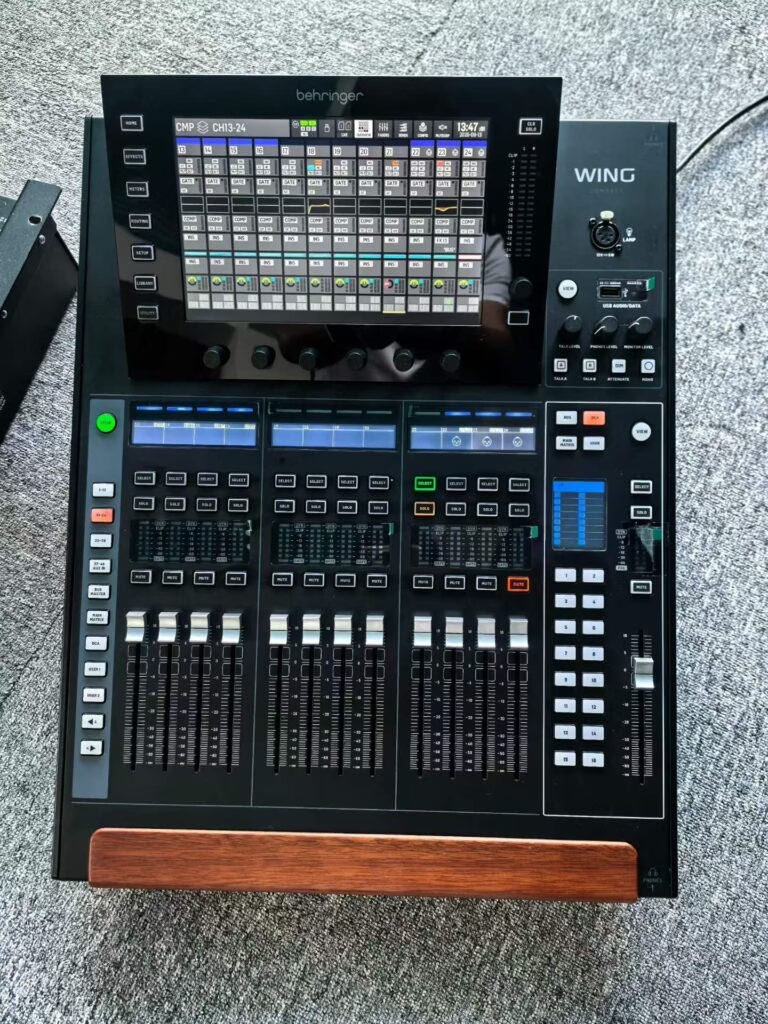
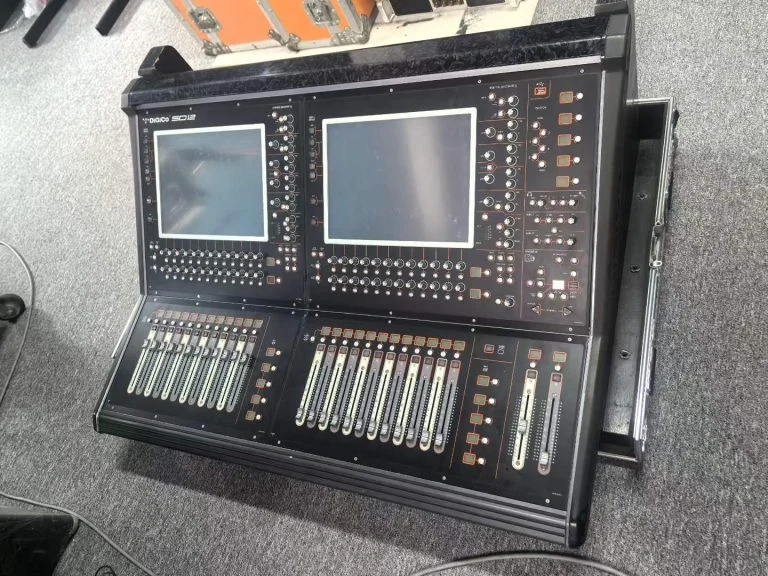
A used Yamaha DM1000 – 48 channels, 96 kHz, 16 faders – sells for roughly $1,200 to $2,500 depending on the flight case and card set. That is less than one new mid-tier analog desk with 24 channels. You get scene recall, compressor on every input, and a recallable gain structure that a wedding band will thank you for at 11 pm.
The catch is that digital consoles are computers. A 2004-era desk may still need a firmware disc, a specific ADAT card, or a replacement display backlight that nobody stocks. Check that the seller ships the power supply and at least one card, or the “bargain” becomes a paperweight.
Why do people still chase a vintage mixing console for sale listings?
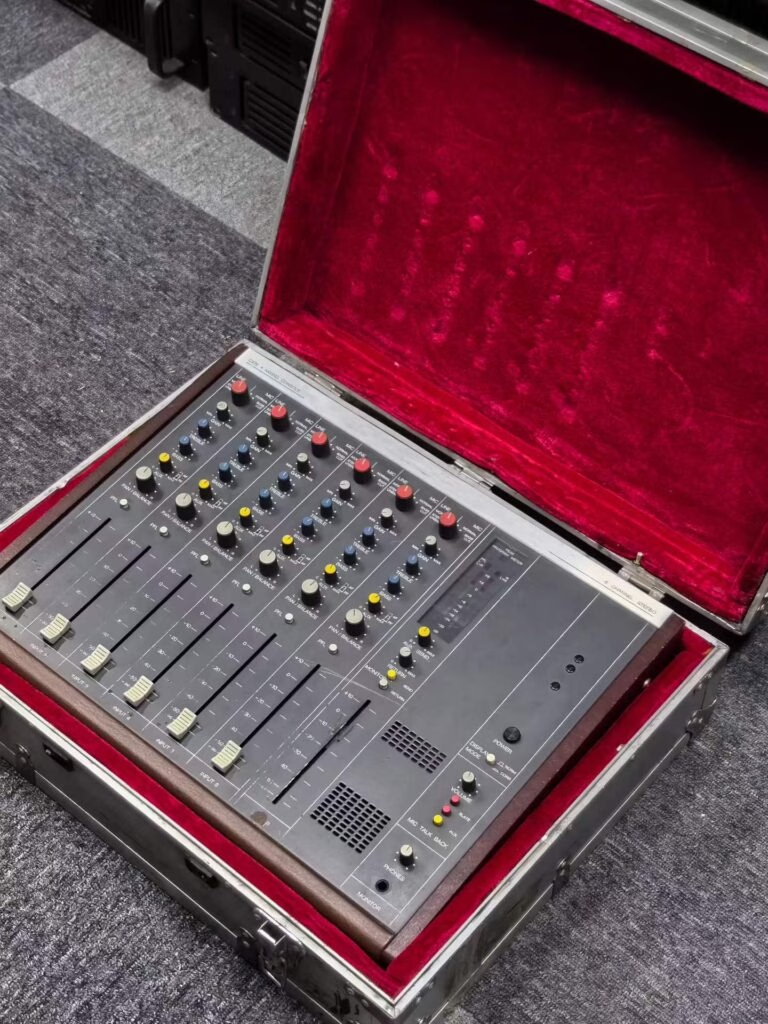
Preamps. A 1970s desk with transformer inputs does something to a drum kit that no plugin fully copies. Engineers describe it as weight – a slight saturation that glues kick and bass together. If you record live instruments often, that character is worth real money.
- Neve and API modules: a single working channel strip can cost more than a used digital desk. Full vintage consoles usually start near $20,000 and go far higher.
- Repair reality: recapping a 32-channel analog frame runs $3,000 to $8,000 in the US, and caps alone may take six weeks to source.
- Weight: a 32-channel analog desk with frame often lands at 150 to 250 kg. Shipping that from China costs more than the desk itself in many cases.
Which one survives a bad room and a rushed load-out?
Digital, clearly. One Cat5 or AES50 cable replaces a 40-channel copper snake that weighs 30 kg and fails at the worst moment. Fewer connectors equals fewer faults. The downside: when a digital desk dies, it usually dies entirely. An analog desk with one dead channel still finishes the show.
| Factor | Used digital | Used analog |
|---|---|---|
| Typical price | $800 – $3,000 | $600 – $25,000+ |
| Recall of settings | Instant, saved to USB | Photograph the knobs |
| Service skill needed | Firmware + board level | Component level |
| Weight (32 ch) | 15 – 30 kg | 120 – 250 kg |
| Failure mode | All or nothing | Degrades channel by channel |
What should you test before paying?
On a digital desk, ask for a video of every fader moving, every input metering, and the desk booting from cold. Then check the card slots. On analog, ask for a per-channel noise test at high gain and look at the meter bridge photos with all channels open.
If you want a reference point for a known-good digital desk, look at the used Yamaha DM1000 digital mixing console we list, which includes its flight case. For speakers and PA to pair with either desk, the used speakers category has current stock with condition notes.
Key Takeaways
- Digital wins for touring, recall and channel count; analog wins for preamp character and graceful failure.
- A used DM1000 at $1,200-$2,500 is still cheaper than a comparable new analog desk.
- Recapping a 32-channel analog frame can cost $3,000-$8,000 and several weeks.
- Always confirm the power supply, cards and case are included with digital gear.