What breaks on a used digital desk?
Faders first. Motor faders are the wear item, and a full set on an 16-fader desk costs $200-350 in parts. Encoders and touchscreens are next. An out-of-production screen can be the difference between a $900 desk and a $900 paperweight, so ask for a photo of the display and a video of a scene recall.
Also check firmware and licences. Some desks need a paid card for extra channels, and a used unit without that card is worth 15-20% less than the listing suggests.
And what breaks on a used analog desk?
Potentiometers, channel strips and power supply caps. The good news is that a competent tech can fix them with generic parts. A dead channel on an analog desk is annoying, not fatal. On a digital desk, a dead channel can be a board-level repair.
Which one should a bar band buy?
Digital, if one member will learn it. A used 16-channel digital desk at $800 replaces a $500 analog desk plus a $400 effects rack plus a $300 recording interface. The single-purchase maths usually wins, and you keep 16 faders in a 9 kg case.
Analog, if the desk will be operated by different volunteers every week and nobody wants to teach. A simple analog desk with labelled channels gets a clean mix from a nervous operator. That is a legitimate reason, not a compromise.
Is there a middle path?
Yes: a used digital desk with an analog-style layout. Desks with one knob per function and a visible strip per channel give you recall without menu diving, and they are the easiest transition for someone coming from analog. Expect to pay $1,200-1,800 used for that layout, but you skip a year of frustration.
One more variable: the room. A digital desk is easy to leave in place and forget; an analog desk invites hands. If the desk sits on a balcony out of reach, menus cost you nothing. If volunteers walk up to it with a mic in one hand, physical knobs win every time.
If the seller cannot show a scene recall on video, treat the price as a repair estimate and bid accordingly. A desk that boots but will not store scenes has a dead battery or a corrupt card, and the fix is easy only if you already know the model.
One last thing worth checking: recording. Some older desks only record to internal memory, and pulling files off them is a slow process. If you plan to post a mix after the gig, confirm the desk writes to a USB stick you can hand to a laptop on the spot.
Budget for consumables as well. A used condenser usually needs a new foam windscreen and a pop filter, and a used handheld needs a fresh clip. Ten to twenty dollars, but it is the difference between a mic you can put on a stand tonight and one you have to order parts for.
Key Takeaways
- Used 16-channel digital: $600-1,200. Used 16-channel analog: $250-600.
- Digital pays off through scene recall, channel count and USB multitrack recording.
- Motor faders and touchscreens are the main failure points on used digital desks.
- Choose analog when volunteers rotate and there is no time to train.
In 2026, a used 16-channel digital console sells for $600-1,200 and a used 16-channel analog desk for $250-600. Digital wins for most venue and band work because it gives you recall, dynamics on every channel and multi-track recording from one USB cable. Analog wins when you need to mix without menus and you want a desk you can repair with basic tools.
The used market changes the argument. New digital desks have dropped in price, which pushed used digital into a range that used to be analog-only territory. That is why the digital vs analog mixing console question is worth re-answering in 2026.
What do used consoles actually cost?
| Class | Example | New | Used 2026 | Notes |
|---|---|---|---|---|
| 16-ch analog | Soundcraft LX7ii | $1,300 | $300-500 | No recall, easy repair |
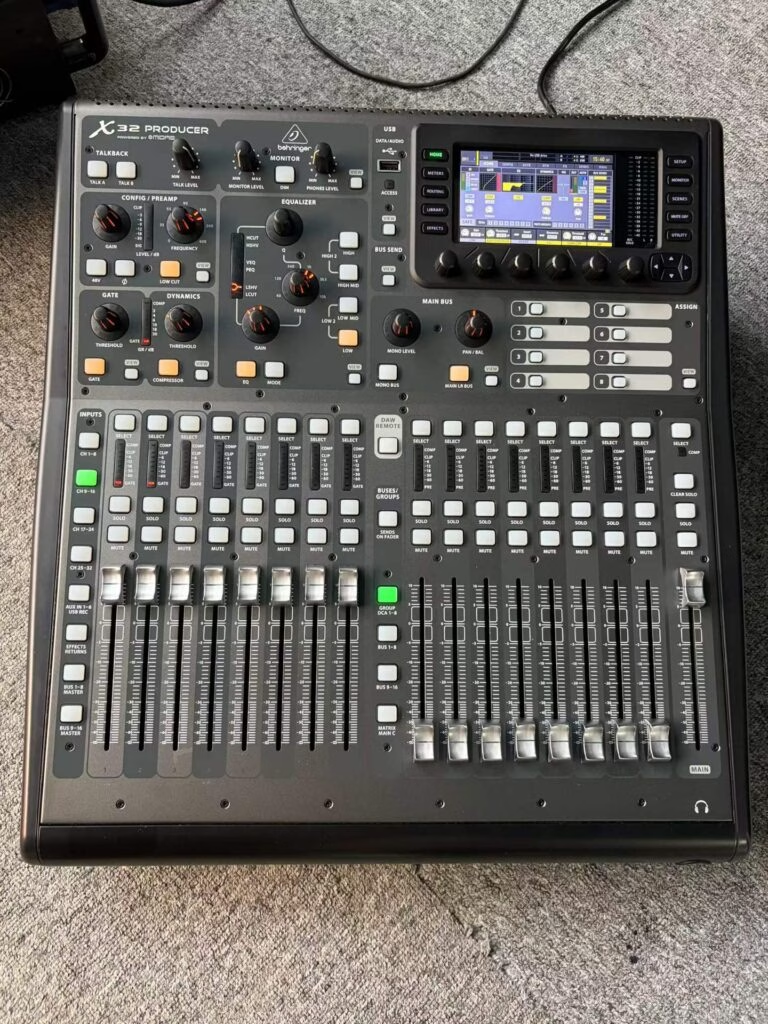
| 16-ch digital | X32-class | $2,200 | $800-1,200 | 32 in, 16 out, USB record |
| 32-ch digital | Yamaha DM1000 | Discontinued | $900-1,400 | See the DM1000 console page |
| Large analog | 40-ch live desk | $9,000+ | $1,500-2,800 | Heavy, 120+ kg |
Where does digital really earn its keep?
Three places. First, recalling a scene between acts: a four-band night goes faster when each band’s mix loads in two seconds. Second, channel count: a 16-fader digital desk can carry 32 inputs, which analog cannot do without a bigger frame. Third, recording: a single USB or card output gives you a multitrack file for a remix or a social clip.
The cost is learning time. A volunteer operator needs a few evenings with a digital desk. That is a real cost, and it is the strongest argument for analog in small churches and community halls.
What breaks on a used digital desk?
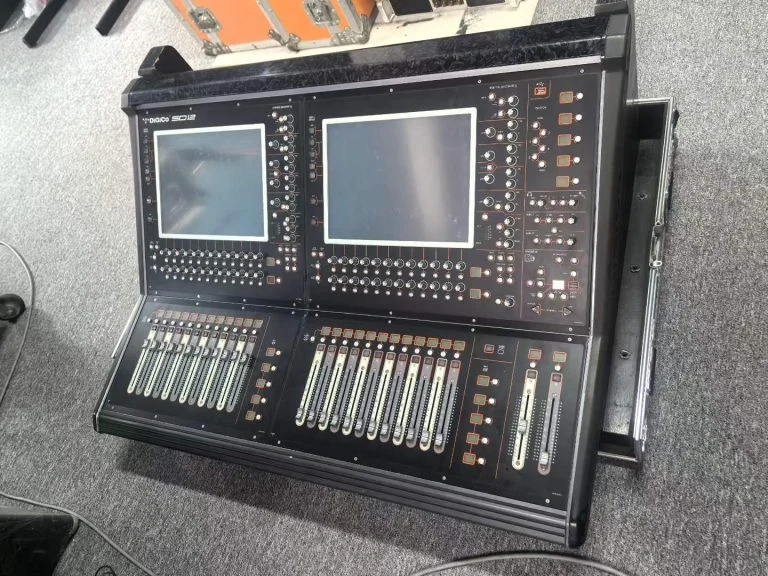
Faders first. Motor faders are the wear item, and a full set on an 16-fader desk costs $200-350 in parts. Encoders and touchscreens are next. An out-of-production screen can be the difference between a $900 desk and a $900 paperweight, so ask for a photo of the display and a video of a scene recall.
Also check firmware and licences. Some desks need a paid card for extra channels, and a used unit without that card is worth 15-20% less than the listing suggests.
And what breaks on a used analog desk?
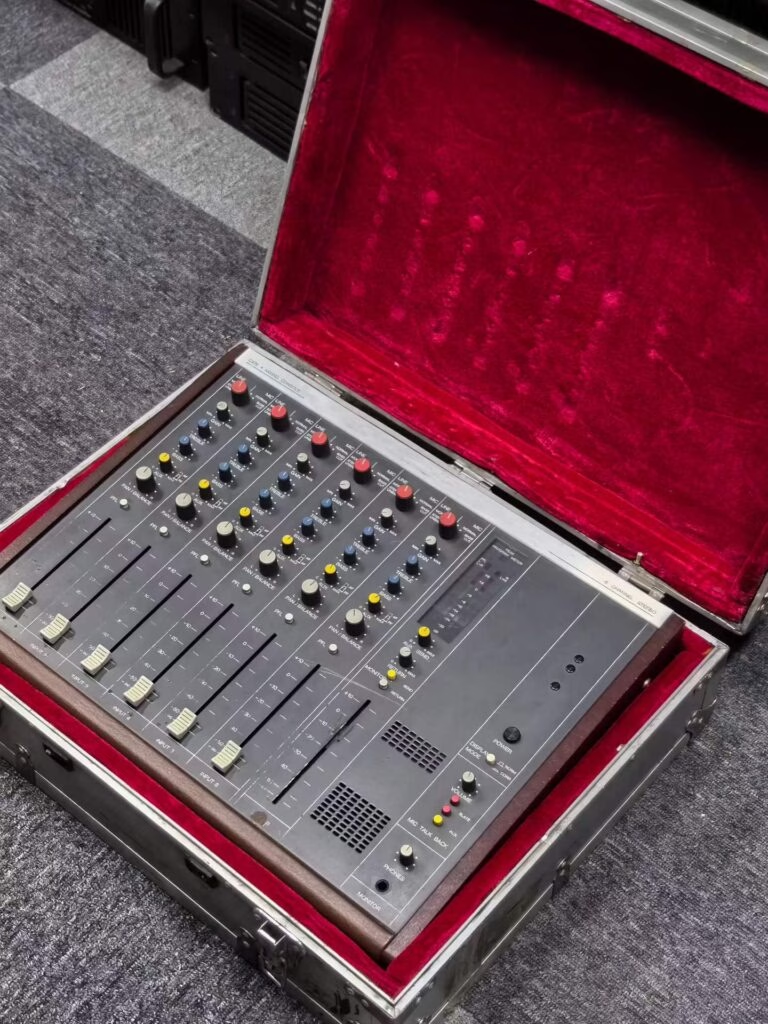
Potentiometers, channel strips and power supply caps. The good news is that a competent tech can fix them with generic parts. A dead channel on an analog desk is annoying, not fatal. On a digital desk, a dead channel can be a board-level repair.
Which one should a bar band buy?
Digital, if one member will learn it. A used 16-channel digital desk at $800 replaces a $500 analog desk plus a $400 effects rack plus a $300 recording interface. The single-purchase maths usually wins, and you keep 16 faders in a 9 kg case.
Analog, if the desk will be operated by different volunteers every week and nobody wants to teach. A simple analog desk with labelled channels gets a clean mix from a nervous operator. That is a legitimate reason, not a compromise.
Is there a middle path?
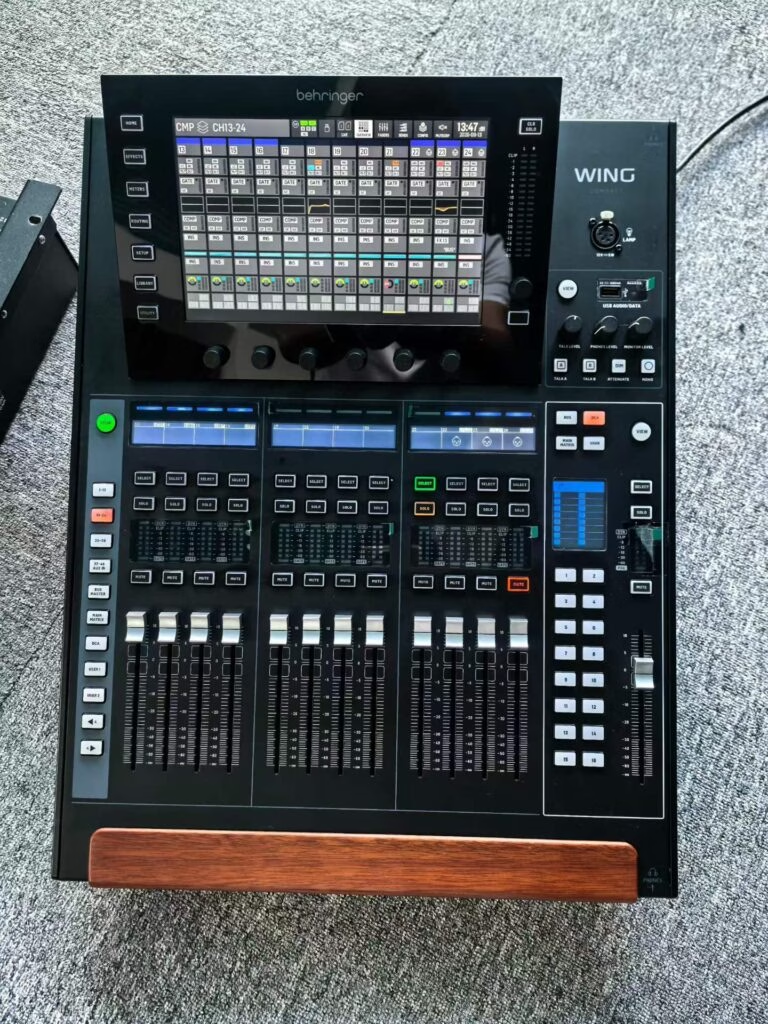
Yes: a used digital desk with an analog-style layout. Desks with one knob per function and a visible strip per channel give you recall without menu diving, and they are the easiest transition for someone coming from analog. Expect to pay $1,200-1,800 used for that layout, but you skip a year of frustration.
One more variable: the room. A digital desk is easy to leave in place and forget; an analog desk invites hands. If the desk sits on a balcony out of reach, menus cost you nothing. If volunteers walk up to it with a mic in one hand, physical knobs win every time.
If the seller cannot show a scene recall on video, treat the price as a repair estimate and bid accordingly. A desk that boots but will not store scenes has a dead battery or a corrupt card, and the fix is easy only if you already know the model.
One last thing worth checking: recording. Some older desks only record to internal memory, and pulling files off them is a slow process. If you plan to post a mix after the gig, confirm the desk writes to a USB stick you can hand to a laptop on the spot.
Budget for consumables as well. A used condenser usually needs a new foam windscreen and a pop filter, and a used handheld needs a fresh clip. Ten to twenty dollars, but it is the difference between a mic you can put on a stand tonight and one you have to order parts for.
Key Takeaways
- Used 16-channel digital: $600-1,200. Used 16-channel analog: $250-600.
- Digital pays off through scene recall, channel count and USB multitrack recording.
- Motor faders and touchscreens are the main failure points on used digital desks.
- Choose analog when volunteers rotate and there is no time to train.