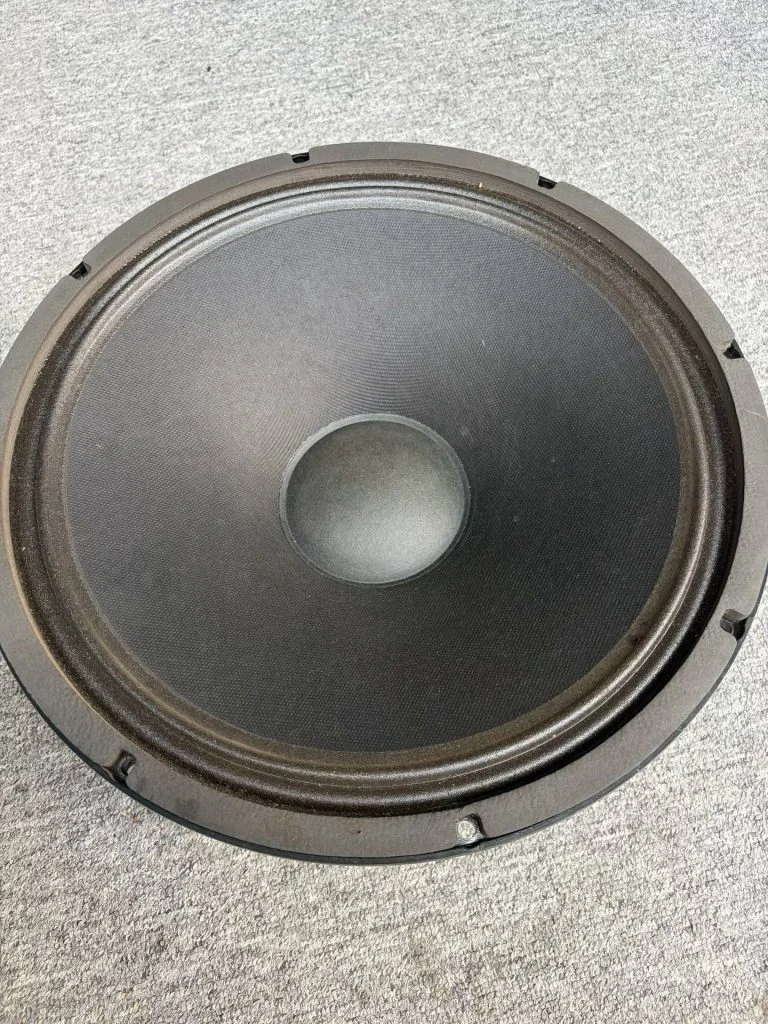
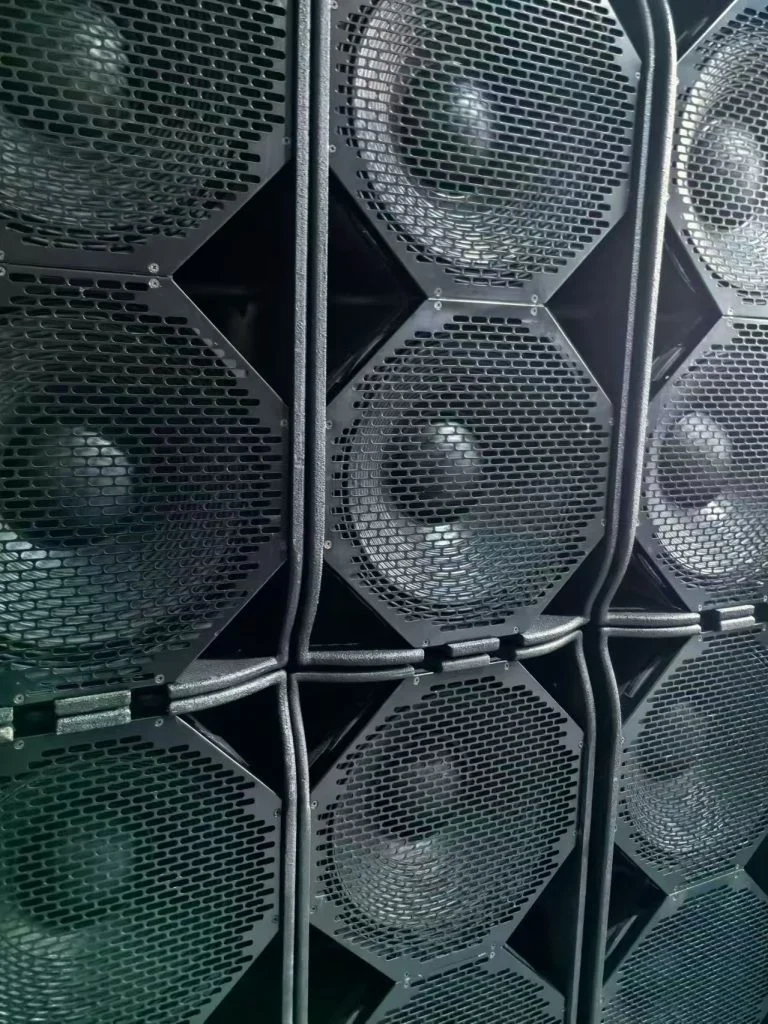
A matching set of four 18-inch neodymium drivers in good condition is a USD 600-900 buy in 2026. Singles are worth much less than a quarter of that, because nobody wants to end up with three cabinets and one odd driver. Original cones, unshifted magnets and intact surrounds decide whether you are buying drivers or scrap.
Why does a set of four matter so much?
Because subs are used in multiples, and drivers from different batches can differ by 1-2 dB in sensitivity. In a four-box array that means uneven output you cannot EQ away, and one box working harder than the others. A matched set with sequential serials is worth 20-30% more than four identical-looking singles, and it is genuinely worth paying.
What are the three failure modes that matter?
- Recone. Non-factory kits change the moving mass. Look for glue rings and a dust cap that is not perfectly centred.
- Magnet shift. A dropped driver can shift the magnet and pinch the voice coil. Push the cone gently, it must move freely with no scraping.
- Surround rot. Foam and treated cloth surrounds degrade. A crumbling surround is a USD 40-80 refoam per driver.
The free-movement test takes ten seconds and rules out the most expensive failure. Do it on every driver before you look at cosmetics.
Neodymium or ferrite: does it change the price?
Neodymium saves 6-10 kg per driver, which is the whole reason touring subs use it. It also raises used prices by 25-40% for the same output, and it makes shipping by air defensible. Ferrite drivers are fine for installs where weight does not matter and cost 30% less used. A set of four 18-inch B&C KS28 neodymium drivers is the neodymium case: 143 dB peak, 25-100 Hz, and manageable weight for a road case.
What should you pay, line by line?
| Condition | Set of 4 (USD) | Note |
|---|---|---|
| Original cones, tested | 600-900 | Best value, ask for sweep video |
| Refoamed, original cones | 500-750 | Fine if foam quality is good |
| Mixed recones | 300-450 | Treat as unmatched, price accordingly |
| Scrap, for parts | 80-150 | Magnets and baskets only |
How do you test drivers before shipping?
Ask for a free-air sweep on each unit at low level, filmed with the driver visible so you can hear and see any rubbing. Then a DC resistance reading on each, which should sit within 5% of spec and within 3% of each other in a set. A driver reading 6.2 ohms against a 5.8 ohm spec has been cooked or reconed with a different coil.
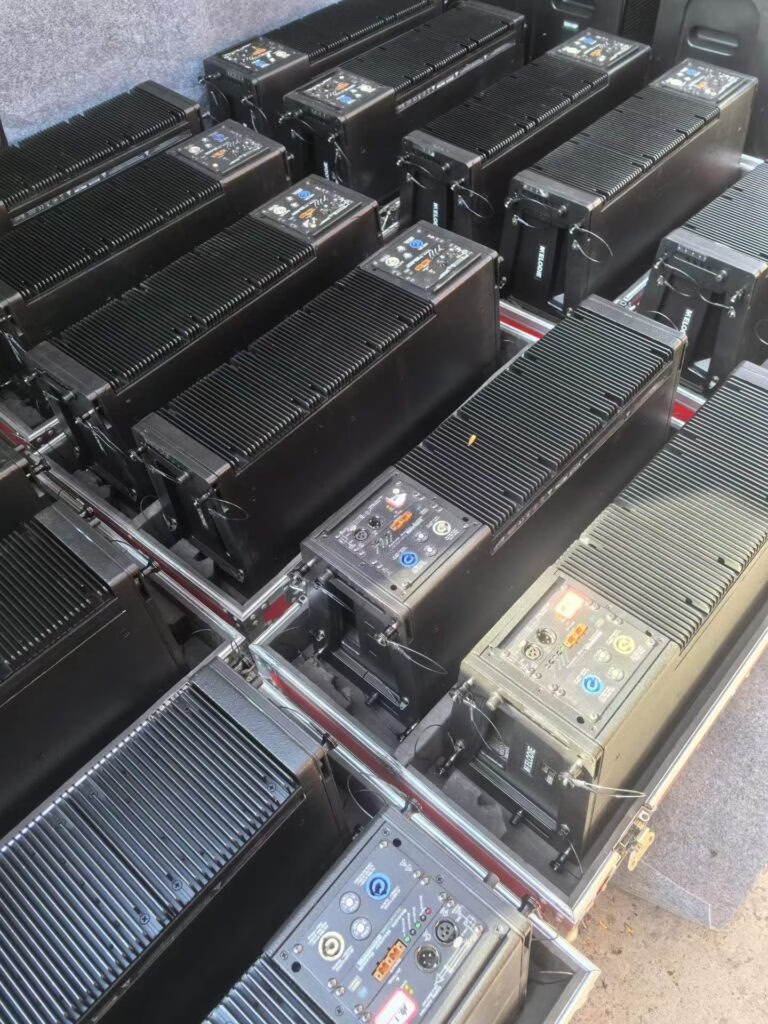
Browse PA systems to see how complete sub packages are listed, including cabinet condition, which tells you how the drivers inside were treated.
Should you buy drivers or whole sub cabinets?
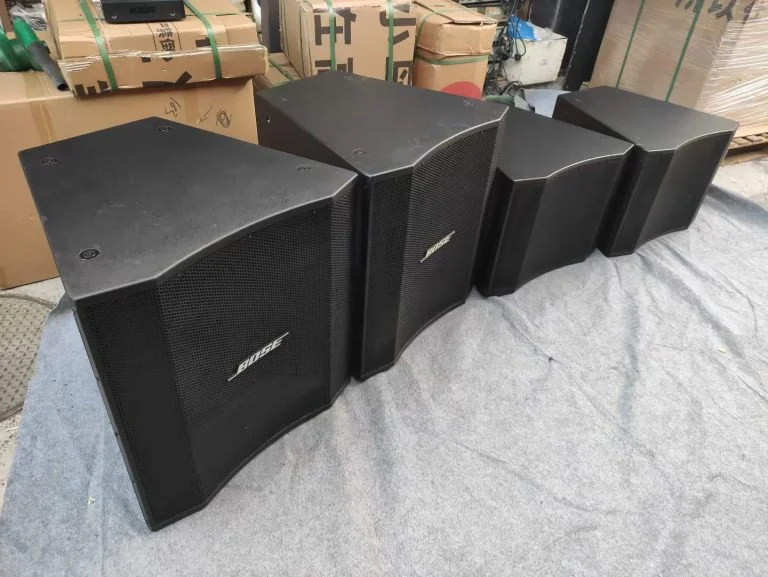
Drivers, if you already own cabinets that fit them. Cabinets are cheap plywood and expensive freight, so buying loaded boxes across an ocean rarely pays. Drivers ship in a 0.05 m³ carton and last decades. The exception is a cabinet built to a specific driver, where a bare driver will not match the tuning and you are better off buying the pair together.
Key Takeaways
- USD 600-900 is fair for a tested set of four 18-inch neodymium drivers.
- Matched sets with sequential serials are worth 20-30% more.
- Push the cone gently, scraping means a shifted magnet.
- Neodymium costs 25-40% more and saves 6-10 kg per driver.
- Demand a per-driver DC resistance reading within 3% of each other.