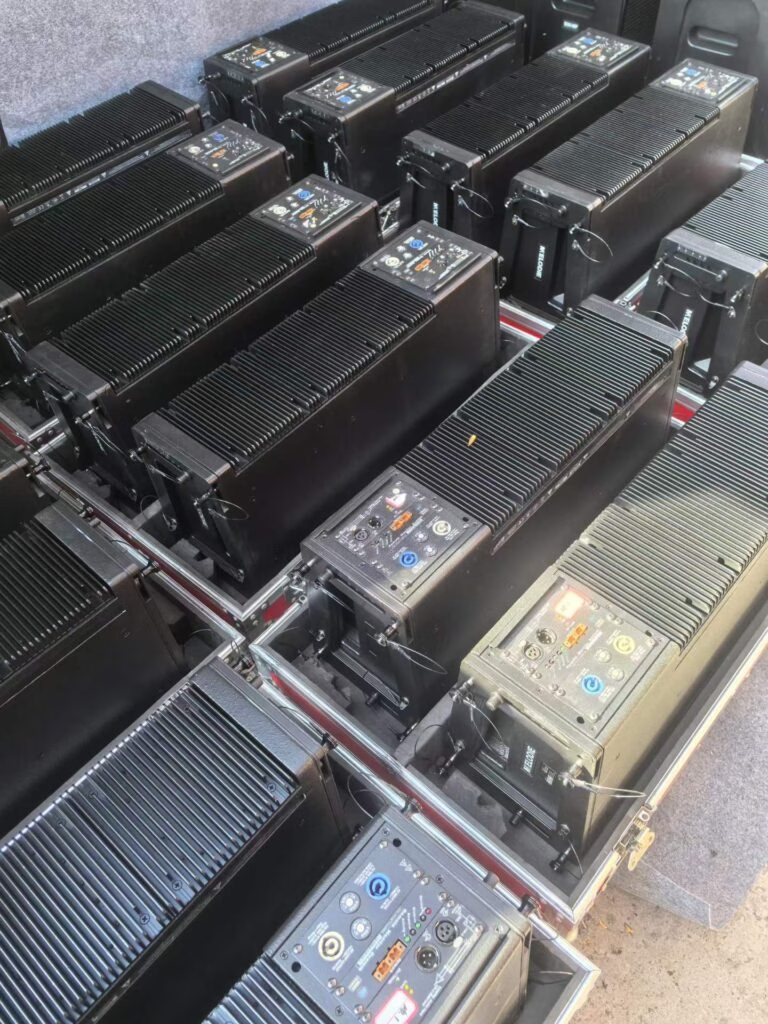
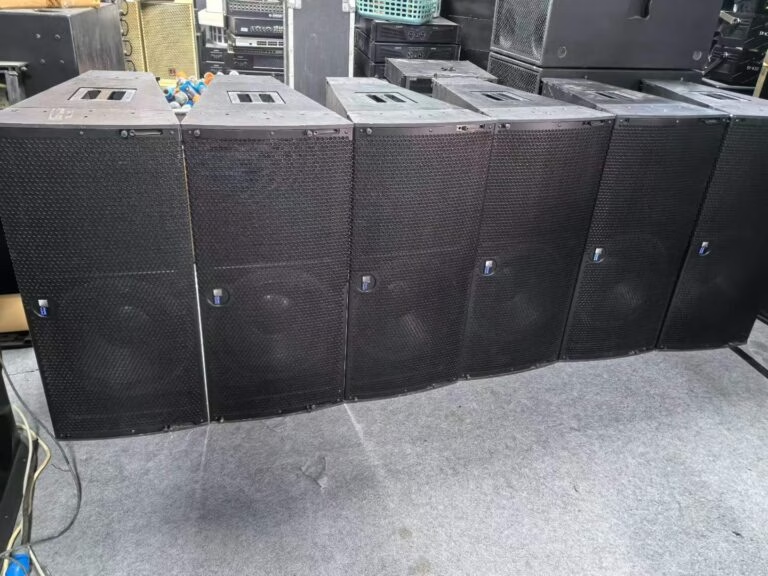
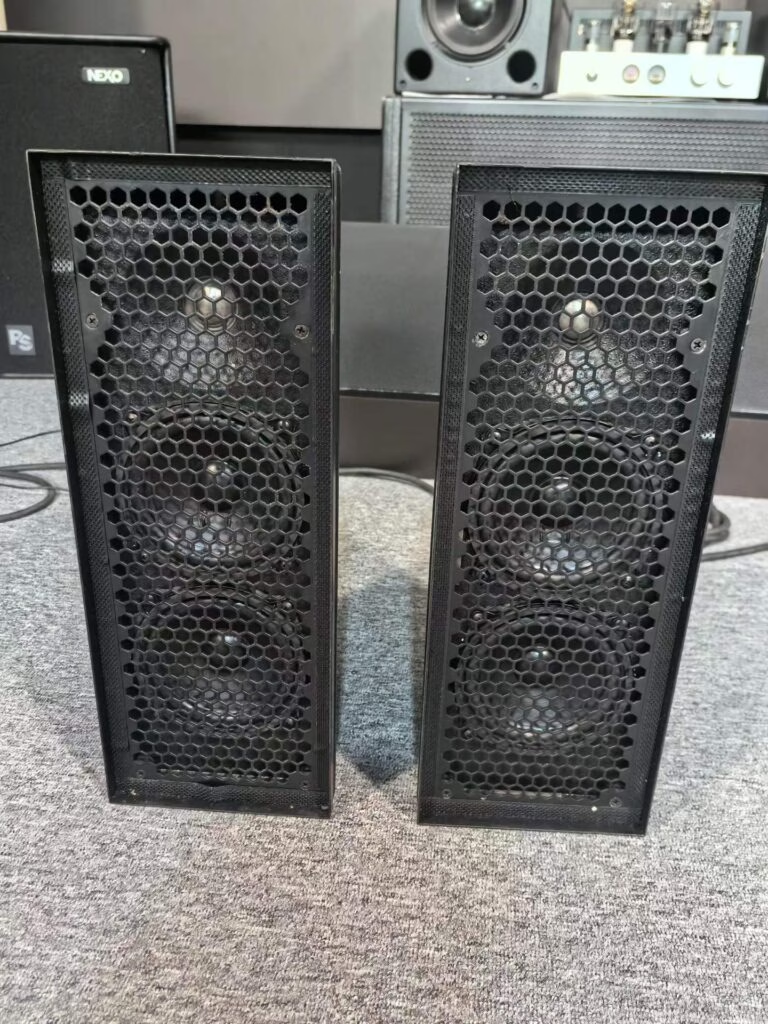
Store used speakers upright, on a dry floor or a pallet, out of sunlight, and run them at low level for 20 minutes every two months. The two killers are humidity and resting position. Moisture degrades foam and paper surrounds, and storing a speaker face-down for a year can deform the spider.
Why does storage damage speakers at all?
A loudspeaker is a mechanical device with a paper or foam suspension and a glue joint holding the cone to the frame. Foam surrounds start to crumble after eight to fifteen years even in perfect conditions; humidity accelerates that to three or four years. Sitting still for months lets the suspension take a set at one position, so on first use the coil rubs.
There is a second, less obvious problem: dust. Store a speaker with the grille off in a workshop and ferrofluid-cooled HF drivers pick up grit in the gap. A $70 diaphragm replacement later, you learn to cover them.
What are the storage rules worth following?
- Upright or on its back, never face-down. Face-down loads the cone against the grille and flattens the spider.
- 10 to 30 degrees C. Below 5 C the surround gets stiff and brittle; above 35 C the glue softens.
- Under 60% relative humidity. A $20 hygrometer tells you the truth; a dehumidifier is cheaper than six new woofers.
- Off the concrete. A pallet or a shelf, because concrete wicks moisture into the wood.
- Grille on, or a bag over it. Dust is permanent once it is in the gap.
How often should you power them up?
Every 60 days, 20 minutes at low level with music that has real bass content. This exercises the surround and coil, redistributes lubricant in the magnet assembly on some designs, and drives out light surface moisture. Do it at maybe 10 percent of rated power; you are not testing output, you are moving parts.
This matters most for self-powered boxes, where the amp module also benefits from being run. Capacitors that sit unpowered for two years are the ones that fail on first switch-on. If you own self-powered speakers, a monthly power-up is the cheapest insurance available.
What are the signs of storage damage?
Play a 60 Hz sine sweep gently and listen. A scratching or rubbing sound means the coil is misaligned or the gap is dirty. A rattle at one specific frequency is often a loose grille or a delaminated cone edge. Visible white powder on a foam surround means it is already failing; that speaker needs a refoam before it tears.
| Symptom | Cause | Cost to fix |
|---|---|---|
| White powder on surround | Foam rot | $30-$80 per driver |
| Scratching on sweep | Coil rub, dirt in gap | $70-$200 |
| Rattle at one frequency | Loose grille or delamination | $0-$50 |
| No output, powered box | Capacitor failure | $200-$400 |
Does climate change the advice?
Yes, sharply. In coastal or tropical climates, humidity is the dominant risk and you should store with a dehumidifier and silica packs inside the grille area. In desert climates, fine dust is the bigger enemy and bagging is essential. In cold climates, never move a speaker from a freezing truck into a warm room and play it immediately; let it come to room temperature for two hours or the surround can crack.
Key Takeaways
- Store upright, never face-down, off concrete, grille on.
- Keep 10-30 C and under 60% humidity; foam rot speeds up 3-4x in damp air.
- Cycle each speaker for 20 minutes every 60 days at low level.
- Powered boxes need power-ups too, or the capacitors fail at switch-on.
- White powder on a surround means refoam now, before the cone tears.