Running 220V audio gear on 110V mains usually does not destroy it immediately, but it does not work correctly either. Output power drops by roughly half to two-thirds, switch-mode supplies may fail to start or drop out under load, and relays can chatter. Use a step-up transformer rated 1.3 to 1.5 times the amp’s wall draw instead of testing your luck.
What actually happens at half voltage?
Power scales with the square of voltage, so half the voltage gives about a quarter of the power in the simplest model. Real amplifiers do better than that because their supplies regulate, but a 220V class-D amp on 110V will typically produce 40-60% of its rated output before the rails sag.
The audible result is an amp that runs out of headroom early and sounds compressed at levels that should be comfortable. Users often call this “the speaker is broken” when nothing is broken at all.
When does it get dangerous?
- SMPS under-voltage lockout. Many switch-mode supplies simply will not start below about 150V. Others start, then drop out at high load.
- Higher input current. To deliver the same power at lower voltage, the amp draws more current, which heats connectors and thin cables.
- Relay chatter. Protection relays can cycle, producing clicks and pops.
- Fan speed and thermal margin. Some designs under-cool at low supply voltage.
So the risk is less “smoke” and more “unreliable behaviour under load”, which in a live room is its own kind of failure.
What transformer do you need?
| Device | Rated wall draw | Transformer size | Typical price |
|---|---|---|---|
| One 12″ active top, 800W out | 500-700W | 1,000VA | $120-180 |
| Two active tops + one sub | 1,800-2,400W | 3,000VA | $250-400 |
| Small analog desk | 120W | 300VA | $50-90 |
| Rack of 4 amplifiers | 3,000-4,000W | 6,000VA | $500-900 |
Transformers are rated in VA, not watts, and the two differ slightly at low power factor. Size on VA and add margin. An undersized transformer hums loudly and runs hot, which is exactly the failure people blame on their amps.
Is a 115/230V switch a better answer?
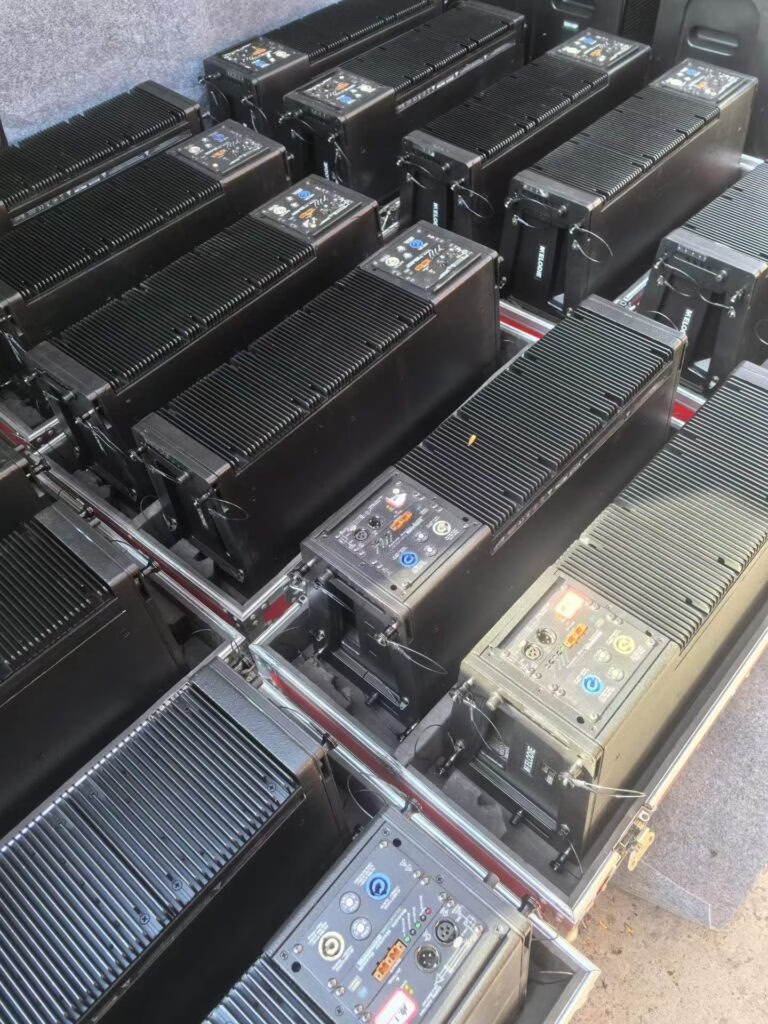
Always, when it exists. Many professional powered boxes have a voltage selector behind a cover plate near the mains inlet. Flip it to 115V and the only thing left is a plug adapter. Ask the seller to photograph the rear panel before shipping — this one photo decides whether you need to budget $200 for a transformer or $4 for an adapter.
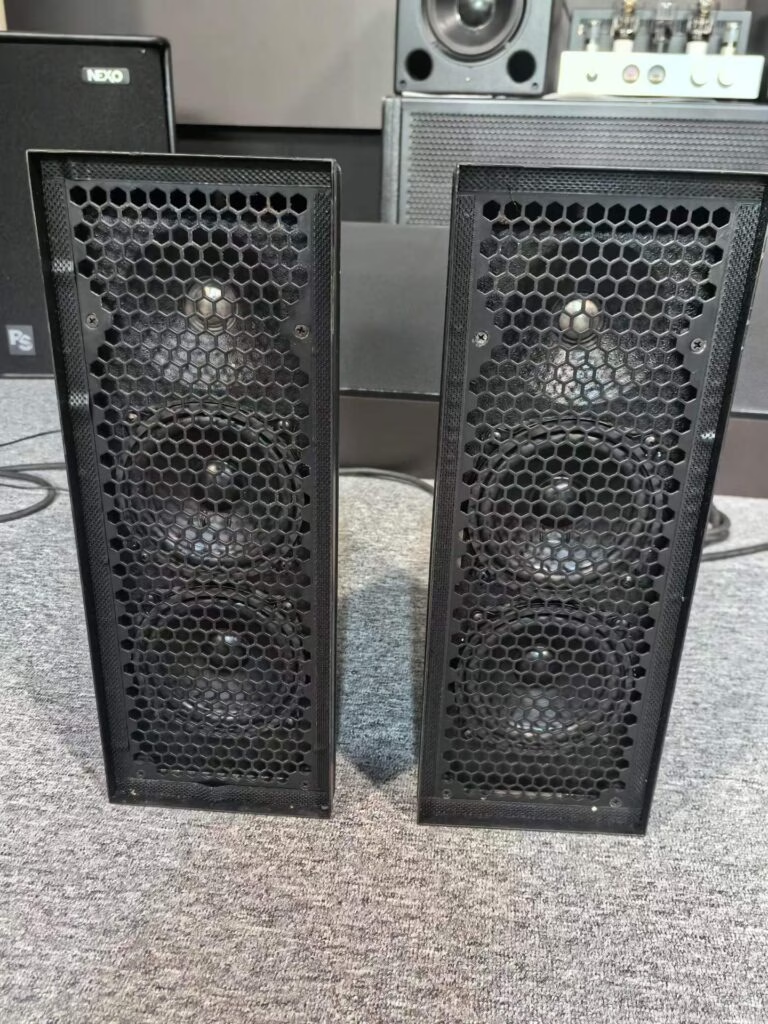
It belongs in the same conversation as condition. On a cabinet like the K-array KF12 self-powered 2-way speaker, confirm the input voltage and cable termination before it leaves the warehouse, because changing it after arrival means opening the amp module.
Can a converter hurt the gear?
A cheap converter can. Low-cost units often output a modified square wave or an unstable voltage, which switch-mode supplies dislike. Look for a transformer with a clean sine output, a fuse, and a stated VA rating rather than “for devices up to 2,000W”. The second number is marketing; the first is engineering.
See the current range of used PA system listings for real prices and stated condition before you commit.
Key Takeaways
- 220V gear on 110V mains usually survives but loses 40-60% of its output and behaves unreliably.
- Some switch-mode supplies will not start below 150V at all.
- Use a transformer rated 1.3-1.5x the device’s wall draw in VA, not output watts.
- Check for a 115/230V selector first — it is cheaper than any transformer.