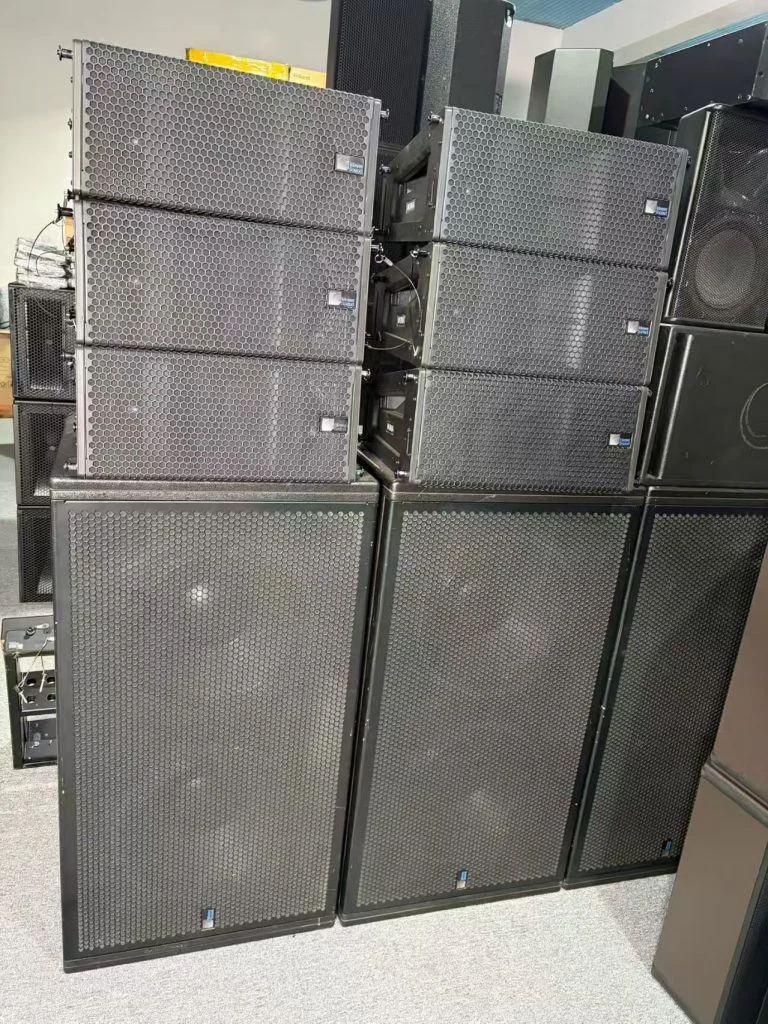
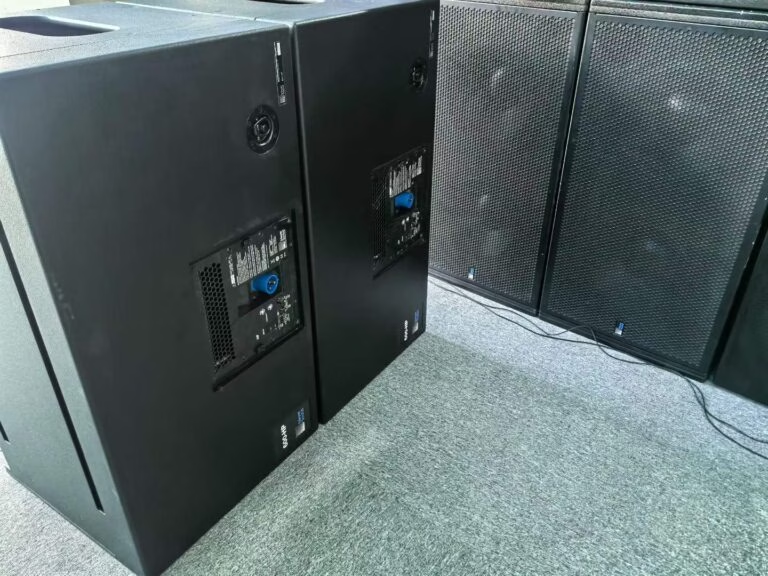
Verdict first: yes, the Meyer Sound MINA is well matched to rooms of roughly 300-1000 people, and it is genuinely one of the better compact line arrays ever made. The catch is not the speaker, it is the ecosystem. MINA wants proper rigging, correct prediction software, and a competent system tech. This is not a plug-and-play purchase.
What is the MINA, in plain terms?
Meyer Sound is a US manufacturer famous for self-powered loudspeakers. The MINA is a compact line array element, small enough to hang in tight spaces, loud enough to cover a mid-size room as a line. Because it is self-powered, each box has its own amplifier and processing. That is the Meyer signature.
Where does a one-box-point-source system beat a line array?
In a low-ceiling club or a wide, shallow room, a line array can be the wrong tool. Line arrays throw long and narrow, which is great in a deep room and awkward in a short one. For a boxy 300-capacity venue, a couple of good point-source boxes on each side often sound better and cost less. Do not buy a line array just because it looks pro.
What does owning a MINA rig actually require?
- Rigging hardware and a certified rigger for safe hangs
- Meyer’s prediction software to model coverage before you fly it
- An experienced system tech who knows the platform
- A flight case set, these boxes live and travel in cases
- Access to spare parts and service, Meyer support is not cheap
If you cannot tick most of those boxes, the rig will underperform and you will blame the speaker. It is almost never the speaker.
How does the cost picture look?
| Item | Typical used range |
|---|---|
| MINA element, per box | High four to five figures each |
| Matching subwoofer | High four figures each |
| Rigging and fly bar | Four figures |
| Flight cases | Hundreds to low four figures |
This is a system purchase, not a speaker purchase. Buy the whole rig from one seller if you can, mismatched arrays are a maintenance headache. You can see a full example of a complete Meyer line array set on our Meyer Sound MINA line array page.
Who should buy one?
Buy it if you are a rental company serving mid-size touring acts, a venue upgrading to a proper system, or a production house that will use it often enough to justify the service overhead. Skip it if you are buying your first PA, if you have no rigger and no system tech, or if your room is small and boxy. For those buyers a good self-powered point-source rig is the smarter spend.
Key Takeaways
- The MINA suits rooms of roughly 300-1000 capacity.
- It is self-powered, so each box carries its own amp and processing.
- Line arrays favour deep rooms, point-source suits small boxy venues better.
- Owning a MINA rig means rigging, prediction software, and a system tech.
- Buy the whole system together, mismatched arrays are a headache.