Short answer: around 2,000–4,000 W of continuous (RMS) output covers 300 people indoors with headroom. The “12,000 W” numbers on budget speaker boxes are peak ratings measured for a fraction of a second, and doubling real power only buys you 3 dB of loudness. Speaker sensitivity matters more than the wattage number.
How loud does a 300-person room actually need to be?
Around 100–105 dB SPL at the mix position for a live band, with peaks to 110 dB for a DJ set. Past 110 dB sustained, most audiences leave or put in earplugs. That target is well within reach of 2,000 W into efficient speakers.
Why does sensitivity beat wattage?
| Speaker sensitivity | Power needed for 105 dB @ 1 m | Real-world example |
|---|---|---|
| 92 dB (budget box) | ~250 W | Cheap plastic PA |
| 98 dB (mid) | ~65 W | JBL KP series |
| 104 dB (pro) | ~16 W | K-array KF12 class |
The 12 dB gap between the top and bottom rows is 16x the amplifier power for the same output. Two efficient 12-inch boxes will outrun four inefficient ones while drawing a quarter of the current — which also means a smaller generator, lighter cable runs, and fewer channels on the distro.
How many cabinets for 300 people?
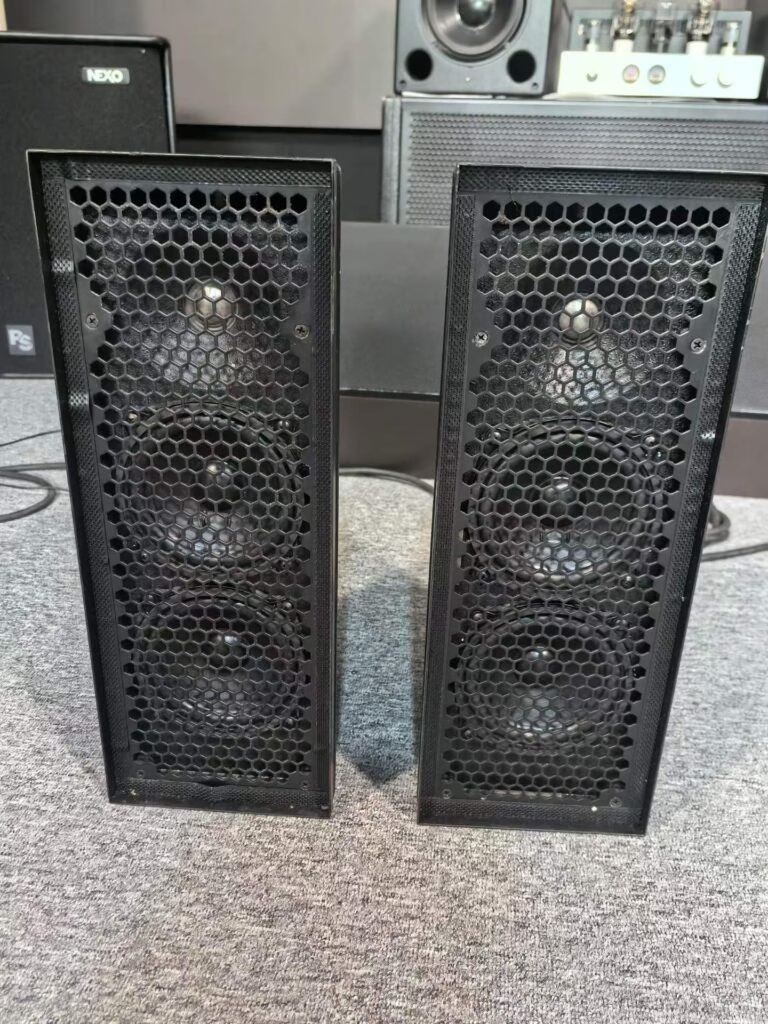
- Two full-range tops on stands, 12-inch, 500–800 W RMS each — covers 150–250 people.
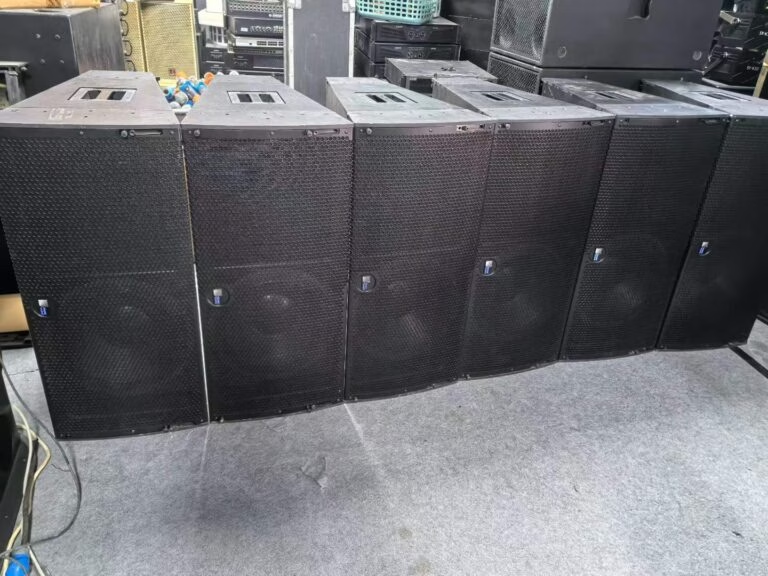
- Add two 18-inch subs (600–1,000 W RMS each) and you are comfortable at 300 for music-heavy events.
- For a live band with drums, add a second pair of tops as side fills or delay.
For a 300-person wedding or corporate event, one pair of quality powered tops plus one or two subs is the standard rig. It packs into a small van and one person can set it up in 90 minutes.
What does the used market change?
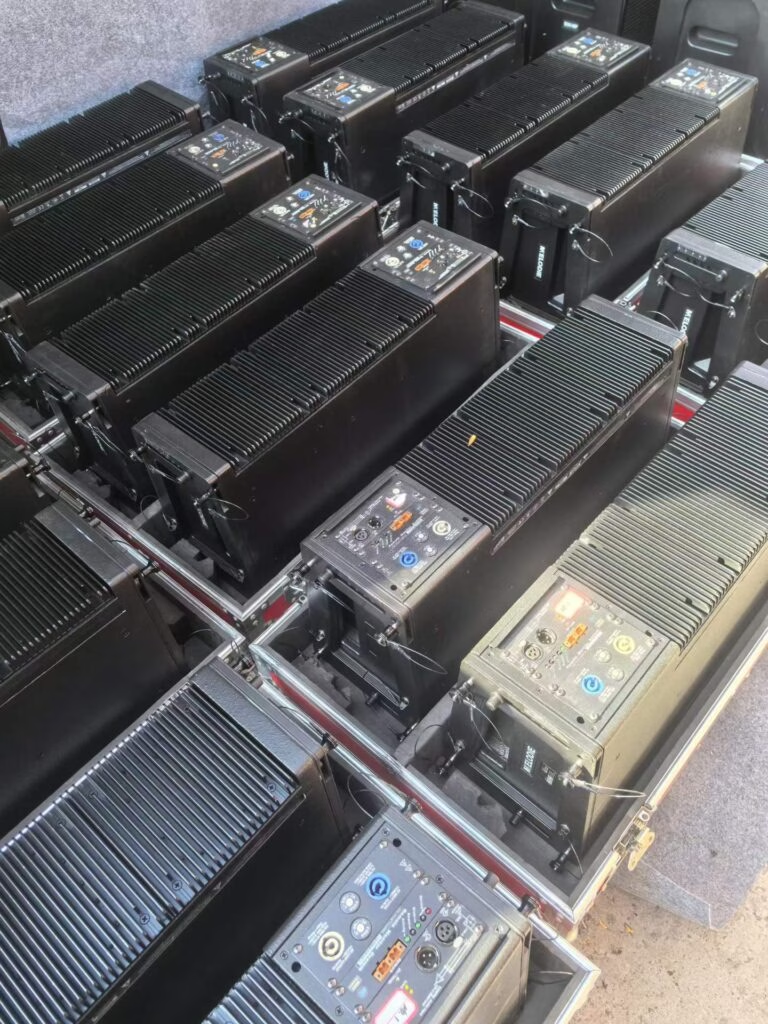
Used gear lets you buy efficiency instead of wattage. A self-powered K-array KF12 delivers about 104 dB sensitivity with onboard DSP and 12 units sit in our KF12 self-powered speaker listing — you need fewer boxes and less amp rack than a budget 12,000 W setup, and the cabinets are lighter for load-in.
The downside of used powered speakers is repair: a failed amp module is $250–500, and older modules are hard to source. Passive used speakers plus a good used amp rack are easier to fix but heavier to move. Pick based on who does your service.
What is the biggest mistake people make?
Buying peak watts and calling it headroom. A 12,000 W peak system with 2,000 W RMS burns amps hard and distorts early. If you want loudness that stays clean, buy 2x the RMS you need, then set limiters. Amplifier headroom is cheap; blown drivers are not.
Does the room shape matter more than power?
Usually, yes. A long narrow room with a low ceiling will need delay speakers regardless of wattage, and a highly reverberant hall can make 105 dB sound like mud. Spend 30 minutes walking the room with pink noise before deciding how many cabinets to buy. See the used speaker category for cabinet options.
Key Takeaways
- A 300-person room needs about 2,000–4,000 W RMS, not 12,000 peak.
- Every 3 dB of loudness needs double the power; sensitivity beats wattage by a mile.
- Two quality tops plus two 18-inch subs handle 300 people for most events.
- Buy 2x your RMS headroom and set limiters instead of chasing peak numbers.