Daily Q&A

How much does shipping used audio equipment from China cost?

Answered on November 6, 2026

Shipping used audio equipment from China costs $110–$180 per speaker pair, $180–$320 per pallet of 20–30 units, or $900–$2,400 for a 20ft container. Sea freight to East Africa runs 22–35 days; air freight is 5–8 days but costs 6–10× more per kg. Anything over 60 kg should go by sea.

The shipping quote is not the cost. Docking fees, customs brokerage and inland trucking typically add 20–35% on top of the freight line.

What does sea freight cost by region?

Route (from Shenzhen/Guangzhou)Per CBM20ft containerTransit
East Africa (Mombasa, Dar es Salaam)$95–$140$1,100–$1,60026–35 days
West Africa (Lagos, Tema)$150–$220$1,800–$2,60030–40 days
Middle East (Jebel Ali, Dammam)$70–$110$850–$1,30018–25 days
South America (Santos, Callao)$130–$190$1,500–$2,20030–40 days
Europe (Rotterdam, Hamburg)$75–$120$900–$1,40028–38 days

Speaker cabinets are volume, not weight. A pair of 12-inch boxes in one carton measures around 0.3 CBM and weighs 45 kg. That is a density of 150 kg per CBM, well under the 1,000 kg/CBM break-even, so you pay for air. Pack flat where you can.

How much does air freight cost?

Air freight from Guangzhou to Nairobi or Lagos runs $4.50–$7.00 per kg at 100 kg volumes. A 45 kg speaker pair by air is $200–$315 — more than the freight by sea for the whole pallet. Air only makes sense for small, high-value items: wireless microphone systems, DI boxes, interfaces, and single drivers.

What gets added on top of the freight quote?

  • Duty and VAT — typically 10–25% duty plus local VAT, assessed on CIF value.
  • Customs brokerage — $80–$250 per shipment.
  • Port handling and demurrage if paperwork is slow — $30–$60 per day after the free period.
  • Inland trucking — $150–$450 for a 20ft container to an inland city.
  • Insurance — 0.4–1.0% of cargo value, worth it on anything above $2,000.

How do you lower the landed cost?

  1. Fill the container. A half-empty 20ft costs the same freight as a full one.
  2. Buy in matched lots — 10 units pack tighter than 3 mixed models.
  3. Ship to the nearest port, not the nearest city; inland legs are the expensive part.
  4. Ask for CIF quotes and compare against FOB plus your own forwarder.
  5. Consolidate several suppliers into one shipment; three small LCL shipments cost more than one FCL.

If the volume is small, group your order with speakers and consoles in one pallet. Our shop page lists what is in stock now, and we will quote FOB and CIF side by side so you can see the real difference.

What paperwork do you need?

Commercial invoice, packing list, bill of lading, and for most destinations a certificate of origin. Some countries also ask for a pre-shipment inspection certificate. Used equipment needs a clean declaration that the goods are functional and not waste — vague wording gets containers held for weeks.

Key Takeaways

  • Sea freight from China: $95–$140 per CBM to East Africa, $1,100–$1,600 for a 20ft.
  • Air freight is $4.50–$7.00 per kg — only for light, high-value items.
  • Speaker pairs are volume-heavy at 0.3 CBM and 45 kg; pack flat and buy in lots.
  • Budget 20–35% above the freight line for duty, brokerage and trucking.
  • Incomplete paperwork can cost $30–$60 per day in demurrage.
Daily Q&A

How Much Does Shipping Used Audio Equipment From China Cost?

Answered on October 24, 2026

Short answer: shipping used audio equipment from China costs $1,800-4,200 for a 20ft container to a major port, or $4-9 per kg by air. The per-unit number is what matters. A full container of speakers works out to $10-25 per box; a single speaker by courier is $80-150, which is often more than the speaker is worth.

What does a container actually cost in 2026?

MethodCostTransitBest for
20ft container (FCL)$1,800-4,20025-40 days15-150 boxes
40ft container (FCL)$2,800-6,50025-40 days150-400 boxes
LCL groupage$60-120 per CBM35-55 days1-15 boxes
Air cargo$4-9 per kg5-10 daysMixers, mics
Courier (DHL/FedEx)$8-15 per kg3-7 daysSingle small items

Rates swing hard. In 2021 a 40ft box from Shanghai hit $10,000+; by 2024 the same route dropped under $2,000. Do not trust a quote older than 30 days, and do not assume the price you saw on a freight index applies to your route or your season.

How do you calculate per-unit cost?

Volume, not weight, drives speaker freight. A 12-inch two-way box with packaging is roughly 0.12-0.18 CBM. A 20ft container holds about 28 CBM usable, so 150-220 boxes if you stack efficiently and 120 if you need access aisles.

At $3,000 container freight: 150 boxes means $20 per box. Add $3-6 per box for loading, documentation and local port fees. That is why export lots beat single-unit purchases so decisively.

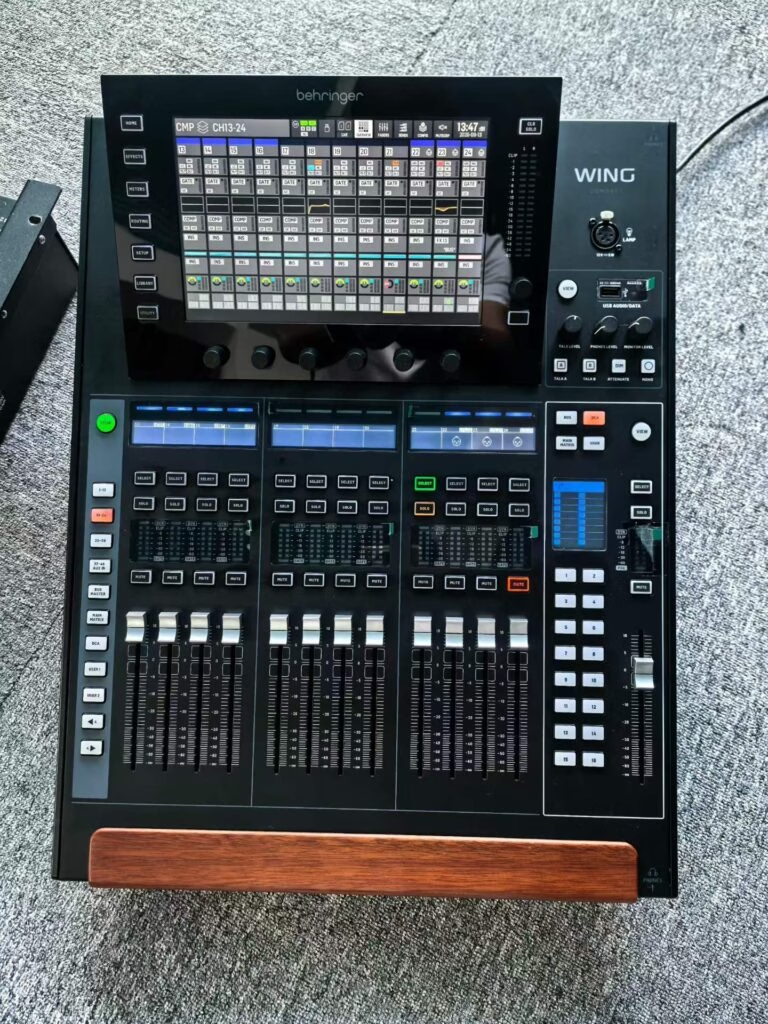
Consoles are the opposite. A 20 kg digital desk is 0.14 CBM but weighs enough that LCL billing may use weight. Air freight at $6 per kg on a 20 kg console is $120, plus $80-150 for a proper flight case – often the smarter route than waiting six weeks.

What do you pay at destination?

  • Import duty: typically 0-8% on used professional audio depending on the country and HS code.
  • VAT or GST: 5-25% depending on jurisdiction, charged on value plus freight plus duty.
  • Port and clearance fees: $150-450 for a container, $80-200 for LCL.
  • Delivery to your door: $100-600 for a container depending on distance.

Ask the seller for the HS code before you commit. Used goods under some HS headings attract a lower rate than new, and misclassification is the most common cause of surprise bills.

Which items ship badly?

Large passive subwoofers. An 18-inch sub cabinet is 0.25-0.35 CBM and heavy; per-unit freight can exceed the used value of the cabinet. That is a strong argument for buying sub drivers, not sub cabinets, from overseas – the drivers fit in a fraction of the space.

Also bad: anything with a heavy steel rack. Rack frames and cases add volume without adding value.

How do you avoid damage in transit?

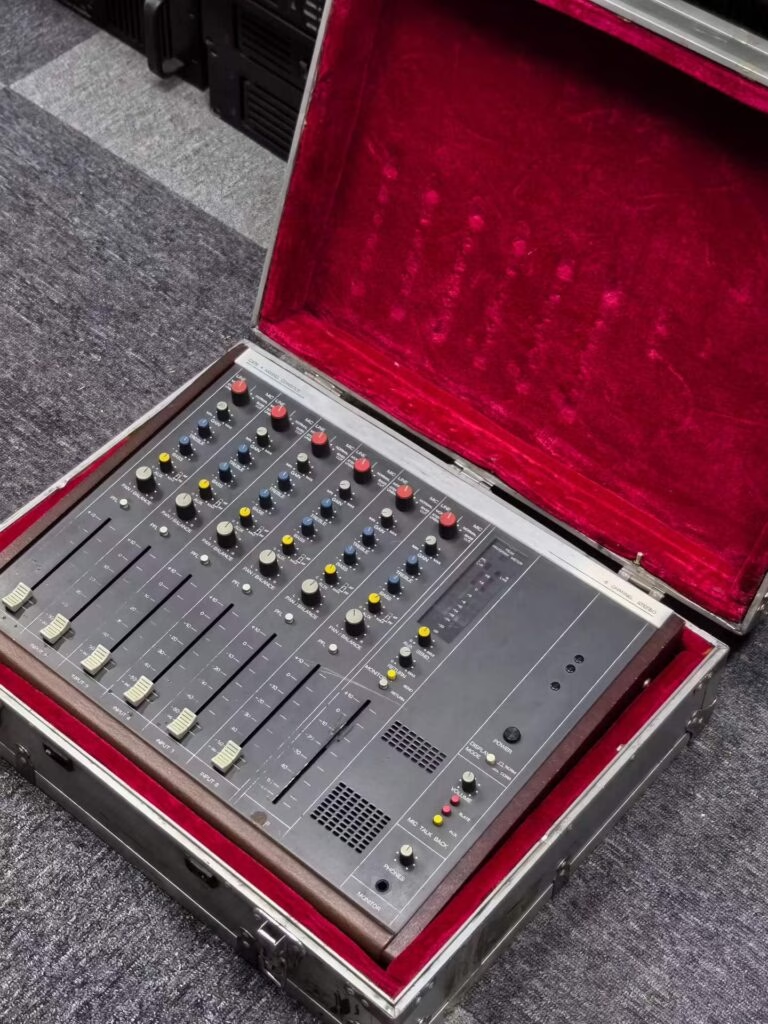
Two rules. Corners need 5 cm of foam, not a single layer of bubble wrap. And cases should be crated, not taped cardboard, if they contain anything with a screen or motorised faders. A damaged Yamaha DM1000 is a $200-400 repair plus weeks of paperwork.

Ask for photos of the packing before it leaves, and insist on a loading photo inside the container. It settles arguments later. Current stock and freight quotes are on our shop page.

Does insurance pay for damage?

Only if you bought it. Standard carrier liability is capped by weight – often $2-4 per kg – which on a 25 kg speaker is $50-100 against a $200 replacement. Marine cargo insurance costs 0.3-0.8% of the declared value plus freight, so on a $5,000 shipment that is $20-50. Buy it for anything fragile or expensive.

Declare the real value. Under-declaring to save duty usually costs more when a claim is paid at the declared figure.

Key Takeaways

  • A 20ft container runs $1,800-4,200 in 2026; LCL costs $60-120 per CBM and suits one to fifteen boxes.
  • Full-container speaker freight lands at $10-25 per box. Single-unit courier at $80-150 rarely makes sense.
  • Consoles and mics ship better by air at $4-9 per kg; speakers almost never do.
  • Budget duty 0-8% plus VAT/GST 5-25% at destination, and confirm the HS code before the goods move.
Daily Q&A

How much does shipping used audio equipment from China cost?

Answered on October 16, 2026

Straight answer: a single pallet of used audio gear moves by sea for roughly $180-450 door to door to the US or EU, or by air for $600-1500. Sea takes 25-40 days, air takes 5-10. On larger orders the sea rate per kilogram drops, which is why most buyers consolidate before shipping.

Why is audio gear priced by weight and volume, not units?

Carriers charge on the greater of actual weight or volumetric weight. Volumetric weight is length x width x height in cm divided by 6000. A Yamaha DM1000 console in its flight case is heavy and bulky, so it lands in a high bracket either way. A powered 12″ speaker is bulky but lighter, so volume usually wins.

This is why “how many boxes” is the wrong question. Ask for the total kilograms and the total cubic meters, then compare.

Sea freight vs air freight: which makes sense?

MethodCost per palletTransit timeBest for
Sea (LCL)$180-45025-40 daysNon-urgent, 1+ pallets
Sea (FCL 20ft)$1800-350025-40 days10+ pallets
Air freight$600-15005-10 daysUrgent, under 300 kg
Express courier$8-15 per kg3-6 daysSingle small items

LCL means less than container load, your pallet shares a container. It is the standard route for first orders. Once you pass about 12-15 cubic meters, a full 20ft container is cheaper than paying LCL rates.

What fees come on top of the freight quote?

  • Export clearance and documents: $80-180 per shipment
  • Import duty: typically 0-6% on professional audio in the EU, and 0-5% in the US depending on HS code
  • VAT / sales tax: 19-27% in most EU countries, charged on goods plus freight
  • Port and customs broker fees: $120-350
  • Last-mile delivery: $60-250 depending on address and liftgate needs

Always ask for a DDP quote if the seller offers it. DDP means the price includes duty and delivery to your door, so there is no surprise invoice at the port.

Does packing quality really matter for used gear?

More than anything else on this list. A used amplifier or console ships best in original flight cases. Loose speakers need corner protection, foam, and a double-wall carton. One vendor I know lost two consoles to a single damaged pallet because they stacked 40 kg boxes on top of unbraced gear. Packing is not the place to save $30.

How do you lower the freight bill?

Buy more at once. Consolidate several items into one shipment. Strip non-essential weight like heavy road cases you will not use. And ship to a port or commercial address, not a residential one, which shaves the last-mile fee. If you are evaluating a digital console for a project, the Yamaha DM1000 page shows cabinet dimensions and weight, which is exactly what a freight quote needs. Browse more consoles on the mixers category.

Key Takeaways

  • Sea freight runs $180-450 per pallet door to door; air runs $600-1500.
  • Carriers bill on the greater of actual or volumetric weight.
  • Budget 0-6% duty plus 19-27% VAT in the EU on top of freight.
  • Ask for a DDP quote to avoid port surprises.
  • Consolidating shipments is the fastest way to cut cost per unit.