There is no industry standard behind the words. In practice, ‘Like New’ means boxed, under about 20 hours of use, no marks and all accessories present. ‘Excellent’ means it has been gigged but the cabinets, cones and grilles are unmarked and every part is original. ‘Good’ means working with visible wear. Anything vaguer than that is marketing.
Why do dealers use four grades and not two?
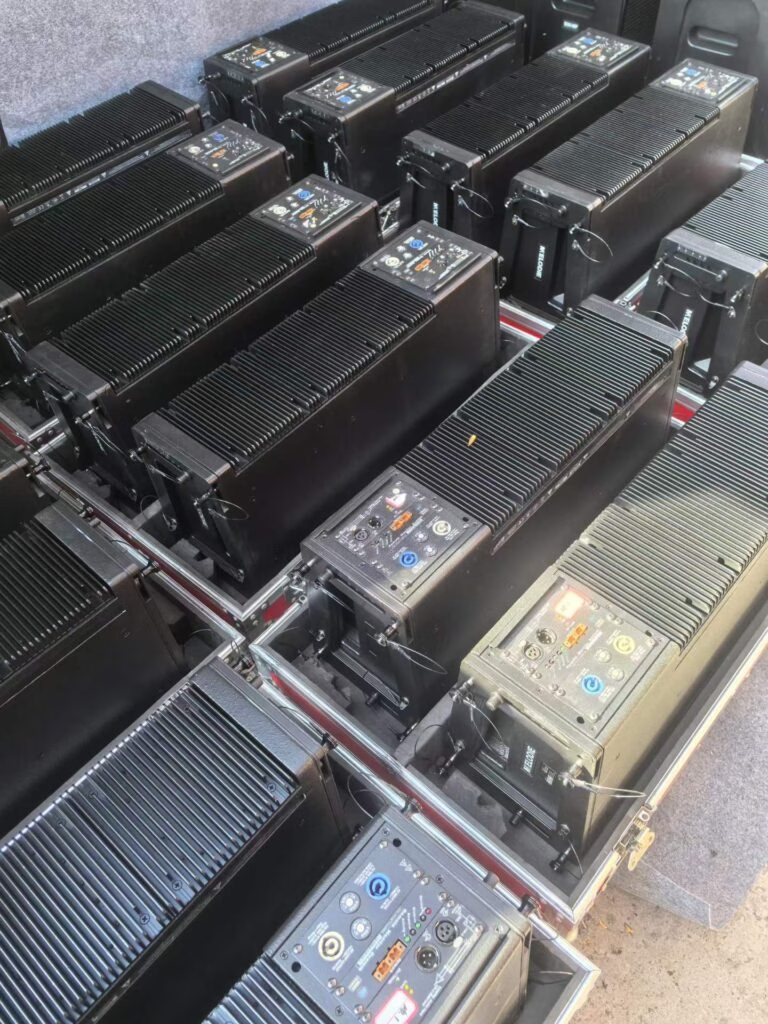
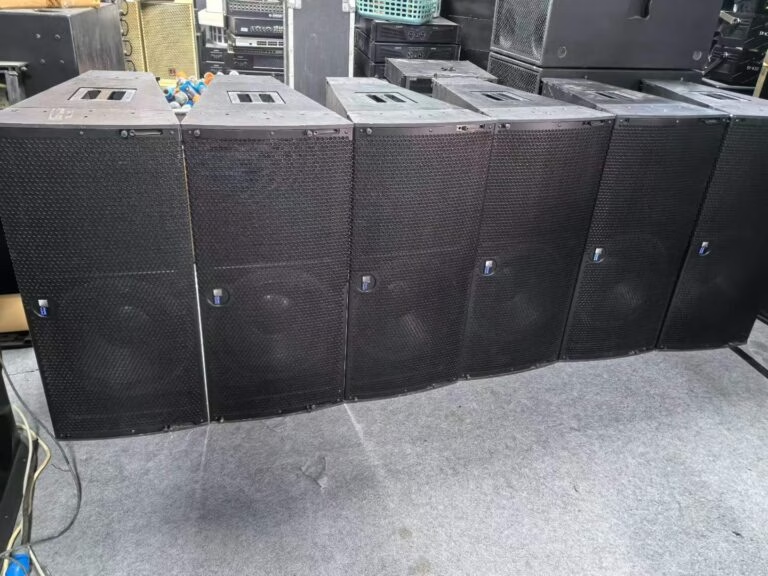
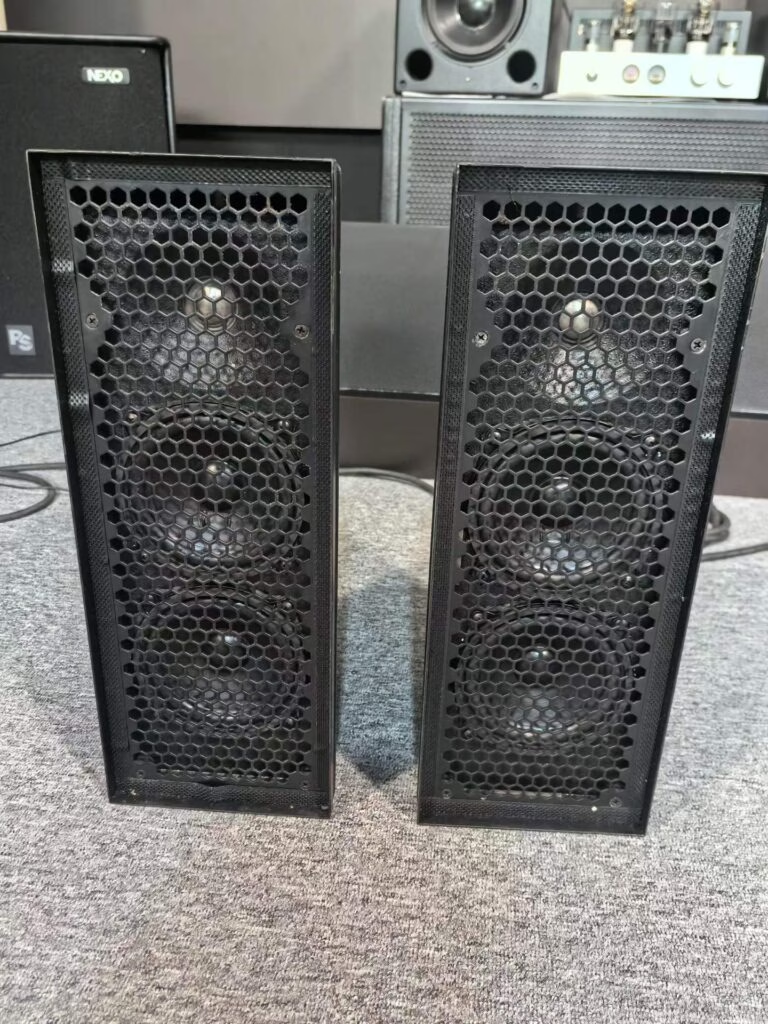
Because the gap between a speaker that lived in a studio and one that toured for six years is enormous, and buyers want a price that reflects it. A used K-array KF12 self-powered speaker in Excellent condition with all 12 units from one install is a very different purchase from one that has done festival duty.
| Grade | Typical use | Cosmetic state | Price vs new |
|---|---|---|---|
| Like New | Under 20 hours, often boxed | No marks, all accessories | 65-80% |
| Excellent | Light gigging, careful owner | Minor scuffs on base | 50-65% |
| Good | Regular touring or install | Visible scratches, faded logo | 35-50% |
| Fair / B-stock | Heavy use or repaired | Dents, replaced parts | 20-35% |
What does each grade hide?
‘Excellent’ hides dust in the HF horn and worn foam behind the grille. Foam degrades whether or not anyone touched the speaker, and a 2015 cabinet can have foam that crumbles when you press it. Ask the seller to remove one grille and photograph the horn.
‘Like New’ hides battery state on wireless gear and capacitor age on anything that sat unplugged for years. Electrolytics dry out when idle. A mint-looking amplifier that has not been powered since 2019 may need new caps within the first month.
Which photos should you demand?
- Rear panel, close enough to read every connector label.
- Grille off, showing the cone and horn.
- Base and corners, where road wear shows first.
- Serial number plate.
- A shot of the unit powered on with signal passing through it.
If a seller refuses the grille photo, assume the foam is gone and price accordingly. That single refusal has saved more buyers than any inspection checklist.
Does grading affect shipping and returns?
Yes, and it is rarely explained. Used speakers sold as ‘used speakers for sale uk’ listings from EU warehouses travel by pallet, and a corner ding in transit is usually the buyer’s problem unless the seller packed to a tested standard. Ask whether the pallet is double-walled and whether the grilles come off for shipping. Loose grilles are the most common transit damage on 12-inch cabinets.
How do you check a grade on arrival?
Do it within 48 hours: sweep 40Hz to 16kHz at low level and listen for rattle, then push each driver gently to feel for voice coil rub. Run at moderate level for 20 minutes and check whether the amp module gets hot. On a powered cabinet, a module that is too hot to hold after 20 minutes at half power has a cooling problem, not a cosmetic one.
Key Takeaways
- ‘Like New’ should mean boxed, under 20 hours, no marks – ask for the box.
- ‘Excellent’ means gigged but unmarked; expect minor base scuffs.
- Always ask for a grille-off photo to check foam and horn condition.
- Idle gear can have dried capacitors even if it looks new.
- Report transit damage within 48 hours, before signing off the pallet.
When a grade is stated plainly and backed by photos, trust it. Browse used speakers by grade and compare cabinet condition side by side before you commit.