“Like New” should mean fewer than 50 hours of use, no cosmetic marks, original box or flight case and every function tested. “Excellent” means used regularly, cosmetically clean, all functions working, minor scuffs allowed. Neither term is regulated. If a listing gives no hours, no test list and no close-up photos, the grade is a word, not information.
Who actually defines these grades?
Nobody. There is no grading body for used pro audio the way there is for used cars. Every seller writes their own scale, and the same speaker can be “Excellent” at one warehouse and “Good” at another.
That is why photos beat words. Ask for the cone from the front, the basket from the back, the amp plate, the connectors and the serial. Five photos tell you more than a page of adjectives.
What should “Excellent” include?
- All drivers original, no recones, no cone tears
- Amp module tested at full output for at least 30 minutes
- Every input, output and link connector passing signal
- Grille dents allowed; foam intact or replaced
- Scratches on the cabinet allowed; no cracks in the ply
If any of those is missing, it is “Good” at best. A speaker with a reconed woofer is still saleable, but it should be priced 25-35% under a fully original one.
What should “Like New” actually require?
Under 50 hours, or under one touring season. Original accessories: power cable, manual, flight case, any bundled brackets. No paint touch-ups. A test log with dates.
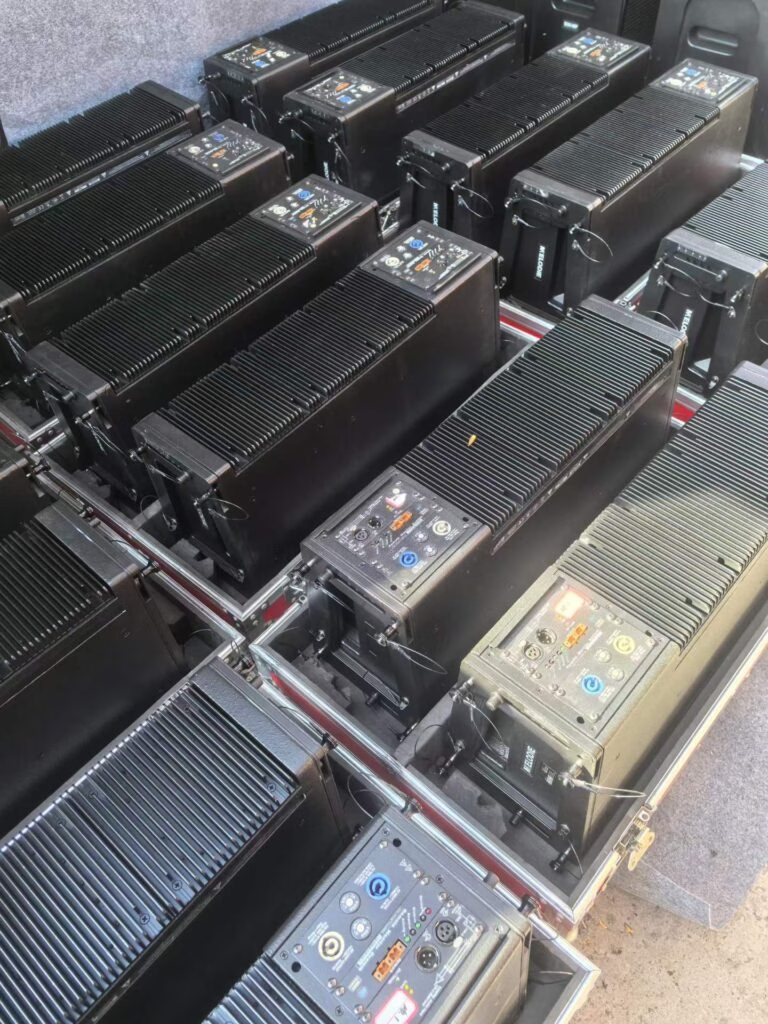
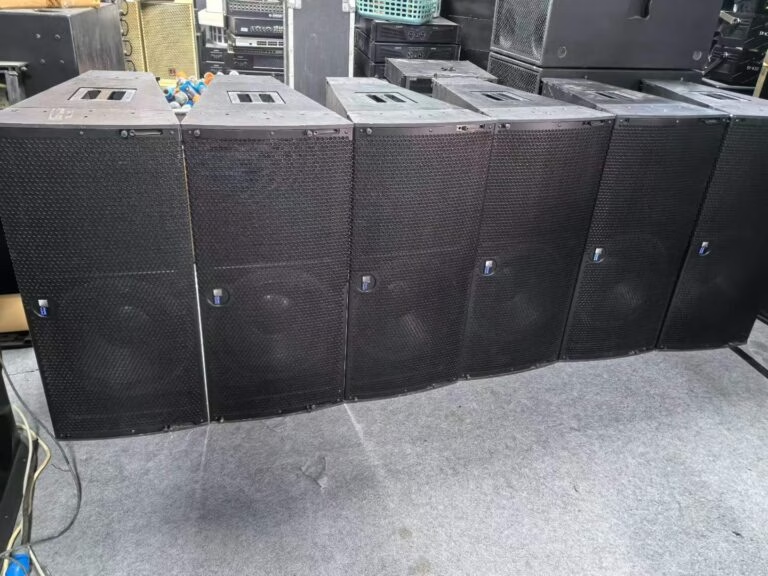
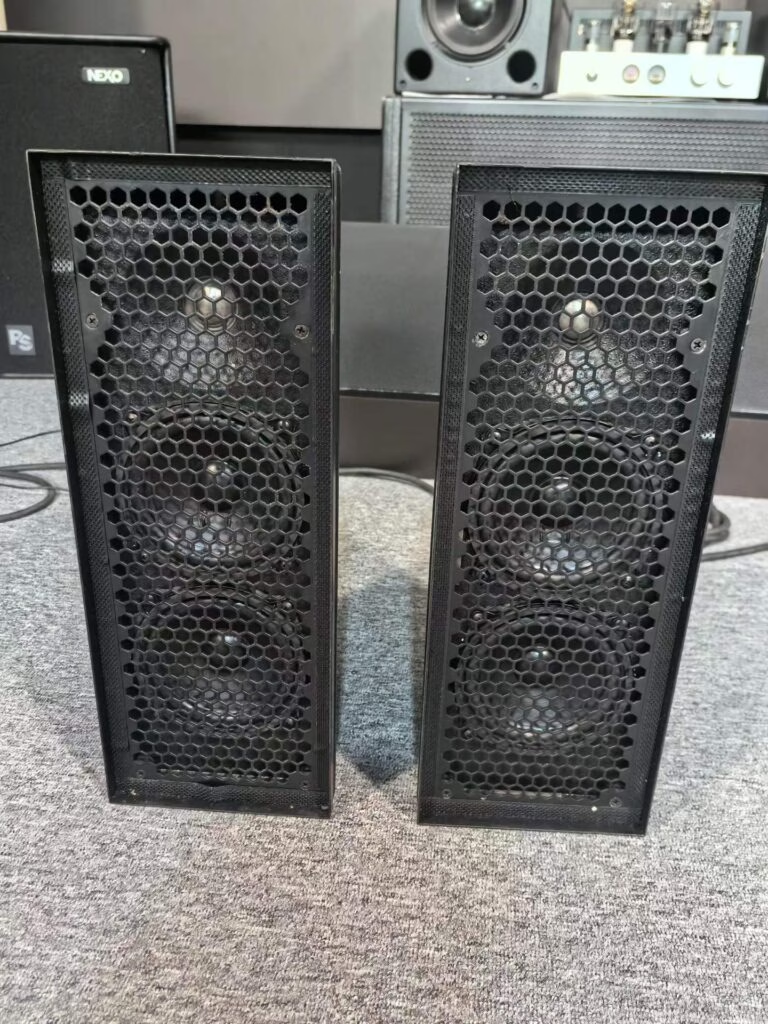
In practice, genuinely like-new pro audio is rare and usually comes from a cancelled install or a studio that closed. Rental stock almost never reaches that grade. If a seller has 40 units all labelled “Like New”, they are using the term as marketing. A realistic batch listing looks more like our used K-array KF12 stock — graded excellent, sold by unit count.
Why do “used speakers for sale UK” listings grade differently?
UK sellers usually grade against cosmetics first because the buyer can collect in person and look. Export sellers grade against function first because the buyer cannot. Both are defensible; they just answer different questions.
| Grade | Hours | Cosmetic | Typical price vs new |
|---|---|---|---|
| Like New | <50 | No marks | 60-75% |
| Excellent | 50-500 | Minor scuffs | 45-60% |
| Good | 500-2000 | Visible wear, grille dents | 30-45% |
| Fair / parts | Unknown | Cracks, missing parts | 10-25% |
Which questions expose a loose grade?
Ask these four and read the answers carefully:
- “How many units did this come from, and how many hours did each see?”
- “Has any driver been reconed or replaced?”
- “Can you send a 60-second video with pink noise at half power?”
- “What exactly failed on the units you rejected?”
A seller who answers the fourth question is a real seller. A seller who ignores it is moving boxes.
Key Takeaways
- Grades are seller-defined. Photos and test lists are the only real evidence.
- Like New: under 50 hours, original accessories, no touch-ups.
- Excellent: used regularly, cosmetically clean, every connector tested.
- A reconed woofer should cut the price 25-35%.
- Ask what failed on the rejected units — that answer sorts sellers fast.
Compare grades across the used speaker category to see how the same model prices at different condition levels.