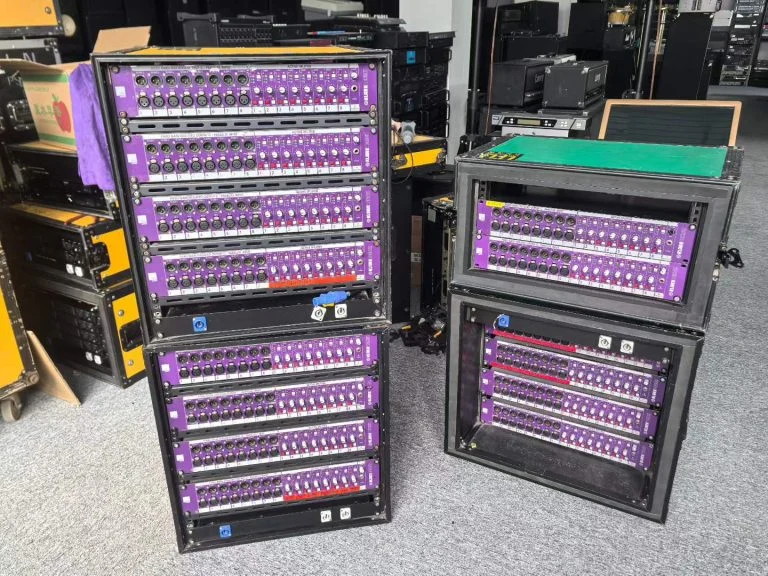
You need an active or transformer-isolated splitter the moment two consoles share one microphone. A passive Y-cable is $15 and technically works, but it halves phantom power to each leg and invites hum from ground loops between two desks. A proper transformer split fixes both for about $40-90 per channel.
What does a passive Y-split do to the signal?
It puts two preamps in parallel with one source. Each leg sees a lower impedance and roughly 3-6dB less level, which is usually recoverable with gain. The bigger problem is phantom power: 48V from two consoles meeting on one microphone pin is a recipe for a damaged capsule or a preamp that shuts down.
Ground loops are the other one. Two desks on different power feeds, joined by a mic cable, hunt for a common ground through the shield. That is the hum you hear at 50 or 60Hz. Transformer isolation breaks the loop properly.
Active or transformer-isolated – what is the difference?
- Active splitter – a buffer amplifier per channel. Needs mains power, gives a clean isolated direct out, and typically provides phantom from the splitter itself.
- Transformer split – passive, no power, isolates ground by design. Slightly heavier and costs more per channel in good quality.
- Passive Y-cable – none of the above. Fine for one microphone into two recorders in a low-stakes setup.
How many channels does a 5×8 splitter give you?
The naming is confusing and it trips up buyers every time. A 5×8 unit usually means 5 inputs, each split to 8 outputs, or 5 channels with 8 total sends depending on the manufacturer’s convention. Read the spec sheet, count the XLRs, and do not trust the model name.
One thing to check before buying: does the splitter support phantom power passthrough on the direct leg? If your condenser mics need 48V and the splitter cannot pass it, you need the active type that generates its own.
Is a used splitter safe to buy?
Safer than almost any other used gear, because there are no moving parts and the failure modes are mechanical. Check every XLR for wobble and a broken latch, and on active units confirm the PSU is included. Missing power supplies are the most common complaint on used splitters, and a replacement is not always available.
Look at this Klark Teknik active 5×8 channel mic splitter system (five rack units, studio-grade transformers) as a reference point. If you are pairing it with a desk, the Yamaha DM1000 digital mixing console takes those split sends cleanly on its analog inputs.
When is a splitter not the answer?
When both desks are digital and you have a shared network. In that case one stage box feeds both consoles over Dante or AES50, and a splitter is dead weight. Splitters matter when the monitor desk is analog, or when the two systems are owned by different companies and must not share power.
Key Takeaways
- Use a splitter the moment two consoles share one mic.
- Passive Y-cables cost 3-6dB and risk two phantom supplies on one capsule.
- Transformer splits isolate ground and are passive; active splits need mains.
- Always confirm the PSU is included on used active units.