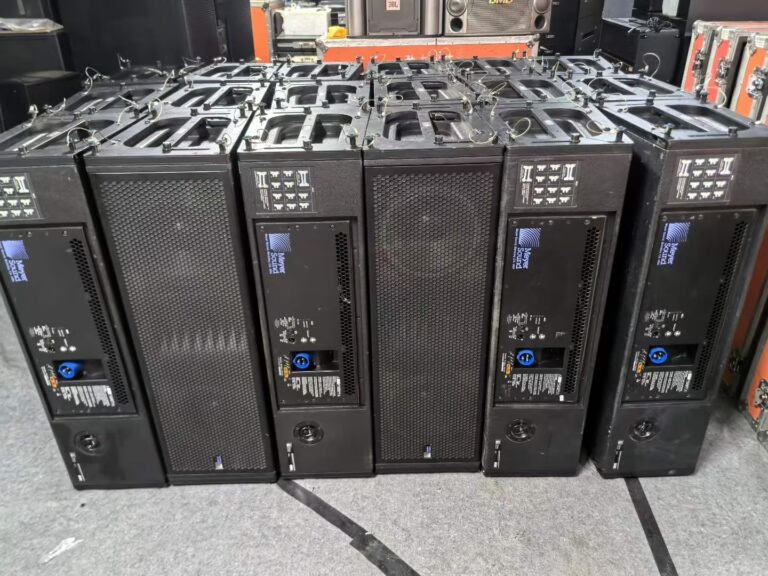
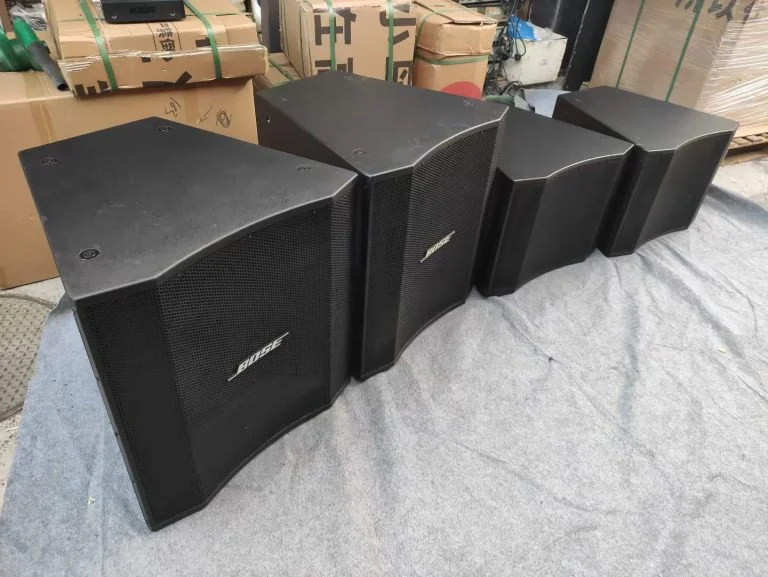
Short answer: powered speakers hold value best, at 55-65 percent of their original price after five years. Digital consoles fall to 25-35 percent. Gear from brands with a rental market – K-array, Yamaha, Shure, Pioneer DJ – sells in days, while no-name cabinets sit for months even at half price.
Resale value is not something most buyers think about on the day they purchase. It becomes the whole story three years later when the rig changes and the old cabinets are in the way.
How much value does each type of used PA gear keep?
| Gear | After 5 years | After 10 years | Notes |
|---|---|---|---|
| Powered speaker, branded | 55-65 percent | 35-45 percent | Amp module is the risk |
| Passive speaker, branded | 50-60 percent | 30-40 percent | Fewer failure points |
| Digital console | 25-35 percent | 10-18 percent | Software support decides |
| Analog console | 35-45 percent | 20-30 percent | Steady install demand |
| DJ controller | 35-45 percent | 15-25 percent | New model kills it |
These bands come from 2026 export quotes, not a guide book. The pattern is consistent: mechanical and acoustic parts age slowly, software-bound parts age fast.
Why do speakers beat consoles on resale?
A speaker is a box, a driver and an amp. Nothing in it depends on a manufacturer shipping firmware in 2026. A console depends on exactly that. Once a desk stops getting updates, its feature set freezes while newer desks at the same used price do more, and the market reprices it hard.
There is a second reason: speakers get bought by installers who never sell them again, so used supply stays thin while demand is steady.
What kills resale value fastest?
- Missing accessories. A console without its power supply or a speaker without its grille loses 15-25 percent.
- Cosmetic damage on the front face. Buyers judge from photos, and a dented grille reads as abused gear.
- Non-original drivers. A reconed woofer drops the price even when it sounds fine.
- No serial number or a scratched-off label. Resale buyers assume stolen or grey market.
Does buying used actually protect you here?
Yes, and this is the underrated argument for used gear. A new speaker bought at $2,000 and sold at $1,100 after five years lost $900. A used pair bought at $1,100 and sold at $800 lost $300. The absolute loss is what matters, not the percentage, and used gear has already taken its biggest depreciation hit.
If you want a reference point for what a well-graded used cabinet costs today, the K-array KF12 listing shows a self-powered two-way box with export documentation – the kind of stock that resells easily because the brand has a rental market.
Which brands hold up best in 2026?
K-array, d&b audiotechnik, L-Acoustics, Yamaha and Shure hold the strongest resale in pro audio. Pioneer DJ holds well for club gear. Avoid brands that changed distributor or folded in the last five years – buyers cannot get parts and will not pay for risk.
Key Takeaways
- Powered speakers keep 55-65 percent after five years; digital consoles 25-35 percent.
- Anything software-bound depreciates faster than anything mechanical.
- Missing accessories and non-original drivers cut 15-25 percent.
- Buying used limits absolute loss, which matters more than the percentage.
- Brands with a rental market sell in days; no-name stock sits for months.