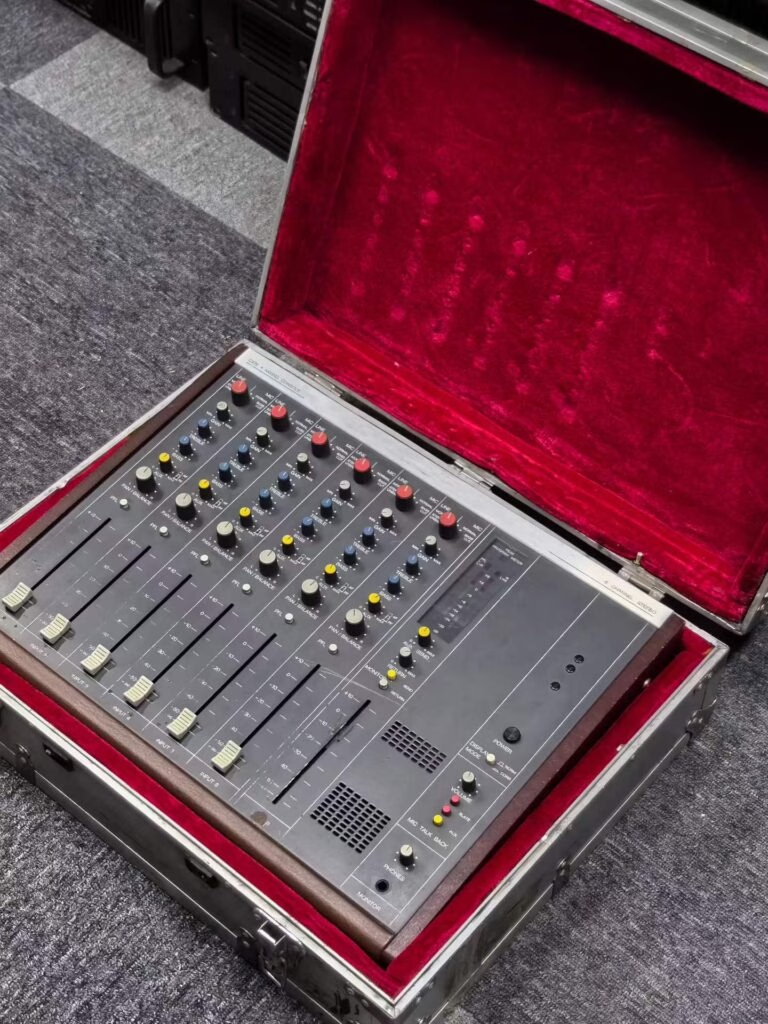
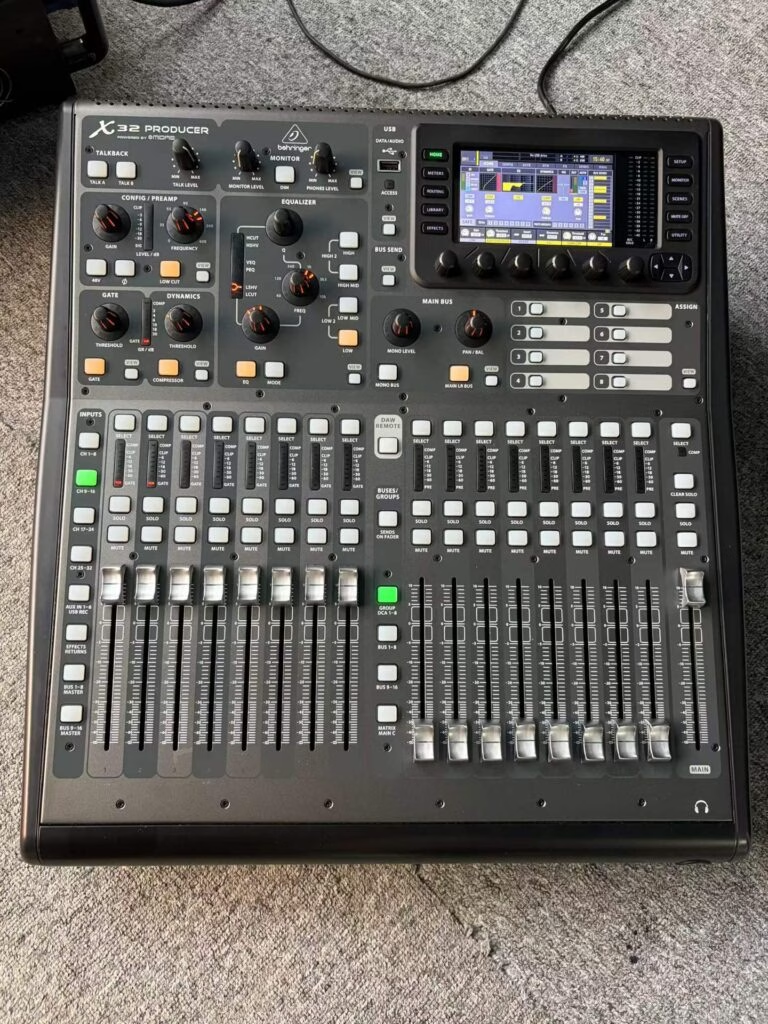
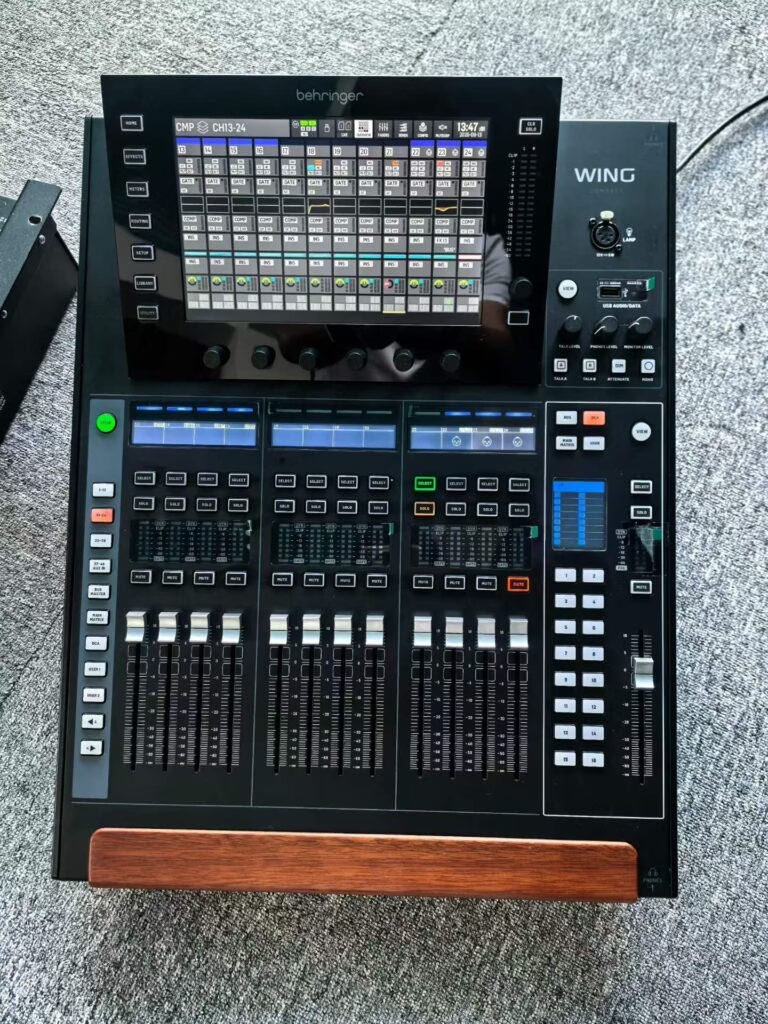
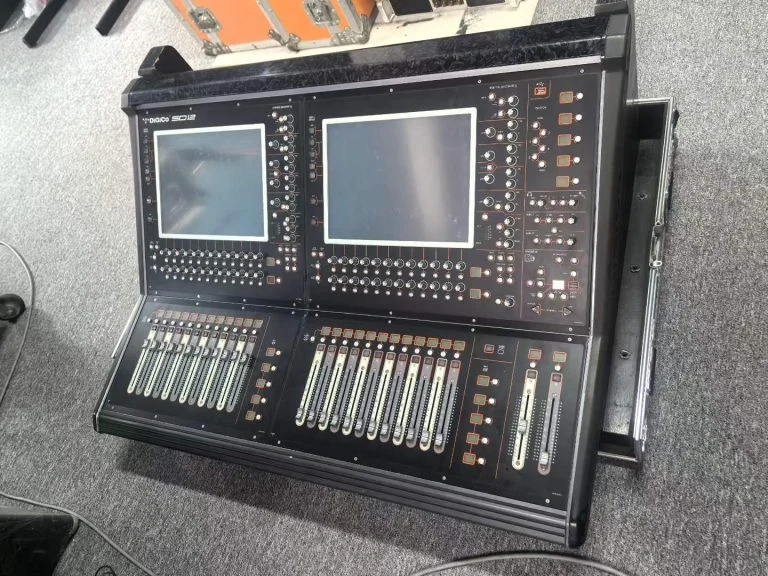
Go digital if you mix different acts, need scene recall or want 32 channels in a 60cm footprint. Go analog if you run the same band weekly, want instant power-up and prefer repairs you can do yourself. Above $1,000 the used market is almost entirely digital; below $600 analog desks offer better sound per dollar.
What does digital actually buy you?
Recall is the headline feature. Save a scene for each band and the next soundcheck starts from a known state instead of from memory. On a 16-channel desk that saves 20-30 minutes per show, which matters if you are doing three acts a night.
The second gain is footprint. A Yamaha DM1000 digital console puts 48 channels into a 20kg frame with motorized faders, and it fits in the back of a hatchback. The analog equivalent needs 3 metres of desk and weighs 120kg.
What does analog still do better?
It starts in under a second. No boot, no firmware, no screen that can freeze at doors. It also survives bad power better, because there is no CPU to corrupt. In a venue with a generator and voltage dips, an analog desk keeps passing audio when a digital one reboots.
Repairs are also cheaper. A dead channel on an analog desk is a $60-150 fix at any shop. A dead channel on a digital desk can mean a $400 board swap or a unit that has to go back to the manufacturer.
How do the numbers compare in 2026?
| Used analog | Used digital | |
|---|---|---|
| Typical price | $200-900 | $700-2,800 |
| Channels for the money | 16-32 | 16-48 |
| Boot time | Instant | 20-60 seconds |
| Recall / scenes | No (unless midi) | Yes |
| Multitrack recording | Needs interface | Built in on most |
| Repair cost per channel | $60-150 | $200-450 |
| Weight (24ch) | 45-70kg | 8-20kg |
Which failure modes should you check?
On analog, wiggly pots and scratchy faders are normal wear and cheap to fix, but a burnt channel strip or a failed master section is not. Test every channel with a mic and check the master insert path.
On digital, check the fader motors, the screen, and whether the firmware will still update. A console stuck on firmware from 2016 may not accept modern Dante or USB cards. Power it up, move every fader, and watch for one that hunts or refuses to move.
So which one should you buy?
Mobile operators and multi-act venues: digital. Churches, rehearsal rooms and fixed installs with a regular engineer: analog is still honest value. If you are spending under $700 and need it to work tomorrow, a used analog 24-channel desk with a fresh power supply is hard to beat.
Key Takeaways
- Digital wins on recall, footprint and multitrack recording.
- Analog wins on boot time, repairability and tolerance of bad power.
- Used digital consoles start around $700; analog desks from $200.
- Test every fader motor on digital, every channel strip on analog.
- Under $700 for a working desk tomorrow, buy analog.
Match the console to how you work, not to what looks modern. Compare used mixing consoles by channel count, weight and repair history before you decide.