The short version: pick digital if you need scene recall, channel count, and built-in processing, and pick analog if you want zero menu diving and a tech who can fix it with a soldering iron. Both sell used at 40-70% off new. The wrong choice costs you more in frustration than in money.
What do you actually gain with a used digital console?
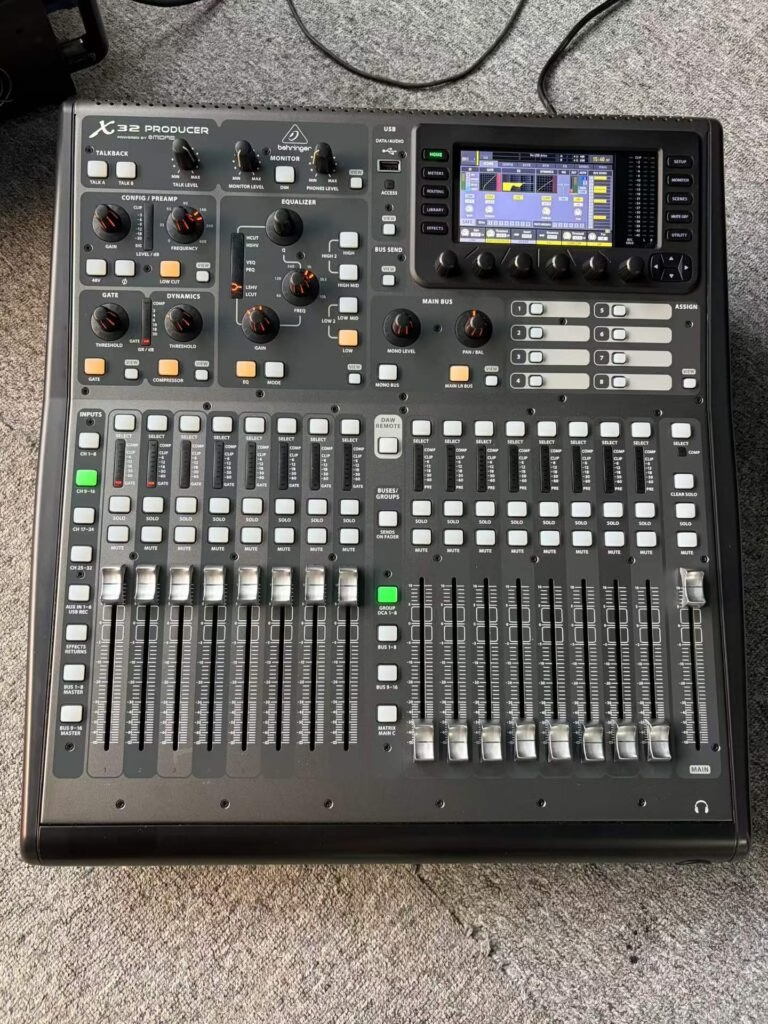
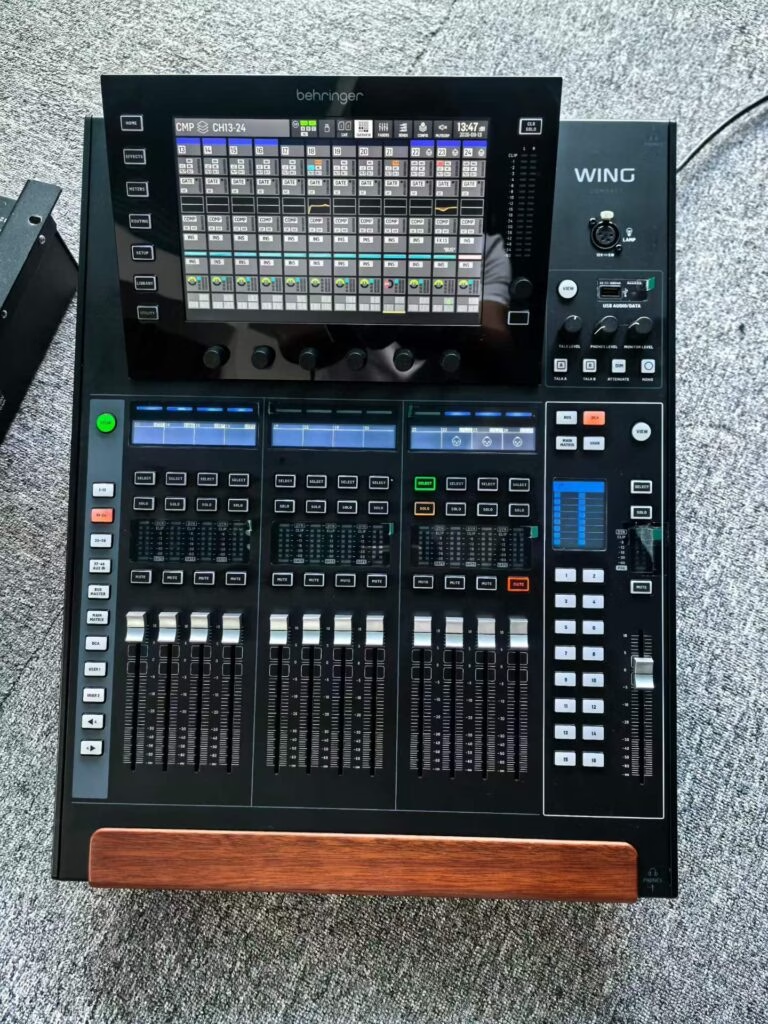
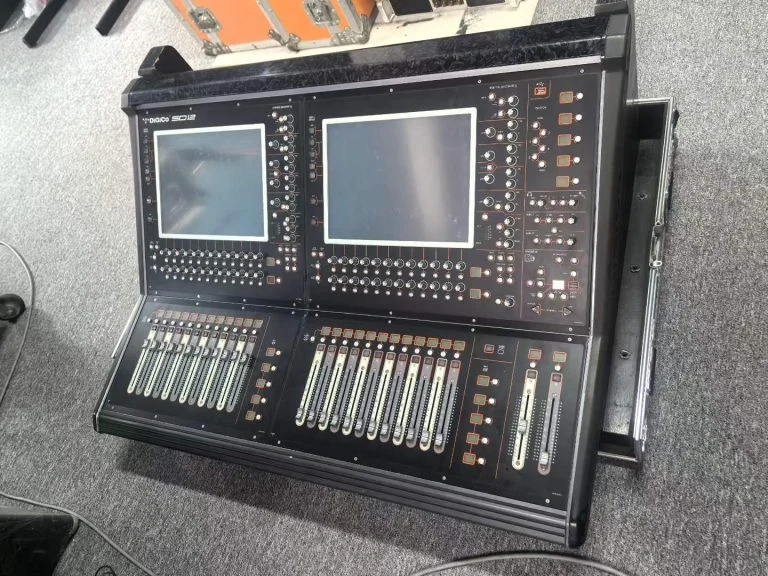
Recall is the headline. Save a scene, come back next week, everything is where you left it. On a Yamaha DM1000 you get 48 input channels, 8 aux buses, onboard dynamics and reverb, and full motorized faders, all in a 60 cm deep frame. Try fitting that into a small analog desk.
- Scene and show recall in seconds
- EQ, compression, and effects on every channel without racks
- Digital snakes instead of multicore runs
- Recording straight to a laptop or card
What does analog still do better?
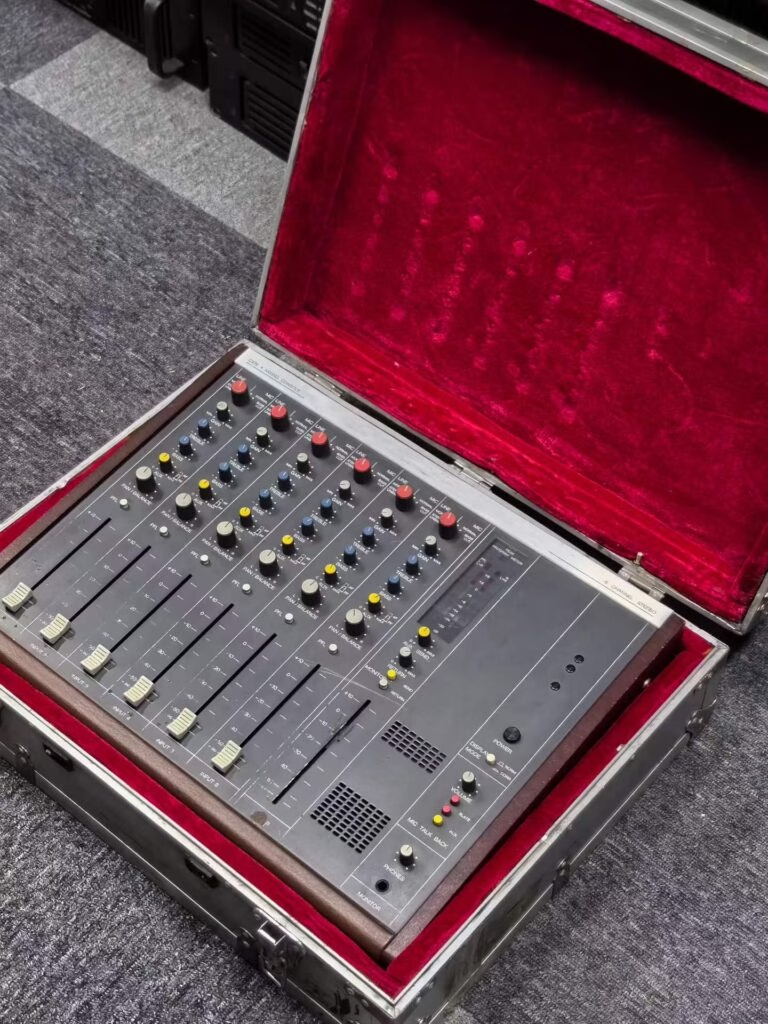
Analog consoles do not boot. They do not crash mid-show. Every control sits under your finger and you can see everything at once. And when they break, a good tech fixes them for parts cost. A 24-channel analog desk with a dodgy pot is a $40 repair, not a $400 board swap.
That is not nostalgia. For fixed installs, houses of worship, and one-band venues, a simple analog desk that anyone can operate is still the safer choice.
How do the two compare on cost and upkeep?
| Factor | Used digital | Used analog |
|---|---|---|
| Typical used price | $700-4000 | $200-1500 |
| Repair if it fails | Board swap, $200-600 | Component, $20-120 |
| Learning curve | Steep, menu based | Flat, hands on |
| Footprint for 32 ch | Small, one case | Large, 1.5 m wide |
| Recall | Full | None, use a photo |
Which one should a first-time buyer pick?
If you mix the same bands in the same rooms, save for digital. The recall pays for itself the first time you do a two-band show. If you mix different acts every night with no time to build scenes, or you run a venue where staff rotate, analog keeps you moving.
The honest downside of used digital: aging touchscreens and dead backlights. On a 15-year-old desk, a fading display is common and expensive to source. Ask the seller for a close-up photo of the screen with it powered on. On used analog, the risk is scratchy pots and worn faders, which are cheap but tedious to clean.
What should you verify before buying used?
- Power it up and check every channel for noise on the fader sweep
- On digital, confirm the screen is bright and all buttons register
- Test phantom power on each input, a dead 48V rail ruins mics
- Ask whether the firmware is current and the power supply is original
- Confirm the desk ships in a flight case, not loose
You can see specs and current stock for a 48-channel digital desk on the Yamaha DM1000 mixing console page, and compare more options on the mixers category.
Key Takeaways
- Digital wins on recall, channel count, and built-in processing.
- Analog wins on instant control and cheap, simple repairs.
- Used digital consoles sell for $700-4000, analog for $200-1500.
- The hidden risk on old digital desks is a failing screen, always ask for a powered-on photo.
- Match the console to how you actually work, not to the spec sheet.