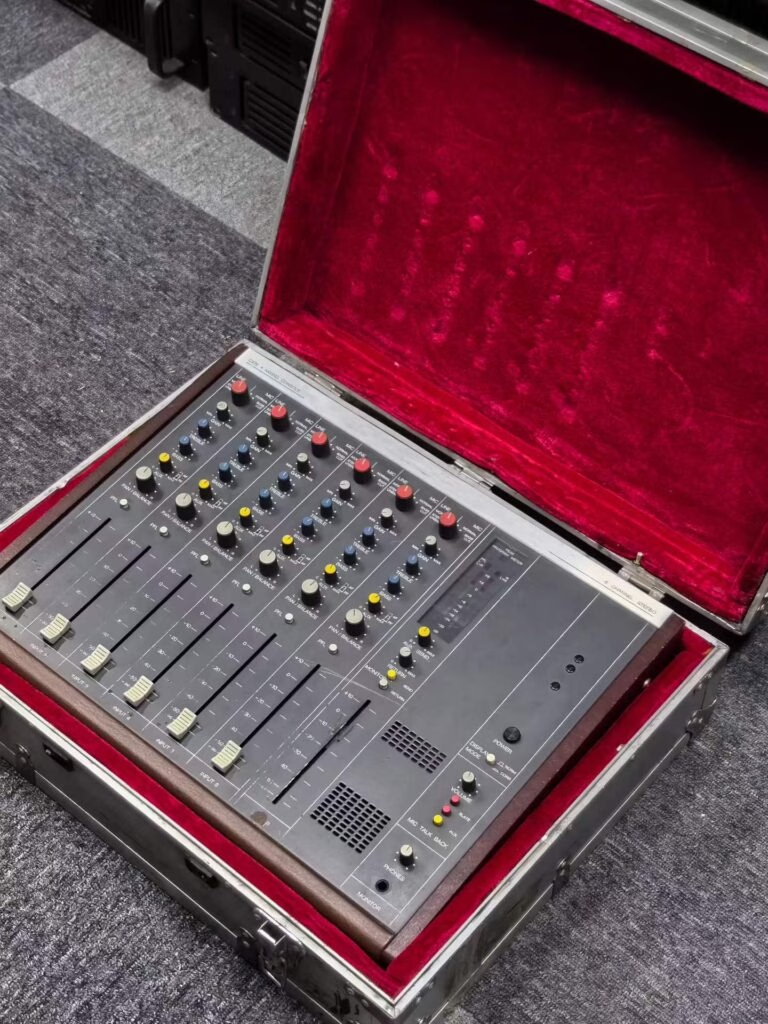
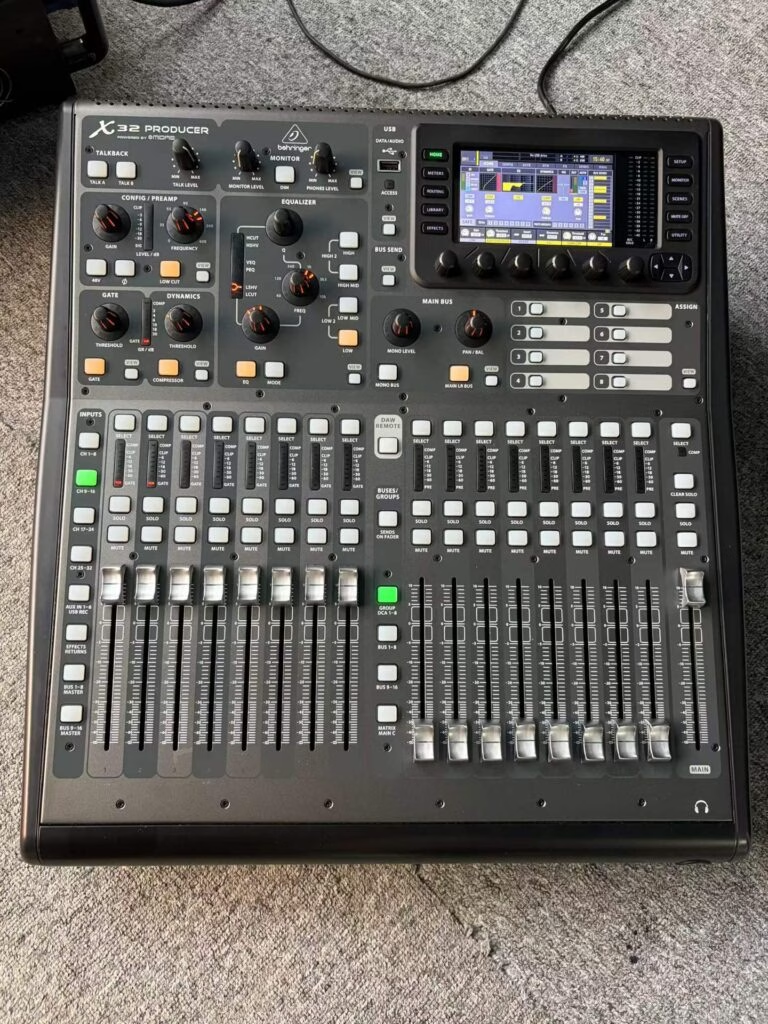
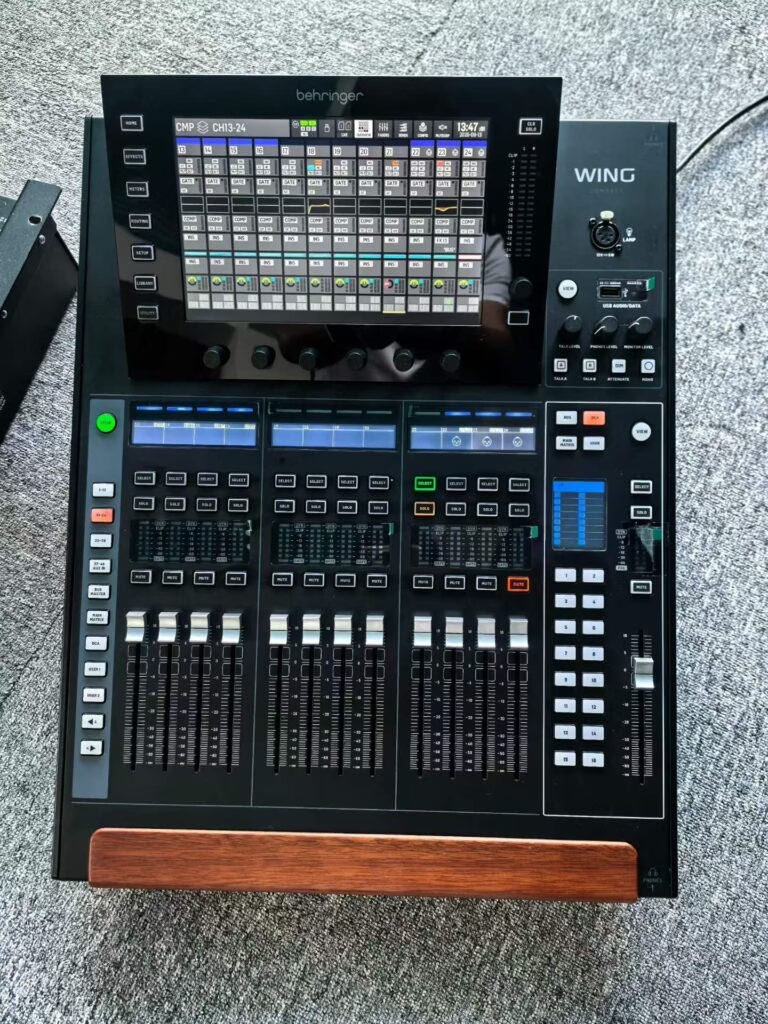
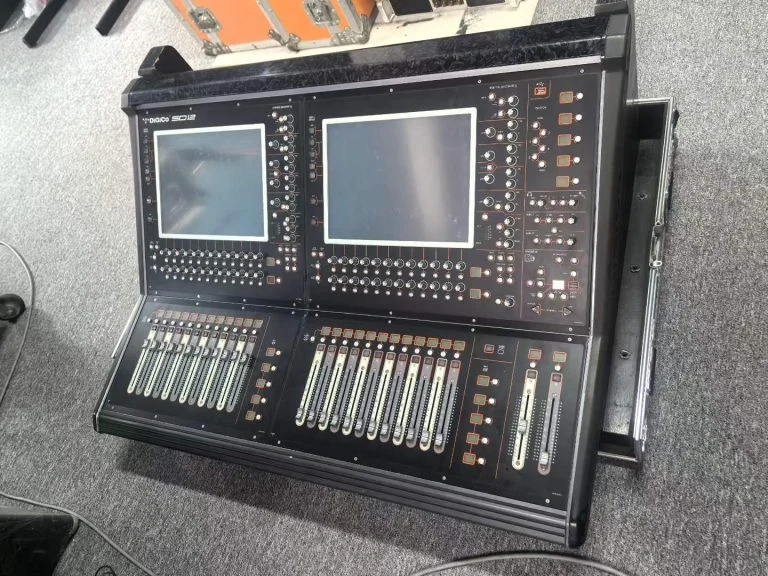
For most buyers in 2026, a used digital console beats a used analog one. Digital gives you 32–48 channels in a 15 kg case, recallable scenes, and built-in effects. Analog wins only when you need instant hands-on control, zero boot time and repairs any local tech can do with a soldering iron.
The real deciding factor is not sound. It is who fixes it when a channel dies at 11 pm on a Saturday. Digital consoles are computers; analog consoles are wires and op-amps.
How much do they cost used?
| Used analog (24–32 ch) | Used digital (16–32 ch) | |
|---|---|---|
| Typical 2026 price | $600–$1,400 | $900–$1,800 |
| Weight | 45–70 kg | 12–22 kg |
| Memory / scenes | None | 100+ scene recalls |
| Repair skill needed | Basic electronics | Firmware + board-level |
| Lifespan left on used units | 10–15 years | 5–10 years |
A used Yamaha DM1000 sits in the digital bracket at roughly $900–$1,200 in tested condition. It is a 48-channel 96 kHz desk with 8 aux buses, and it still shows up on riders in the Middle East and Southeast Asia. You can check specs and stock on the Yamaha DM1000 digital mixing console page.
Where do used analog consoles still win?
- Fixed installs — churches, school halls and small clubs where nobody needs scene recall.
- Voltage-unstable sites — a generator that drops to 200V will reboot a digital desk mid-show.
- Long-term repairability — a 1990s Allen & Heath or Soundcraft is still fixable in Nairobi or Jakarta.
- Cost on very small rigs — a 16-channel analog desk for $250 does the job for a 200-capacity bar.
What breaks on used digital consoles?
Faders. Motorised faders are the first thing to go, at $25–$60 each for parts, and a 24-fader desk with four dead faders is a $200–$400 repair. Touchscreens fail next — usually the digitiser, not the display. Third, the internal battery that keeps the clock and scene memory alive; a dead coin cell resets your desk to 2003 on every power cycle.
Ask the seller for a video of the desk booting from cold with the date showing. That single clip tells you the battery state and whether the boot sequence is clean.
When is a used analog console the smarter buy?
If you rent to schools and churches, buy analog. The failure modes are visible, spares are cheap, and any competent electronics tech can trace a dead channel. If you mix touring bands or corporate events, digital pays for itself in saved setup time — 10 minutes of scene recall versus 40 minutes of patching and gain-setting.
What about firmware and expansion cards?
Digital desks hold value only while the firmware is current. A console stuck three versions behind may not accept a modern Dante or MADI card. Before buying, confirm the current firmware version and whether the card you need is still sold new. Cards for desks discontinued before 2018 are typically 30–50% more expensive second-hand than new.
Compare both routes in our mixers category — we list tested units with fader sweeps recorded. If you are unsure which way to go, tell us your channel count and venue size and we will point you at one console, not five.
Key Takeaways
- Digital beats analog on used consoles unless you need repairability or generator-proof operation.
- Used pricing: $900–$1,800 digital, $600–$1,400 analog for 24–32 channels.
- Motorised faders are the top failure — $25–$60 each in parts.
- Always ask for a cold-boot video to check the backup battery and firmware state.
- Churches and schools: buy analog. Touring and corporate: buy digital.