Used digital consoles win for most buyers in 2026 — scenes, 32+ channels and a small footprint for under $1,000. Used analog still wins if you tour with a tech who can fix it on the road and you want a sound you can shape with your hands. That is the short answer.
The longer answer depends on two questions nobody asks until the gear fails: who repairs it, and how fast can you recall a mix.
What breaks on a used digital console?
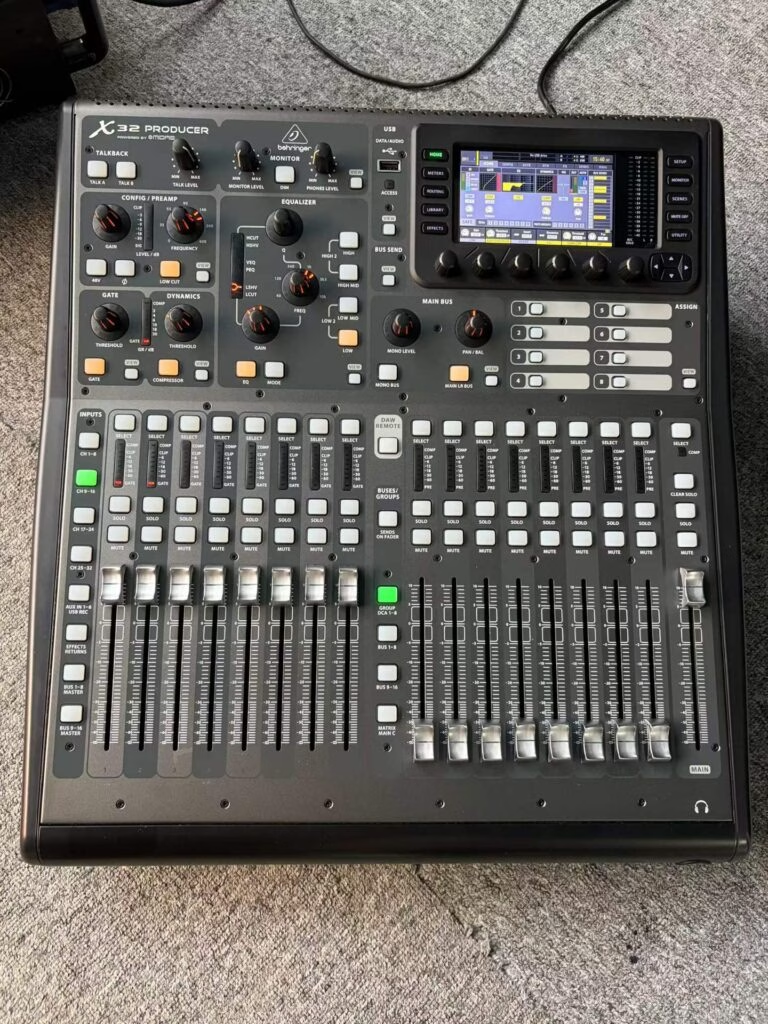
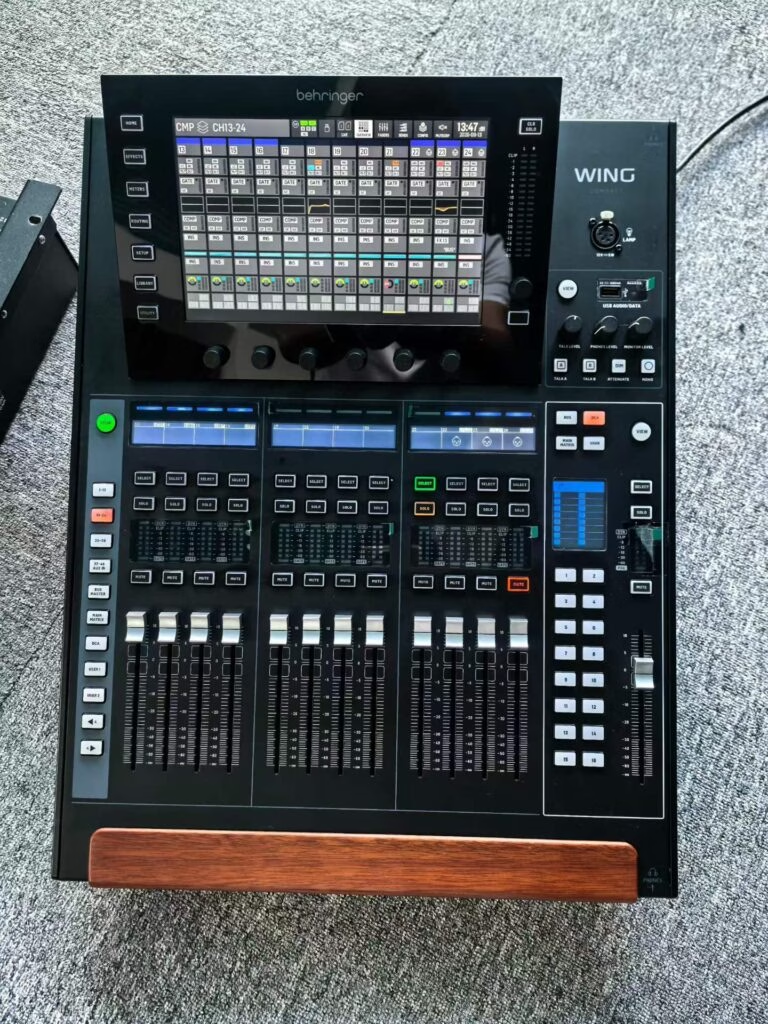
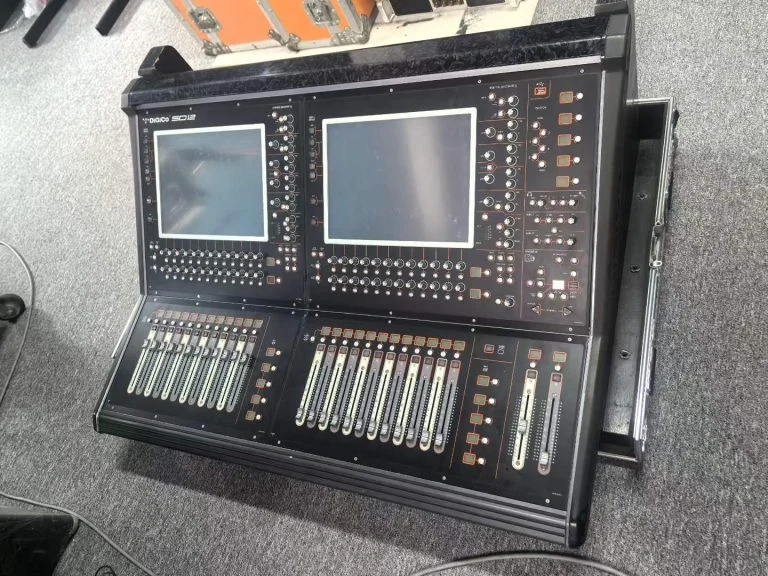
Faders, screen backlights, and the PSU. On a used Yamaha DM1000 the motorised faders are the common wear item, and a board with 24 faders can cost $300–500 to refurbish. Screens can be dim or dead. The good news: DM-series PSUs are still sourced, and the desk boots in about 40 seconds.
What breaks on a used analog console?
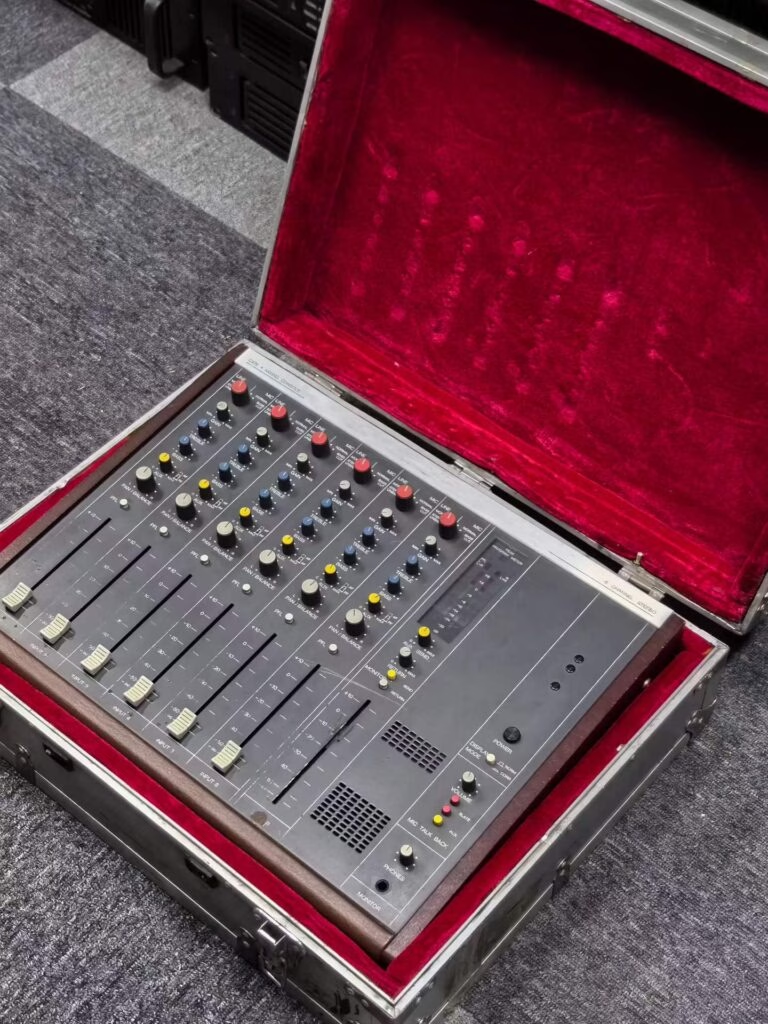
Dirty pots, worn faders, dead channels, and aging capacitors. Almost all of it is fixable with a meter and a soldering iron. A 24-channel analog desk from the 2000s costing $400 might need $150 in caps and two evenings of work — or it might need nothing.
How do the two compare on price and features?
| Factor | Used digital | Used analog |
|---|---|---|
| Typical price | $400–1,200 | $200–900 |
| Channels | 32–48 | 16–32 |
| Recall | Scene/store | Manual, pen and tape |
| Repair | Needs parts, skill | Often field-serviceable |
| Weight | Lighter | Heavier |
Who should pick which?
- Pick digital if you run multiple acts, need scene recall, or have limited van space.
- Pick digital if you want to record 32 tracks straight off the desk.
- Pick analog if you play one band, one setup, and value a sound you can tweak instantly.
- Pick analog if your tech is you and you like fixing things.
Key Takeaways
- Most buyers in 2026 are better served by a used digital console.
- The Yamaha DM1000 remains serviceable; expect $300–500 to refurbish faders.
- Analog desks are cheaper to buy and fix, but give up recall and channel count.
- Check fader health and PSU on digital; check pots and caps on analog.